Google Reader is Closing – Don’t Forget to Change Your RSS Reader!

By , June 26, 2013

We will miss you Google Reader!

Just as a reminder, for those of you who subscribe to China Law & Policy via Google Reader (RSS feed), remember that it will close its doors at 12:01 AM, July 1, 2013.

If you would like to continue to receive China Law & Policy updates via RSS, please register with a new reader before July 1.  Here at China Law & Policy, we have switched out RSS feed to Feedly which has a very similar look and feel to Google Reader (website here).  It can also import all of your feeds from Google Reader but you only five more days to do that.

In addition to Feedly, there are multiple other readers you can use as well.  CNET recently listed its Top 5 Replacements for Google Reader.  Check it out here.  A Google search for “google reader alternatives” will also pick up websites recommending countless other readers.

Finally, if you want to do away with readers altogether, a good way to follow China Law & Policy updates is through our Twitter feed or via email.  You can subscribe by clicking the buttons on the top right hand side of this website or by clicking here for Twitter feed or here for email updates.

As always, thank you for your support and for taking the time to read China Law & Policy!

Chen Guangcheng and the Commandeering of Our China Human Rights Policy

By , June 20, 2013

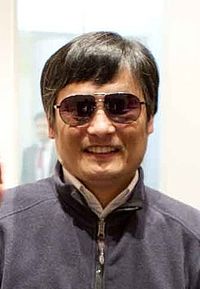
Chinese activist Chen Guangcheng

Love is a battlefield and so evidently is our China human rights policy.  At least that is what the recent developments with blind Chinese activist Chen Guangcheng demonstrate.  Chen made international headlines last April when he bravely escaped his illegal house arrest, fled to Beijing and sought refuge in the U.S. Embassy.

On May 19, 2012, after the U.S. brokered a deal, Chen and his family arrived at Newark International Airport where Chen was to start a fellowship at NYU Law School’s U.S.-Asia Law Institute.

Fast forward a year and on Sunday, Chen was again in the news, this time issuing a press release stating that NYU had forced him to leave, alleging that NYU’s actions were a result of the Chinese Communist Party’s pressure on the University.  NYU has denied Chen’s allegations.

Chen’s story is more than just a page six affair of he-said-she-said.  Instead it reflects the ability one group to exert an undue influence on the China human rights agenda.

The Commandeering of the U.S.’ Human Rights Policy in China

In very simplistic terms, the politics behind our China human rights policy used to be easy – the left supported human rights in China above all else.  The right was more about business ties to China before human rights (or as a way to achieving human rights).

But the rise of the religious right, especially the pro-lifers, within the Republican Party has changed that dynamic.  Nothing demonstrates that more clearly than the changing politics behind the Congressional-Executive Commission on China (CECC).

In 2000, after China’s WTO entry, Congress created the CECC to monitor China’s human rights and rule of law development.  It quickly became Capitol Hill’s bipartisan think tank on China issues, publishing a detailed annual report on China’s human rights and rule of law record and some of the U.S.’ best young China hands passed through the CECC.

But over the past six years, the CECC has become dominated by one voice, that of Rep. Chris Smith, a pro-life Republican who became a member of the Commission in 2007, its chairman in 2011 and its current co-chair.  Since his membership, the CECC has become increasing politicized.

I first felt this when undergoing an interview for a position covering the CECC’s criminal law portfolio back in 2009.  I had already cleared interviews with CECC staff, and a political vetting by one of

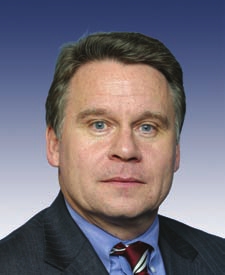
Rep. Chris Smith of New Jersey

Chris Smith’s staffers was the final hurdle. It was unclear why this staffer had been chosen as he neither spoke Chinese nor demonstrated any special knowledge of China.  He asked only limited questions about my work at NYU’s U.S.-Asia Law Institute (the same organization where Chen would land years later) or about my knowledge of Chinese criminal law which I had focused on during my two years at NYU.  Instead he asked about my views of Obama’s China policy vis-a-vis Bush’s (I believe they were pretty much the same); why I wrote for the Huffington Post (because they are willing to publish me); what editorial control did the Huffington Post have over my work (none); and finally, what did I think about China’s one-child policy.  And that is where much of the interviewed remained – around China’s one-child policy.

I told the staffer that forced abortions are wrong and illegal under Chinese law.  The staffer probed deeper than just forced abortions, inquiring what I thought about the one-child policy in the abstract and whether the policy alone, regardless of the way it was implemented, was a human rights violation.  Of the human rights violations in China, the one-child policy is low on my list, and I said as much.  But the questions continued, and at some point I found myself “admitting” that I was fine with contraception.   Once those words left my mouth, somehow I knew I did not get the job.

The phone interview ended with the staffer asking about one of my blog posts where I tried to explain why the Chinese Communist Party should not be viewed as a monolith.  The line of questioning quickly turned into what felt like a McCarthy-era hearing with the staffer accusing me about not caring about human rights.

After the interview, I was rejected for the job.  I was told that Chris Smith’s office stated that my rejection was because my blog had typos (which is true).  But the line of questioning I underwent suggests another reason to me.  That interview was the first glimpse of what I believe is the pro-life contingent’s influence on our policy toward China’s human rights.

How Does Chen Guangcheng Play Into Chris Smith’s China Human Rights Policy?

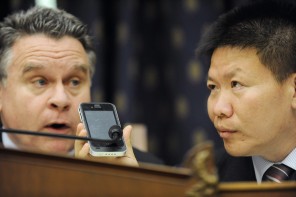
It didn’t surprise me last year when it was Rep. Chris Smith who orchestrated Chen Guangcheng’s dramatic phone call from Beijing into the CECC hearing where Chen begged to be allowed into the US, creating a second international crisis that the U.S. had to negotiate.  It was even less surprising that Chen’s translator on that phone call was Bob Fu, president of the Texas-based evangelical human rights group, ChinaAid.  Fu himself has testified a number of times before the CECC, and since Chen’s Sunday night press release Fu has made the rounds with the press, alleging that Chen was being forced out of NYU because of Chinese pressure.  Expectedly, Rep. Smith has threatened to convene a hearing hauling in NYU officials to testify under oath and prove that they were not pressured by the Chinese government.

Rep. Chris Smith with Bob Fu of ChinaAid, on the phone with Chen Guangcheng

To pro-life advocates like Rep. Smith, Chen is an important figure.  Chen, a self-taught lawyer, began his career by fighting for the rights of those with disabilities.  Soon, Chen heard of other injustices in his village, especially forced abortions.  Although China maintains a one-child policy, forced abortions and sterilizations are illegal under Chinese law.  An investigation by Chen and lawyers from Beijing uncovered that forced abortions and sterilizations were common, especially in rural areas.  By the summer of 2005, Chen filed multiple lawsuits in his village Linyi on behalf of many of the victims.

It was those forced abortion cases that caused Chen to become a martyr, being arrested and thrown in jail on trumped-up charges.  Even after his official release, the Linyi authorities illegally kept him under house arrest.  But it was these forced abortion cases that also brought him to the attention of the pro-lifers in the United States.  Although Chen has stated that he is against forced abortions and less against abortions themselves (see NPR interview at 9:51), his lawsuits represent an important stepping stone for pro-lifers –  ridding China of the one-child policy.  And there is always hope that he can be converted to a pro-life stance.

Chen Guangcheng – Only A Pawn in Their Game?

I don’t believe that NYU succumbed to Chinese political pressure.  Mattie J. Bekink, Chen Guangcheng’s special adviser while at NYU, has issued a convincing press release detailing the efforts that NYU went to for Chen and his family and that she was the one who informed him early on in his tenure is that he was on a one-year fellowship.

But more importantly, I question how much the Chinese government actually cares about Chen’s existence in the United States.  Chen was a public relations disaster for the Chinese government while he was in China – causing protests domestically and internationally and even having Christian Bale attempt to visit.  Yes, the Chinese government protested the U.S. government’s involvement in the Chen affair, but ultimately they let him go and likely because they wanted to.  Activists lose their impact once they leave China.

Chen offers no evidence as to this alleged pressure.  Although he ties all of this to NYU’s desire to expand its Shanghai campus, that doesn’t seem to make sense.  NYU accepted Chen in May 2012.  That didn’t change its plans for the Shanghai campus.  The campus is still set to open in fall 2013.

But whether Chen is a pawn in a much bigger game is merely speculation.  And maybe Chen isn’t even a pawn; maybe he has taken sides and that he has chosen the pro-life camp.  News reports have stated that Chen is currently negotiating fellowships with two organizations – the Leitner Center at Fordham Law School focused on international human rights and the Witherspoon Institute, a conservative, pro-life think tank, in Princeton, New Jersey.  But it wouldn’t surprise me if after Sunday’s press release and accusations if Fordham withdraws from negotiations; who would want that headache, ending up in the press like NYU.  So in the end, Chen may only be left  with one choice – Witherspoon.  Which makes one wonder why Chen didn’t wait until he signed the contract with whichever organization he chose and then lambast NYU.  There was no particular reason to do it now.  Unless of course Chen – or the people surrounding him – didn’t want a choice.

Ramifications of the Pro-Life’s Influence on China’s Human Rights Policy

Soon after my interview with Rep. Chris Smith’s office, I asked a friend who worked on Capitol Hill how a Congressional commission could be so influenced by one voice.  No one cares about China he told me, they care about the Middle East.

I don’t know if that is exactly true but certainly what happened with the CECC shows that others on Capitol Hill need to start paying attention.  Our relationship with China is too important to allow the human rights agenda to be so unduly influenced by one contingent.  The one-child policy and abortions can and should be a part of our human rights agenda, but it should not be the exclusive focus.  Or if it is, that consensus should be reached in a more democratic process not just by default because no one paid attention.

The CECC has long been an important resource for scholars, journalists and everyday citizens who want to learn more about China.  No other organization publishes as well documented an analysis of China’s human rights and rule of law developments as the CECC does in its annual report.  But if the organization becomes politicized, that annual report will begin to lose its legitimacy.  Its work is too important to allow that to happen.

In the present Congress, Rep. Smith is CECC’s co-chair, meaning that he will wield less influence than he did as chairman.  But he is still on the Commission and he also currently chairs the Subcommittee on Africa, Global Health, Global Human Rights and International Organizations of the House Foreign Affairs Committee.  Under his tenure, many of the hearings on China focus on these narrow issues with some of the same witnesses testifying.

But more than anything, what is happening with Chen Guangcheng is a sad state of affairs – it appears that he is being used by pro-life advocates in an attempt to commandeer the U.S.’ human rights policy in China.  To the extent that Chen is not a pawn, well, it didn’t have to end this way.  What’s unfortunate is that Chen’s behavior sets the tone for other activists trying to escape China, fearing for their life.  Will the United States government be willing to take that risk again, especially if a Democrat is still in the Executive Office?  Likely “the Dissident Wears Prada” is not a movie they want to see replayed.

Just For Fun: Restaurant Review – Las Vegas’ Ping Pang Pong

By , June 13, 2013

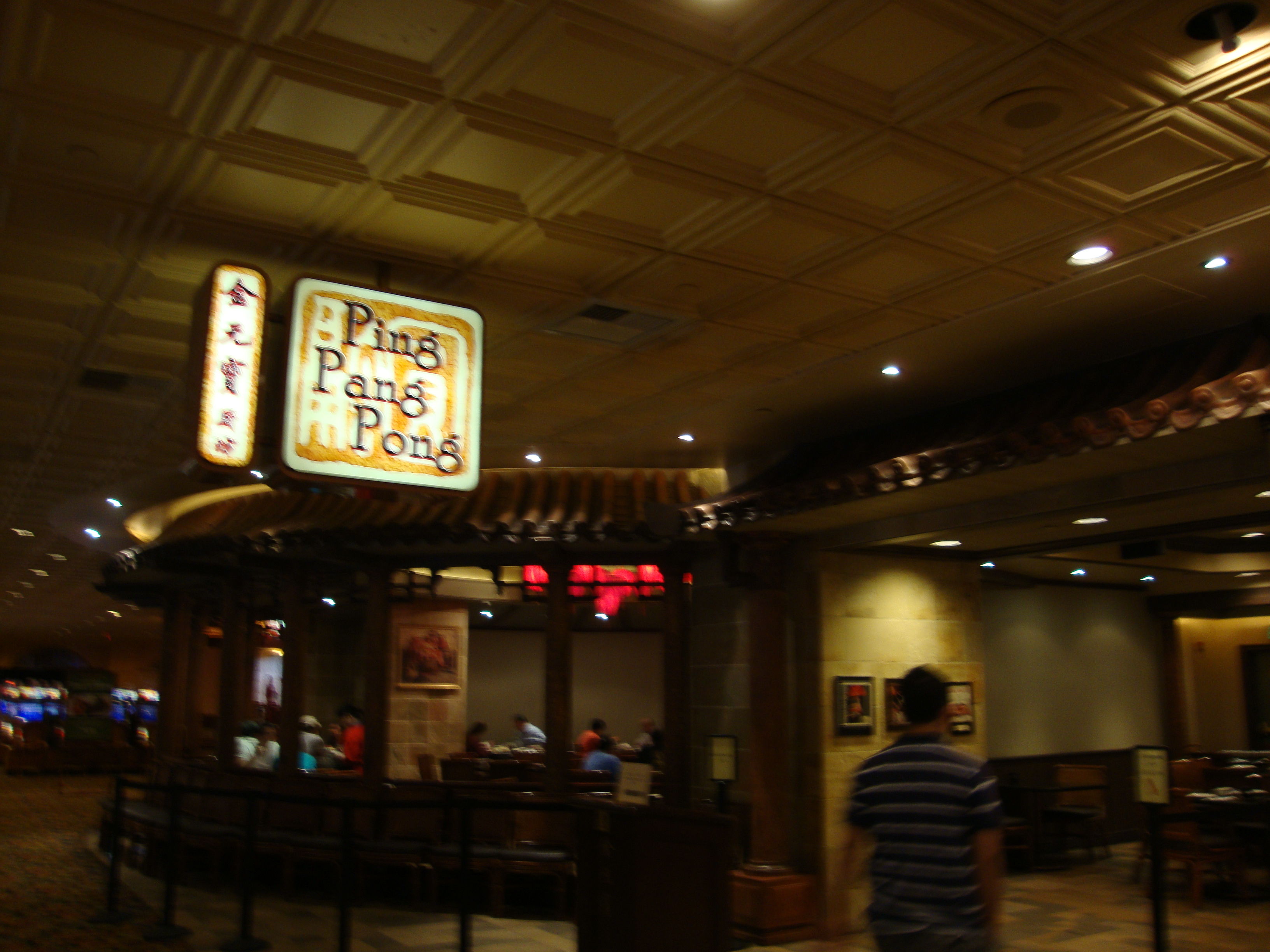
Ping Pang Pong in the Gold Coast Casins

It’s not an understatement to say that Chinese tourists likely saved Las Vegas from economic oblivion after the meltdown of 2008.  When most of Nevada was in a foreclosure crisis, Las Vegas had to look elsewhere for cash and not surprisingly, that elsewhere was China.  Chinese people have long enjoyed gambling: Macau is the most profitable gaming city in the world and the number of Chinese travelers to Las Vegas has risen 30% every year these past through years.  In fact, last month, two Nevada congressmen proposed a bill to provide a visa waiver to Hong Kong Chinese.

And to thank these Chinese tourists, Las Vegas has given them their just reward – plenty of Chinese restaurants along the strip.  Because if there is something that Chinese tourists like more than gambling, it is eating Chinese food.  Some of the fanciest hotels – like the Bellagio and the Wynn – have premier Chinese restaurants allegedly serving “authentic” cuisine.

But what China Law & Policy wanted to find out – were any of them good?  A review of the internet brought up mixed reviews of some of the fancier places, but the one name that kept popping up as the best Chinese food was the unfortunately named Cantonese restaurant Ping Pang Pong in the old school, $5-table Gold Coast Casino.

Ping Pang Pong and the Gold Coast Casino are about a 20 minute, unattractive walk from the strip.  But every step of that walk is worth if for just

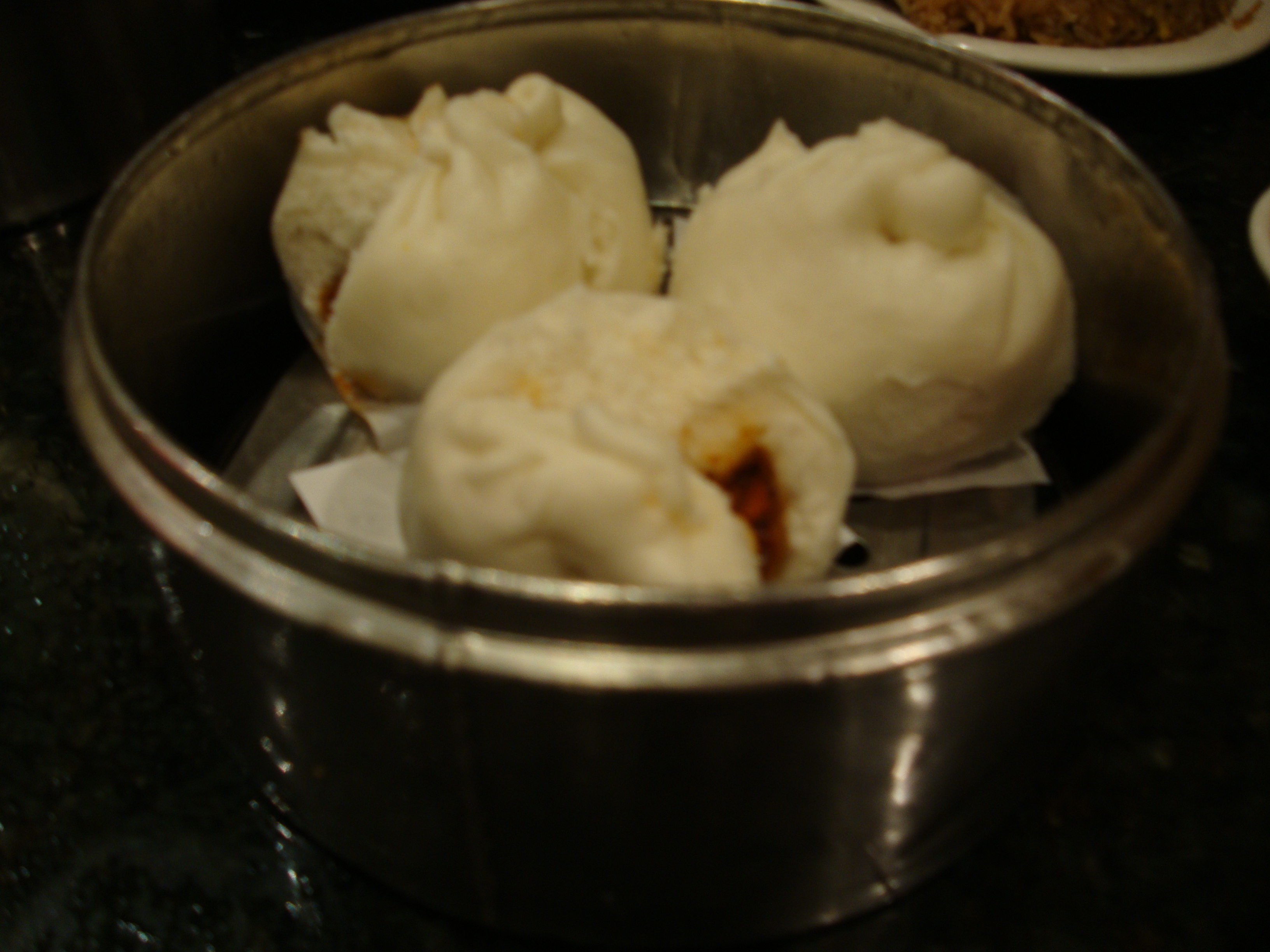
Best roast pork buns outside of Hong Kong? You bet!

for one thing: some of the best roast pork buns (cha siu bao) outside of Hong Kong.  All too often dim sum restaurants give too little attention to the roast pork buns, knowing that it is an easy sell; even a bad roast pork bun is still good.  But Ping Pang Pong’s roast pork buns are not simply good, they are actually divine.  The attention provided to the pork is amazing – not only is the bun full of shredded pork, but you can actually taste the barbeque flavor of the sauce mixed with the sweetness.  The soft bun, which was served hot, was fresh and added a perfect complement to the strong, delicious and distinct tangy and sweet flavors of the meat.  This is the way a steamed roast pork bun is supposed to taste.

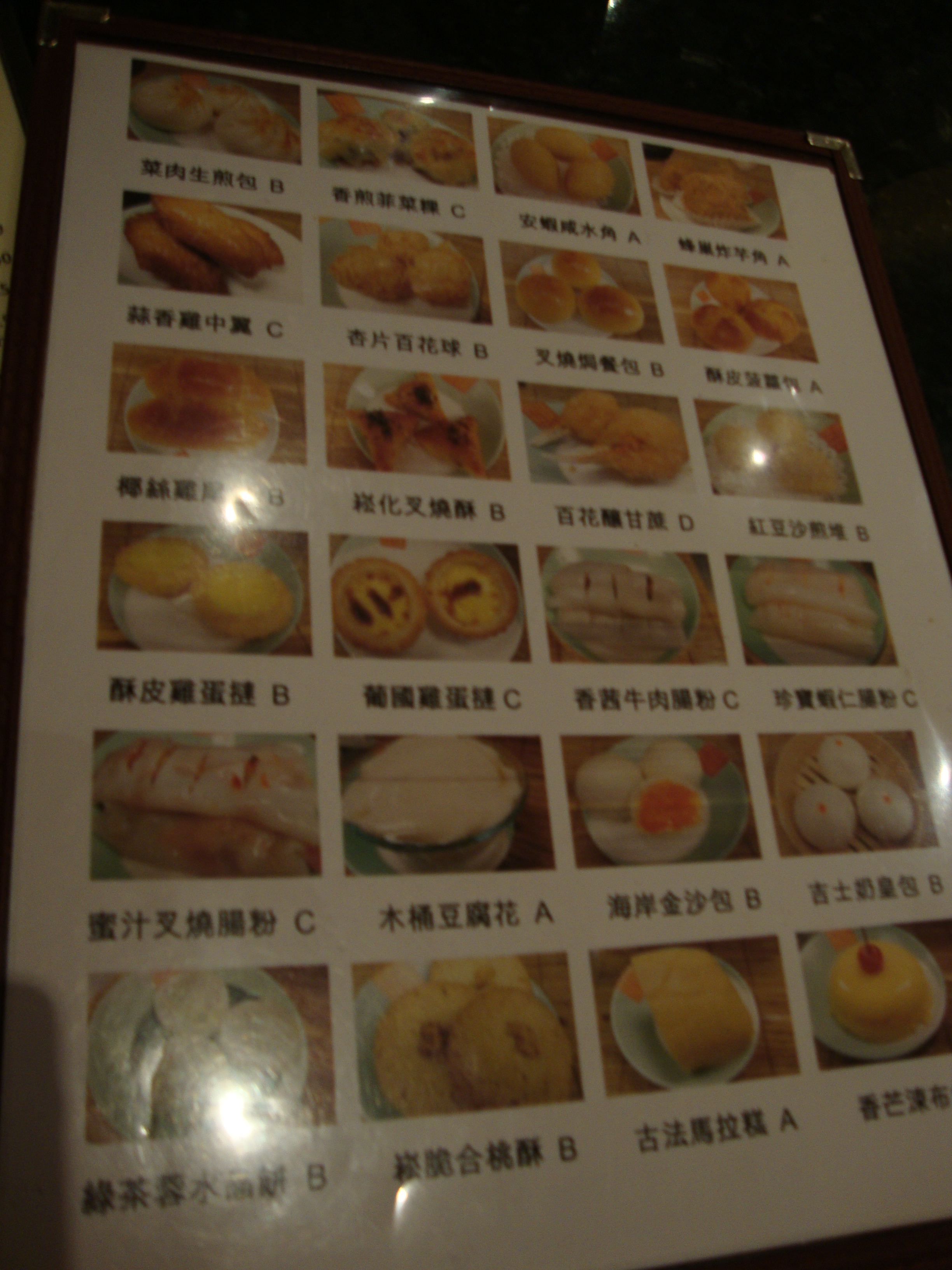
The rest of the dim sum was very solid.  Although the restaurant was full of Chinese and Hong Kong customers (out of the 20 tables, only four were non-Chinese speaking) and most of the ordering is done in Chinese, it is still accessible to non-Chinese speakers because of its picture menu.

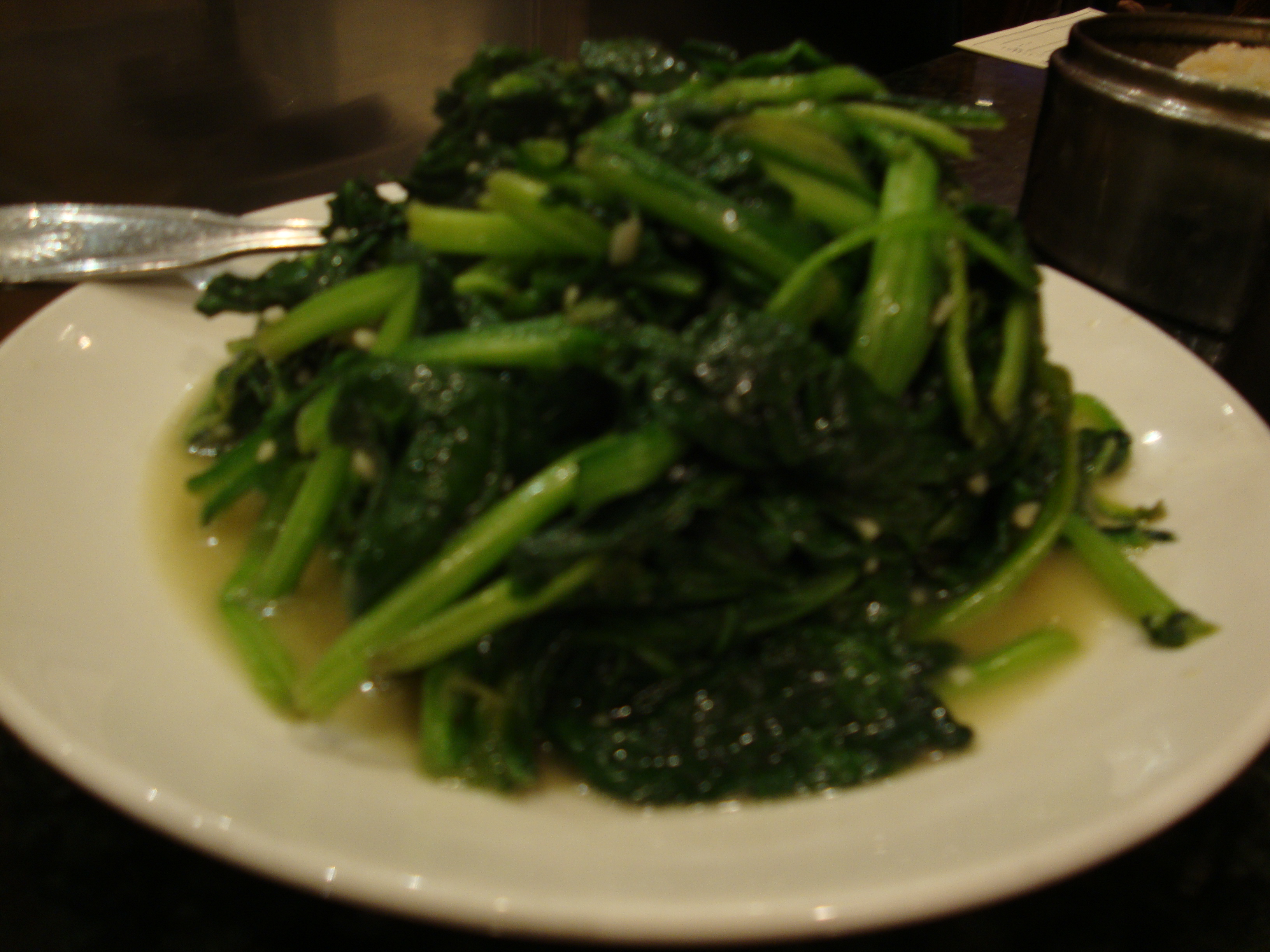
Spinach in garlic sauce

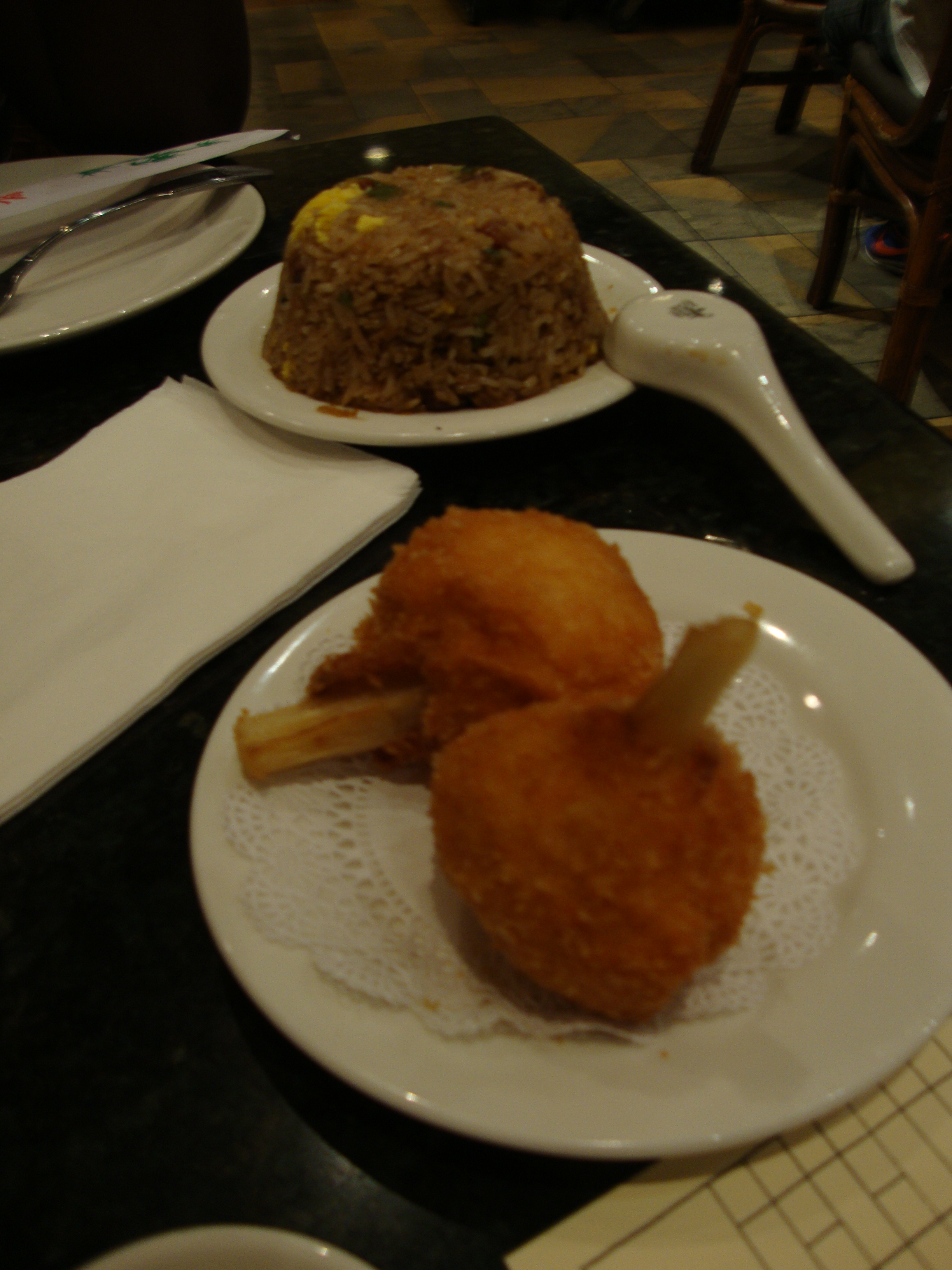
One of the first things that intrigued my dining companion and I on the picture menu was the shrimp lollipops.  And these lollipops did not disappoint.  If you like shrimp, you will love these.  The ground shrimp meat is fried and breaded and sits on a bamboo stick.  Although fried, these shrimp lollipops are very delicate – the frying is lightly done with no taste of oil, allowing for the flavor of the hefty amount of shrimp meat to really come out.  Even ground, the shrimp was still extremely fresh.  There is a mayo-based dipping sauce that comes with the shrimp lollipops, but this only detracts from the flavor.  There is no need for any sauce with these hefty shrimp mammas, but if you feel the need, go with the table hot sauce.

Next we tried the sticky fried rice with Chinese sausage.  At first taste, there was not much to write home about.  It wasn’t overwhelmingly flavorful, but it was a dish my dining companion and I kept coming back to.  The sausage was nice and sweet and the texture of the sticky rice complemented the sausage.  This was a dish we ended up making a point of finishing – it turned out to be very savory and satisfying.

Our next dish was a bit of a mistake – shrimp balls with rice on the outside, sitting in a congee sauce (rice gruel sauce).  Mixed with the shrimp was a vegetable medley of sorts – corn, carrots and peas.  I would not recommend ordering this.  While it is great that Ping Pang Pong is experimenting with new ideas, this is one experiment I could do without.  The flavors do not really go together and it’s just weird to mix corn, carrots and peas with the shrimp.

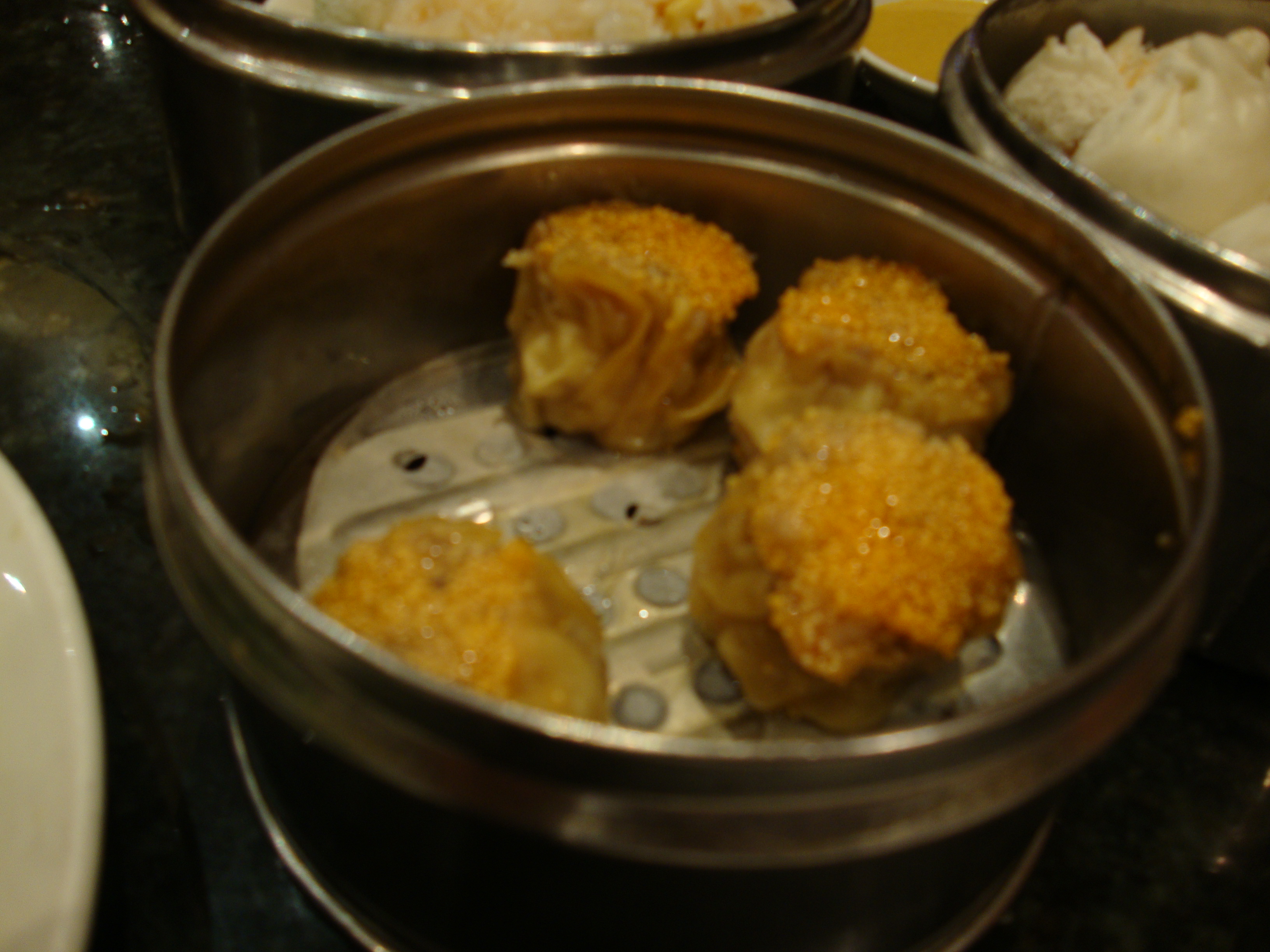
Fortunately we were saved by the next dish – the beef and shrimp shu mai.  These shu mai were bursting with flavor and were also very savory.

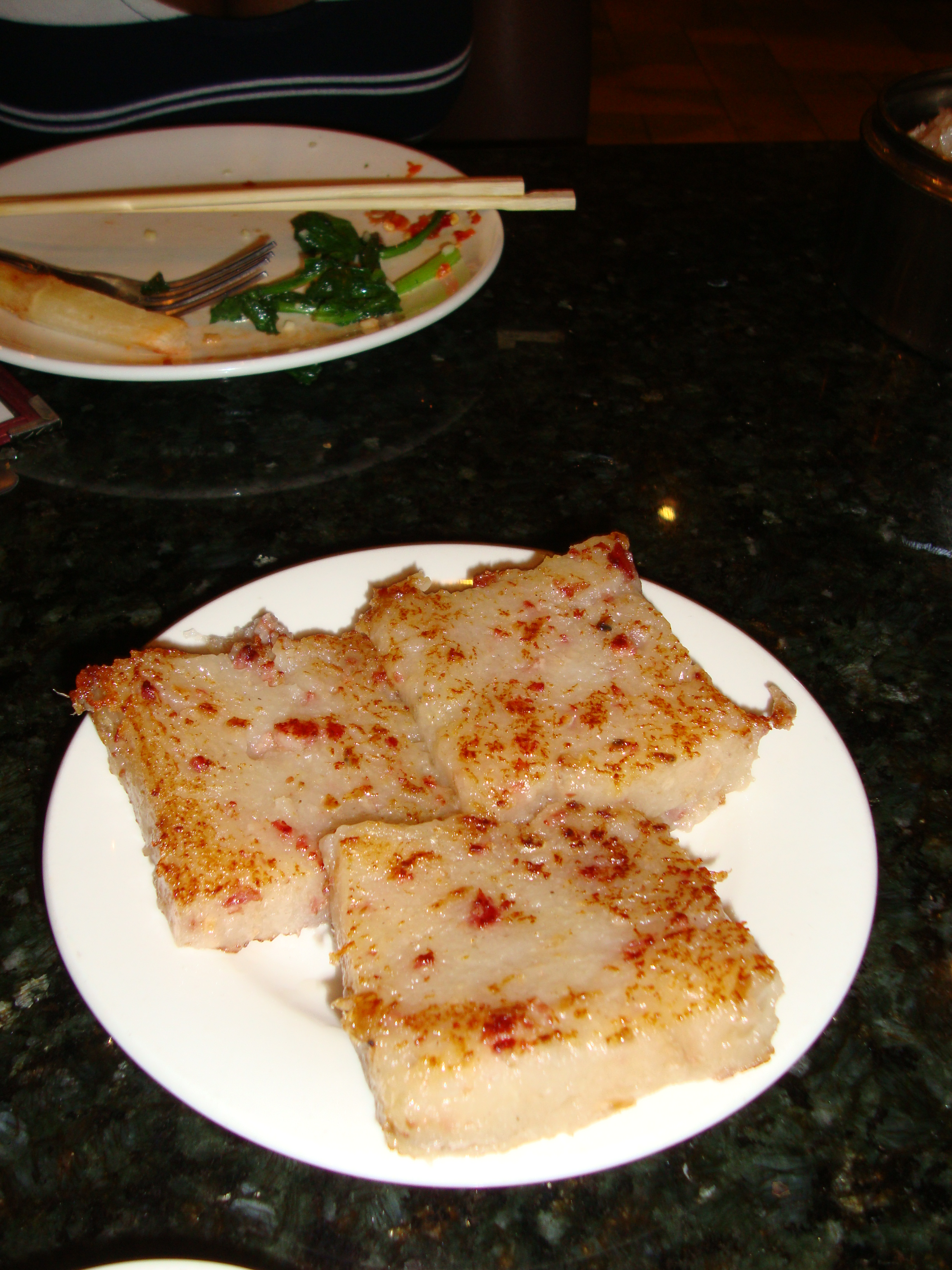
Turnip cakes

The dish did not come with a sauce and to be honest, it wasn’t needed.  A sauce would again detract too much for the freshness of the meats.  We also ordered off the menu – spinach with garlic sauce.  The dish was good – it was not dripping with garlic sauce which meant that the flavor of the spinach wasn’t lost as all too often happen – but it wasn’t great.

Finally, we ordered one of my favorites – turnip cakes.  These turnip cakes were fresh out of the oven, an experience I never had.  As a result of their freshness, the cakes fell apart very easily when you went to pick them up with your chopsticks.  Also surprisingly, these turnip cakes did not come with the oyster sauce that usually accompany them.  The waitress was happy to oblige when we asked for it, but I have never seen turnip cakes without a sauce.  These turnip cakes were good – my dining companion enjoyed them more than I did – but nothing you can’t get in New York City’s Chinatown.

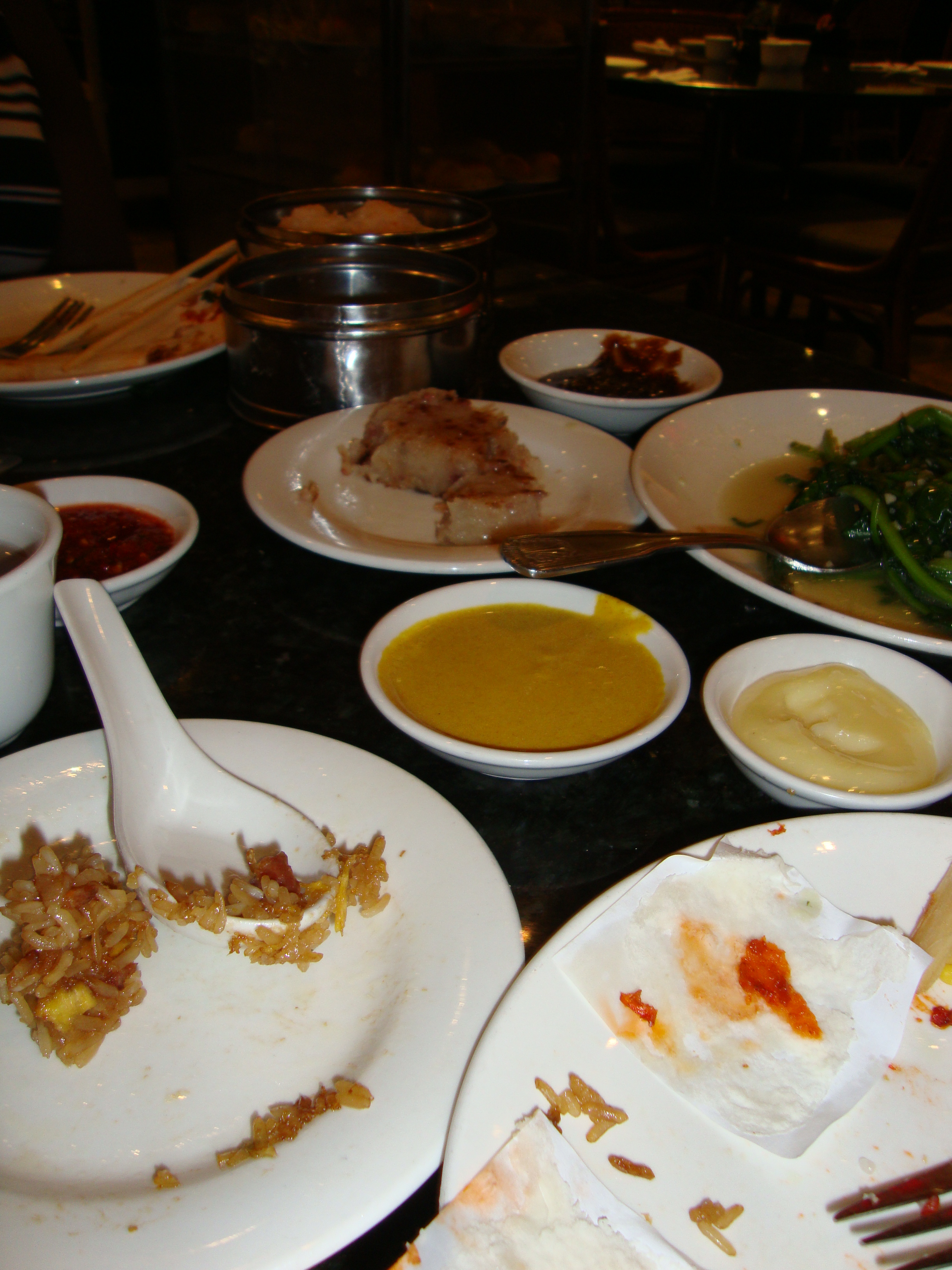
All done!

Ping Pang Pong offers very good dim sum with exceptional roast pork buns that should not be missed.  The food is authentic and can compete with some of the better dim sum restaurants of larger Chinatowns like New York and San Francisco.  It also can compete with many of the Strip’s more famous chefs. Whoever the chef is of Ping Pang Pong, his genius is evident in the roast pork buns – Emeril could learn a thing or two from him.

What’s also great is that the meal will not set you back in the way that one of the restaurants on the Strip will.  The prices of the dim sum dishes range from $2.18 to $5.88 for a specialty.  Our meal – in which we over ordered – was $35 with tip (no alcohol though).  Certainly a winning find after losing big the night before in blackjack.


Rating: ★★★½☆

Ping Pang Pong
Inside the Gold Coast Casino
4000 W Flamingo Road
Las Vegas, NV 89103
(702) 367-7111

http://www.goldcoastcasino.com/dine/ping-pang-pong


Xi Jinping & Obama – Working Together on the Enviornment

THE WHITE HOUSE

Office of the Press Secretary

FOR IMMEDIATE RELEASE
June 8, 2013

United States and China Agree to Work Together on Phase Down of HFCs

Today, President Obama and President Xi agreed on an important new step to confront global climate change.  For the first time, the United States and China will work together and with other countries to use the expertise and institutions of the Montreal Protocol to phase down the consumption and production of hydrofluorocarbons (HFCs), among other forms of multilateral cooperation.  A global phase down of HFCs could potentially reduce some 90 gigatons of CO2 equivalent by 2050, equal to roughly two years worth of current global greenhouse gas emissions.


The agreement between the United States and China reads as follows:


Regarding HFCs, the United States and China agreed to work together and with other countries through multilateral approaches that include using the expertise and institutions of the Montreal Protocol to phase down the production and consumption of HFCs, while continuing to include HFCs within the scope of UNFCCC and its Kyoto Protocol provisions for accounting and reporting of emissions.


HFCs are potent greenhouse gases used in refrigerators, air conditioners, and industrial applications. While they do not deplete the ozone layer, many are highly potent greenhouse gases. Their use is growing rapidly as replacements for ozone-depleting substances that are being phased out under the Montreal Protocol on Substances that Deplete the Ozone Layer. Left unabated, HFC emissions growth could grow to nearly 20 percent of carbon dioxide emissions by 2050, a serious climate mitigation concern.

The Montreal Protocol was established in 1987 to facilitate a global approach to combat depletion of the stratospheric ozone layer. Every country in the world is a party to the Protocol, and it has successfully phased out or is in the process of phasing out several key classes of chemicals, including chlorofluorocarbons (CFCs), hydrochlorofluorocarbons (HCFCs), and halons. The transitions out of CFCs and HCFCs provide major ozone layer protection benefits, but the unintended consequence is the rapid current and projected future growth of climate-damaging HFCs.

For the past four years, the United States, Canada, and Mexico have proposed an amendment to the Montreal Protocol to phase down the production and consumption of HFCs. The amendment would gradually reduce consumption and production and control byproduct emissions of HFCs in all countries, and require reporting in these areas. The amendment includes a financial assistance component for countries that can already access the Protocol’s Multilateral Fund, and leaves unchanged the reporting and accounting provisions of the UN Framework Convention on Climate Change and Kyoto Protocol on HFC emissions.

###

President Xi Jinping & President Obama – Press Conference – Sunnylands, CA

THE WHITE HOUSE

Office of the Press Secretary

________________________________________________________________

For Immediate Release                               June 7, 2013


REMARKS BY PRESIDENT OBAMA

AND PRESIDENT XI JINPING OF THE PEOPLE’S REPUBLIC OF CHINA

AFTER BILATERAL MEETING

Sunnylands Retreat

Rancho Mirage, California

8:09 P.M. PDT

     PRESIDENT OBAMA:  Everybody ready?  Well, I know we’re a little behind, but that’s mainly because President Xi and I had a very constructive conversation on a whole range of strategic issues, from North Korea to cyberspace to international institutions.  And I’m very much looking forward to continuing the conversation, not only tonight at dinner but also tomorrow.

     But I thought we’d take a quick break just to take a question from both the U.S. and Chinese press.  So what I’ll do is I’ll start with Julie Pace and then President Xi can call on a Chinese counterpart.

     Q    Thank you, Mr. President.  How damaging has Chinese cyber-hacking been to the U.S.?  And did you warn your counterpart about any specific consequences if those actions continue?  And also, while there are obviously differences between China’s alleged actions and your government’s surveillance programs, do you think that the new NSA revelations undermine your position on these issues at all during these talks?


     And President Xi, did —


     PRESIDENT OBAMA:  Why don’t you let the interpreter —


     Q    And President Xi, did you acknowledge in your talks with President Obama that China has been launching cyber attacks against the U.S.?  Do you also believe that the U.S. is launching similar attacks against China?  And if so, can you tell us what any of the targets may have been?  Thank you.


     PRESIDENT OBAMA:  Well, Julie, first of all, we haven’t had, yet, in-depth discussions about the cybersecurity issue.  We’re speaking at the 40,000-foot level, and we’ll have more intensive discussions during this evening’s dinner.


What both President Xi and I recognize is that because of these incredible advances in technology, that the issue of cybersecurity and the need for rules and common approaches to cybersecurity are going to be increasingly important as part of bilateral relationships and multilateral relationships.


In some ways, these are uncharted waters and you don’t have the kinds of protocols that have governed military issues, for example, and arms issues, where nations have a lot of experience in trying to negotiate what’s acceptable and what’s not.  And it’s critical, as two of the largest economies and military powers in the world, that China and the United States arrive at a firm understanding of how we work together on these issues.


But I think it’s important, Julie, to get to the second part of your question, to distinguish between the deep concerns we have as a government around theft of intellectual property or hacking into systems that might disrupt those systems — whether it’s our financial systems, our critical infrastructure and so forth — versus some of the issues that have been raised around NSA programs.

     When it comes to those cybersecurity issues like hacking or theft, those are not issues that are unique to the U.S.-China relationship.  Those are issues that are of international concern.  Oftentimes it’s non-state actors who are engaging in these issues as well.  And we’re going to have to work very hard to build a system of defenses and protections, both in the private sector and in the public sector, even as we negotiate with other countries around setting up common rules of the road.


     And as China continues in its development process and more of its economy is based on research and innovation and entrepreneurship, they’re going to have similar concerns, which is why I believe we can work together on this rather than at cross-purposes.

     Now, the NSA program, as I discussed this morning, is a very limited issue, but it does have broad implications for our society because you’ve got a lot of data out there, a lot of communications that are in cyberspace.  And how we deal with both identifying potential terrorists or criminals, how the private sector deals with potential theft, and how the federal government, state governments, local governments and the private sector coordinate to keep out some of these malicious forces while still preserving the openness and the incredible power of the Internet and the web and these new telecommunications systems — that’s a complicated and important piece of business.  But it’s different from these issues of theft and hacking.

     And every government is then inevitably going to be involved in these issues, just like big companies are going to be involved in these issues.  I mean, you’ve got private companies that have a lot more data and a lot more details about people’s emails and telephone calls than the federal government does.  And if we’re called upon not only to make sure that we’re anticipating terrorist communications but we’re also called upon to work with the private sector to prevent theft out of ATMs, et cetera, then we’re going to have to find ways to deal with this big data in ways that are consistent with our values; in ways that protect people’s privacy, that ensure oversight, and strike the right balance.


     And as I indicated this morning, that’s a conversation that I welcome having.


     PRESIDENT XI:  (As interpreted.)  As President Obama said, in our meeting this afternoon we just briefly touched upon the issue of cybersecurity.  And the Chinese government is firm in upholding cybersecurity and we have major concerns about cybersecurity.


     In the few days before President Obama and I meet today, I note sharp increased media coverage of the issue of cybersecurity.  This might give people the sense or feeling that cybersecurity as a threat mainly comes from China or that the issue of cybersecurity is the biggest problem in the China-U.S. relationship.

The application of new technology is a double-edged sword.  On the one hand, it will drive progress in ensuring better material and cultural life for the people.  On the other hand, it might create some problems for regulators and it might infringe upon the rights of states, enterprises, societies and individuals.

     We need to pay close attention to this issue and study ways to effectively resolve this issue.  And this matter can actually be an area for China and the United States to work together with each other in a pragmatic way.  And I’m happy to learn that within the context of the China-U.S. strategic and economic dialogue, a working group has been established to discuss cybersecurity issues.  So this is an issue that the two sides will continue to discuss.


By conducting good-faith cooperation we can remove misgivings and make information security and cybersecurity a positive area of cooperation between China and the U.S.  Because China and the United States both have a need and both share a concern, and China is a victim of cyber attacks and we hope that earnest measures can be taken to resolve this matter.


Thank you.


Q    I’m with China Central Television and my question for President Xi is, what are the main issues that were discussed in the longer-than-expected meeting this afternoon?  And what are the major areas of consensus that have emerged from the discussion?  And last year, when you were visiting the United States, you raised the concept of the two sides working together to explore what you call a new model of major country relationship, something that is unprecedented in the relationship and that can inspire future generations.  And after this concept was raised, there has been much discussion and comment on it, both in China and the United States and in the world more broadly.  So did you have further discussion on this issue in your meeting this afternoon?


And my question for President Obama is, what will the United States do to contribute to the building of a new model of major country relationship between China and the U.S.?


     PRESIDENT XI:  (As interpreted.)  In the first meeting that I’ve had with President Obama this afternoon, we had an in-depth, sincere and candid discussion on the domestic and foreign policies of China and the United States, on our joint work to build a new model of major country relationship, and our international and regional issues of mutual interest.  And the President and I reached important consensus on these issues.

     I stated very clearly to President Obama that China will be firmly committed to the path of peaceful development and China will be firm in deepening reform and opening up the country wider to the world.  China will work hard to realize the Chinese dream of the great national renewal and will work hard to push forward the noble cause of peace and development for all mankind.

     By the Chinese dream, we seek to have economic prosperity, national renewal and people’s well-being.  The Chinese dream is about cooperation, development, peace and win-win, and it is connected to the American Dream and the beautiful dreams people in other countries may have.


President Obama and I both believe that in the age of economic globalization and facing the objective need of countries sticking together in the face of difficulties, China and the United States must find a new path — one that is different from the inevitable confrontation and conflict between the major countries of the past.  And that is to say the two sides must work together to build a new model of major country relationship based on mutual respect and win-win cooperation for the benefit of the Chinese and American peoples, and people elsewhere in the world.

     The international community looks to China and the United States to deliver this.  When China and the United States work together, we can be an anchor for world stability and the propeller of world peace.


     I stand ready to work with President Obama to expand on all levels of exchanges between the two sides.  I look forward to maintaining close communication with the President through mutual visits, bilateral meetings, exchange of letters and phone calls. And I invited President Obama to come to China at an appropriate time for a similar meeting like this.  And we look forward to visiting each other country.

     At the same time, the two sides will work hard to make progress in the various bilateral mechanisms, such as the strategic and economic dialogue and the high-level consultation on people-to-people exchange.  Also, the Chinese Minister of Foreign Affairs and the Chinese Minister of National Defense will both make visits to the United States within the year.


     Our two sides should also step up exchanges and cooperation in economy and trade, energy, environment, people-to-people, and cultural fields, as well as at the sub-national level, so that we can deepen the shared interests of the two countries and expand them to all areas.

     We should also improve and strengthen the military-to-military relationship between the two countries and promote the building of a new model of military relationship between the two sides.  The two sides should also improve coordination microeconomic policies so that by strengthening cooperation, we can contribute to our respective development at home, and promote strong, sustainable and balanced economic growth in the Asia Pacific region and the world at large.


     And I’m confident in our joint effort to build a new model of major country relationship.  I believe success hinges on the human effort.  Firstly, both sides have the political will to build this relationship.  Secondly, our cooperation in the last 40 years provides a good foundation for us to build on.  Thirdly, between China and the United States, there are over 90 intergovernmental mechanisms which provide the institutional underpinning for our efforts.


     Fourth, there is strong public support for this kind of relationship between China and the United States.  There are 220 pairs of sister provinces, states and cities between China and the U.S.  There are 190,000 Chinese students in the United States, and 20,000 American students in China.


     And 5th, there is enormous scope for future cooperation between China and the U.S.


     Of course, this endeavor is unprecedented and one that will inspire future generations.  So we need to deepen our mutual understanding, strengthen our mutual trust, further develop our cooperation and manage our differences so that we can avoid the traditional path of inevitable confrontation between major countries and really embark on a new path.


The Chinese nation and American nation are great nations, and the Chinese people and American people are great peoples.  As long as we stand high and look far, as long as we make specific progress and accumulate them over time, as long as we maintain confidence and determination, as long as we have wisdom and patience, I’m confident that we will succeed in achieving this historical mission.


     I’m sorry for going too long.  Thank you.

     PRESIDENT OBAMA:  Well, I think President Xi summarized very well the scope of our conversations.  We spoke about some very specific issues — for example, President Xi mentioned the importance of military-to-military communications.  In the past, we’ve had high-level diplomatic communications about economic and strategic issues, but we haven’t always had as effective communications between our militaries.  And at a time when there’s so much activity around the world, it’s very important that we each understand our strategic objectives at the military as well as the political levels.  So that’s an example of concrete progress that can advance this new model of relations between the United States and China.

     So we’ll be taking steps to institutionalize and regularize such discussions.  But more broadly, I think President Xi identified the essence of our discussions in which we shared our respective visions for our countries’ futures and agreed that we’re more likely to achieve our objectives of prosperity and security of our people if we are working together cooperatively, rather than engaged in conflict.


     And I emphasized my firm belief to President Xi that it is very much in the interest of the United States for China to continue its peaceful rise, because if China is successful, that helps to drive the world economy and it puts China in the position to work with us as equal partners in dealing with many of the global challenges that no single nation can address by itself.

     So, for example, neither country by itself can deal with the challenge of climate change.  That’s an issue that we’ll have to deal with together.  China as the largest country, as it continues to develop, will be a larger and larger carbon emitter unless we find new mechanisms for green growth.  The United States, we have the largest carbon footprint per capita in the world; we’ve got to bring down our carbon levels in order to accommodate continued growth.  And so that will translate then into opportunities for specific work around green technologies and research and development, and interactions between our scientists so that we can, together, help advance the goal of a sustainable planet, even as we continue to grow and develop.


     We’ve got a lot of work to do to take these broad understandings down to the level of specifics, and that will require further discussions not only today and tomorrow, but for weeks, months, years to come.  But what I’m very encouraged about is that both President Xi and myself recognize we have a unique opportunity to take the U.S.-China relationship to a new level.  And I am absolutely committed to making sure that we don’t miss that opportunity.

     Thank you very much, everybody.

                             END           8:47 P.M. PDT

Remarks by President Obama & President Xi Jinping After First Day of Meetings

THE WHITE HOUSE

Office of the Press Secretary

For Immediate Release                                June 7, 2013

REMARKS BY PRESIDENT OBAMA

AND PRESIDENT XI JINPING OF THE PEOPLE’S REPUBLIC OF CHINA

BEFORE BILATERAL MEETING

Sunnylands Retreat

Palm Springs, California

5:21 P.M. PDT


     PRESIDENT OBAMA:  Well, it gives me great pleasure to welcome President Xi back to the United States.  We first met during my visit to China in 2009, and I had the opportunity to welcome him to the Oval Office last year when he was still Vice President and a guest of Vice President Biden’s.

     I think some of you may know that President Xi is no stranger to the United States.  He’s remembered fondly in Iowa, where he once visited and stayed with a local family, and on his trip last year, he had a chance to come to California — including, I understand, going to a Lakers game, which I was very jealous of.  (Laughter.)

     President Xi just took office in March.  Our decision to meet so early, I think, signifies the importance of the U.S.-China relationship.  It’s important not only for the prosperity of our two countries and the security of our two countries, but it’s also important for the Asia Pacific region and important for the world.

     And the importance of this relationship in some ways is reflected with this somewhat unusual setting that we are hosting the President in.  Our thought was that we would have the opportunity for a more extended and more informal conversation in which we were able to share both our visions for our respective countries and how we can forge a new model of cooperation between countries based on mutual interest and mutual respect.  I think both of us agree that continuous and candid and constructive conversation and communication is critically important to shaping our relationship for years to come.


     And for my part, this will give me an opportunity to reiterate how the United States welcomes the continuing peaceful rise of China as a world power and that, in fact, it is in the United States’ interest that China continues on the path of success, because we believe that a peaceful and stable and prosperous China is not only good for Chinese but also good for the world and for the United States.

     Of course, as two of the largest economies in the world, we’re going to have a healthy economic competition, but we also have a whole range of challenges on which we have to cooperate, from a nuclear North Korea — or North Korea’s nuclear and missile programs — to proliferation, to issues like climate change.


     And the United States seeks an international economy and international economic order where nations are playing by the same rules, where trade is free and fair, and where the United States and China work together to address issues like cybersecurity and the protection of intellectual property.


     In addition to the strategic concerns that we share and the economic challenges that each of our countries face, I will continue to emphasize the importance of human rights.  President Xi has spoken of a nation and a people that are committed to continuous self-improvement and progress, and history shows that upholding universal rights are ultimately a key to success and prosperity and justice for all nations.


So I want to again welcome President Xi to the United States.  We’re very glad that he’s here.  Inevitably, there are areas of tension between our two countries, but what I’ve learned over the last four years is both the Chinese people and the American people want a strong, cooperative relationship, and that I think there’s a strong recognition on the part of both President Xi and myself that it is very much in our interest to work together to meet the global challenges that we face.  And I’m very much looking forward to this being a strong foundation for the kind of new model of cooperation that we can establish for years to come.


So welcome, and thank you very much for being here.


PRESIDENT XI:  (As interpreted.)  Honorable President Obama, it’s my great pleasure to meet you.  We’re meeting with each other earlier than people might have expected.  They thought that we might have to wait until the Saint Petersburg G20 summit to meet with each other, but here we are.  I want to thank you for your invitation, and it’s my great pleasure to meet you here at Sunnylands, the Annenberg Estate.


This is a wonderful place, a place of sunshine, and it’s very close to the Pacific Ocean.  And on the other side of the ocean is China.  When I visited the United States last year, I stated that the vast Pacific Ocean has enough space for the two large countries of China and the United States.  I still believe so.


And, Mr. President, we’re meeting here today to chart the future of China-U.S. relations and draw a blueprint for this relationship and continue our cooperation across the Pacific Ocean.


     And this reminds us of what happened over 40 years ago when the leaders of China and the United States, with the strategists’ political courage and wisdom, realized a handshake across the Pacific Ocean and reopened the door of exchanges between China and the United States.  And in the more than 40 years since then, the China-U.S. relationship has gone through winds and rains and it made historical progress.  And our two peoples and the people elsewhere in the world have reaped huge benefits from this.


     And at present, the China-U.S. relationship has reached a new historical starting point.  Our two countries have vast convergence of shared interests, from promoting our respective economic growth at home to ensuring the stability of the global economy; from addressing international and regional hotspot issues to dealing with all kinds of global challenges.  On all these issues, our two countries need to increase exchanges and cooperation.

     And under the new environment, we need to take a close look at our bilateral relationship:  What kind of China-U.S.  relationship do we both want?  What kind of cooperation can our two nations carry out for mutual benefit?  And how can our two nations join together to promote peace and development in the world?  These are things that not just the people in our two countries are watching closely, but the whole world is also watching very closely.

     Both sides should proceed from the fundamental interests of our peoples and bear in mind human development and progress.  We need to think creatively and act energetically so that working together we can build a new model of major country relationship.

President Obama, I look forward to having in-depth communication with you on major strategic issues of common interest to deepen our mutual understanding and to push forward all-round cooperation.  I’m confident that our meeting will achieve positive outcomes and inject fresh momentum into the China-U.S. relationship.

     Thank you.

     PRESIDENT OBAMA:  Thank you very much, everybody.

                        END           5:34 P.M. PDT

Xi-Obama Agenda: Time to Talk Press Freedom?

Sunnylands’ golf course – will this lady be President Xi’s caddy?

President Obama and China’s new president, Xi Jinping (pronounced See Gin-ping) have much to discuss in their two days of informal meetings scheduled to begin Friday in Sunnylands, California.  Economic ties, cyber-espionage, North Korea, the United States’ “pivot” to Asia, will all likely be on the agenda.

One small critical item that needs to be on that agenda: China’s increasingly hostile treatment of foreign journalists, especially those foreign journalists whose stories the Chinese government does not like.

Freedom of the press is limited for the Chinese domestic media.  The Chinese government still supports certain state-run media outlets which serve as its mouthpiece and even the independent, commercial media is subject to censorship, including daily instructions on what not to report.  It likely comes as a shock to the Chinese government that it cannot control the foreign press in quite the same way.

But that doesn’t mean it does not try.  Over the past year, in response to critical articles and coverage, the Chinese government has attempted to censor the press with something that many fear most: a denial of a journalist visa during the annual renewal period or a visa renewal that is conveniently not processed.  In 2012 alone, four journalists, Al Jazeera’s Melissa Chan, the Washington Post’s Andrew Higgins, the New York Times’ Philip Pan and also Chris Buckley, have either been forced to leave China or not allowed to enter because of visa issues.

Buckley’s visa problems are likely attributable to his colleague, David Barboza’s hard-hitting series on the then Vice Premier Wen Jiabao’s family’s inordinate amounts of wealth.  Although Barboza’s visa was renewed, when Buckley’s visa expired on December 31, 2012, even though he put in for a renewal months prior, the Chinese government was still processing his paper work.  Without a valid visa, Buckley and his family were forced to leave China.  As of today – six months later – Buckley is still reporting from Hong Kong and waiting on his visa.

China’s visa vendetta diplomacy may seem minor but it doesn’t have to stay that way.  Right now, the Chinese government has decided to deal with recalcitrant foreign journalists by not renewing their visas or in some cases toying with their visas (in a 2012 survey, the Foreign Correspondents Club of China found that a third of its members surveyed stated that they had difficulty renewing visas.  The majority of those journalists believed – or in some cases were told – that their difficulty was a result of specific reporting).

But each one of these reporters are also subject to Chinese law, including Chinese criminal law.  Articles 102 to 112 of the Criminal Law criminalize behavior that is a threat to national security.  In particular, Articles 105 and 111 are commonly used to censor dissent and carry prison terms of 3 years, 5 years, 10, life or death depending on the severity of the circumstances.

  •             Article 105: “Whoever instigates the subversion of the political power of the state and overthrow the socialist system through spreading rumors, slandering, or other ways….”
  •             Article 111: “Whoever steals, secretly gathers, purchases, or illegally provides state secrets or intelligence for an organization, institution, or personnel outside the country….”

Article 4 of the Regulations of the People’s Republic of China on News Coverage by Permanent Offices of Foreign Media Organizations and Foreign Journalists (“Regulations”) makes clear that foreign journalists are subject to China’s laws, including its criminal law.  Although the Regulations were amended in 2008 to take out specific prohibitions against endangering China’s national security and using foul means to carry out news coverage (see Article 14 of the earlier regulations here), the fact that these provisions were deleted does not shield foreign journalists from those provisions of the Criminal Law dealing with the same issues – Articles 105 and 111.

As the cases against Stern Hu – a naturalized Australian business man and Rio Tinto executive – and Xue Feng – a naturalized U.S. citizen and geologist – demonstrate, China will bring criminal charges against foreign citizens. Hu, whose case began as a “state secrets” case, was given 10 years; Xue was given 8 years in his “state secrets” case.

So far, the Obama administration has remained publicly silent about China’s attempted censorship – through the visa process – of American journalists and American media companies.  Hopefully there is behind the scenes discussions about this issue and that it will be discussed during the next two days.

If the issue is not raised and highlighted as a priority, that silence will come with a price.  As foreign journalists continue to write hard-hitting exposes on China, the Chinese government will begin to realize that its visa vendetta diplomacy has not had the intended effect and might resort to another tool in its tool box against foreign journalists – China’s vague and expansive “endangering national security” provisions of its Criminal Law.

How to Remember a Past – 24 Years Since Tiananmen

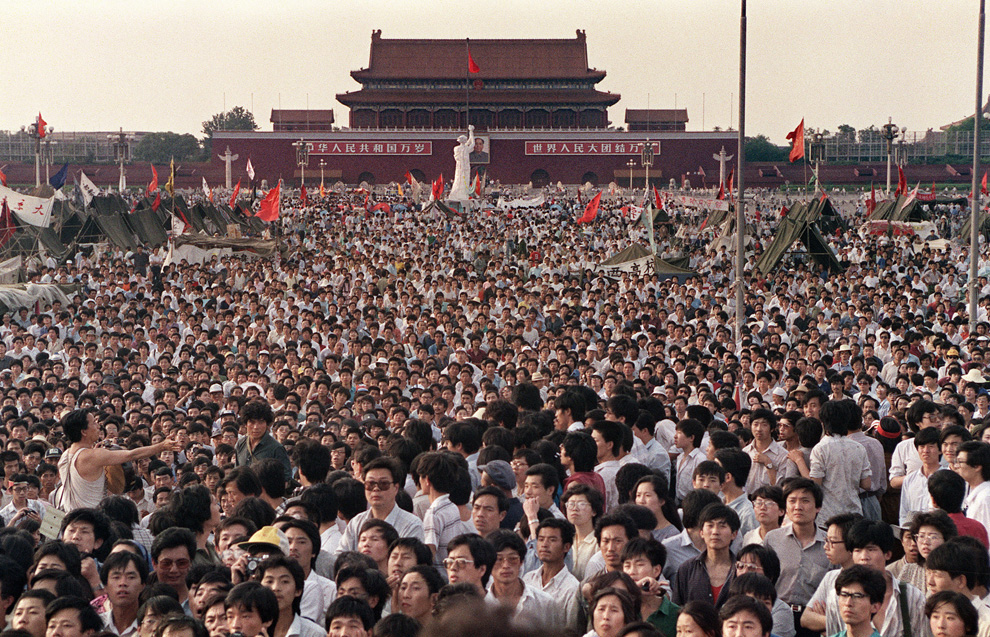
Spring 1989 - Peaceful Protest on Tiananmen SquareTwenty-five years is a silver anniversary; fifty a golden and seventy-five, a diamond jubilee.  But 24 years?  There is nothing in particular to mark a 24th anniversary – no special color, no special symbol, little attention in the press.

On Tuesday, the world will mark this nondescript 24th anniversary of the Tiananmen Square massacre.  The 20 year old idealistic college students who called for greater equality and believed in their government back in 1989, those kids will turn 44.  The parents who had to bring home a dead son or daughter, they will have to face another lonely anniversary of remembering.

But their remembrance will be in silence.  The Chinese government does not mark the passing of its violent crackdown on thousands of unarmed, college students on the night of June 3, 1989 and doesn’t allow its state-controlled press or its people to do so either.  The American author William Faulkner once wrote “The past is never dead.  It’s not even past.”  But in China, that’s just not true of the Tiananmen Square massacre.  Since 1989, the Chinese government has effectively expunged the events of that night from society’s collective memory, especially among the young.  Today, it is not uncommon to find college students – students the same age as those killed in 1989 – who know little or nothing of the event, who have never heard of the “Goddess of Democracy,” and have no clue about the bravery of their countrymen in attempting to form a more perfect country.

Unfortunately, the Tiananmen Square massacre is not the only part of China’s past that has been forgotten.  Take the Cultural Revolution.  From

Some of the dead discovered on June 4, 1989

1966 to 1976, China, at the behest of Mao Zedong, descended into chaos.  Various factions of high school and college age Red Guards were in charge, parents, teachers and intellectuals were publicly ridiculed, some tortured and the unfortunate ones killed.

Today’s youth do know about the Cultural Revolution but only the white-washed version.  Walk into any hip shop on the cute street of Nanluoguxiang in Beijing and it will be filled with kitsch Cultural Revolution memorabilia.  Red Guard hats and armbands, t-shirts with puns of popular Cultural Revolution slogans on them, Mao wristwatches.  All of these are bought with gusto by Beijing’s youth.  But while certain aspects of the Cultural Revolution are allowed to be discussed, the seamier parts – the hundreds to thousands of people killed (either by their own hand or by overzealous Red Guards) and a generation of dreams shattered because of insane policies of the government – are largely unknown to the young.

Every society and every culture has parts of its past it would prefer not to remember.  The United States, with its sordid treatment of various ethnic groups throughout its history, is no stranger to forgetfulness.  The 1862 mass execution of 38 Dakota Indian men for war crimes is known by very few.  In fact the specifics of our treatment of Native Americans is rarely taught in school.  It’s not uncommon for a high school lessons on the United States’ treatment of Native Americans to – sadly – be concluded with a showing of Dances with Wolves.

Tank Man – A man, celebrated throughout the rest of the world but not in China.

Although historical forgetfulness is never good, there is a difference between a people deciding to forget their past and a government that gives their people no choice.  A people should be allowed to acknowledge those actions it deems significant to its culture.  For the United States, many of the marches, protests, and bravery of ordinary Americans during the civil rights movement have come to be celebrated, even those events that at the time that seemed pernicious.

But for China, the people have not been given that opportunity.  The Chinese people have not been allowed to celebrate their fellow countrymen and women who, during one spring season believed in a better country and who in one night lost their lives at the hands of their own government.

Panorama Theme by Themocracy