Don Clarke & Li Tiantian: Two Takes on the Jasmine Revolution in China

China's Jasmine Revolution?

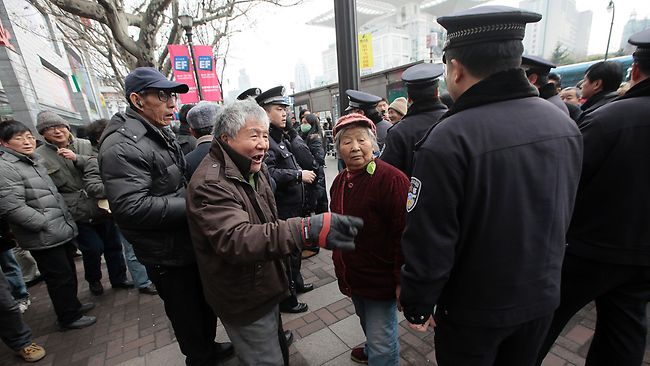
In February 2011, the Chinese government began a quick and widespread crackdown on Chinese rights-defending (“weiquan”) lawyers and activists, abducting many for days to months on end, some subject to torture while in government custody.  The general narrative that has emerged to explain this recent crackdown is the Chinese government’s fear that an Egypt-like democratic revolution could occur in China, overturning the Chinese Communist Party’s one-party rule.

Make no mistake these extrajudicial abductions are not permissible under Chinese criminal law and like other countries, there are laws in China that restrict the government.  Under Chinese Criminal Procedure Law (“CPL”), a detention warrant issued by a public security organ must be presented when an individual is taken into custody (CPL Art. 64); either the family members or the employer of the detained individual must be informed of the reasons for the detention within 24 hours (CPL Art. 64); the first interrogation of the detained person must be conducted within the first 24 hours (CPL Art. 65); after the first interrogation, the detained person has the right to retain a lawyer and the lawyer has a right to meet with his or her client (CPL Art. 96 – note that this provision makes it legal for the first interrogation to be conducted without a lawyer present); and after 37 days in custody, the detained individual must either be arrested or released (CPL Art. 69).  Additionally, Article 238 of the Chinese Criminal Law criminalizes any unlawful detention or deprivation of personal liberty, imposing a harsher criminal sanction on state functionaries.

So the question remains, if the Chinese government just flouts these laws, why does it bother?
Rule of Law in China?

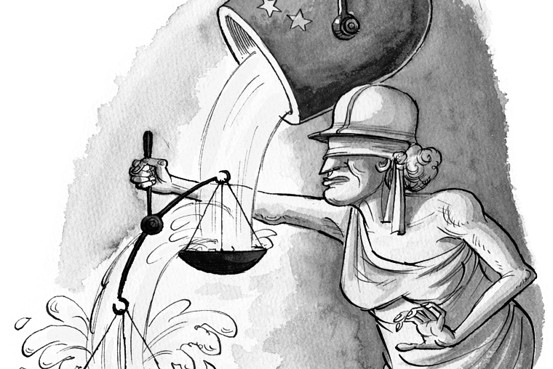
And what does this say about its progression toward a rule of law, a progression the Chinese government maintains is its goal?

Prof. Donald Clarke of George Washington University Law School came out with a rather thought-provoking essay last Thursday, seeking to answer some of these questions, and put China’s ‘rule of law’ development in some sort of perspective.  In “China’s Jasmine Crackdown and the Legal System,” Prof. Clarke dispenses with the conventional idea that China was ever on the path toward a rule of law.  Defining a rule of law as a system “where there are meaningful restraints on the powers of government” and that “those in power cannot do simply as they please,” Prof. Clarke maintains that the Chinese government never had the intention to be held accountable; its quest toward a “rule of law” for the past 30-odd years has just been about creating government efficiencies.  In 1978, to become a successful market economy, the Chinese leadership had to create some legal system since Mao had all but dispensed with law by the end of the Cultural Revolution (1966-1976).  But while these developments in the economic-legal sphere might have the looks of a rule of law, scholars are wrong to think that it was ever the government’s intention to be held accountable under a true rule of law system.  Many of the Chinese government’s recent actions, including the crackdown on rights-defending lawyers, exemplify the leadership’s anti-commitment to a rule of law.

Rights-defending Lawyer Li Tiantian

There is something to be said for Prof. Clarke’s assessment and in many ways it is accurate: the leadership appears unwilling to allow anything it deems “political” to be handled by the legal system and this appears to explain its harsh assault the past few years on rights-defending lawyers.  It’s commitment to a “rule of law,” a commitment it repeatedly states in various US-China dialogues, seems specious if it does not allow a space for rights-defending lawyers.  But Prof. Clarke’s analysis is very top-down and doesn’t take into effect the rights-defending lawyers themselves.  And this is where the other fascinating essay from last Thursday comes into play, Li Tiantian’s blog post “I was Discharged from the Hospital” (translation courtesy of Siweiliozi’s Blog).  Li Tiantian is a Shanghai-based rights-defending lawyer, taken into custody on February 19, 2011 and held incommunicado for three months, finally released on May 24, 2011.  In a highly allegorical essay, Li Tiantian recounts her captivity:

It’s been a while since I’ve been in touch. First, let me tell you a story.

One day, a hornet worried unreasonably that a little bird would stir up its nest. (As it happened, some distant hornet nests had recently been stirred up.) The hornet grabbed the little bird and began stinging it frenziedly. Unable to bear the hornet’s stings and thinking there was no point to suffering this ordeal, the bird realized that no one would gain anything and that there was no way to change the hornet’s ways. So, the bird kneeled down to the hornet and kowtowed in order to extricate itself. The hornet, knowing that the force of justice was on the increase in the animal world, didn’t dare do anything rash to the bird and came up with a plan that would satisfy everyone. It agreed to release the little bird, but only if the bird promised: (1) not to speak of the past few months; (2) not to damage the hornet’s reputation; and (3) not to urge other animals to stir up the hornet’s nest. Finally the bird was free. (…read more here…)

Li Tiantian’s publication of this blog post soon after her release belies her commitment to any kind of silence concerning her unlawful detention.  The fact that her blog post was pulled – likely by the Chinese government – a few days later is not surprising.  But her brazenness is.  After three months in custody, unable to communicate to the outside world, and subject to heaven’s knows what, Li still feels the need to speak; still feels the need to give push back to the government.

Prof. Clarke presents a government that doesn’t want to give people like Li Tiantian any space; but Li Tiantian has no plans to give up that easily.  True that since many of the lawyers’ release, most have kept out of the spotlight, but will they continue to do so?  And how can the Chinese government expect them to?

Prof. Clarke is right to contend that the Chinese Communist Party is not interested in a “rule of law” if it means that it will contain the Party.  But after 30 years of constantly reiterating – both domestically and abroad – the idea of a rule of law, sending lawyers, judges, and academics abroad to study Western countries’ legal systems, and inviting various foreign legal NGOs to establish offices in China and work with Chinese layers, some belief in a rule of law must have permeated  society, especially for academics and rights-defending lawyers, the beneficiaries of much of China’s rule of law programs.

Prof. Clarke compares the Chinese government to a well organized army: sure there are lots of bureaucratic rules that must be followed, but those rules are not intended to be followed by the commander.  For Prof. Clarke, an army, with all the rules that help it function, is in no way a rule of law society.

But running a society is different from running an army; unquestionable allegiance to hierarchy is not naturally found in society like it is among foot soldiers in an army.  Ultimately, Prof. Clarke’s essay raises another question: while the Chinese government has little interest in rule of law, will these rights-defending lawyers succumb and just disappear?  Li Tiantian’s essay upon her release heavily implies that the answer is no and that among some in China, there is a true commitment to a greater rule of law, even if not found within the ruling party.

CL&P – What to Read for the Week Ending 2011-05-29

Just for Fun: Movie Review – Lu Chuan’s City of Life and Death

Massacre is the word most often used to describe the Japanese invasion and occupation of the city of Nanjing in December 1937.  But Chinese director Lu Chuan’s new movie City of Life and Death (in Chinese “Nanjing!  Nanjing!) reminds us that language is too crude a tool and massacre does too little to describe the horror of the rape of Nanjing. But where words fail, Lu’s movie perhaps comes the closest to capturing what happened during that six week period were 200,000 to 300,000 Chinese people were killed and tens of thousands of Chinese women raped.

Shot in all black and white, City begins slowly, with the Japanese troops in the process of conquering Nanjing, while high-level Chinese officials flee the city, leaving the Chinese civilian population largely unprotected.  There are still some rag-tag Guo Mindang (KMT) soldiers, futilely battling the well-armed and organized Japanese army and Lu does an amazing job of capturing the intensity, confusion and pure adrenaline rush of battle.  Also remaining in Nanjing is  John Rabe, a German businessman and Nazi, who established an International Safety Zone for Nanjing’s civilians, assuming that the Japanese soldiers would abide by the international rules of war.

But they didn’t.  And slowly City descends into an orgy of violence and horror against the Chinese people.  But the movie itself is not overly graphic – at least not compared to the actual photographs and newsreels from the real event.  The gang rape of women, the murder of children, the burying, all largely happen off screen.  But the sounds that emerge from the torture and the anguish on family members’ faces is what makes the movie perhaps even more horrific than the actual photographs.  Through Lu’s movie, the emotional suffering of Nanjing’s “survivors” becomes very real.

And although City was made for the Chinese market, it isn’t particularly one-sided.  Instead, by focusing one half of his story on a sensitive and morally upright (and also Christian which was an interesting addition) Japanese soldier, Lu tries to show that there were some Japanese that also suffered at “doing their job” and in their way tried to rise above.  But ultimately, the facts speak for themselves and that is what makes City even more powerful, heart wrenching and uncomfortable – the atrocities which Lu portrays are not exaggerations; they are the horror that one group of people imposed on another for six weeks in December 1937.

City is only playing for two more days at Film Forum (closes May 24) and for those who want to learn more about the rape of Nanjing and don’t want to spend the time reading Iris Chang’s non-fiction book, The Rape of Nanjing (which the movie is largely based on), should see City.  While Lu’s City is good, it doesn’t offer that much new; so if you read Chang’s book, City will largely be the film version of it.  But Chaun’s artistry is also pretty amazing and he is perhaps the best director to emerge from China in the past decade.

Rating: ★★★½☆

If you missed the movie in the theaters, it is now available on DVD: City of Life and Death: 2-Disc Special Edition


CL&P – What to Read for the Week Ending 2011-05-22

Jerome Cohen on the Importance of Ted Kennedy in US-China Relations

Ted Kennedy and his family visit China in December 1977

Timing is everything and Prof. Jerome Cohen seems to have a particular knack for it. As various book reviews of Henry Kissinger’s On China revisit the role Kissinger and Nixon played in opening China, Prof. Cohen offers a different – and too often ignored – narrative of Nixon’s 1972 visit: the importance of the late Senator Ted Kennedy in pushing the U.S. into a policy of detente with China and eventual normalization of relations between the two countries.

For Cohen, who first began advising Sen. Ted Kennedy on China issues in 1966, it was neither Nixon nor Kissinger who had the courage to first push the country toward normalizing relations with China. Instead, it was Sen. Kennedy. By 1969, Kennedy had formulated a sound and forceful China policy, urging the U.S. government to seek recognition of the mainland while maintaining its commitment to protecting Taiwan. It was his speech at the inaugural meeting of the National Committee on U.S.-China Relations in March 1969 that forced President Nixon to re-evaluate his own position on China. Fearful that Kennedy might win the 1972 presidential election on his increasingly popular China stance, Nixon quickly urged his National Security Adviser, Henry Kissinger, to get him to China. Kissinger’s success in planning Nixon’s February 1972 trip to China is one of the factors that caused Nixon to win the election that fall.

Cohen’s eight-page essay on his experience of advising Ted Kennedy and working with him on China offers a startling perspective on the late Senator. Best known for his domestic policy and legislation, Kennedy’s contribution to foreign policy, particularly as it pertains to China, is not often discussed. Cohen points out that even Kennedy himself failed to recognize his importance to opening China – in his own memoir, Kennedy spends less than a page discussing his involvement with China in the late 60s and early 70s.

The Late Senator Ted Kennedy

Cohen ends his essay with a more familiar Kennedy – one who understood the art of diplomacy and that politics, no matter the culture, is an important factor.  As the Carter Administration continuous hit road block after road block in dealing with China, it was Kennedy’s December 1977 trip to Beijing that altered the course and allowed the two countries to normalize relations. A year later, Carter basically adopted the Kennedy plan of recognizing the mainland as the “one China” but maintaining the policy of defense of Taiwan.

To read the full essay, click here.

Jerome Cohen’s “Ted Kennedy’s Role in Restoring Diplomatic Relations with China” is featured in NYU Journal of Legislation and Public Policy, Volume 14, Issue 2, commemorating the work of Senator Edward Kennedy

CL&P – What to Read for the Week Ending 2011-05-15

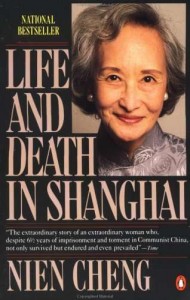
Book Review: Nien Cheng – Life & Death in Shanghai

When Nien Cheng passed away on November 2, 2009, I did not know who she was.  Chinese studies listserves were abuzz about her passing, but as someone who started in the Chinese studies field in the late 1990s, I was unfamiliar with her work.  A quick Wikepedia search revealed that in 1987, she wrote a book about her time in Shanghai during the Cultural Revolution (1966-1976) – Life & Death in Shanghai – but her book didn’t seem any different than the many other memoirs I had read about the Cultural Revolution.

Fast forward a year and a half and I found myself in a soon-to-be-closed Borders Bookstore in lower Manhattan staring at a pile of Nien Cheng’s Life and Death in Shanghai on the “Ultra Bargain Books” table and stamped with a $1.99 price tag.  Even at two bucks, I hesitated in purchasing the book, but Ms. Cheng’s picture on the cover – a grandmotherly woman, with big pearl earrings and make-up perfectly in place – refined, older and  beautiful Chinese woman wistfully gazing out – caught my attention.  And thankfully it did because Ms. Cheng’s memoir is decidedly different from the others I had read.  It is a must read for anyone who wants to truly understand both on an intellectual and emotional level, the personal and physical costs of China’s Great Proletarian Cultural Revolution.
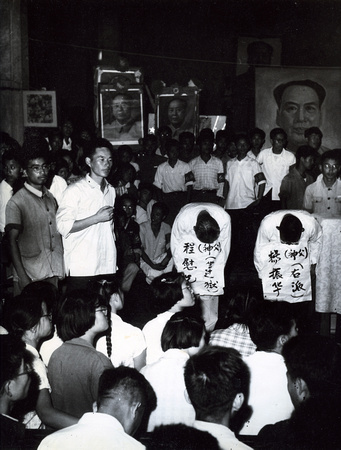
Ms. Cheng’s story starts on the eve of the Cultural Revolution, a hot, steamy morning in her lavish Shanghai home.  Although the Chinese Communists had been in power for more than 15 years, three servants continue to wait on Ms. Cheng and her daughter.  But as the Cultural Revolution begins to heat up, her lifestyle, her life abroad, and her former employer in Shanghai – Shell Oil Company which only shut down its office in China in 1965 – make her the perfect target for Mao Zedong’s new campaign against the remaining vestiges of “capitalist privilege” in China.  On that fateful morning, Ms. Cheng is dragged away by low-level Chinese officials, all the while lamenting about their ill treatment and their improper manners.

Ms. Cheng’s complaints – of missed meals, the oppressive heat, the disrespect, ignorance and bad manners of the

Picture of a typical struggle session during the Cultural Revolution

Communist officials – continue for months during the summer of 1966 as the struggle sessions against her former Shell colleagues, and eventually her, increase in intensity.  At first, it’s hard to have much pity for Ms. Cheng – her grievances seem trivial, and – for lack of a better word – bourgeois.  Seventeen years into the Communist Party’s reign, how could Ms. Cheng expect to maintain such a lifestyle and it comes to a shock that she did.  But that is what makes Ms. Cheng’s memoir interesting and an essential read.  Most memoirs of the Cultural Revolution (at least in English) are written by former Red Guards – individuals who would have been in high school or college during the time.  Ms. Cheng was much older, much more experienced in life, and much more politically aware when the Cultural Revolution began.

Because of her age and experiences, Ms. Chung’s memoir does one of the best jobs in placing the Cultural Revolution in its historical context, questioning many people’s simple perception that the Chinese Party’s rule from 1949 until 1976 was a simple lineal progression to communism.  In fact, Ms. Cheng’s story shows that there were differing voices in the CCP leadership that at times held sway – Shell was allowed, even encouraged, to maintain a presence in China because by the early 1960s, certain market reformers had significant power in the Chinese leadership; at one point Ms. Cheng’s life was saved because she defended Liu Shaoqi – a senior leader who fell out of Mao Zedong’s favor but was still supported by certain Red Guard factions.

But more than the historical context is the strength that Ms. Cheng shows in her six years of solitary confinement, suffering the abuse, torture, and near death experience at the hands of the Red Guards.  Many a Cultural Revolution memoir is more of a mea culpa for the author’s betrayals – turning on a father or a close friend in order to preserve his or her own life.  But Ms. Cheng has no reason to offer such an apology for she never succumbs to what must have been intense pressures on the intellectual class.  Before being taken away to prison, Ms. Cheng is visited by a close friend of her dead husband who gives her one piece of advice – do not make a false confession, no matter how heavy the pressure.  These are words she ends up living by and which not only eventually save her, but save many others who the Red Guards attempted to implicate during Ms. Cheng’s various “interrogations.”  As Ms. Cheng points out in her book – although rule of law was largely non-existent during the Cultural Revolution, the procedures of a legal system were still in place – there was a deep need for her interrogators to obtain “evidence” in order to “convict” her and others of political missteps.

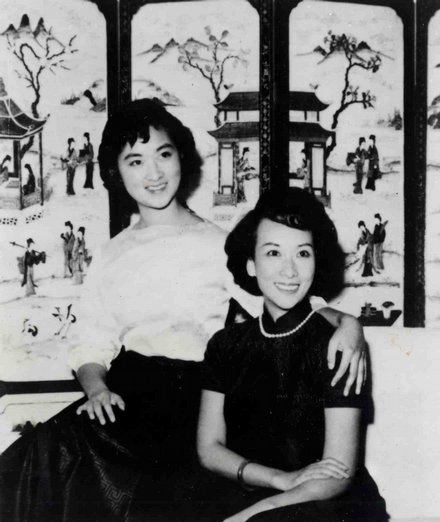
Nien Cheng (right) with her daughter Meiping

Ms. Cheng is finally freed in 1973 but it is questionable if her life improves.  [ATTENTION PLOT SPOLIER]  Upon her release, Ms. Cheng finds out that her daughter – her only child – has died.  The revelation takes the reader by surprise as one has been so focused on Ms. Cheng’s survival that one has forgotten about her life outside of prison.  Interestingly, Ms. Cheng’s memoir does not dwell on her daughter’s death nor does it describe the deep and visceral pain Ms. Cheng must have suffered in eventually learning that her daughter was killed by an overzealous Red Guard that attempted to pressure her to turn on her mother.  It is the murder of her daughter, and what is eventually the denial of justice for her daughter, that makes Ms. Cheng’s survival all the more tragic.  There will be no Hollywood ending for Ms. Cheng, where she is happily reunited with her daughter; instead, Ms. Cheng must live the remainder of her life with this hole in her heart, and while Ms. Cheng never precisely states it, the reader is left wondering why; why this gentle, strong woman had to lose her beautiful child; why any of this had to happen at all; and how could these experiences not still resonate in most Chinese people’s minds.

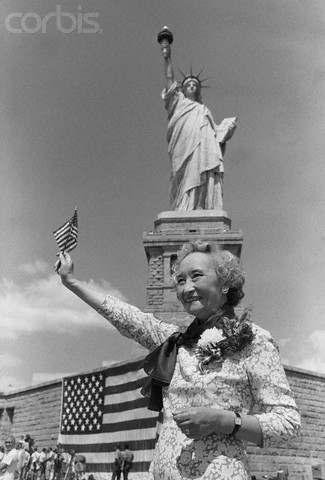
In 1983, Ms. Cheng left China for Canada and finally the United States.  But before leaving, Ms. Cheng donated her antique Chinese porcelain to the Shanghai museum.  When the Red Guards first ransacked her home in 1966, Ms. Cheng pleaded with the immature high school students to save her valuable pieces of porcelain, pieces that today fetch millions in auctions throughout the world by Chinese buyers attempting to reclaim their history.  But while Ms. Cheng still respects the beauty of these pieces, she no longer seems to care.

China changed much between Ms. Cheng’s departure and her death in 2009 – economic reforms ushered in a flourishing market economy, there was greater openness in thought and speech, and the political indoctrination of the Cultural Revolution ceased.  But Ms. Cheng never returned to her homeland.  Not surprisingly, her death was not widely reported on the mainland.  And this is perhaps the greatest tragedy of all – that the Chinese people are not afford the opportunity to celebrate this strong, kind, brave, and wonderful woman.  Instead, the Chinese Communist

Nien Cheng in her new homeland, the United States (1988)

Party insists on white-washing its history and denying its people the choice of what to remember and who to celebrate.  The newly renovated National Museum of History in Beijing barely mentions the Cultural Revolution, providing only one picture from that time period and three lines of text, reflecting a government intent on suppressing its own history.

Life and Death in Shanghai is one of the best Cultural Revolution memoirs I have read and is a must read for anyone who wants to understand China.  It is also a must read for the Chinese people as well, for them to know that during one of the darkest periods of their history, there were individuals who never lost sight of their moral convictions and who in their individual ways helped to guide their country through such a tumultuous period; even in the darkest days, there is still a history that the Chinese people can be proud of.  Hopefully one day, the Chinese people will be able to celebrate these people, like the rest of the world already has.

Rating: ★★★★★
Life and Death in Shanghai, by Nien Chang (Penguin Books, 1987), 543 pages.
 

CL&P – What to Read for the Week Ending 2011-05-08

CL&P – What to Read for the Week Ending 2011-05-01

Panorama Theme by Themocracy