It’s the Police? How to Make Sense of Judicial Reform & the Civil Society Crackdown

By , April 29, 2015

P1000689Last week, Young China Watchers asked a question that many who study China’s legal development have been grappling with: how to gel the Chinese government’s call for greater judicial authority, announced at October’s Fourth Plenum, with its current crackdown on anti-corruption and civil society.  China Law & Policy was fortunate to be invited to comment on this important question along with Jeremy Daum, senior research fellow at the Yale China Law Center, founder of China Law Translate, and recent participant in a China Law & Policy interview.

While we both reached the conclusion that these two phenomena – a call for judicial reform and the current crackdown  on civil society – are not mutually exclusive, we came at it from very different directions.

Jeremy Daum: “Far from constraining the Party’s power, these legal reforms are designed to reinforce the legitimacy of Party rule by creating more complete and effective mechanisms for the implementation of Party policy through all levels of government……The leadership’s ongoing concern with stability, which includes not just preventing social unrest, but also maintaining continuity of Party rule, resists the development of such perceived alternative sources of influence in civil society. 

Elizabeth M. Lynch: “[W]hat we are seeing are not necessarily two mutually exclusive ideas.  Instead, it is the reflection of the increased dominance of the public security forces. The Party’s calls for judicial independence – eliminating local government control of the judiciary and seeking to appoint legal professionals to the judiciary – can still occur even as this crackdown is happening since the proposed rule of law reforms do nothing to reign in the public security forces….”

The discussion, which can be read in its entirety here, proved an interesting one and even I don’t know who is right.  Feel free to read for yourself and offer any comments!

Read the Full Text of the Young China Watcher’s Conversation by clicking here.

Do We Still Need to Translate China’s Laws? An Interview With Jeremy Daum

By , April 20, 2015
China Law Translate's founder Jeremy Daum

China Law Translate’s founder Jeremy Daum

In the past ten years, the number of Chinese-speaking foreign scholars of Chinese law has increased dramatically, and the number of Chinese lawyers who speak and read English has increased even more. Inevitably, this raises the question of whether translations of Chinese legal materials are still necessary and likewise for American laws translated into Chinese.?

For Jeremy Daum, the creator of China Law Translate (www.chinalawtranslate.com) and Senior Research Fellow at the Yale China Law Center in Beijing, a community-based translation website, the answer is yes, and more so now than ever. China Law Translate (“CLT”) uses internet resources and a volunteer army of netizens to translate various legal documents – laws, regulations, articles, interpretations and news stories from Chinese into English and vice versa.

Over the last two years the site has become an important resource as foreign interest in Chinese law continues to grow. Cited by the New York Times, the Wall Street Journal, and the United States Congress, China Law Translate is a novel attempt at crowd-sourced collaboration for this kind of translation. To understand its success and impact, China Law & Policy interviewed CLT founder Jeremy Daum to better understand the site and its planned future.

[In the interest of full disclosure, China Law & Policy is a proud participant of China Law Translate’s community translation project.]

************************************************************************************

EL: What caused you to create China Law Translate?

JD: Pure selfishness–I use our translations constantly.

In creating the site, I had three goals. First, to allow experts, students and other interested folks to contribute their time and efforts without making a big commitment. At the same time, I hoped to incorporate technological tools to make translation easier. Finally, I also wanted to create a forum for discussing the accuracy of the translations, so our group could begin to standardize commonly used, but uniquely Chinese legal terms.

Also, while it sounds hokey, I honestly believe that communication leads to increased understanding, and hope that

China Law Translate - making it as easy to translate like pushing a button!

China Law Translate – making it as easy to translate like pushing a button!

the site helps contribute something to foreign legal professionals’ understanding China’s situation and vice versa.

In 2013 when I started the site, there were a number of major new laws and interpretations released, not the least of which was the revised Criminal Procedure Law (CPL) with its 290 articles, the Supreme People’s Court’s accompanying 548-article interpretation, the Supreme People’s Procuratorate’s accompanying 708-article interpretation and the Ministry of Public Security’s 376-article implementation regulations. That’s a lot right there, and even reading through it can take an enormous amount of time.

There are a lot of us translating various documents, but we too often translate the same work, duplicating efforts constantly but rarely sharing the successes in any meaningful way.

EL: In introducing this interview I mentioned that with the increased number of bilingual experts, translation might be less relevant. The positive response to your site indicates that you aren’t alone in valuing translation—so, why is translation still important?

China Law Translate's mascot, Judge Bao, a general in 1000 AD but also a symbol of justice.

China Law Translate’s mascot, Judge Bao, a general in 1000 AD but also a symbol of justice.

JD: It’s a legitimate question, but I suspect that anyone who has ever practiced or studied law in China knows that language can still be a barrier. Translating legal texts requires a big skill set- not just excellent language ability, but also an understanding of both the Chinese and foreign legal systems. Law itself is already a kind of second language, and ensuring accurate communication across national languages and legal systems is not so easy.

The number of foreign nationals and organizations involved in China is still increasing, and they all have a practical need to understand Chinese law. At the same time, Chinese law is becoming more and more sophisticated, and this also makes translation more important. Where a quick summary might once have been enough to get a feel for the law, it is now necessary to actually parse the text and follow through to read its interpretations, local implementing regulations and so on. If China’s ongoing legal reforms are to be taken seriously, you have to understand what they really say.

EL: Your site has been used by the New York Times, the Wall Street Journal, the U.S. Congress. Have you been surprised by the response to your site?

JD: Well, we get fairly steady traffic of readers despite slow service times behind the firewall, but only about 1% of visitors have ever even opened the translation panel to contribute. Still, that the media and various governments find the translations useful means we are making a contribution.

One thing that has surprised me is the percentage of readers who are Chinese speakers coming to read Chinese

If only this guy had come to China Law Translate first!  This tattoo means "Chicken Noodle Soup"

If only this guy had come to China Law Translate first! This tattoo means “Chicken Noodle Soup”

language materials. That is to say, about 20% of the traffic is people in China, with their computer set to Chinese, reading Chinese law in Chinese. Sometimes when you set out to solve one problem you end up meeting another need entirely. My only guess as to what’s going on is that other online versions of Chinese laws just aren’t as searchable as ours are—they are often divided up into several pages and you can’t just search the text easily. We always talk about access to law—well, the site seems to be accidentally helping some Chinese people access their laws.

EL: What have been the most important or most cited translations?

JD: I sometimes say that instead of “China Law Translate” the site should be called “China Law Translated”, because in addition to straight translations, we do also provide explanations, commentaries and a real-time newsfeed. These include blog posts and original articles by me, (and anyone else who wants to submit) and also annotations made through a great comment system called Factlink that lets people make sidebar comments on specific chunks of a law.

So, some our most heavily trafficked pages have been translations of draft laws that other places aren’t likely to bother translating: The draft domestic violence law and the draft counter-terrorism law have both been among the site’s busiest pages. Others have been original pieces like an explanation I wrote about the crime of provocation (“ picking quarrels”) a poorly understood offense that has been used to detain a number of prominent activists. We’ve also had a lot of traffic on important case documents of interest to a wider foreign audience, such as the verdict of Xu Zhiyong.

EL: What’s the benefit of CLT’s translations over more formal and traditional processes, like a law school hiring a translator?

Don't get lost in translation!

Don’t get lost in translation!

JD: I love it when law schools, NGOs, governments etc. hire translators to create reliable bilingual versions of laws and documents to share with everyone. It just doesn’t happen very often. Translation is expensive, and usually still requires expert staff time to review if quality is to be assured, so its takes time on top of the translation fees. We avoid a lot of that by working together.

Also, those few translations that are shared publicly aren’t usually kept in a single location where everyone can find them all. But CLT isn’t just a repository for translations either, it’s truly collaborative. Once something is online, it keeps evolving, getting better through contributors comments and additions.

Finally, there are a few pay services that put out translations of key documents, but the pay wall limits the number of people who can use them, and honestly, I think we match them for quality. More importantly, they tend to cater to a different audience, focusing on documents involving business and transactional law, rather than the public law materials CLT emphasizes.

EL: Just to explain it to those who may not have ever seen the site, how exactly does it work?

JD: The documents on the site are broken into single sentence units of meaning for translation purposes. When you open the translation/editor mode, you can click on any of these translation units to make changes, and after you approve the change, it changes the way everyone coming to the site sees that translation.

Even if you don’t want to make changes, you can also use the translation mode to compare the translation to the original language. In reading through translations, I’ve found that I generally see at least one typo that I want to correct, so I encourage others to do this too.

On the off chance that vandals come through and change all the text of the translations, a record is kept of every change to every block of text, and they can be rolled back without any heartache.

EL: If you start translating a law, do you have to finish it? What’s the time commitment for your volunteers?

Not a big time commitment

Not a big time commitment

JD: There is no minimum or maximum time commitment; it’s an ad-hoc ongoing collaboration. And there is certainly no need to finish a translation in one sitting – many of the translations on the site are works in progress, and any portions that haven’t been translated just get displayed in the original language.

It’s a funny thing, I made the site precisely because nobody has time to translate everything by themself, but lots of colleagues still say they’d love to contribute if they only had the time. My thought is this, if you are looking for a certain part of a law, check our site, see if we have it and if that part of the law has been translated yet. If not, translate it so it’s there for the next person.

If you are really devoted, you could translate a random sentence or two a day, it’s a great way to practice language skills!

EL: What if someone who does a translation wants credit for it? Are you willing to allow that person’s name to appear on the translation?

JD: As long as you log in to the site, any translations you make are attributed to you, and anyone who looks at the translation history of a given translation block will see what you did. Most people seem to want NOT to be detected, and translate anonymously by not logging in.

If someone submits a completed full-text translation, I’m happy to put it up with their name (or logo) clearly indicated and an explanation that they submitted it. I do like to keep the entire site editable, so I would probably also put up a PDF of the document as originally submitted so that nobody would wrongly attribute any subsequent changes to the donor.

For folks who consider themselves active members of our community, we have a system where frequent users earn points for visiting the site and commenting and can earn badges or even t-shirts. Of course, if a regular participant wants to put their CLT participation on their resume or what have you, I’d be happy to vouch for them.

EL: How do you guarantee accuracy?

JD: Oh, hah, I don’t. We do our best, and I’ve corrected a few obvious mistakes more than once, but at least at CLT every reader can correct mistakes they see.

As I mentioned above, the secondary goal of the site, beyond creating translations, is creating a forum for discussing translations. There’s room for disagreement about what terms mean even between native speakers discussing their own language’s legal terminology, and it only gets worse when you start translating.

If something on the site seems wrong or bizarre, bring it up in the comments and see if others have something to contribute. This is a conversation that needs to be happening for the benefit of both Chinese and English speaking users.

EL: China Law Translate has been around for a little over two years. Where do you see it going in the future?

JD: In addition to trying to expand our translator and editor base, I’m trying to encourage other organizations doing translations to let me cross post their content. I know that lots of groups do translations for a meeting or case that they only use once, maybe not realizing the value that these documents have for a wider audience. This is just one more way to make the site more complete and collaborative.

EL: Well, thank you again Jeremy first off for creating such an amazing resource and this interview. In case any of our readers are inspired by this interview, they should go to www.chinalawtranslate.com, right?

JD: Yes! Go to China Law Translate to translate your first sentence today!

To help get you started, here is the intro video that guides you in how to translate on China Law Translate:

Update – Good or Bad? Five Chinese Female Activists Released on “Bail”

By , April 14, 2015

how-does-bail-workNormally it is an embarrassment when you get something wrong, but in this case, I could not be more relieved to be completely mistaken.  Yesterday, I blogged that Wang Man, Wei Tingting, Zheng Churan, Li Tingting and Wu Rongrong would likely be officially arrested.  However, last night, each was released “on guarantee pending further investigation” (取保候审), a concept akin to bail in the United States. 

Human Rights in China goes into detail on the legal requirements of “release on guarantee pending further investigation” and as a result, we won’t go into further detail other than to say, this is not complete freedom.  Basically, for the the next 12 months (CPL Art. 77 limits bail to 12 months), the women are at the whim of the local public security bureaus, allowed to be called in for questioning as the police further investigate the charges.  Under the Criminal Procedure Law (“CPL”), the women’s freedom will be limited.  They must remain in their home city and depending on what the police determine should be the conditions of their bail, they may be prevented from organizing any further demonstrations, activities or working together (see CPL Art. 69(2): may not meet or communicate with designated persons; CPL Art. 69(3): must not engage in designated activities).  Their passports may also be taken away.

But again, although there is a written document that lists the conditions of their “release on guarantee pending further investigation,” no where in the Ministry of Public Security Regulations (“MPS Regulations” or “MPS Regs”) does it state that this document must be physically given to the suspects.  In fact, the MPS Regulations only require that the conditions of bail be read aloud to the suspect (MPS Regs. Art. 79).

However, the fact that there is a release on “bail” is a positive development and many foreign agenthave praised the international outcry for precipitating the women’s release.   Certainly the international and media attention to the detention of these activists on the eve of International Women’s Day likely played a role in influencing some in the government to realize that backlash would only increase if these women were formally arrested. 

But one can’t help but wonder whether this international influence is a double-edged sword in the current NGO environment in China.  Presently, Chinese grassroots NGOs, who operate in a legal netherworld, have been under increasing scrutiny by the Chinese government with a draft Charity Law in the works that could make life more difficult for these organizations.  The government’s goal: to determine how much funding the the domestic NGOs receive from abroad.  It’s this international funding and influence that the Chinese government has begun to increasingly fear and view as a Western attempt to undermine the Chinese Communist Party (see Julia Famularo’s brilliant essay on this in The Diplomat).  And it is not just domestic NGOs that the Chinese government is seeking to restrain.  Allegedly a confidential, draft regulation or law, colloquially called the “Anti-Foreign Agent Law,” is in the works to regulate foreign NGOs working in China. 

International demonstrations to Free the Five

International demonstration to Free the Five

Thus, the international uproar, likely also a result of Chinese NGO Yirenping’s effective advocacy campaign for the freedom of their staff and former staff (three of the women are currently or have been affiliated in the past with Yirenping), while being applauded in the West, might be the type of example that will give supporters of a harsh Charity Law and severe Anti-Foreign Agent Act the evidence they need to make sure it passes as is. 

To Arrest or Not to Arrest – Prosecutors Have to Today to Determine Fate of Five Female Activists

By , April 13, 2015
P1010037

Women Hold Up Half the Sky? And Half the Detention Centers?

On Thursday, the New York Times reported that the Beijing police requested that the local prosecutor formally arrest the five Chinese women detained for planning an anti-sexual harassment demonstration on Intentional Women’s Day (March 8).  According to the detained women’s lawyers, the recommended charges are “organizing a crowd to disturb public order” (Article 291 of  China’s Criminal Law), a charge different than the initial basis for detention: “picking quarrels and provoking trouble” (Article 293(4) of China’s Criminal Law). 

Since the inception of these detentions on March 6, 2015, little has been transparent, even to the lawyers for the women.  In fact, according to the New York Times, the women’s lawyers were not even informed that a request for arrest had been made to the prosecutors on April 6, 2015.  According to a phone interview with Liang Xiaojun, one of the detained women’s attorneys, the police’s April 6 request for arrest means that the prosecutors must decide by today if there is enough evidence for such an arrest.  (see also Criminal Procedure Law (“CPL”) Art. 89 requiring that the prosecutor’s office determine within 7 days whether to formally arrest the suspect).  But like everything else that has been happening in this case, likely the detained’s lawyers will continue to be kept in the dark of today’s decision.   

Two years ago the Chinese government heralded the passing of its amended

Clockwise from top left: Zheng Churan, Li Tingting, Wang Man, Wu Rongrong, and Wei Tingting

Clockwise from top left: Zheng Churan, Li Tingting, Wang Man, Wu Rongrong, and Wei Tingting

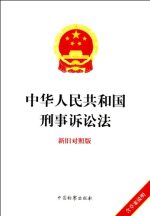
Criminal Procedure Law, which was intended to bring China more inline with the international community.  Scholars and government officials praised the law for its greater protection of criminal suspects’ rights and improved access to defense lawyers early in the process.  But the detention of these five women, exemplifies the continued weaknesses of the Criminal Procedure Law and its failure to protect suspects’ rights.  Where it does offer some protections, what’s happened to these five women, demonstrate that Chinese police and prosecutors continue to skirt the law with impunity.  This post will review some of the major issues with the detention of China’s five women activists.

The Police Have Not Issued Any Document with the Charges. Is That Legal?

China's Amended Criminal Procedure Law

China’s Amended Criminal Procedure Law

No.  In a phone interview with Liang Xiaobin, Wu Rongrong’s attorney, Mr. Liang informed China Law & Policy that the police have yet to issue any formal document regarding the detention or potential charges against his client.  But Art. 123 of the Ministry of Public Security’s “Procedural Regulations on the Handling of Criminal Cases by Public Security Organs (revised 2012)” (“MPS Regulations” or “Regs”) which implements the CPL, a detention notice must be issued to the family of the detained within 24 hours of detention.  That detention notice would list the charges being investigated. Presumably if such a notice was provided to Wu’s family, it would be transmitted to Liang.  But Liang has yet to obtain any verification of any charges other than those verbally communicated to him.

The Police Did Not Inform the Five Women’s Lawyers that it Had Recommended Arrest.  Is This Legal?

Yes, and this is where one of the major weaknesses in the new Criminal

Will the five women be formally arrested?

Will the five women be formally arrested?

Procedure Law and its implementing regulations is obvious.  During the pre-arrest phase, even when a suspect has retained a lawyer, that lawyer has very little ability to access any of the police or prosecution documents.  In fact, neither the CPL nor the MPS Regulations require that the police or prosecutor inform the lawyer of what is happening in the case.  There is some information that has to be told to the detained’s family (that the suspect has been detained (CPL Art. 83 & MPS Reg Art. 123); that the suspect has been formally arrested (MPS Reg. 141)), but the police do not have to affirmatively inform the family that the police have recommended arrest to the prosecutor, even though there is a paper trail for all of this (see CPL Art. 85 & MPS Reg. Art. 133 both requiring a written formal request be made by the police to the prosecutor)  Without this information, it becomes difficult to hold the prosecutor to the 7-day limit to decide whether to arrest (CPL Art. 89).

Chinese defense lawyers kept in the dark

Chinese defense lawyers kept in the dark

But no where in the CPL or the MPS Regulations does anyone have to inform the retained lawyers of anything.  It is not until the prosecutor begins to investigate for indictment (审查起诉) do rights attach to the defense lawyer.  When that occurs – and again, the law is unclear if anyone has to be affirmatively informed that such a review is occurring – can defense counsel access information from the state.  At that point, the prosecutor’s office is required to share the case file (CPL Art. 38).  But up until that point, keeping the defense attorney in the dark is completely legal.   

Allegedly, the Women Were Denied Easy Access to their Lawyers & When Able to Meet, Conversations Were Recorded.  Is this legal?

No.  The amended CPL was specifically modified to rid the Chinese criminal justice system of these patently unfair practices.  But according emails issued by Yirenping, a Chinese-NGO that many of the women are affiliated with, many of the lawyers’ requests to meet with their clients have been ignored.  The few times the lawyers have been able to meet with their clients, according to Yirenping, the conversations have been recorded. 

Article 37 of the CPL clearly requires that detention centers promptly schedule meetings between lawyers and their clients when the suspected charges do not include national security; such meetings must be scheduled no later than 48 hours after the request.  The MPS Regulations reiterate that right (MPS Regs. Art. 48).  Further, Article 37 of the CPL plainly states that conversations between the lawyer and his or her client are not to be monitored (see also MPS Reg. Art. 52).

Is the Limit for Detention 30 days?

Detention in China

Detention in China

This is unclear.  Although the lawyers for the five women have stated that detention can only be for 30 days before moving to the next stage of the case (here, the police formally requesting that the prosecutors arrest the women) and the police have conveniently stated that it did in fact move the case forward on April 6 (approximately 30 days after the initial detentions), it is unclear whether there is in fact a 30 day limit to detention.  Article 89 of the CPL states that detention, without a request for arrest, is generally limited to three days.  But the police can unilaterally extended that limit for an additional four days (making for a total of seven days). 

But for suspects being investigated for “multiple crimes” (like the women here) or “crimes across multiple regions” (again, like the women here), the police may add an extra 30 days to the detention (CPL Art. 89).  In both the English and Chinese, it is unclear if that 30 days is added on top of the seven that was permissible or if 30 days is the outer limit of detention before request for arrest.  Although both the attorneys in this case and the police seem to maintain that 30 days is the limit, the law is not clear.  But at the most, 37 days is limit for detention. 

Was it legal to bring Wu Rongrong and Zheng Churan to Beijing for detention?

One of the five detained, Wu Rongrong, founder and executive director of the Weizhiming Women’s Center in Hangzhou

One of the five detained, Wu Rongrong

Yes.  Of the five women detained, two – Wu Rongrong, director of the Hangzhou-based Weizhiming Women’s Center and Zheng Churan, staff member at Yirenping Guanzhou, live outside of Beijing.  Both  were planning their International Women’s Day demonstrations in their respective cities and both were initially detained by the public security officials in each city.  But both were eventually transferred to Beijing’s Haidian Detention Center where the other three women, Wang Man, Wei Tingting and Li Tingting, all residents of Beijing, were being held. 

Both the CPL and the MPS Regulations permit the easy movement of suspects between cities, counties and provinces when appropriate.  Although the default presumption is that jurisdiction of a criminal case is where the crime was committed (see CPL Art. 24; MPS Regs Art. 15), both the Criminal Procedure Law and the MPS Regulations contemplate instances where that might not be the case, especially when there are multiple crimes and/or multiple defendants.    

In fact, an entire Chapter of the MPS Regulations – entitled Cooperation in Case-

One of the detained, Zheng Churan, 25, and staff member of Yirenping based in Guangzhou

One of the detained, Zheng Churan

Handling (Chapter 11, encompassing Articles 335-344) – specifically deals with these situations.  Unlike in the United States, where extradition from one state to another is a formal affair, here the transfer of a criminal suspect is more informal (see MPS Regs Art. 335 requiring local public security bureaus to cooperate with a request to detain a suspect & Art. 336 requiring only a “letter of cooperation” to obtain the locality’s cooperation). Presumably the Beijing PSB provided such a letter to the Hangzhou and Guangzhou PSBs in order to detain and eventually transfer Wu Rongrong and Zheng Churan to Beijing. 

Will the Women Be Arrested?

Their Fate is in the Prosecutor's hands

Their Fate is in the Prosecutor’s hands

Increasingly likely.  The fact that the police have changed the charges and have added more incidents to the charge, such as the women’s street performance demonstration against domestic violence where they dressed up in wedding dresses with fake blood and their “occupy men’s toilets” day to demonstration the insufficiency of women’s toilets in public places, provides for more evidence for arrest.  Further, adding extra incidents and making this multi-crime case, arrest and continued detention is all but certain.  According to Article 139(1) of the People’s Procuratorate’s Criminal Procedural Regulation (revised 2012), the prosecutor’s implementing regulations of the CPL, arrest is necessary when the criminal suspect may commit a new crime.  What provides evidence that the suspect might commit another crime if not detained?  The fact that “the suspect has committed multiple crimes, changed locations in committing multiple crimes, committed related crimes…” 

Within 24 hours of the police’s decision to arrest, the police must inform the family (MPS Reg. Art. 141).  Under Chinese law, the world should know by Tuesday if an arrest was made.  But that’s assuming that anyone actually follows the law.

Just For Fun: Capital Spirits – Beijing’s First Baijiu Bar

By , April 8, 2015
Cozy Capital Spirits in Beijing

Cozy Capital Spirits in Beijing

For most foreigners in China, baijiu (pronounced bye gee-oh) is a joke, or at the very least, the key element in any story about passing out, blacking out or vomiting up your banquet dinner.  But for the Chinese, baijiu, a strong, traditional grain or rice wine, is a must at any celebratory outing.  While foreigners often turn up their noses at baijiu, the Chinese really seem to enjoy it.  And have so for around 2,000 years.

Capital Spirits, a new bar in Beijing’s Dongzhimen neighborhood, successfully bridges

Bartender David gives an introduction to a flight of baijiu

Bartender David gives an introduction to a flight of baijiu

the gap between foreigners’ misunderstanding of baijiu and the Chinese love of it.  Showcasing some of China’s finest and smoothest baijius, Capital Spirits gives the uninitiated a reason to respect – if not begin to love – baijiu.  The bar offers a number of baijiu flights, where for 40 kuai (around $8), you can taste and compare four or five different baijius from around the country.  Each drink in the flight is introduced to you by the bartender, highlighting the differences and history of each brand.

But for those who cannot yet face pure baijiu, Capital Spirits also offers an eclectic and inventive baijiu cocktail mix.  That is the menu my friends and I ordered off of when we were there one recent night.  The cocktails were familiar – the hutong hound, a mix between grapefruit juice and baijiu was similar to a greyhound; the pineapple express had elements of pineapple and Malibu; and the ma-la rita, like a margarita.  But the taste of baijiu was evident if not in the strength of the cocktail alone.  While each was refreshing and tasty, especially the ma-la rita which had an enjoyable Sichuan peppercorn kick to it, because of the baijiu, these were sipping cocktails, not downing ones.  If you do want to down drinks in a more traditional manner, Capital Spirits has a full bar (two men were drinking whiskey when we showed up) and a non-baijiu cocktail mix.

Baijiu cocktails @ Capital Spirits - the Hutong Hound, the Ma-la Rita, and the Pineapple Express

Baijiu cocktails @ Capital Spirits – the Hutong Hound, the Ma-la Rita, and the Pineapple Express

Capital Spirits’ goal is to convert the doubting to the gospel of baijiu, a task that it appears to be slowly winning.  But what it truly does best is create an intimate neighborhood vibe in this small hutong space.  This is a crowd willing to try new things, and as a result, willing to talk to strangers.  By the end of the night, we had bantered with many of the other customers.  David, the bartender that night, was also hospitable, explaining all the different drinks.  But if you want to be left undisturbed, that is an option too in this dimly-lit space.

I am probably not going to become one of the converted.  Baijiu is still a mean spirit, especially for yours truly who thinks Mailbu and pineapple juice is a strong drink.  But I am going to go back to Capital Spirits.  It’s a great place to enjoy a drink – even a non-baijiu one – with a fun group of a people.


Rating: ★★★★☆

Capital Spirits

大菊胡同3号 (DA JU HUTONG #3)
Beijing, China

Although in a hutong, Capital Spirits is easy to find. Take Line 2 to Dongzhimen and get out at Exit B. You will be on Dongzhimen Nei Dajie and the Second Ring Road. Walk west along Dongzhimen Nei until you hit Dongzhimen Nan Xiaojie. Cross to the otherside of Dongzhimen Nan Xiaojie and immediately turn left. Pretty much the first hutong on your right will be 大菊胡同 (Da Ju Hutong). Capital Spirits is pretty much five feet in on your right. There is no sign, but there is the address painted on the front: 大菊胡同3号

Note that the bar does not open until 8 PM.

Panorama Theme by Themocracy