Translation – Beijing News Interviews Tian Wenchang on Custody & Education

By , June 25, 2014
Criminal Defense Lawyer Tian Wenchang

Criminal Defense Lawyer Tian Wenchang

With the hoopla surrounding actor Huang Haibo’s six month sentence under China’s Custody & Education (“C&E”) system – an administrative punishment outside of the court system – on June 9, 2014, Beijing News ran an article examining that system. Included with the article was a telling diagram that highlighted the lack of a legal basis for C&E. The article effectively called for the repeal of C&E.

For an explanation of C&E and the current debate, see China Law & Policy’s previous post here.

That article is no longer available on the Beijing News website. However, it can still be found here. Additionally, below, China Law & Policy translates the portion of the article that was an interview with Tian Wenchang (pronounced Tea-en When-chang), one of China’s most famous attorneys and the current director of the Criminal Law Committee of the All-China Lawyers’ Association. In the short interview, Tian persuasively argues for C&E’s abolishment.

*****************************************************************************************************************************

Beijing News [BJN]: As one of the people pushing [for reform], why do you want think to do this?

Tian Wenchang [TWC] (Director of the Criminal Law Committee of the All-China Lawyers’ Association): The fact is that after Reeducation through Labor (“RTL”) was abolished, people forgot about Custody & Education (C&E). But because a case relating to C&E recently emerged, society is once again examining C&E, questioning whether it is legitimate and whether it should still exist.

BJN: What do you consider to be the biggest problem with C&E?

TWC: The biggest problem is with C&E is the same as with RTL: administrative agencies can deprive individuals their liberty without due process, so lots of problems appear in implementing it.

BJN: What kinds of problems?

TWC: For example, for sex workers and their clients, after undergoing an administrative punishment [under the Public Security Administrative Punishment law], public security bureaus are able to decide on their own whether the individual should also receive a C&E sentence. There are no specific standards to guide this decision. For example, six months to two years of custody, how is this term determined; it’s very possible that there are variations in the implementation. Without due process and public transparency, it’s easy for there to be a hidden agenda.

BJN: Six months to two years, is that too heavy a punishment for prostitution and solicitation?

TWC: Under the Public Security Administrative Punishment Law, [the police] are able to keep someone in custody for 15 days for a prostitution-related offense. But under C&E, the maximum sentence may be up to two years. This is often more severe than the punishment under the criminal law. Whether this [disparity] is fair or not is pending discussion.

Repealing C&E Will Likely Take A Long Time

BJN: Based on your observation, do local public security bureaus often use C&E as a form of punishment?

TWC: My understanding is that in the overwhelming majority of provinces in the country, C&E is not used very often. But this does not mean that the public security bureaus do not have the right [to use C&E]. So long as they have this right, there will be problems.

BJN: What is the relationship between C&E and RTL?

TWC: Because both are systems that restrict personal liberty, in essence they are the same. It is only the people targeted and the length of the punishment that are different. Furthermore, both are systems that don’t go through the judicial process and instead the administrative agencies unilaterally make the decision. In looking at the legal principles governing C&E, the public security bureaus don’t have a problem; rather the C&E-related legal provision are not in line with the current law. As a result, they must be repealed.

BJN: How likely do you think are the proposals to abolish C&E?

TWC: It will be like RTL which took a long time to repeal; I think repealing C&E will be like that.

**********************************************************************************************************************************

Interview Portion of the Beijing News Article on C&E – Full Article Can Be Found Here


新京报:作为推动人之一,为什么想到做这个事情?

田文昌(全国律协刑事专业委员会主任):实际上在废除劳教制度后,收容教育制度正在被人们遗忘。但是最近相关案件的出现,让社会重新对它开始有所审视,这个制度到底合不合理,应不应该存在。

新京报:你认为收容教育制度最大的问题是什么?


田文昌:最大问题是它和劳教制度一样,行政机关可以直接剥夺人的人身自由,没有经过正当的司法程序,执行过程中会出现很多问题。


新京报:会有哪些问题?

田文昌:比如说,一个卖淫嫖娼人员,在经过行政处罚后,公安机关可以决定是否进行收容教育,这个决定没有特定的标准。再比如6个月到2年的收教,这个期限怎么判定,很可能出现执行偏差。没有正当的司法程序,没有向社会公开,里面容易有猫腻。


新京报:6个月到2年的收教期限,对于卖淫嫖娼处罚重吗?

田文昌:按照治安处罚法,卖淫嫖娼犯罪行政拘留15天。但是收容教育最高可到两年,这个在很多时候比刑罚还要严重,合不合理是有待商榷的。


  废止收容教育或需很长时间


新京报:据你观察,各地公安机关用收容教育制度惩戒的情况多不多?

田文昌:据我了解,全国绝大多数省份用这个制度的已比较少了。但是这并不表示公安机关没有这个权力,只要有这个权力,就可能出问题。


新京报:收容教育和劳教制度有什么关联?

田文昌:本质上都属于限制人身自由的制度,是相同的,只是针对的人群和惩戒的期限不同。另外,它们都是没有经过司法程序,行政机关就可以单方决定的制度。从法理上看,收容教育制度并不是公安机关的问题,毕竟以前有这样的相关法规,但是已经和现在法律制度不协调,所以应废止。


新京报:你认为这次建议废止收容教育制度的可能性有多大?

     田文昌:和劳教制度一样,推动废止需要很长的时间,我想废止收教制度也是如此。

It’s a Man’s, Man’s, Man’s World: Current Efforts to Abolish China’s Custody & Education System

By , June 23, 2014
Actor Huang Haibo

Actor Huang Haibo

Unfortunately, it took the detention of a famous male actor for the Chinese media to criticize an unlawful detention system that has long been used against low-income female sex workers. Last month, actor Huang Haibo (pronounced Hwang Hi-bwo), affectionately known as China’s clean-cut “son-in-law,” was detained after he was found with a prostitute in his upscale Beijing hotel room.

Prostitution is illegal under China’s criminal law (Crim. L. Arts. 358-59), but neither Huang nor the sex worker was formally arrested. Neither was charged with a crime. Neither ever saw the inside of a courtroom. But both received a six-month sentence under China’s “Custody and Education” (“C&E”), another punishment in China’s myriad administrative detention system where the police serve as prosecutor, judge and jury. Under C&E, the police can unilaterally detain sex workers and their clients for anywhere from six months to two years.

C&E continues even though last November, the Chinese government herald its abolishment of another administrative detention punishment: the notorious “Re-education Through Labor” (“RTL”). Now, with the detention of one of China’s most famous actors, the spotlight is on C&E. China’s media, including the state-run media, is calling for its abolishment. But will C&E go to the same way as RTL?

C&E’s Dubious Legal Status

It’s not surprising that C&E, formally in existence since 1991, has not garnered much press prior to the detention of Huang Haibo. It is a punishment that is reserved exclusively for sex workers and their clients and according to Asia Catalyst‘s seminal report on the topic, the punishment has largely fallen upon lower-income women who often have no other career options, not your usual feel-good story that mainstream media prefers.

But the Beijing police diverged from the usual pattern when, on May 15, 2014, it went after Huang Haibo and presumably a high-end

Sim Chi Yin for The New York Times

Potential Victim of China’s Custody & Education System (Photo Sim Chi Yin for The New York Times)

prostitute. Immediately following the May 15 detention, the Beijing police – through their Weibo account (China’s version of Twitter) – alerted the world to Huang’s detention. At first, the police gave Huang and his cohort a lighter sentence of 15 days administrative detention under the more generic Public Security Administrative Punishment Law. But on May 30, 2014, the Beijing police unilaterally decided to continue Huang’s detention, sentencing him and his cohort to six months in C&E which falls under the regulation entitled Measures for the Management of C&E Centers (“C&E Management Measures”).

It was that six-month sentence – a much more serious deprivation of liberty than the prior 15 days – that caused popular uproar with various editorials questioning C&E’s legal status. But even prior to the Huang Haibo incident, back in early May, many China human rights lawyers, including Pu Zhiqiang (pronounced Poo Zhir-chee-ang), recently arrested for “creating disturbances and illegally obtaining personal information,” signed a petition calling for C&E’s abolishment stating that under Chinese law, C&E is illegal.

Recent editorials, including an interview with the director of the Criminal Legal Affairs Committee of the All-China Lawyers’ Association, Tian Wenchang (pronounced Tee-an When-chang), have echoed the arguments found in that May petition which received scant attention at the time. Almost every editorial notes the non-transparent nature of C&E. There is no impartial judge that the individual can appeal to; there is no lawyer. Instead, under the C&E Management Measures, the police have complete power to determine if C&E is appropriate and the length of the sentence. While there is an appeal mechanism, the first step is to ask the police to reconsider the sentence (Art. 20). Only after that reconsideration can the individual seek to bring a lawsuit against the state. But without a lawyer, that rarely happens.

An RTL camp in Shijiazhuang, Hebei province. (File photo/CFP)

An RTL camp in Shijiazhuang, Hebei province. (File photo/CFP)

Similar factors – the unilateral decisions of the police and absolutely no judicial oversight – pushed the public to call for RTL’s abolition.  But those due process violations alone were not enough to overturn RTL. Also instrumental was the fact that RTL was not based in law. According to the China’s Legislation Law, the law that sets the basic ground rules on how all other laws and regulations are to be written, “[o]nly national law may be enacted in respect of matters relating to. . . (v) . . . compulsory measures and penalties involving restrictions of personal freedom. . . .” (Art. 8). Thus, only the National People’s Congress (“NPC”) or the NPC’s Standing Committee is entitled to make “national law.” And any attempted to deprive an individual of his or her liberty must be based on laws passed by the NPC or its Standing Committee.

In the case of RTL, the three sets of rules that governed the system – the 1957 Decision, the 1979 Supplemental Decision and the 1982 Trial Rules – were instituted by the State Council and the Ministry of Public Security, not by the NPC or its Standing Committee. As a result, RTL was in violation of legal procedure. Making its abolishment legally necessary.

Similar arguments are being made in regards with to C&E.   C&E was first established by the 1991 Measure on the C&E of Prostitutes & Their Clients which was in fact passed by the NPC’s Standing Committee. In that document, the Standing Committee delegated to the State Council the right to draft the C&E Management Measures, the measures which deal with the deprivation of individuals’ liberty. But again, the China’s Legislation Law, this time Article 9, clearly does not permit the NPC or its Standing Committee to delegate the right to draft regulations pertaining to the deprivation of liberty. As a result, the State Council’s 1993 C&E Management Measures are without legal effect, making the whole C&E system in violation of the law.

Will C&E Go the Way of RTL?

There are certainly strong if not convincing legal claims for C&E’s abolition. But one thing to factor in is the amount of money which the

Cha-ching! Women in a Custody & Education Center (Photo from Weibo)

Cha-ching! Women in a Custody & Education Center (Photo from Weibo)

public security bureaus (“PSB”) make off of C&E as highlighted in the Asia Catalyst report. Under C&E, detainees are required to work and although the Management Measures imply that the detainees be paid (Art. 13), they very rarely are. Instead, the income goes to the local PSB’s coffers.

Another source of income: the detainees themselves. Ironically, the Management Measures require that the detainees completely cover the costs of their own detention (Art. 14); RTL did not contain such a provision. As the Asia Catalyst report documents, these costs are substantial and likely inflated – six months in a C&E costs an individual between 5,000 to 10,000 yuan (US $820 to $1,639). Also inflated are the costs of goods. According to the Asia Catalyst interviewees, goods are several times more expensive than on the outside.

With the free labor and the ability to charge detainees for their custody, C&E centers are an important profit center to local PSBs. It’s the local PSB’s profit-motive that will make abolishing C&E more of a challenge. As the Asia Catalyst report points out, local PSBs did not fare so well when China became a market economy and have had to find ways to support themselves. One way is through C&E centers.

Allegedly the woman found with Huang Haibo - a Chinese "any one"?

Allegedly the woman found with Huang Haibo – a Chinese “any one”?

And on some level, the Chinese government and local PSBs have to recognize that sex workers and their clients do not garner the same level of societal sympathy as those who were getting caught up in RTL. Tang Hui (pronounced Tang Hway), a mother of an 11 year old girl who was raped and sold into prostitution, became the poster-child for the dangers of RTL. After her daughter’s rapists, kidnappers and pimps were given a slight slap on the wrist, Tang protested. But that protest is what landed her in an RTL camp. When she got out, she sued, receiving a tremendous amount of public support and highlighting the dangers of RTL. Similarly, in 2003, when China abolished Custody & Repatriation, another form of administrative detention, the public was aghast that an innocent college student, Sun Zhigang (pronounced Son Zher-gang) could get caught up in such a system and end up dead in police custody.

Tang and Sun were China “any ones” – anyone could be a grieved mother; anyone could be a young

Will public attention to C&E pass once Huang Haibo is freed?

Will public attention to C&E pass once Huang Haibo is freed?

college student. Anyone could have been entrapped by such an unjust system. But here, with C&E, the individuals involved are sex workers, and lower-income, less-educated sex workers. Although C&E has the same abuses as RTL, most Chinese do not fear that they will find themselves entangled in the C&E system. There is a high likelihood that the public spotlight that is currently on C&E will fade once Huang Haibo is freed.

But at the very least the Huang incident has caused the international media to focus on the C&E

system. Supposedly the Chinese Communist Party was intent on repealing RTL because it is an obvious roadblock to its ability to ratify the UN’s Convention on Civil and Political Rights, a treaty which forbids the deprivation of liberty without due process of law and court oversight. But C&E – now that it has been exposed more publicly as a result of the Huang Haibo incident – needs to be abolished before China can ratify that treaty.

Hack Attack! CL&P Falls Victim to Malware

hackThose of you who receive China Law & Policy updates via email or RSS feed will have noticed that our June 3 posting – an article about the 25th anniversary of the Tiananmen crackdown – was prefaced with viagra ad jibberish.  First, we apologize for that experience.  Unfortunately, CL&P was hacked and our site was open to some nasty malware.

We have changed our security system.  Our new system assures us that the site has been cleaned and the backdoor eliminated.  Here is hoping that the next attack is a long ways off.

And no, I don’t think it had anything to do with the Tiananmen post.  I could be wrong but the CCP leadership doesn’t strike me as the types that see the humor in hacking with viagra ads.


25 Years After Tiananmen – Same, Same But Different

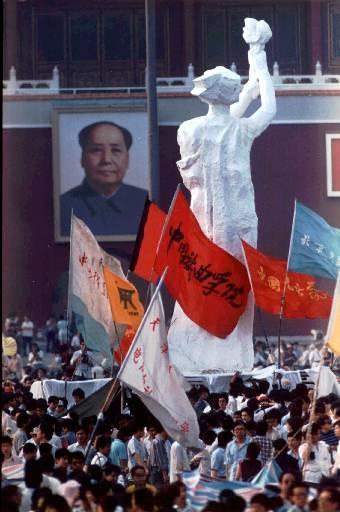
The Goddess of Democracy - the symbol of the Tiananmen Square Protests

The Goddess of Democracy – the symbol of the Tiananmen Square Protests

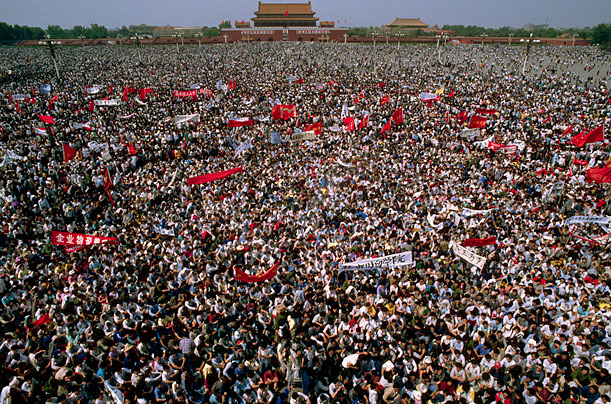
Twenty-five years ago, on the night of June 3 and into the early morning hours of June 4, 1989, tanks rolled in to the streets of Beijing and the Chinese government did the unthinkable: it opened fire on its own people, killing hundreds if not thousands of unarmed civilians in the streets surrounding Tiananmen Square.  That violent crackdown marked the end of seven weeks of student-led, peaceful protests in the Square itself, protests that were supported by much of the rest of Beijing, protests that would amass hundreds of thousands of people a day, protests that people wistfully thought would change China.

Twenty-five years later the students who participated in the protests are no longer fresh-faced, wide-eyed college kids, the workers who supported them are retired, and many of the bicycle rickshaw drivers who ferried dying students to hospitals on that bloody Sunday morning are long gone.  Along Chang’An Avenue, glitzy buildings have replaced the blood and bullet holes.  Starbucks stand near where students once went on hunger strikes. Tiananmen is different; China is different.  But yet there are some things that remain the same.

The government that ordered the crackdown 25 years ago – the Chinese Communist Party (“CCP”) – is still in power and many of the gripes that initiated the student protests – corruption and nepotism among political elites, lack of personal freedoms, and government censorship – have only gotten worse and continue to be the impetuous for activists.  And, like the students in 1989, these activists are still willing to risk their lives to promote the values enshrined in the Chinese Constitution and guide China to become a better place for its people.

But make no mistake, while these factors might be the same, there are important aspects of China that have changed.  In

Hundreds of thousands of Beijing residents - students, workers, ordinary people - supported the protests.

Hundreds of thousands of Beijing residents – students, workers, ordinary people – supported the protests.

particular, China’s rise as a global power.  Criticizing China for human rights violations and its failure to live up to its own laws is not as easy as it was in 1989 when President George H.W. Bush cut off government ties, military relations, and the sale of U.S. government goods the day after the Chinese government’s crackdown.  Imagine denying U.S. businesses the opportunity to sell products to the world’s second largest economy?  That would never happen today.  And to severe relations with China – would the American public want to so easily give up its cheap Walmart goods or be denied the ability to obtain the newest iPhone?  Probably not.  The Chinese government understands the soothing and influential comforts of our material desires.

But perhaps the most troublesome change is how the CCP now deals with dissent.  If the last few months are any guide, excessive violence continues to be the modus operandi of the CCP.  Cao Shunli (pronounced Ts-ow Shoon-lee), an activist who organized small, peaceful protests that called for citizen participation in China’s United Nations human rights review, was detained for “picking quarrels and causing trouble,” was denied medical treatment for months, and died in police custody.  Tang Jitian (pronounced Tang Jee tee-an), a disbarred-lawyer-now-activist that sought to assist Falun Gong practitioners, has recounted the physical torture he suffered while in police custody in March.  Since coming out of detention with 16 broken ribs, Tang has all but effectively been denied appropriate medical care for his tuberculosis which has gotten significantly worse.

Deaths of many protesters lined the streets surrounding the Square

Deaths of many protesters lined the streets surrounding the Square

But the CCP has learned from its mistakes.  No longer is its violence against dissent as public as it was the morning of June 4, 1989.  And no longer does the CCP come off as a lawless regime.  Instead, its cloaks its crackdowns with a veneer of legality.  Since April 2014, in preparation for the 25th anniversary of the Tiananmen massacre, the Chinese government has detained – either criminally or through unofficial house arrest – over 84 individuals.  But these individuals are not detained under the guise of being counter revolutionaries like the students of the 1989 movement.  That would be too obvious.  Instead, the Chinese government has slapped the vague and overly broad crime of  “picking quarrels and provoking troubles.”  After 20 years of Western rule of law programs, the CCP has come to realize that the easiest way to deflect global criticism is to follow legal procedure, no matter how abusive, vague or entrapping that legal procedure might be.

If the 25th anniversary of Tiananmen means anything, China’s new strategy – the use of law to suppress dissent – must be

Everyday rickshaw drivers tried to save many of the students

Everyday rickshaw drivers tried to save many of the students

examined and criticized.  China’s activists are being violently detained and imprisoned in record numbers “in accordance with the law.”  But that suppression of dissent is no different than what happened in 1989.  It is another method of killing the chicken to scare the monkeys – ensuring that the violence against a few “troublemakers” teaches the rest of society not to rock the boat.  This time though the rest of the world is increasingly complacent.

As the world marks the 25th anniversary of the Tiananmen Square massacre on Wednesday, China will be the lone nation that will not.  Since 1989, its people have been forbidden to commemorate the event; they are not permitted to remember; they are not allowed to note those fateful days that changed their lives more than anything in China’s recent past.  And that is why the events that other nations hold in honor of the many brave Chinese people who lost their lives on that night are so important.  Because while the Chinese government has found new strategies to more effectively deal with international criticism of its treatment of its people, the one thing that the outside world still has is the truth.  But that truth must not be limited to just what happened 25 years ago; it must also be used to call on China today stop its suppression of dissent today.  To do otherwise is a disservice the victims of that night.

One of the most iconic photos of the 20th Century - one man stands up to a line of tanks

One of the most iconic photos of the 2oth Century – one man stands up to a line of tanks

Panorama Theme by Themocracy