Rights Lawyer Gao Zhisheng’s Wife on His Abduction

By , March 28, 2011

Gao Zhisheng is perhaps the most well-known of China’s rights-defending lawyers.  In the late 1990s and early 2000s, Gao began successfully representing victims of medical malpractice and farmers denied just compensation for their land.  In fact, in 2001, Gao was named by China’s Ministry of Justice as one of China’s most influential lawyers.  Spurred by his success and what appeared to be a Chinese government welcoming a stronger public interest law bar, Gao expanded his work to included practitioners of Falun Gong, a religious organization which the Chinese government has long feared as a threat to its one-party rule and has declared a cult.  Gao’s representation of Falun Gong practitioners did not just highlight the baseless accusations of “using superstitious sects [cults] to undermine the implementation of the law” (China’s Criminal Law, art. 300), but also the torture of Falun Gong practitioners while in police custody (for a seminal article on Gao’s work, see Eva Pils, Asking the Tiger for His Skin: Rights Activism in China, Fordham International Law Journal 2007. Available at SSRN: http://ssrn.com/abstract=1563706).

Gao’s zealous advocacy of Falun Gong practitioners did not go unnoticed by the Chinese government, and his status as a lawyer to be celebrated for representing society’s most vulnerable, quickly changed.  Gao was now viewed as a piranha of the state. In December 2006, Gao was convicted of subversion and was given five years probation to be served from his home.  However, in February 2009, Gao was abducted from his home by the police.  For over fourteen months, he was not heard from and no one knew where he was.  In April 2010, Gao emerged from seclusion only to be abducted again only two weeks later.  During the time he was free, he was able to report to the Associated Press the torture he underwent while in police custody.

Gao’s whereabouts, like recently abducted rights defending lawyers Tang Jitian, Teng Biao, and Jiang Tianyong, remain unknown.  In a plea for the world to pay attention to these random and lawless detentions, Gao’s wife, Geng He, who was able to flee to the United States with their two children in January 2009, published an op-ed in today’s New York Times.  Below is an excerpt with a link to the full article.  Geng begs that if her husband has been killed, that the Chinese government have the dignity to return his body so that his family can lay him to rest.

The Dissident’s Wife

By Geng He
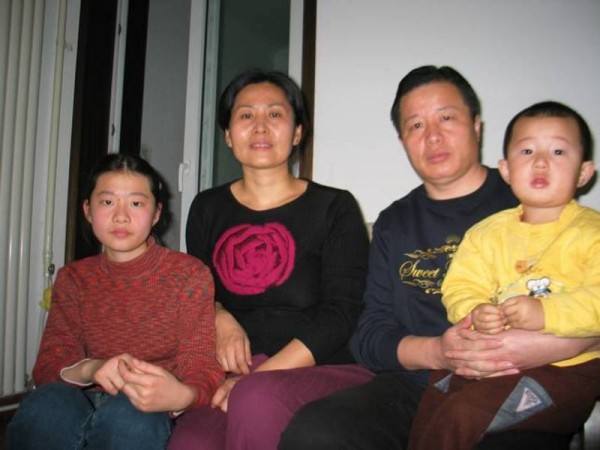
Gao Zhisheng with his wife, Geng He, and their two children

Gao Zhisheng with his wife, Geng He, and their two children

San Francisco – WITH the world’s attention on the uprisings in the Middle East, repressive regimes elsewhere are taking the opportunity to tighten their grip on power. In China, human rights activists have been disappearing since a call went out last month for a Tunisian-style “Jasmine Revolution.” I know what their families are going through. Almost a year ago, the Chinese government seized my husband and since then, we have had no news of him. I don’t know where he is, or even if he is alive.

Click here for full article

CL&P – What to Read for the Week Ending 2011-03-27

By , March 27, 2011

CL&P – What to Read for the Week Ending 2011-03-13

By , March 13, 2011

Just For Fun: Yummy Mummy – Secrets of the Silk Road

By , March 9, 2011

Till March 15 Only!

Victor Mair scored a major victory with “Secrets Of the Silk Road,” an exhibit at the Penn Museum featuring some of the world’s best preserved mummies.  It was a hard fought battle as the Chinese government almost, once again, snatched the mummies from Mair’s grip.  For China, these mummies, found in present day Xinjiang province and as old as 4,000 years, challenge the delicate narrative that China has created for itself. 

The Chinese believe that their culture developed, during its formative years, completely independent of all other cultures and therefore the Chinese culture emerged without any interaction from the West.  But these mummies call such a narrative into question.  With red hair and Caucasian features, the mummies were found in present-day China and with the oldest dating back to 1,800 B.C. these mummies would have been in Chinese territory during the formation of the Chinese culture.  For the Chinese government, these mummies remain extremely controversial. 

And their existence in Xinjiang creates an alternative narrative for the Uighur’s, a distinct ethnic group from the Han Chinese.  The Uighurs have used these mummies to lay claim to their “Western” heritage.  While DNA studies have disproved this theory, the fact that the Uighurs ardently maintain this belief is a worry to the Chinese government who see the Uighers as a separatist group. 

Not surprisingly, China was not proactive in letting anyone know about these mummies.  In fact, if Mair hadn’t stumbled upon these mummies in the backroom of a museum in remote Xinjiang in 1987, its questionable if the rest of the world would ever know about these red-headed Chinese mummies. 

But after years of trying to hide these mummies, the Chinese government finally allowed two of them – the Beauty of Xiaohe and an infant baby – to travel to the United States.  However, when they moved to the Penn Museum a few weeks ago as the crowning jewel in Mair’s “Secrets of the Silk Road,” the Chinese government was threatening to pull the mummies from the exhibit.  Fortunately for us, Mair was able to convince the Chinese government to allow the mummies to be shown for a limited time.  For 15 days only – until March 15 –  the mummies are on display.

Last Saturday I was able to see the mummies and experience the “Secrets of the Silk Road.”  At $22.50 a pop, I was looking to get my money’s worth and with the mummies on display, I certainly did.  The Beauty of Xiaohe has a full head of red hair, high cheek bones of a caucasion and eye lashes that make me jealous.  If you are going to visit this show – and you should – definitely get there before the mummies leave on March 15.

The rest of the show does a poor job of explaining why these mummies are so amazing and yet so controversial for the Chinese.  One of my museum companions noted that with the limited explanations of the history of the region, to truly get the most of the exhibit, a visitor must already have a significant amount of knowledge of the region.  It looks like the Penn Museum missed an opportunity to educate the populace about this fascinating area of the world; a good portion of the show’s visitors were 10 year olds there to see the mummies.  In a similar vein, the lack of a map in the rooms proved distressing even for someone familiar with the region.  The lack of a map at all points during the exhibit was a complaint I heard from a good number of visitors.   

Aside from the mummies which were around 4,000 years old, most of the artifacts were of a more recent vintage, specifically from 600 to 800 AD – China’s Tang Dynasty – during the height of trade between China and the West.  By 600 AD, the Chinese culture is fully formed so the interaction with the West during the Tang Dynasty is not a challenge to China’s current narrative. So these artifacts are hardly controversial. 

With the mummies, this show is a must see.  Without the mummies, the fact that much of the artifacts are from 700 AD provides a less compelling reason to go to the show (presumably the price will go down without the mummies).  It is though a great show for children.  There are games that children can play throughout the show, signage in many places are at the height level of an 11 year old, and even a trivia game at the end of the exhibit.  One of the ending signs, in explaining how a mummy is created, noted that “a raisin is a mummy you can eat.” 

If you do go to the museum and have time to kill, the Buddhist sculpture section on the 3rd floor is a must see.  Beautiful pieces from the artistically high point of Buddhist art in China – the Tang Dynasty. 

Finally, be sure to finish up your tour with a yummy cheesesteak at Abner’s just down the block.

Mummies – Rating: ★★★★★
Show without the mummies – Rating: ★★½☆☆

Penn Museum
3260 South Street
Philadelphia, PA

Mummies on view until March 15

CL&P – What to Read for the Week Ending 2011-03-06

By , March 6, 2011

Panorama Theme by Themocracy