Book Review: Ian Buruma’s Bad Elements – Chinese Rebels From LA to Beijing

By , October 17, 2013

You can’t really be a dissident in an authoritarian regime without being a difficult character. These are individuals who for some reason – call it bravery, call it madness, call it no other choice – feel the need to speak out knowing, either consciously or not, that their cause is likely futile and the full force of the authoritarian regime will come down on them like a ton of bricks.  As a result, their life often becomes their cause.  What happens to these characters when things get so bad that they are forced to flee their country?  What happens to their causes?

These questions rose again this past June when Chen Guangcheng, the blind dissident who escaped his illegal house detention in 2012 and made it to the U.S., caused a stir in the media about his departure from NYU.   But answering these questions – or at least attempting to – isn’t untraveled ground as one China scholar pointed out in the wake of Chen’s NYU exodus.  Back in 2001, Ian Buruma, a Dutch China-hand and journalist, published Bad Elements: Chinese Rebels from Los Angeles to Beijing and this past summer seemed an appropriate time to pick up the book and read it.

Buruma’s Bad Elements begins by looking at the Chinese dissidents – starting with China’s 1978 Democracy Wall Movement through the 1989

Chai Ling during the Tiananmen Protests

Chai Ling during the Tiananmen Protests

Tiananmen student activists – living a new life in the United States.  His survey from Wei Jingsheng to Wang Dan and Chai Ling shows a group of people out of sorts in their adopted land.  Without access to China, most have given up their cause.  Chai Ling, the famous female student leader of the Tiananmen protests is now a successful businesswoman with a Harvard Business School MBA.  Same is true of her former Tiananmen colleague Li Lu.  He now runs an investment company in New York.  Many of the other student leaders just seem lost and lonely.

The pre-Tiananmen/post-Cultural Revolution Chinese exiled in America do not fare any better.  Separated from their cause, most have failed to figure out how to remain relevant to the mission back home.  Fang Lizhi‘s wife, Li Shuxian, probably expressed the exiled dissident’s predicament best when she told Buruma “[n]ow I am finally free to talk, but there is no one for me to talk to.”  Even amongst the exiled dissident community itself, there is little conversation for as Buruma recounts, the splits within the community are cavernous with some dissidents refusing to be in the same room as others.  One would think the bonds within the community would be stronger, but as Buruma insightfully details, the personality traits that allows one to become a dissident are not those that allow them to create strong bonds with others.  But even in honestly observing the exiled dissidents, Buruma never loses respect for them, reminding the reader that these people had the courage to speak up and that their suffering is likely incomprehensible to anyone else.  These individuals carry the battle scars of seeking democracy in a dictatorship and Buruma is always cognizant of this fact.

Modern day Singapore; what Buruma refers to as "Disneyland with capital punishment"

Modern day Singapore; what Buruma refers to as “Disneyland with capital punishment”

But Bad Elements‘ most fascinating aspect is Buruma’s attempt to breakdown “the Chinese Myth,” a key tenant of which is that the Chinese are just not made for or currently prepared for democracy; some form of an authoritarian rule is necessary.

Buruma begins this journey to deconstruct this myth in Singapore, a Chinese-based society where the post-colonial government took and maintained power in the most vicious of ways.  For those who have never been to Singapore or know little of the details of its history, this chapter is a must read.  Singapore is a scary society that holds tight to the belief that this type of rule is necessary in a “Confucian” and “Asian-valued” society.  But even with such pressure to conform and unfathomable methods of torture, there are still those in Singapore who choose to dissent.  Their very existence in Singapore demonstrates that the idea that democracy is too alien a notion for the Chinese is nonsense.

The experiences of Taiwan and Hong Kong further demonstrates that the Chinese can have democracy, with Taiwan offering the best hope that democracy can succeed in a Chinese society.  While Taiwanese democracy is often punctuated with physical assaults within parliament, as Buruma shows, after a period of abusive rule, it has become a rather thriving and real democracy.  Hong Kong is similar except that its reversion back to the Mainland and the change in leadership to more Mainland, business-focused executives threatens that democracy.  In fact, in Hong Kong, the Chinese myth is beginning to reassert itself, with some prominent leaders stating that perhaps the Chinese people cannot handle full democracy.

Buruma ends his journey of destroying the Chinese myth by visiting the Mainland where shockingly, the belief in the need for a strong

Beijing cab driver looking for democracy

Beijing cab driver looking for democracy

government is not just prevalent amongst China’s intellectuals (who usually are the dissidents), but is a strongly held.  It is Buruma’s cab driver who most cogently expresses the desire for democracy, demonstrating that while the intellectual class believes China’s masses are not ready for democracy, those masses sure think they are.

Although Bad Elements is 12 years old, it is certainly not dated and raises issues that are still pertinent.  Twelve years later, the Chinese Myth is still very much alive and not just among the Chinese; at times Western businesses prefer to turn a blind eye to the Chinese government’s choice of leadership and instead are easily lulled by the belief of the Chinese Myth.

Buruma believes that democracy is inevitable in China and that it must be brought more quickly than the current (as of 2001) intellectuals appear to want.  Even as early as 2001, the Mainland intellectuals, perhaps reminded of what happened in Tiananmen Square, sought to more gradually change China.

But one wonders, who is Buruma – or any non-Chinese – to say that this approach is wrong?  Only the Chinese themselves can find their path.
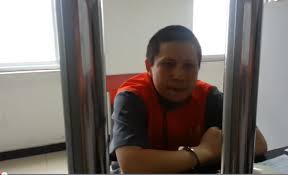
Xu Zhiyong, a more gradual reformer finds himself in and out of jail

Xu Zhiyong, a more gradual reformer finds himself in and out of jail

This theory of gradual reform within the system has only gotten stronger in the past twelve years, with current activists like Xu Zhiyong seeking to work within the system.

Unfortunately, the past four years have shown that perhaps Buruma was right to feel frustrated – the Chinese government has also crackdown

harshly on this set of reform-minded activists.  Buruma’s suggestion twelve years ago – that the “social stability” which the Chinese government and the intellectuals desire – can never be achieved where a people is ruled by an authoritarian regime – rings more true today than ever before.

Another prescient aspect of Bad Elements is Buruma’s observation that many of the dissidents, those in the US, Singapore, Tawain, Hong Kong and even China, are Christians.  This is an occurrence that has only increased over time.  Most of today’s Mainland activist profess the Christian faith.  Buruma speculates that Christianity is prevalent among Chinese dissidents as it replaces one religion – Maoism and the Party – with another.  It’s unclear if that is the reason or if the reason is more because many of the dissidents see Christian values (at least the ones that make it to China) are akin to the rights and democracy which they seek.

Chai Ling today (to the left), working with her group "All Girls Allowed"

Chai Ling today (to the left), working with her group “All Girls Allowed”

But there are aspects of Bad Elements that do show their age, mostly about the exile community.  Although slightly dismissive of Chai Ling in Bad Elements, she has re-engaged with China.  In 2010, Chai founded “All Girls Allowed,” a Christian-influenced non-profit that seeks to eliminate the injustices associated with the one-child policy in China.  Similarly, Xiao Qiang who is give short shrift in the book, has become an important force in communicating the stories of dissent from the Mainland through his website China Digital Times.  Xiao remains extremely relevant to China’s reform movement.  And that’s the aspect of the book that Buruma could not have fathomed at the time – the rise of the internet.  The internet certainly shapes the role of today’s exile differently than those of years past and perhaps allows the dissident community to continue their connections with activists on the Mainland.

Rating: ★★★½☆ — as a result of certain aspects of the book being outdated (which is too be expected from a 12 year old book about contemporary China)

Bad Elements: Chinese Rebels from Los Angeles to Beijing, by Ian Buruma (Vintage Books 2001), 341 pages.

Just For Fun – Movie Review: Jia Zhangke’s A Touch of Sin

By , October 13, 2013

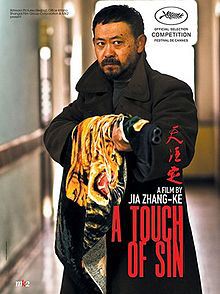
a_touch_of_sin_posterA Touch of Sin  (天注定), mainland director Jia Zhangke’s new movie, is certainly not a tourist flick.  While Jia’s cinematography in the movie lends itself to beautiful sweeping vistas of various parts of China, including the gorgeous Three Gorges area, the focus of the film is on the underbelly of China.  An underbelly that is increasingly prevalent across the country and as Jia vividly, artistically and intensely demonstrates, increasingly violent.  To understand present-day China and the pressures, challenges and threats it faces, that underbelly must be seen.

The four narratives that tell the story of A Touch of Sin are not mere embodiments of Jia’s mind. Rather they are ripped from the headlines or more aptly, from weibo, the Twitter-like microblog where news events are often first reported by average citizens, quickly spread throughout the country, and then suppressed by the central government.  Two of the narratives – the murder of an attempted rapist by his sauna worker victim and the suicide of a young factory worker in Dongguan – will be well known to many China watchers as the Deng Yujiao Incident from 2009 and the 2010 Li Hai suicide at Apple’s Foxconn factory in respectively.

The other two stories – that of Dahai (played by the teddy bear-looking Jiang Wu), a villager in a Shanxi coal mining town angry at the corruption that has allowed the selling of the state-owned mine to benefit a select few, and the story of Zhou San (well played by Wang Banqiang), a hitman returning to his less than grateful family in Chongqing for Chinese New Year – are perhaps less well known outside of China.  But, in the case of Dahai, the comparison between the shockingly savage beating which he experiences and that of real-life Chinese artist and dissident Ai Weiwei’s assault can’t help but be made: both receive a beating by officials (or quasi-officials) in response to their attempts to seek transparency and accountability of “the people’s government” and both have eerily similar head wounds.

In an interview at Asia Society (a must watch before seeing this movie), Jia described his movie and the characters in it as on a quest for dignity –

Dahai seeks his revenge

Dahai seeks his revenge

dignity in a society that is increasingly unequal, dignity in a place that appears to have left so many behind, and dignity in a country where without the rule of law to objectively handle society’s strains, violence is the only answer.

But while Jia’s story certainly focuses on reclaiming that dignity, it is unclear if that is what motivates the individual characters.  For Dahai, does his murderous rage come from a true feeling of societal injustice or from a lack of opportunity to share in the wealth?  It is unclear that if Dahai was put in the same position as the corrupt local officials or his schoolmate, that he wouldn’t have jumped at the opportunity.  Is Dahai a “hero” because he had nothing left to be?

The same questions emerge with Zhou San, the hitman.  Does he really choose this lifestyle because it is the only path he can take?  Or is he a lonely, degenerate unable to maintain healthy relationships even with his own son?  The innocently young Foxconn worker (played by Luo Lanshan) leaves you wondering what motivates his suicide – is it the pressures of the factory life or unrealistic expectations about what life is and what to expect?  Only the sauna worker, Xiao Yu (aptly played by Jia’s beautiful wife Zhao Tao), seems to regain her dignity in the traditional sense.  After receiving a beating from her boyfriend’s wife and her henchmen, Xiao Yu doesn’t take a second beating sitting down.  Instead, she kills the man trying to rape her with a fruit knife.  The movie closes with a return to Xiao Yu’s story, where she has had to flee her village and find a new life.  But even with her apparent restoration of dignity, her life still seems like a hopeless, lonely mess.

Xiao Yu in her murderous rage

Xiao Yu in her murderous rage

This lack of clarity concerning motivation is what makes A Touch of Sin a fascinating movie and ultimately leads the viewer to realize that the individual stories are less important for Jia than the overarching story of that harsh reality known as present-day China.

That is perhaps what will leave the Western viewer perplexed the most – is this really today’s China?  My movie companion and China-hand (who likes to refer to herself as “your good friend Cynthia Nixon”) questioned if Jia’s movie is in fact present day China and if A Touch of Sin is an accurate portrayal.  Definitely there is a lot of violence in contemporary China; but there always was.  It’s not like 1949 to 1976 was some walk in the park: first the killing of landlords, then the Great Leap Forward, then the Anti Rightist Campaign, and the finally the Cultural Revolution.

But Jia is not attempting to give us a complete perspective of modern day China; nor should he or his art be burdened to do so.  Instead, Jia is attempting to show us the future – that if the Chinese government doesn’t curb the rampant corruption that has corroded China, if it doesn’t deal with huge inequities in both wealth and power, if it doesn’t find a legitimate outlet for society’s inevitable anger (like an independent and functioning legal system), then the violence that permeates his movie will soon be more than just a story from weibo.  It will be destined to be a commonplace occurrence.

This premise might be the reason why Jia’s A Touch of Sin might not make it past the Chinese government censors.  According to Jia, the censors have okay’ed his film and rumor has it that it will begin to be shown in China in November.  There are reasons why the censors might be okay with A Touch of Sin.  Philana Woo over at Jing Daily does a great job of explaining why the film “bows” to censorship, namely by avoiding the obvious – an outright attack of the central government.  Dahai’s issues are local, the central government is never implicated in the decision to sell the mine to an insider who retained all the profits.   Even the story of Xiao Yu was toned down.  Deng Yujiao, the real-life sauna worker Xiao Yu’s character is based on, was attacked not by local businessmen (as Xiao Yu was in the movie), but rather by government officials.

But with its emphasis on China’s increasing violence, A Touch of Sin questions one of the central tenants of the Chinese Communist Party’s

Xiao Hui, an ardent Buddhist.

Xiao Hui, an ardent Buddhist.

(CCP) rule: that the Party’s specific type of leadership is necessary to promote “social stability.”  But with the Party’s inability to deal with the rampant corruption and the increasing inequities in Chinese societies that leave individuals with no other choice but to resort to violence, the myth that is the Party’s promise of social stability becomes apparent.  Jia is looking for an alternative.  Religion, including Catholicism and Buddhism, deftly punctuates key scenes.  Traditional Chinese culture including opera plays and old novels keep returning in each scene.  And Jia has repeatedly mentioned that without a fair legal system, people are left with vigilante justice.

It is this conclusion – that the Party’s version of social stability is a mirage and that there needs to be an alternative be it religious, cultural or legal – that ultimately makes A Touch of Sin subversive and could railroad its showing in China.  For our readers outside of China, make sure you see this one as it is a thought provoking, beautifully shot film.  For our readers in China, get the bootleg copy from your local VCD store.

Rating: ★★★★½

************************************************************************************************************************************

A Touch of Sin is currently showing in New York City through October 17 at IFC and Lincoln Plaza Cinemas.  It will then travel throughout the United States.  For schedule, click here.  A Touch of Sin will allegedly open in China in November.  For readers in China, we look forward to your feedback when (or if) this movie opens there. 

China, the Reverse Mortgage and the Emergence of Private Property?

By , October 8, 2013


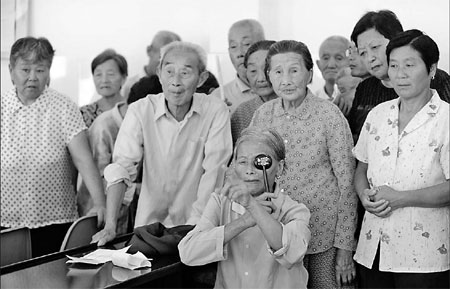
China's increasing elderly population

China’s increasing elderly population

Chinasmack recently translated a fascinating article regarding the introduction of reverse mortgages to the senior citizen population in China.  For those familiar with the foreclosure crisis in the United States, reverse mortgages have a bad reputation.  But even though issued as a predatory product in the mid-2000s (as most mortgages were back then), reverse mortgages, when issued responsibly, do have their place.

Basically, a reverse mortgage is the stripping of equity from your home and usually reserved only for the elderly.  Ideally most seniors own their homes outright.  In the United States, they have paid off the mortgage they took out to purchase their homes 30 years ago and own a piece of property worth, in a place like New York City, over $300,000.  Now in their twilight years, and with an underfunded retirement savings plan, these seniors want to access that equity while remaining in the house.  Refinancing into a regular mortgage likely would not be available to most seniors who are often on a lower fixed income like social security and/or pension and wouldn’t be able to support a monthly mortgage payment.

Enter the reverse mortgage.  A reverse mortgage only looks at your age and the equity remaining in your house and allows you to take that equity out either in a lump sum or in monthly increments.  Instead of making mortgage payments every month, with a reverse mortgage, the bank pays you every month (or as a lump sum when you close on the reverse mortgages – this is usually left at the discretion of the homeowner).

Where’s the catch?  Even though you are stripping the equity out of your house, the bank that has given you the reverse mortgage charges you interest on the money it gives you.  The collateral is your house – when you die, the full amount owed comes due.  If your heirs want to keep the house, they must pay off what is owed or if they can’t, the bank will foreclose.  But you are guaranteed your house until you die, sell it or move out (like to a nursing home) even if housing prices fall.

reversemortgageFor some seniors, the extra monthly cash is essential to survive their later years.  As the Chinese government has recognized, this is especially true in China where – even with reforms to health insurance – out of pocket medical expenses are astronomical.  For seniors, those expenses are even more exorbitant.

Recognizing that by 2025, China’s senior population (defined as 60-plus) will be over 300 million (today the government estimates a senior population of 194 million – see Chinese State Council announcement here), on September 6, 2013, China’s State Council issued its Opinion Concerning the Accelerated Development of the Elder Care Industry.  While the document is more general in stating the problem, the government is rather frank in realizing that elder care and the inability of the government to fund it in addition to pension funds, will become an increasing problem.  Muddle in the middle of the 5 page Opinion is the one sentence announcement that localities should look to experiment with reverse mortgages (“住房反向抵押养老保险”, aka “以房养老”) as a way to fund elder care.

As the Southern Weekend reported, since as early as 2003, various cities in China – including Shanghai, Nanjing and Beijing – have encouraged

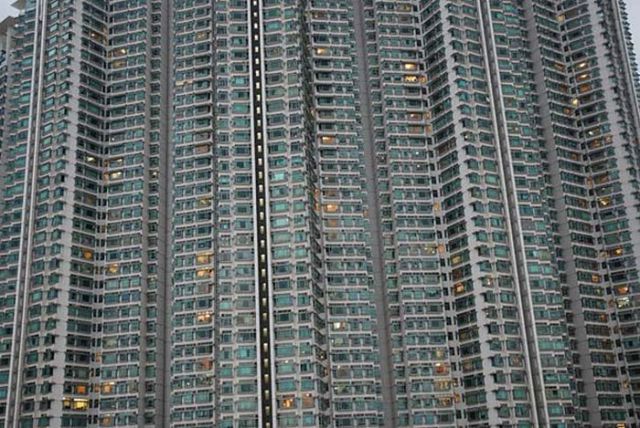
What's this apartment worth?

What’s this apartment worth?

the use of reverse mortgages but with little success.  One major hurdle to the success of the reverse mortgage is the fact that people in China do not own their land – they only have a 70 year land-use right to the piece.  What happens when that land-use right expires in 70 years is unclear, giving the banks or insurance companies major pause in issuing reverse mortgages, especially for land-use rights that are approaching the 70 year mark.

So what is the Chinese government to do?  It realizes that it has a ballooning senior population and insufficient funds to support it.  A reverse mortgage – especially with China’s increasing housing bubbles – can be an important private financing tool of one’s later life.  But banks and mortgage companies don’t want to lend in an environment with such uncertainty.  Does the State Council’s Opinion signal a possible change to the current land-use rights system?  Clearly it must recognize its dilemmas as all the domestic media outlets have been openly commenting on the 70 year problem as a major roadblock.

According to the Southern Weekend, the Chinese government is to issue more specific parameters of reverse mortgage lending in the first quarter of 2014.  While it is doubtful that those parameters will deal particularly with the 70 year land use limits, hopefully the regulations will guard against other risks inherent in dealing with a senior population.  The Southern Weekend pointed out a 2011 case in Shanghai where the court rescinded a reverse mortgage contract between a 90 year old woman and the nursing home, where her 550,000 RMB-valued property rights served as her monthly maintenance fee and her funeral expenses.  It was the son who brought the case in his mother’s name.

In the United States, to deal with the vulnerability of senior citizens, all seniors must receive independent credit counseling regarding the reverse mortgage prior to obtaining it.  Such education is important for two reasons: (1) seniors develop a basic understanding of the product and what it means and (2) proper counseling should prevent seniors from taking out a reverse mortgage too early.  Ideally, the longer you can wait to take out a reverse mortgage, the greater your monthly payment will be.  For seniors this is an important factor to consider because as they age, care becomes increasingly more expensive.

Without protection for spouses in a reverse mortgage, this lady could be out in the cold!

Without protection for spouses in a reverse mortgage, this lady could be out in the cold!

Further, the Chinese government should look to protect the spouse of land-use title holder.  In the United States, federal law prevents reverse mortgage holders from foreclosing on a property when there is still a spouse – even if she is not on the title – living in the property after the mortgage holder dies.  This protection is even more imperative in China where only 30% of married women add their names to the title.

Additionally, the Chinese government should regulate who can give reverse mortgages.  As the case from Shanghai demonstrated, having the nursing home able to enter into a reverse mortgage with one of its residents is likely not best practices.

Finally, the reverse mortgage likely will not be a useful tool in the rural areas.  Reverse mortgages contemplate high property/land use values and an increasing property market.  For seniors in the countryside, the reverse mortgage is likely not an option and to the extent it is, there is likely not enough equity to pay for the care they will need.  The Chinese government will still need to find a way to deal with the health care crisis in the rural areas.

Panorama Theme by Themocracy