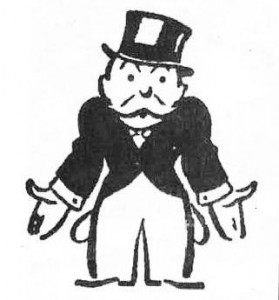
Ai Weiwei – Artist, Dissident and….Tax Evader?

By , June 30, 2011

Getting caught for tax evasion

Originally posted on the Huffington Post

Taxes are a tricky business in any country, let alone China.  Tax codes are usually overly complicated and let’s face it, if you are making money, you can afford to hire accountants who think “creatively.”  American country singer Willie Nelson owed close to $32 million dollars in back taxes when the IRS declared one of the tax shelters his accountant was using to be in violation of the U.S. tax code (he later settled for $16 million, raising the majority of that money through the sale of his album entitled “The IRS Tapes: Who Will Buy My Memories?”); Leona Helmsey, the billionaire New York City hotel operator, served four years in prison for tax fraud (Helmsey allegedly enlightened her staff on a regular basis that “We don’t pay taxes.  Only the little people pay taxes.”); and Al Capone, mafia hitman, bootlegger and perhaps the most famous tax evader of all time, served his longest sentence, seven years, for tax evasion.

When Chinese artist and dissident Ai Weiwei was freed from police custody last Wednesday, the question was raised, most notably by Brian Lehrer in his interesting interview with Human Rights Watch’s Phelim Kine: “are you sure his detention was for being a critic of the government and not for evading taxes?”

Since his release, the Chinese government has vaguely issued more information about the investigation that landed Ai in criminal detention for the past two and a half months.  Although neither formally charged, arrested nor indicted, Chinese officials stated that Ai was held for “failure to pay a ‘huge amount’ of taxes and for willfully destroying financial documents.”  In particular, officials alleged that Ai’s company, Beijing Fake Cultural Development Ltd. failed to pay 5 million RMB (USD 770,000) and owed an additional 7.3 million RMB (USD 1.1 million) in penalties.

But the question remains, what is Ai’s individual liability for a corporation’s tax evasion?  Is he financially liable?  Can

In 2008, Ai was a Chinese government darling, designing the acclaimed Birdsnest Stadium

he be criminally prosecuted?

The answer is….you betcha,  if it is determined that Ai had some form of “direct responsibility” over Beijing Fake Cultural Development Ltd.

Article 201 of China’s Criminal Law criminalizes tax evasion (Amendment VII to the Criminal Law Amends Article 201).  Like many laws in China, the actual law is not the end all and be all.  Because China is a civil law country, often the generalities of the national law are fleshed out in various agencies’ “interpretations.”  Here, Article 201, is further defined through the “Interpretation of the Supreme People’s Court on Some Issues concerning the Specific Application of Laws in the Trial of Criminal Cases for Tax Evasion and Refusal to Pay Tax” (“SPC Interpretation”).

The SPC Interpretation further defines tax evasion as: (a) forging, altering, concealing or destroying without authorization accounting books or supporting vouchers for the accounts; (b) overstating expenses or not stating or understating income in accounting books; (c) being notified by the tax authority to file tax returns but refusing to do so; (d) filing false tax returns; and(e) after paying the tax, fraudulently regaining the tax paid through the adoption of deceptive means such as fraudulently declaring the commodities it produces or operates as export goods.

But while Article 201 and the corresponding SPC Interpretation only uses the term “taxpayer,” Article 211 of the Criminal Law clarifies liability when the taxpayer is a corporation or business unit: “Units committing offenses under Articles 201, 203, 204, 207, 208, and 209 of this section shall be punished with fines, with personnel directly in charge and other directly responsible personnel being punished according to these articles, respectively.”

Thus if Ai Weiwei is determined to be a “personnel directly in charge” (直接负责的主管人员) of the Beijing Fake Cultural Development Ltd. he could potentially be criminally and economically liable.  Ai’s family has maintained that Ai cannot be on the hook because he is not the company’s “chief executive or legal representative.”  However, the Chinese for “personnel directly in charge” is not limited to just the chief executive or legal representative; rather it is anyone in the company with management responsibility (主管人员 is better translated as executive officer).

Ai Weiwei - a directly responsible person?

Furthermore, the second category “other directly responsible personnel”(其他直接责任人员) contemplates a much broader group of people that could potentially be anyone affiliated with the company that has some type of vaguely-defined “direct responsibility” over the company.

Potentially, there could be some validity to the alleged charges against Ai for Beijing Fake Cultural Development Ltd. if the company did in fact evade taxes.  The Chinese government has yet to offer any evidence of the company’s tax evasion.  The company’s attorneys have appealed the charges of tax evasion and have requested a hearing before the Beijing Tax Bureau.

But if there is tax evasion, Ai’s liability will ultimately be determined by defining what his precise role is within the company.  According to friends and family members, Beijing Fake Cultural Development Ltd. merely dabbled in small design projects; the company was not involved in selling Ai’s work.  In fact, according to Ai’s family, it is his wife who is registered as the company’s legal representative not Ai; Ai was a mere consultant.

And while the Chinese government could potentially have a legitimate claim against Ai for the company’s tax evasion, it’s illegal detention of Ai, the fact that there is still no official indictment, the fact that the government continues to hold incommunicado the company’s accountant, the one person who could explain the company’s actual tax filings, and that the government went after Ai instead of his wife, the legal representative of the Beijing Fake Cultural Development Ltd., makes one suspect that the potential charges against Ai are a legal long-shot.  Instead, political considerations – the need to silence one of Beijing’s most vocal and well-known critics – are the real reasons behind the prosecution of Ai.  Again, the rule of law in China takes a back seat to politics and Party supremacy.

CL&P – What to Read for the Week Ending 2011-06-26

By , June 26, 2011

Ai Weiwei Released on Bail

By , June 22, 2011

Ai Weiwei

For the past three months, the world has awaited news on internationally-known artist Ai Weiwei’s unlawful detention by Chinese authorities.  Originally taken into custody on April 3, 2011, Ai’s detention has remained shrouded in rumors as the rest of the world vocally called for his release.

Although not formally arrested, on May 21, 2011, the state-run New China News Agency reported that Ai was being investigated for evading “huge amounts” of taxes through his corporation, Beijing Fake Cultural Development, Ltd.  However, no official government statement confirmed this report and no arrest warrant was issued.

Finally, this morning, Xinhua News Agency, another state-run news outlet, announced that Ai was released on bail “because of his good attitude in confessing his crimes as well as a chronic disease he suffers from.”

Unlike in the United States, bail –or in Chinese qubao huoshen (取保候审) is not freely given in China.  As Prof. Jerome Cohen points out, the term bail is perhaps a misnomer in translating the Chinese since in China “bail” can be provided at any stage in the “investigation,” even before a formal arrest or an indictment as was the situation in Ai’s case (Siweiluozi also has a good piece on the inadequacies of translating qubao huoshen as bail).

If bail is limited in China, what are the circumstances in which it is given?  Prof. Cohen rightly points out that the consideration is largely political and has little to do with rule of law – it’s a good way for the Chinese government to get out of a difficult situation when international criticism mounts (Evan Osnos also has an interesting take on the impact of international pressure on Ai’s release).  But was Xinhua’s reason for bail – good attitude and a chronic disease – a legal basis for the rare reward of bail?

As a matter of fact, there is a basis in law.  Article 60 of China’s Criminal Procedure Law (CPL) makes clear bail may be granted in those cases where the “criminal suspect or accused…should be arrested but are suffering from a serious illness….”  Ai suffers from diabetes and during his ordeal, Ai’s family repeatedly expressed his concerns about his health to the international press.  So while the Chinese government likely made a political choice to release Ai, there is in fact a veneer of legality.  But the claim of “good attitude” for bail is found nowhere in the CPL.

But what is perhaps a more interesting question, is the validity of the alleged charges of tax evasion.  Ai’s company, Beijing Fake Cultural Development, Ltd., is a limited company – how is Ai personally on the hook for the company’s tax evasion?  Presumably there would be limited liability, so how are the authorities able to attribute the company’s evasion to Ai?   On that issue, tune in later, same bat-time, same bat-channel.

CL&P – What to Read for the Week Ending 2011-06-12

By , June 12, 2011

Why So Secretive? US-China Legal Experts Dialogue

Who received the invitation to the Legal Experts Dialogue?

One would think that after a six-year hiatus, the resumption of the U.S.-China Legal Experts Dialogue would receive a little more fanfare than a cursory four-sentence press release from the Department of State (“DOS”), issued on June 6, a mere two days before the big event.

For the past two years, almost every high-level discussion between the U.S. and China has raised the issue of the Legal Experts Dialogue (“LED”), with the goal of resuming the talks (last held in 2005).  When President Obama visited China in November 2009, the two countries’ Joint Statement directly stated that “[t]he United States and China decided to convene the U.S.-China Legal Experts Dialogue at an early date.”  Ditto for the Joint Statement after President Hu’s visit to Washington, D.C. in January 2011.

It wasn’t until April 28, 2011, at the Human Rights Dialogue, that anyone provided somewhat more of a hard date.  At a press conference, Assistant Secretary of State Michael Posner announced that the U.S. and China finally agreed to convene the LED in “June 2011.”  This vague date was reiterated a few weeks later in the statement issued at the conclusion of the Strategic & Economic Dialogue.

So why the lame press release about the LED?  It’s been a priority item in the U.S.’s negotiations with China.  One would think that finally being able to achieve the goal of actually having the LED and especially of hosting it in the midst of the Chinese government’s crackdown on rights-defending lawyers, would be a feather in DOS’s cap; something that they would want the world to know about.

Why remain mum on who these “experts” are and what they will be discussing?  Instead, DOS only states that there will be “government and non-government experts” who will “explore key legal issues of mutual interest.”  Could DOS be more vague?

There are occasions when the U.S. might achieve more by pressuring China behind the scenes.  In the case of Xu Zhiyong in 2009, it looks like that approached worked.  But the LED is a completely different beast – the existence of the Dialogue has long been made public and given that there will be non-government experts, it does not appear that there will be high-level discussions here on par with Hu-Obama talks.  It sounds like it is one group of lawyers talking to another.  Given some of the issues that have sprung up in the past few months, including the assault on public interest lawyers, China’s indigenous innovation policy, various WTO cases, and the criminal trials of U.S. citizens, it would be interesting to know what is on the agenda.

But in general, I do not hold out hope that the LED will produce any earth-shattering results, if it produces results at all.  While DOS has stated that there will be “in-depth discussions and practical cooperation on the rule of law” (yeah, I don’t know what that means either), it’s basically two days of meetings among strangers with translators in between.  How much can really be achieved?

And maybe that’s why the U.S. hasn’t given the LED the credit one would think it is due.  Maybe even DOS realizes that bringing over a delegation of Chinese lawyers and legal experts for a mere two days is likely a waste of taxpayer’s money.

I do think that more open dialogue between the U.S. and China is a good thing.  But there are better ways to increase the lines of communication between the legal communities in the two nations and assist China with improving upon its commitment to a rule of law.  Identifying and inviting reform-minded Chinese lawyers to the United States for a longer period of time – anywhere between three months to a year – is a better use of money.  Through that experience, a Chinese lawyer can see how our legal system functions, see the good and the bad, interact with U.S. lawyers, and determine which aspects if any should be replicated in China.

These types of sustained contact are what can best assist China with implementing a rule of law.  A two-day conference likely cannot.  But unfortunately, we won’t really know because nothing about the LED is publicly available.

CL&P – What to Read for the Week Ending 2011-06-05

Panorama Theme by Themocracy