Book Review – Green Island: A Novel

By , February 27, 2021

Tomorrow marks the 74th anniversary of the 228 (two-two-eight) Incident.  Never heard of it?  I hadn’t either until a couple of years ago. But the 228 Incident marks the start of a violent, dark period of Taiwan history: the White Terror.  Starting on February 28, 1947 and for the next 40 years, Taiwan’s ruling Nationalists Party (“KMT” or “Guo Min Dang”) instituted martial law, subjecting any dissenters – or those who the government believed to be dissenters – to arbitrary imprisonment, torture, and death. At times, the White Terror even made its way to U.S. shores, such as assassinations sponsored by the KMT. 

The world knows little of the White Terror because of the KMT’s effective suppression of the topic even after martial law was lifted in 1987. And also because of Taiwan’s friendship with the U.S., which didn’t ask the questions it should have even when U.S residents and citizens were subject to the White Terror, let alone ordinary Taiwanese.  Then, came the mid-1990s, when Chinese studies in the U.S. began to focus on the mainland, with Taiwanese history an afterthought, if even that. 

Now though Taiwan is on the rise.  With its successful containment of COVID-19 and its strong embrace of democracy, the world is watching Taiwan.  And another example that Taiwan can offer to the world is how a country deals with the mass violence and murders of its own people. In 2018, the Taiwanese government instituted the Transnational Justice Commission to investigate and address the atrocities committed during the White Terror.
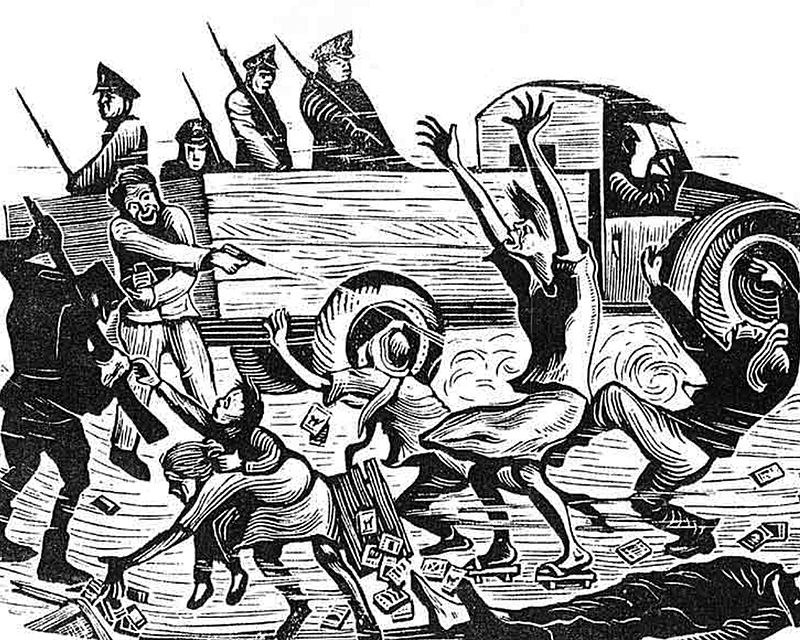
Artist rendition of the 228 Crackdown

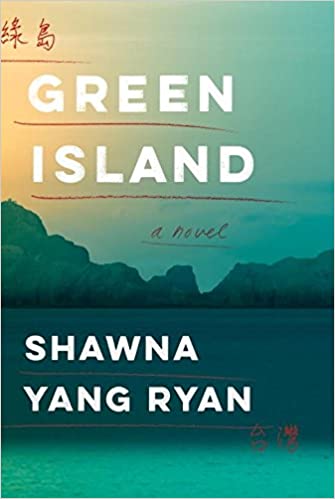
To even contemplate if the Transnational Justice Commission will be successful, knowledge of the violence and pervasiveness of Taiwan’s White Terror is a must. Shawana Yang Ryan’s Green Island, a historical novel that tells the story of a Taiwanese family trying to survive the White Terror, provides that understanding.

Green Island starts on the eve of the 228 Incident, with the birth of its narrator who remains nameless throughout the entire novel. Her father, a doctor, delivers her, but the next day he is violently hauled off by the police, all because of a brief moment when he spoke, in public, about his desire for a freer Taiwan. He returns to the family 10 years later, unrecognizable after a decade of on Green Island, the island where the KMT set up its diabolical prisons for political dissidents.  Ryan briefly details the father’s torture, covering only the time period soon after his detention; Ryan does not go into the gory details of his decade-long prison sentences.  But what Ryan shares is enough to know that the father will emerge – if he emerges at all – a very broken man. And by telling the story through the daughter, we see the intergenerational damage of the White Terror: a distant, destroyed father, who will never be able to hold a job again nor the respect of his family; the constant surveillance by the authorities; the crushing of civil society; family and friends forced to turn on each other to save another or sometimes just themselves; the retribution experienced by family members in Taiwan when an emigrated child exercises her freedom of speech in America.

Green Island is not an uplifting novel, nor can it be given the truth it seeks to expose about the KMT’s martial law.  Even the narrator is a complex character, where at points you are rooting for her but then at others are appalled by her choices. Although on some level, you wonder – would I have made the same choice if put in such a horrific situation, and are thankful that your government never has asked you to. With Ryan’s artful prose and development of characters over a 60-year time period, Green Island is a necessary read to learn about the White Terror and to understand the trauma that Taiwan still grapples with even as it establishes itself as a vibrant democracy. 

Rating: ★★★★☆

Author Shawna Yang Ryan

Green Island: A Novel, by Shawna Yang Ryan (Penguin Random House, 2018), 400 pages.

Interested in purchasing the book? Considering supporting you local, independent bookstore. Find the nearest one here.

The Economist’s Recent Piece about Genocide in Xinjiang is Wrong

By , February 15, 2021
Protest outside of China

It was disappointing to read The Economist‘s most recent piece about the atrocities in China’s Xinjiang province – “‘Genocide’ is the wrong word for the horrors of Xinjiang” given the hard stance it has taken in the past against the Chinese government’s violence, oppression and mass internment of Uighurs and other Turkic Muslims. But in its most recent article, by ignoring the sexual violence against Uighur and Kazakh women, The Economist demonstrates its lack of understanding of the crime of genocide under international law and perpetuates a misogynistic view of the crime.  

Although sexual violence has been a key element of most genocides – from Armenia in 1915 to the Rohingya today[1] – the term rape does not appear in either the Genocide Convention or the Rome Statute of the International Criminal Court.  But the systematic rape of women has repeatedly been found to constitute the physical element of genocide.  In 1998, the U.N. Tribunal for Rwanda found former Hutu mayor Jean-Paul Akayesu guilty of genocide for the systemic rape of Tutsi women in his community.[2] Specifically, the Tribunal held that systematic rape constituted the genocidal act of “causing serious bodily or mental harm to members of the group.”[3] More recently, the U.N.’s Independent International Commission of Inquiry on Syria concluded that the Islamic State of Iraq’s (“ISIS”) systematic rape of Yazidi women and girls constituted the physical element of genocide: “Rape can be a measure to prevent births [another defined genocide act under the Convention] ‘when the person raped subsequently refuses to procreate, in the same way that members of a group can be led, through threats or trauma, not to procreate.’”[4]

Uighur Protest in front of the Chinese consulate in Istanbul on October 1, 2019 (Photo by Yasin AKGUL / AFP)

But in arguing that genocide is the wrong word to describe what is happening in Xinjiang, The Economist ignores clear legal doctrine.  Allegations of rape in Xinjiang’s concentration camps have been circulating since at least 2019.  Earlier this month, the BBC reported on the systematic use of rape and sexual torture against Uighur women in the concertation camps, with different women, from different camps, describing the same horrific acts perpetrated by Chinese state actors. The eerie similarity in these women’s stories is what gives them credibility, especially as the Chinese government’s sole retort is to state that these sources are “untrustworthy.” The Chinese government has also failed to give the U.N. High Commissioner on Human Rights access to Xinjiang for an independent assessment of what is happening there.  If The Economist failed to mention these women’s stories because it doesn’t think these stories “prove” genocide, “we should long ago have shifted the burden of proof away from the refugees and to the skeptics, who should be required to offer persuasive reasons for disputing eyewitness claims.”[5]

In addition to ignoring the well-developed doctrine that mass rapes can constitute the physical element of genocide, The Economist implies that the only action that could be “intended to prevent births” is “the systematic sterilisation of all women.” As show above, the United Nations – and the world – moved away from such a narrow definition years ago. The Economist does a disservice to its readers – and female victims of genocide – by offering such an inaccurate assessment. 

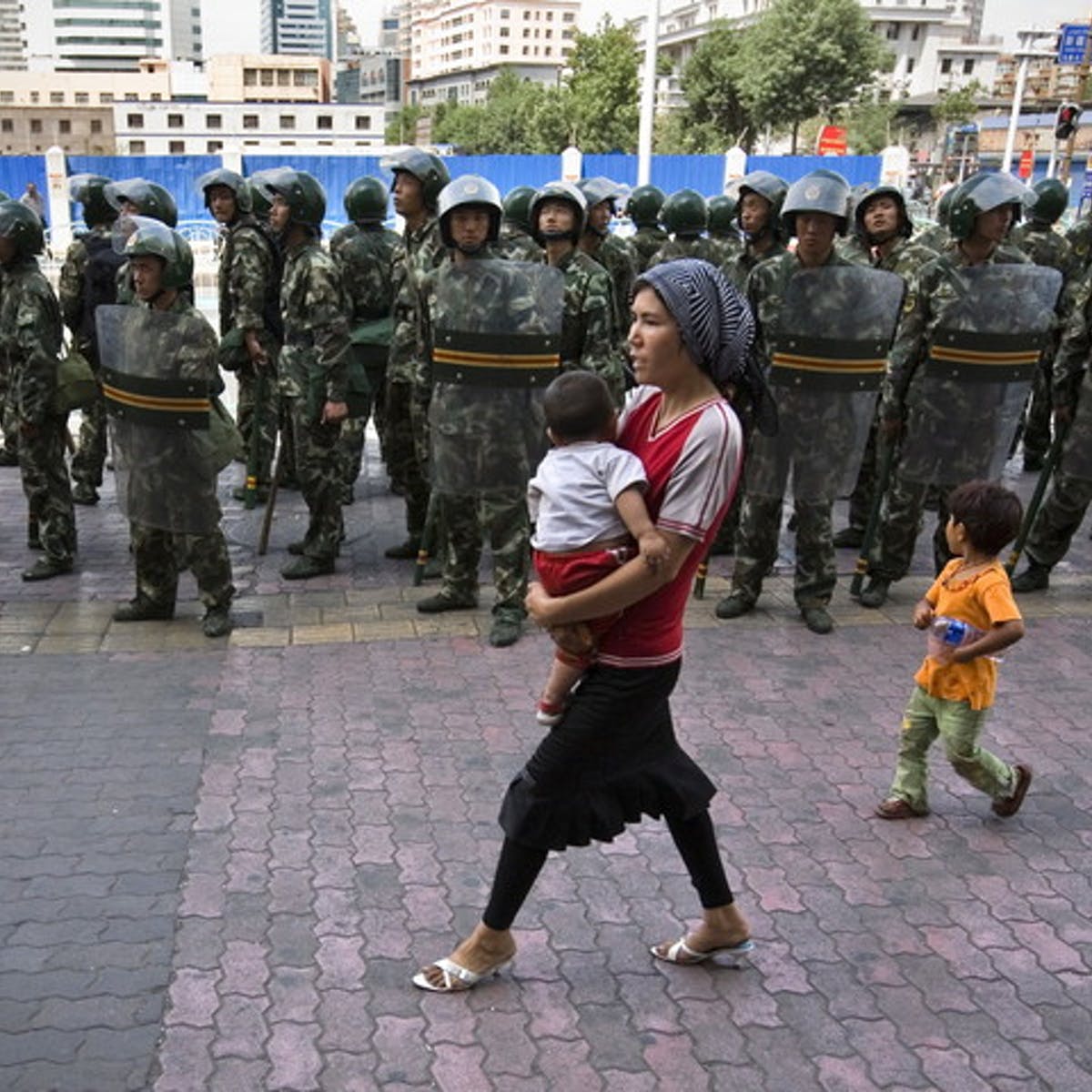
Uighur woman walking past Chinese government troops.

Ultimately though, it appears that The Economist wanted to make the argument that we shouldn’t get hung up on defining what is happening in Xinjiang as a genocide or as crimes against humanity; it’s all just a parade of horrors that need to end.  China Law & Policy has made this argument too (see here) since for both genocide and crimes against humanity, U.N. member states have the same “responsibility to protect.” But The Economist went too big in definitively stating that what is happening in Xinjiang is not genocide. The Economist does not know that and offers no proof or legal analysis; instead it merely states that genocide “exaggerates” the Chinese government’s crimes in Xinjiang.  But it doesn’t if you focus on the violence perpetrated against Uighur women.  The Economist – and the world at large – would be wise to heed the advice of Samantha Power in her authoritative book on the world’s missteps in stopping genocide in the past: “A bias toward belief would do less harm than a bias toward disbelief.”[6]


[1] Global Justice Center, Beyond Killing: Gender, Genocide & Obligations Under International Law, pp. 18-19 (Dec. 6, 2018), available at https://globaljusticecenter.net/files/Gender-and-Genocide-Whitepaper-FINAL.pdf.

[2] Samantha Power, “A Problem from Hell”: America and the Age of Genocide, pp. 485-86 (Harper Perennial 2002).

[3] Id.

[4] U.N. Human Rights Council, “They came to destroy”: ISIS Crimes Against the Yazidis, ¶ 145 (June 15, 2016), available at https://www.ohchr.org/Documents/HRBodies/HRCouncil/CoISyria/A_HRC_32_CRP.2_en.pdf.

[5] Power, supra note 2, at p. 506.

[6] Id.

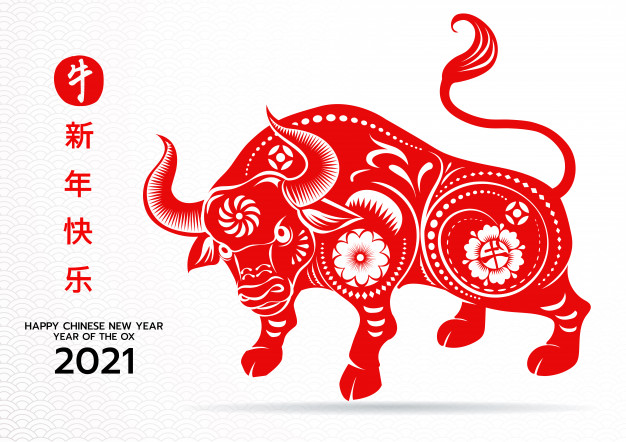
恭喜发财!Happy Year of the Ox!

By , February 9, 2021

The world needs an ox. Boy does it need an ox. Grounded, loyal, gentle and trustworthy, the ox fixes and stabilizes, heals and unifies. And on Friday, the ox will finally arrive as our friends in East Asia celebrate the lunar new year and mark the start to new beginnings.

The ox is known to work hard and plan and because of that some see this ox year as one that will take the negative challenges of last year – a rat year that brought a world-wide pandemic – and transform them into positive outcomes.  But the ox year can’t do it alone.  We have to put on our ox hats and work at it too.  There does seem to be light at the end of this COVID tunnel, but like an ox, we must stay focused and persistent, ensuring that we reach our goal of ending this pandemic. 

Although many are positive about the upcoming year of the ox, seeing its reliable nature as something that will get us through the next few months, there are some doubts.  In particular, feng shui master Raymond Lo warns that it could be a “bleak” year. That is because this year’s ox isn’t just any old ox but a metal ox.  In Chinese astrology, a new year doesn’t just usher in a new animal, it also brings forth a new element.  In addition to being associated with an animal, each year is also associated with one of the five astrologic elements (metal, wood, water, fire and earth).  For 2021, that element is metal.  But at the same time, each zodiac animal is independently associated with one of the five elements.  And a ox’s intrinsic element is earth.  According to Lo, mixing an earth ox with a metal year “is a symbol of a harsh and cold atmosphere that incites disharmony, conflict, assassination, and terrorism.”  But Lo has never been a “glass half full” kind of feng shui master and if you ask me, Lo seems to be a little too focused on 1901, another metal ox year that saw the assassination of U.S. President William McKinley, the attempted assassination of German Emperor Wilhelm II, and an attempted coup in Portugal.  Let’s hope these are all things of the past.

What does year of the metal ox mean for you?  That depends on how your zodiac sign interacts with the ox.  To find out your wealth, career, love and health prospects for 2021, click here (Don’t know your Chinese zodiac sign? Find out here).

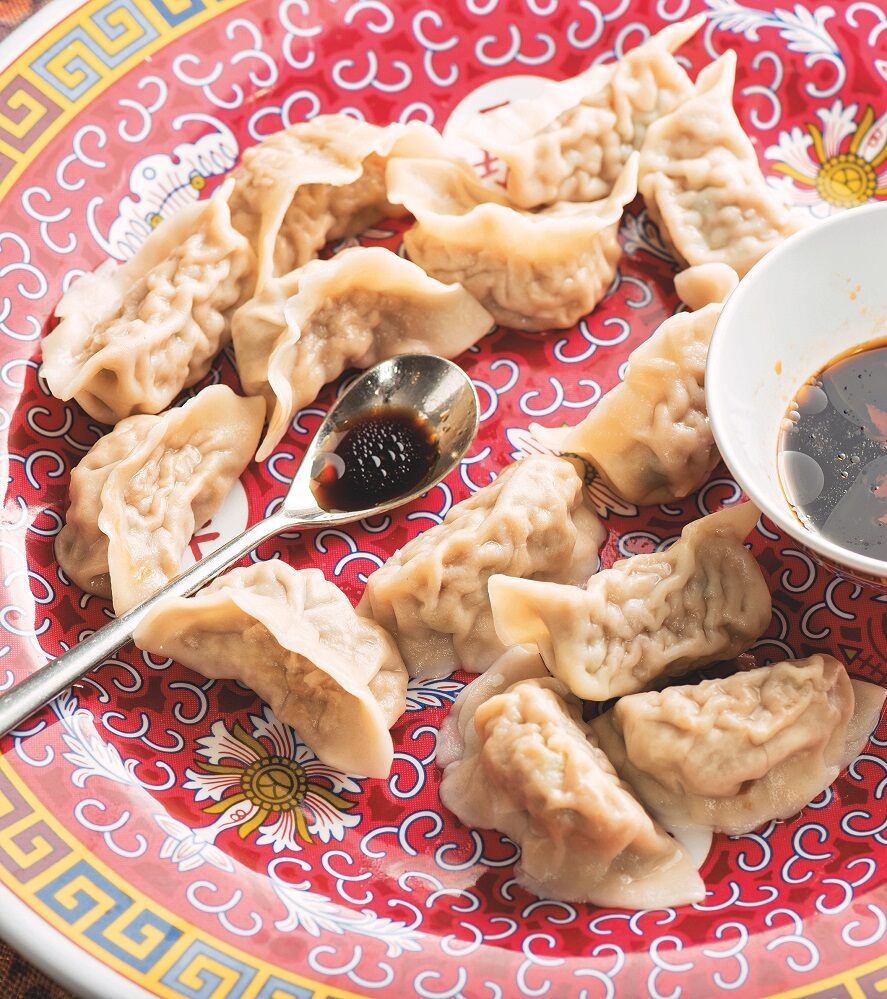
But most importantly, the lunar new year is a time to cherish your loved ones.  That’s hard to do in person right now, but maybe this weekend you, your friends and family can each order in some dumplings (traditional new year food in northern China), hop on the Zoom, and reminisce about the good times you have had together and plan for more in the future!  With that, I wish everyone a happy and healthy new year and 恭喜发财! (gong-see-fah-tsai – “may you be happy & prosperous!”)

Since many will be missing outdoor lion dances this year, here is a great performance from Hong Kong, 2019.

Panorama Theme by Themocracy