CL&P – What to Read for the Week Ending 2011-02-27

By , February 27, 2011

Reality or Myth: China’s Rule of Law & Its Recent Assault on Lawyers

By , February 21, 2011

Originally posted on The Huffington Post
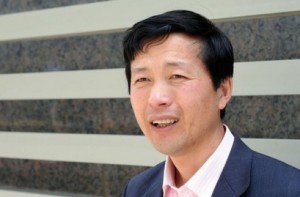
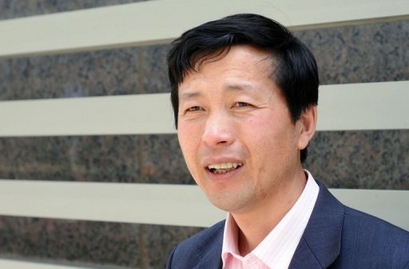
Rights-Defending Lawyer, Tang Jitian

The Chinese government has tried to break Tang Jitian’s spirit.  Failing, it now seeks to break his body.  Tang, a Chinese human rights lawyer, was forcibly abducted from his home on Wednesday, February 16 by the Beijing police.  Five days later, in contravention of Chinese law, Tang’s whereabouts remain unknown to his family, friends, and other human rights lawyers who desperately await some news of him.  Tang’s wife, after waiting at the police station for over four hours, was not permitted to see her husband and not informed of his whereabouts.  Tang’s “crime” in all of this: seeking to uphold individual’s legally-guaranteed rights and hold the State to its promise of a rule of law.

When Tang Jitian (pronounced Tang Gee Tea-ann) emerges from this unlawful and forced seclusion, he may be badly beaten, tortured and abused.  Soon after his abduction on Wednesday, Tang was transferred to the Beijing Public Security Bureau (PSB), an outfit that has been assigned the task of suppressing China’s nascent human rights movement.  Violence is a necessary part of the PSB’s mandate: it provides a very physical signal to other human rights lawyers what awaits them if they become too vocal, organized, or, ironically, too successful in bringing cases to protect citizen’s rights.  But this State-sanctioned violence is outside the limits of the law, and makes one wonder that if, by attacking these rights-defending lawyers (in Chinese, weiquan lawyers), the Chinese government is really committed to a “rule of law” society or if the use of such language by Chinese officials is a mere mirage.

The Breaking of a Body: Tang Jitian’s Potential Fate While in PSB Custody

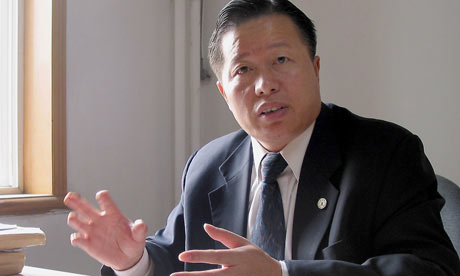
Human rights lawyer Gao Zhisheng (pronounced Gao Zhi-sheng) likely serves as the most potent reminder of the
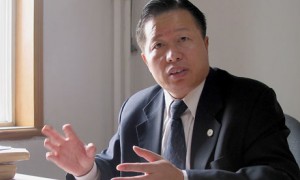
Human Rights Attorney, Gao Zhisheng

lawlessness of the PSB.  In 2001, Gao was listed by China’s Ministry of Justice as one of the country’s top-ten lawyers for his work representing victims of medical malpractice and farmers who were denied just compensation for their land.  But as Gao took on more controversial cases – particularly defending Falun Gong practitioners, a quasi-religious organization that the Chinese government perceives as a real threat to its power – government respect for his work quickly faded.   In December 2006, Gao was convicted of subversion and was given five years probation to be served from his home.  However, in February 2009, Gao was abducted from his home by the police.  This was the second time he was abducted, the first in 2007 where he was tortured for over 50 days.  But this time, Gao’s abduction would be for much longer.  For over fourteen months, he was not heard from and no one knew where he was.  In April 2010, Gao emerged from seclusion only to be abducted again only two weeks later.  During the time he was free, he was able to report to the Associated Press the torture he underwent while in police custody.

What awaits Tang may be similar – 48 hours of continuous beatings, various forms of physiological torture, wet towels over one’s face to give the feeling of suffocation – or even worse.  Unlike Gao Zhisheng, who is well known in the international community, or Teng Biao, a famous Chinese law professor and human rights activist who, because of his status, experienced a less violent beating when he was taken into custody for a few hours by police last December, Tang does not have such connections to protect him.  Without such an international cache like Teng Biao, Tang is an easy target for the Chinese security apparatus and will likely be used to violently symbolize the PSB’s power over the human rights lawyers.

Trying to Break a Spirit: Tang Jitian’s Disbarment
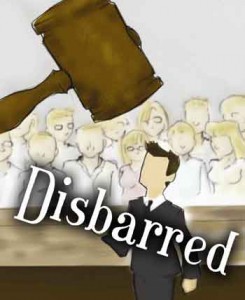
Wednesday’s abduction was not the first time that Tang has been on the Chinese government’s radar.  In May 2010, because of his defense of a Falun Gong practitioner in Sichuan province, the Beijing Bureau of Justice – the government body that manages the legal profession in Beijing – disbarred Tang from the practice of law.  Ostensibly arguing that Tang violated courtroom rules, the Beijing Bureau of Justice’s decision was largely seen as political.  Similar to the United States, disbarment in China is reserved for those lawyers who commit a crime.  Tang was the first lawyer to be disbarred for what merely appeared to be zealous advocacy.

Since his disbarment, Tang has had no way to economically support himself, relying solely on the kindness of other human rights lawyers.  Such a blow has had its impact and more recently, Tang had become depressed about his situation, although still very active in the human rights movement.  One would have thought that this would have been sufficient for the Chinese government – that by taking away Tang’s livelihood, it would not seek to detain him.  One would also think that such action would be unnecessary: Tang’s disbarment was a clear signal to other human rights lawyers that the State could use vague provisions of the law to disbar them and deny them their raison d’etre.  But it appears that disbarment was not punishment enough for the PSB.

Why Abduct Tang Jitian Now? China’s Rule of Law Regression

The immediate cause of Tang’s abduction relates to the recent house arrest and abuse of another human rights lawyer,
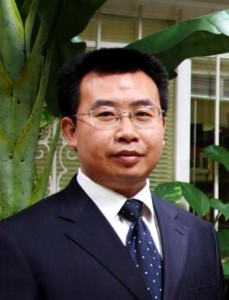
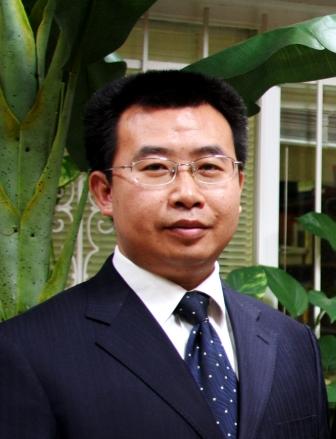
Human rights lawyer, Jiang Tianyong

Chen Guangcheng (pronounced Chen Gwang-chung).  Chen, a blind, self-taught lawyer who represented women forced into abortions by their village government, has been under house arrest since he was freed from prison in September 2010.  Last week, Chen and his wife were reportedly beaten after they leaked an hour-long video of their daily surveillance to the U.S.-based human rights and religious group, China Aid (for the video, click here).  On Wednesday afternoon, Tang Jitian had lunch with a group of Beijing human rights lawyers to discuss what the group could do to support Chen.  Soon after this brain-storming session, Tang was abducted.  Additionally, another participant of the Wednesday lunch group has also been abducted.  On Saturday, February 20, 2011, human rights lawyer Jiang Tianyong (pronounced Gee-ong Tea-ann young) was taken away in an unmarked van, only days after he was roughed up while in police custody.

But Tang and Jiang’s belief that the law should be followed and individuals’ rights should not be trampled on by the State is the real reason for his abduction and likely abuse at the hands of the PSB.  Over the past few years, China’s human rights attorneys have become more organized, using modern technology to quickly communicate with each other, and increasingly vocal, demanding that  the government abide by its own laws when it comes to the people’s civil rights and civil liberties.  Instead of responding positively to these developments – developments that largely symbolize a growing rule of law society and an emerging civil society  – the Chinese government and the Chinese Communist Party (CCP) has further entrenched its authoritarian rule and has used increasingly sever measures to break these human rights lawyers. While Chinese human rights lawyers’ cases would be everyday affairs for public interest lawyers elsewhere in the world, the CCP views these lawyers as a threat to their one-party rule and the PSB views them as a threat to its all-inclusive, and many times illegal, policing methods.  Based upon the recent abduction of Tang Jitian and Jiang Tianyong, the PSB and the CCP will do whatever it takes to suppress these human rights lawyers.

On Saturday, while rumors were circulating on the internet that China itself was to have a “Jasmine Revolution” following the events in the Middle East, a Chinese rights activist tweeted that the Chinese government detained twenty-one other human rights attorneys: Zhu Yufu, Liao Shuangyuan, Huang Yanming, Teng Biao, Ran Yunfei, Li Tiantian, Liu Guohui, Ding Mao, Lu Yongxiang, Xiao Yong, Zhang Jianping, Shi Yulin, She Wanbao, Li Yu, Lou Baosheng, Wei Shuishan, Zhang Shanguang, Li Xiongbing, Xu Zhiyong, Huang Yaling, and Li Bo.  Many may suffer physical abuse at the hands of the PSB.  Some already have.

Why Should Anyone Care?

I met Tang Jitian when I was last in China and was impressed, not just with his bravery, but also with understanding of his role in pushing the Chinese government to truly commit to a rule of law.  If human rights lawyers are suppressed now he told me, there will be no one to take over the movement.  Tang is right and breaking the movement appears to be one of the goals of the Chinese government.  By openly subjecting human rights attorneys to constant surveillance, disbarment, psychological threats, and physical abuse, the Chinese government hopes that once this generation of human right lawyers pass, no younger lawyers will dare to take up the mantle; the repercussions are too severe.
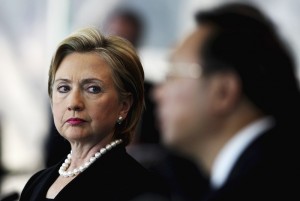
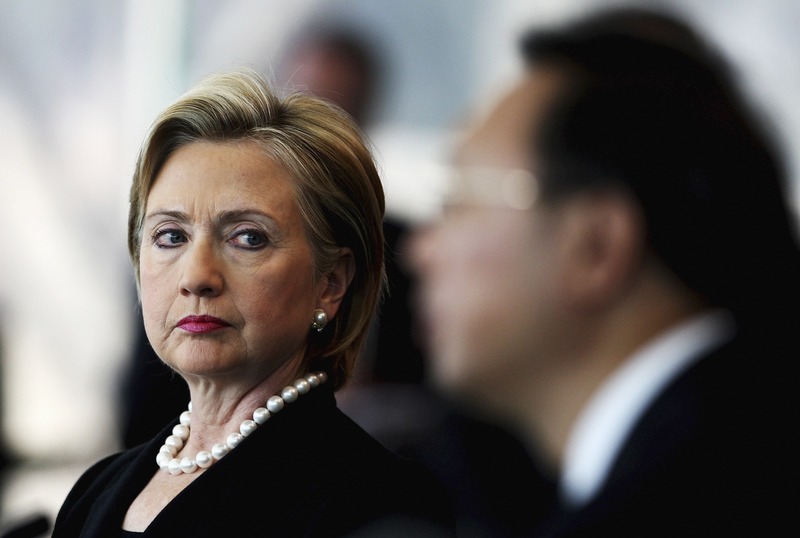
Secretary of State Hillary Clinton to take a hard line on human rights

But the question remains, will the rest of the world allow this?  Last month, the Obama Administration impressed many by repeatedly raising the issue of human rights with Chinese President Hu Jintao.  Just days before Hu’s arrival in Washington, D.C., Secretary of State Hillary Clinton bluntly discussed the plight of China’s human rights lawyers, stating that the United States will expect China to fulfill its own promise of rule of law: “America will continue to speak out and to press China…when lawyers and legal advocates are sent to prison simply for representing clients who challenge the government’s positions….”  The time has come for the United States to back-up that statement.

The Obama Administration has already expressed its concern with the treatment of Chen Guangcheng.  But it cannot forget the less known advocates like Tang Jitian and Jiang Tianyong – without some form of international recognition of his situation the PSB will believe it has the cover to do with Tang and Jiang what it wants.  Furthermore, the Obama Administration needs to see the Chinese government’s recent reaction as an affront to a “rule of law” and also needs to comment on the importance of not just a “rule of law” in China but on the existence of a vibrant public interest law bar.  Human rights lawyers directly challenge the State in order to protect individual’s legally-guaranteed rights; only when these lawyers are able to more freely function in society will China have any meaningful rule of law.

A meaningful rule of law in China is not just an abstract principle for Americans.  As more Americans do business in China and as the U.S. government seeks to increase the number of students studying in China to over 100,000, rule of law in China will become an everyday concern.  Last year’s arrest and prosecution of Australian citizen and Rio Tinto executive Stern Hu and the recent conviction of U.S. citizen and geologist Xue Feng embody the importance of China’s rule of law development for Americans.  The Obama Administration needs to publicly condemn the Chinese government’s recent suppression of human rights lawyers, call for the release of Tang Jitian, and frankly question the Chinese government’s commitment to a rule of law.  Tang and Jiang’s safety depends on it.

CL&P – What to Read for the Week Ending 2011-02-20

By , February 20, 2011

Translation: Speech by Mo Shaoping Discussing the Dangers for China’s Lawyers

By , February 16, 2011

Human Rights Lawyer, Mo Shaoping

Last July, Caijing Magazine – an independent, hard-hitting financial news outlet in Beijing – convened its first ever conference on the status of lawyers in Chinese society.  Titled “China’s Lawyers at a Crossroads” (summary of the conference can be found here – in Chinese), the conference featured notable criminal defense and human rights lawyers and professors such as Professors Jiang Ping and Chen Guangzhong of the prestigious China University of Politics and Law.

Through a series of speeches (conference website here – in Chinese), the panelists seemed to agree that the road China’s lawyers have been forced to walk in recent years has been rough and full of pot holes.  Rights-defending lawyer (or in Chinese weiquan lawyer), Mo Shaoping, known more recently for representing Nobel Peace Prize winner Liu Xiaobo, provided a clear analysis of the regression of the legal profession these past few years.  Below is an English translation of his fascinating, if not depressing, speech.  The Chinese original can be found here.

Ultimately, Mo provides some hope for China’s lawyers – a far-off, distant hope, but hope none the less, echoing some of the sentiment found in Bob Dylan’s “Paths of Victory” (trails of trouble/roads of battle/paths of victory/we shall walk).  In all, his speech provides an interesting insight into how one of China’s most prominent lawyers views the development of the profession.

China’s Lawyers Confront Systemic Dangers
By Mo Shaoping
Speech presented at Caijing’s Forum on “China’s Lawyers at a Crossroads”
July 10, 2010

I think I will discuss the legal profession and the rule of law from a macro perspective.

First, what is the present situation concerning lawyers and the legal system?  I agree with both Prof. Jiang Ping’s and Ms. Jin Liping’s views: at present, there has been a regression for the legal profession and the rule of law.  And this is not an ordinary regression; the movement backwards has been very great.

You can see China’s current regression from a rule of law from several angles.

1.  Originally, the path and direction of judicial reform was for judicial independence.  Now, this isn’t mentioned; instead, “[The Doctrine of] the Three Supremes” is promoted.

2.  The original direction of reform was to bring professionalization and specialization to the judges, but now the emphasis is on the decades- old “Ma Xiwu” adjudication method of following the masses.

3.  Originally, there was emphasis on judicial neutrality and passivity: the judiciary should be passive and neutral.  Now, the emphasis is on the active initiative of the judiciary.  I myself consider this a step back; even though there are very intense and different opinions in this debate, I consider a more active judiciary a regression.

4.  Originally, there was the emphasis that lawyers associations would be self-regulating, autonomous organizations.  But now, the leaders of our Ministry of Justice want lawyers to “pay attention to politics, take into consideration the overall situation, and observe proper discipline;”there is no mention of the word “law,” there is no mention that lawyers should follow the Lawyers Law when providing service to clients.

Second, does the legal profession exist in an environment and system of rule of law?  I believe that the legal professional environment and system does not exist under a rule of law.  Even though we have emphasized rule of law for many, many years and have regarded a [creating] a rule of law country as the goal, I believe our current system and environment is not one that relies on rule of law, rather it relies on the law of the Party [the Chinese Communist Party].  From the selection and appointment of [Party] cadres, we are under the Department’s control.  Our armed forces are under the absolute leadership of the Military Commission of the Party and thus absolutely obeys Party leadership; our ideology is under the increasingly strict control of the Propaganda Department, including the judiciary’s ideology.  The Political and Legal Affairs Committee of the Party is in charge of the People’s Courts; of course, it’s not only just the courts, it also includes the People’s Procuracy, the public security bureaus and the judicial administration bodies.  From a theoretical legal perspective, China itself does not follow a principle of judicial independence in organizing its judicial system.  From a reading on the 126 articles of the [Chinese] Constitution, it’s the People’s Courts that exercise judicial power; administrative bodies, societal groups, and individuals are not suppose to interfere with the courts’ judicial power.  But you cannot say that about Party interference and thus we have a Party-run political-legal justice system.  China’s 1954 Constitution is better than this current regulation.  The 1954 Constitution was clear and simple: only the independent courts administered the judicial power, and the courts only answered to the “law.” It was very clear, there was no mention of administrative bodies’ interference, or society groups of individuals.  So did Party organs have the right to interfere [under the 1954 Constitution]?  No.

Third, under this system and environment, is the legal profession one with true freedom of speech?  My answer is similarly “no.”  Right now, criminalizing speech can be found everywhere.  Prof. Jiang Ping has paid particular attention to the case of Liu Xiaobo.  From hundreds of articles with over two million words, I can pick six articles and over 674 words to maintain that you are inciting subversion of state power [the crime Liu Xiaobo was convicted of].  A few days ago, I ran into a Hunan professor.  He requested that the Supreme People’s Court conduct an investigation of the lawyer perjury provision of Article 306 of the Criminal Law;  [the request] was signed jointly by other lawyers.  Allegedly, the local justice ministry and local lawyers association disciplined him.  From the perspective of the Legislation Law, not even a lawyer, but rather any regular person can request that the National People’s Congress conduct an official examination of any law, but when a lawyer, who has a closer relationship with the law, asks the people’s court to conduct an investigation, he is punished.  Thus, our profession is not one with freedom of speech and expression.

Fourth, are our lawyers associations self-regulated and autonomous?  That’s also not the case.  Prof. Zhang just mentioned that we are not able to have confidence in our lawyer associations, these lawyer associations sometimes, I myself think do not protect lawyers’ legal rights.  Instead they work to help judicial administration bureaus punish lawyers.  Of course, from another perspective, a country that uses a branch of its government to control lawyers’, this is rarely viewed as a true democratic, rule of law country; very, very rarely seen as such.

Just raising in passing the problem of lawyer fees, I hold a very negative view of the regulation concerning attorney fees.  The regulation on attorney fees lacks an adequate basis in law and violates the Price Law.  The Price Law includes nothing more than three kinds of prices: government-set prices, government-guided prices, and market-set prices.  There isn’t sufficient basis in the law to say that attorney fees are government-set or government-guided, but at the same time, [China’s] regulations standardizing attorney fees runs counter to the rest of the world.  In many countries, there is a limit on the lowest amount that can be charged – this prevents vicious competition – but there is no limit on the maximum that can be charged.  In practice, this method is difficult to operate.  Moreover, this causes some excellent lawyers [to leave], for example, criminal defense lawyers abandon the criminal defense bar.

Fifth, what should China’s lawyers’ next step be?  To be honest, I also don’t know what the next steps should be.  Of course, I still firmly believe that [China] will inevitably move toward democracy, rule of law and constitutionalism; this is the tide of history.  To borrow a phrase from Dr. Sun Yat-sen: in the majestic tide of history, those who follow the current shall flourish, those who go contrary to it shall perish.  Although the road will be very tortuous and dangerous, China will eventually become a democratic, rule of law, constitutional government and no one can stop it.

Just For Fun: Photos of Lunar New Year Parade

By , February 13, 2011

On Saturday, February 12, 2011, the Korean and Chinese communities of northeast Queens in New York City celebrated the Lunar New Year by hosting the 15th Annual Lunar New Year Parade on Main Street in Flushing.

Below are photos of the parade from Robert Burnett, Jr. – world-renowned “Chelebrity” (a China celebrity) photographer (Burnett is known for his work in photographing Peter Hessler here).  Burnett’s amazing and extensive portfolio can be found on his website, www.rburnettjr.com

Lunar New Year is celebrated by both the Chinese and Korean communities, and both had a strong presence at the Flushing parade.  The first half of the parade included the Korean and Korean-American communities, including a small but strong contingent of Korean soldiers who served in the Vietnam War.  Unknown to most Americans, in the late 60s and early 70s, the U.S. government requested that Korea send troops to Vietnam to assist the U.S. war effort there.  Although largely against Korean public opinion, the Korean president eventually sent 320,00 soldiers.  Over 4,000 Korean soldiers were killed in action (for more info, click here).

The Chinese segment of the parade was largely dominated by the Taiwanese Chinese community, which was surprising since for the past 10 years, there has been a large influx of mainland Chinese to Flushing.  There only appeared to be one mainland Chinese group in the parade – the “China Anti-Cult World Alliance” – which appears to be more a statement against the Falun Gong than any “anti-cult” movement.  Only a few floats later was there a Falun Gong group marching in the parade.

But in all, as Burnett’s photos below reflect, the 2011 Lunar New Year parade was a fun celebration of one of the most important holidays in the Chinese and Korean cultures.  Enjoy!

Click the “Next” button or click on the picture itself to go to the next photo in the slide show.
[portfolio_slideshow]

CL&P – What to Read for the Week Ending 2011-02-13

By , February 13, 2011

CL&P – What to Read for the Week Ending 2011-02-06

By , February 6, 2011

恭喜发财!What Will Year of the Rabbit Bring?

By , February 2, 2011

Tomorrow – February 3 – starts the beginning of a new year on the lunar calendar for most East Asian countries.  It is a time to celebrate with family and friends and wish in health, prosperity and good fortune for the new year.  To all of our Asian friends – happy new year!

For the Chinese, the new year also represent a new sign in the 12-animal zodiac.  2011 marks the end of the tumultuous year of the Tiger and ushers in Year of the Rabbit.  But while the rabbit might seem soft, cuddly and cute, the 2011 year of the rabbit will be anything but.

Navigating the intricacies of China’s astrology and fortune-telling makes knowledge of its 2,000-year-long history and non-transparent government look like a walk in the park.  But it is essential to the Chinese culture, even on the mainland where the Chinese Communist government sought to stamp out such things during the 1950s and 60s.  With “Reform and Opening” in 1980, Chinese traditional astrology came back with a vengeance; birth rates noticeably increase for auspicious years:  2000, year of the dragon, saw a spike in births and inspired this interesting academic article on the role the zodiac plays in Chinese fertility.  Heck, even the Beijing Olympics were planned in light of folklore traditions – August 8, 2008, highlighting the ever auspicious number “8.”  So much for the Chinese government’s attempt to eliminate the “Four Olds.”

While I’m no Mr. Wong (a friend’s dad who has tried many, many times to explain to me how the Chinese zodiac work and also makes the world’s best sesame noodles), I probably know a little bit more than the average General-Tsao-eating American.  So here goes my meager, amateur take on why this year of the Rabbit is so going to suck.

Every animal in the zodiac is associated with one of the Five Elements of Chinese cosmology – either fire, earth, metal, water or wood.  This is a permanent association and for the rabbit, its fixed element is wood.  But every year is also associated with an element as well; the year-element association is independent of the animal-element association (I know, this is very confusing).  So while most Westerns think that the Chinese zodiac is on a 12-year cycle, this in fact is not true – it’s on a 60-year cycle (5 elements times 12 animals).

2011 is a metal year.  This is where we come into trouble.  Metal and wood, the fixed element of the rabbit, just don’t

Beware of the Metal Rabbit!

get along.  Sort of like a game of rock, paper, scissors, each element has control over another; here metal controls wood with wood constantly rebelling against metal.  So you take a wood-based rabbit and stick it in a metal year and you have yourself a bit of a problem.  While the rabbit year would otherwise pass peacefully, with the metal element thrown in, don’t expect your troubles from 2010’s year of the tiger to end quite so quickly.  It will be calmer, but will still be filled with uncertainties and problems.

In the end, the future of the year will depend on your OWN birth sign.  So click here for a more detailed analysis of what 2011 holds in store for you.

In the meantime, to all of our friends who celebrate the new year – Gong Xi Fa Cai (pronounced gong see fa tsai), may the year of the Metal Rabbit bring wealth, health and luck, and may this year pass quickly for the calmer water dragon year of 2012!

Panorama Theme by Themocracy