Posts tagged: Rule of Law

A Response to Rio Tinto – A Different Opinion from Australia

By , April 20, 2010

Australia-flagOn Monday, I posted my take on the Rio Tinto trial which elicited significant response from China law scholars.  I was lucky to have a very thoughtful response from Prof. Vivienne Bath of the University of Sydney and Director of the Centre for Asian and Pacific Law at the University of Sydney.

Prof. Bath has a different perspective on the Rio Tinto trial and you can find her comments below.  She also points out two mistakes that I made in the original article.  In the original article, I state that foreign press was permitted into the bribery portion of the trial.  This is incorrect.  They were only permitted access to the verdict and sentencing portion.  A second mistake is that I state that there was live witness testimony; there was not.  There was only the presentation of written testimony; not actually live witness testimony.  I have made these corrections to the original article and my apologies to the readers.

I thank Prof. Bath for her response to my article and for giving me permission to post it to China Law & Policy to offer a different perspective.


I was interested in Elizabeth Lynch’s comments on the Stern Hu trial now that it is all over (bar the appeals).  Her post presents an interesting and different view of the trial to that often presented in the press.  Certainly some of the comments by politicians (on both sides) have been fairly unconstructive and some of the press coverage could have been better informed.

In particular, Elizabeth makes some very apposite comments on the process. It appears to be the case that Chinese authorities followed the letter of the Criminal Procedure Law, although their interpretation of the Australia-China Consular Agreement was, in my opinion, completely unjustified.  Regular visits by the consul were allowed as was access to lawyers.  Time limits were strictly observed.  Apparently a 71 page judgment was produced (which is quite unusual!) justifying the court’s conclusions, which is very welcome (or will be, if and when the judgment is made publicly available).

I do not think, however, that the fact that the Chinese authorities complied with Chinese laws should be a matter for particular congratulation.  The content of those laws is bound to be the subject of comment.  The press (and the Australian public), for example, probably took access to a lawyer for granted – they were more interested in the fact that Hu’s wife was apparently not allowed to visit her husband at all during his period of detention.

In addition,  there are still some issues relating both to the trial and to the Chinese legal system itself which are continuing matters for concern regardless of the guilt or innocence of the parties.  First, it appears that the foreign media was not admitted to any part of the trial, although several representatives of the state media may have been present.  See http://www.abc.net.au/news/stories/2010/03/22/2852611.htm;  http://www.theaustralian.com.au/business/media/the-world-watches-stern-hu-case-as-media-coverage-is-gagged/story-e6frg996-1225846613332 .  The Australian press was, as you would expect, very indignant on this point.  News reports were provided by brief comments from the Department of Foreign Affairs and Trade representative, who was quite succinct in his comments.

Secondly, I did not see any references to witnesses testifying in person at the trial and I would be interested to see the links to reports on this.  Indeed, Du Shuanghua’s devastating evidence on the payment of RMB70 million was given in writing, with, according to reports, Wang Yong indignantly asking that Du appear in person so that he could be cross-examined (http://mulrickillion.spaces.live.com/blog/cns!41BA4803555B0DA4!5445.entry ).   The entire trial, involving 4 defendants and a variety of complex charges, took less than 3 days, which is not consistent with the presentation of detailed personal testimony and cross-examination.  The point has been made that written testimony is often presented in trials conducted under the inquisitorial system.   Article 47 of the Criminal Procedure Law, however, does provide for the testimony of witnesses to be questioned and cross-examined in the courtroom.  Although Chinese trials often take less time than this, and, it does not take away from the main point, which is that such a short time period is completely inadequate to allow defendants to conduct cross-examination of witnesses (if they are there) or to present their own cases in detail.

Thirdly, in relation to the length of the sentences, it should be noted that a sentence of 3-7 years for infringing on commercial secrets can only be handed out “if the consequences are especially serious”.  The court justified the sentences as follows: ” ‘The four have seriously damaged the interests of the Chinese steel enterprises and put those enterprises in an unfavourable place (during) the iron-ore negotiations, which led to the suspension of the negotiations in 2009,’ Judge Liu told a packed court room.  He said this behaviour caused overpayment of 1.108 billion yuan by industry players, including Shougang Steel and Liagang Steel. The interest alone on this was more than 11 million yuan.” (http://www.theaustralian.com.au/business/mining-energy/bribes-forced-china-to-overpay-for-iron-ore/story-e6frg9df-1225847190730 ). This is really quite an extraordinary conclusion for any judge to make, particularly in the confused and political atmosphere surrounding the iron ore negotiations.

Fourthly, Australia does have an obligation under its Criminal Code, which codifies its obligations under the OECD Convention, to prosecute bribery of foreign officials.  Although Australia is nowhere near as active as US authorities, Australia has just revised its law to increase the penalties significantly.  The Australian government can hardly prosecute Stern Hu, however, because he has already been convicted in China.  In relation to Rio Tinto, if the Chinese authorities thought Rio was implicated, Article 220 of the Criminal Law provides the basis for prosecution of a “unit”.  The action of the Chinese authorities in closing the trial and failing to produce any evidence publicly on the commercial secrets charge is not helpful for an Australian investigation.  In any event, it  appears that agencies in the US, the UK and Australia are looking at Rio’s behaviour – see http://www.watoday.com.au/business/just-what-is-a-chinese-commercial-secret-remains-a-secret-20100416-skmv.html .  We do not know if the Australian Federal Police have commenced or will subsequently commence an investigation under the Criminal Code.  Rio Tinto’s comments suggest doubt about whether the “commercial secrets” were in fact secret, but it has in any event issued new guidelines to its employees operating in China (http://www.riotinto.com/documents/Media-Speeches/2010AGM_transcript.pdf ).

The final question is the standard of the press coverage.  Without commenting on the press outside Australia, I do not think that the mainstream Australian press can be accused of using “bad facts” making “bad journalism”.  There was front-page coverage of the trial and considerable commentary, as one would expect, since an Australian citizen and one of Australia’s most important companies were involved, but the main Australian newspapers, The Age, The Australian and The Sydney Morning Herald appeared to go to considerable trouble to ensure that their coverage was accurate.  They published reports on the judgment and details on the court findings on bribery with as much enthusiasm as they published reports on the criminal system and the process of the trial itself.  As for the Australian government, given the unease that the timing of the arrests and the lack of transparency regarding the trial caused in Australia, I think that the Australian government’s behaviour and comments were fairly restrained (unlike the Chinese foreign affairs spokesperson, whose comments were quite provocative).  Opposition politicians in Australia were less restrained in criticising the Chinese legal system and the Australian government for alleged inaction and failing to stand up for Australia’s interests, but that is the nature of opposition politicians in a democratic system.

It should be appreciated that this trial touched on a number of very sensitive points in Australia – the influx of massive amounts of proposed Chinese investment in the natural resources area, particularly by state-owned enterprises, has caused considerable public unease; there was considerable publicity about the proposed Chinalco investment in Rio Tinto, with the shareholders and BHP actively campaigning against it,  and front-page coverage of the China Iron and Steel Association’s effort to take over conduct of the annual iron ore pricing negotiations.  All of these issues were widely discussed in the Australian press, not just the business press, due to the importance of natural resources in supporting the Australian economy in the midst of the global financial crisis.  The timing of the arrests – directly after the withdrawal of the Chinalco bid and the collapse of the iron ore negotiations –  combined with the involvement of the Ministry of State Security and the original focus on “state secrets” was guaranteed to attract widespread publicity and encourage the belief that the entire criminal investigation was politically motivated.  Unfortunately, the conduct of the trial – and the fact that the prosecution started with the employees of Rio rather than the employees of the Chinese steels mills – has done very little to dispel that belief.  I do not think that this can be blamed on the press – it is, after all, their duty to report, and the case, and the circumstances surrounding it, certainly gave the press enormous amounts of material.

–Vivienne Bath, Associate Professor, University of Sydney

All expressions of opinion in this comment, and any associated errors, are entirely my own.

Bookmark and Share

The Rio Tinto Trial in China – A Miscalculation about Rule of Law?

By , April 19, 2010

Originally Posted on Foreign Policy Digest

china steelDevelopments

Last summer, the billion dollar steel industry watched in rapt attention as China cracked down on one of its own.  On July 5, 2009, Chinese authorities in Shanghai detained four employees of the Australian mining company Rio Tinto, then later sentenced them to prison terms ranging from seven to fourteen years.  Many China watchers and industry insiders considered the sentencing and charges of bribery and commercial espionage to be retaliation for the recent tough iron ore pricing negotiations, and Western media were quick to portray the Rio Tinto incident as a reflection of China’s irreverence toward rule of law and its politicization of the legal system for corporate advantage.   However, in examining the Rio Tinto case, the Chinese prosecutors followed legal procedure more precisely than they do in most ordinary criminal trials in China.  While there may have been some misuse of criminal process for corporate gain, it appears that the Australian government and Rio Tinto itself may have acted as passive accomplices in its politicization.

Background

Rio Tinto is keenly aware of China’s importance in its operations.  In 2009, China’s imports accounted for $10.56 billion, or close to a quarter of Rio Tinto’s overall profits.  With China as one of the few countries still growing during the global finical crisis, it is no wonder that Rio Tinto’s 2009 Annual Report listed “strengthen [its] relationship with China” as a key strategic goal for 2010.

In China, it is neither unusual nor unlawful for suspects to be detained without being officially arrested or charged with a crime.  Article 69 of the Chinese Criminal Procedure Law (CPL) permits authorities to detain a suspect

Stern Hu

Stern Hu

without arrest for up to 30 days in certain instances—one of which is in cases with multiple suspects.  When the four employees were detained by Chinese State Security officials on July 5, 2009, Stern Hu—an Australian citizen—Wang Yong, Ge Mingqiang, and Liu Caikui appeared likely to be charged with stealing state secrets, a grave offense under the Articles 111 and 113 of the Chinese Criminal Law (“CL”) that can carry a life or, even death, sentence if convicted.  State secret trials are particularly nontransparent; the trial is completely closed, with even the defendant’s lawyer excluded.  However, upon their official arrest on August 12, the four Rio Tinto employees were not charged with stealing state secrets; instead all four were charged with the lesser crimes of stealing corporate secrets and commercial bribery, which carry prison terms of three to seven years and five years, respectively.  There is a thin line between stealing state secrets and stealing corporate secrets when the entity involved is a state-owned company, as are most Chinese steel companies.  But, given Stern Hu’s Australian nationality, it was crucial to Sino-Australian relations that China make such a distinction in this case.  On February 10, 2010, a three-judge panel in the Shanghai Number One Intermediate Court agreed to accept the case, and the four employees were officially indicted.

While in custody, the four employees received support from both Rio Tinto and the Australian government.  Sam Walsh, chief executive of Rio Tinto’s iron ore operations, remained confident in his employees’ innocence and repeatedly expressed his concern over the charges.  Australian officials who paid consular visits to Hu, as mandated by the China-Australia Agreement on Consular Relations (the “Consular Agreement”), continued to discuss the case with the press, and the Western media remained actively interested in the case, wondering how the Chinese government was going to execute what was perceived as trumped up charges against Rio Tinto employees.

Australian Consul-General Tom Connor (centre) makes a statement to the media outside the Shanghai No. 1 Intermediate People's Court in Shanghai, on March 22, following the first day in the trial of four Rio Tinto employees.

Australian Consul-General Tom Connor (centre) makes a statement to the media outside the Shanghai No. 1 Intermediate People's Court in Shanghai, on March 22, following the first day in the trial of four Rio Tinto employees.

In a surprising turn of events, on March 22, 2010—the opening day of the long-awaited trial–all four Rio Tinto employees pled guilty to accepting bribes totaling $13 million.  In accordance with the Consular Agreement, an Australian consular official was allowed to attend the bribery portion of the trial.   Domestic press was given access to the trial, but with only guilty pleas, there was little to report.  Foreign press was excluded.* After the guilty plea, Rio Tinto and the Australian government, the only two Western entities that have seen the actual evidence that caused the four to plead guilty, stated that there was enough evidence to support the bribery charge.  But this allegedly “clear evidence” has not been made public, making it impossible to evaluate its credibility.

On the second day of the trial, the Court tried all four defendants in a closed-door trial on the charge of stealing commercial secrets.  Even Australian consular officials, who are permitted to attend all trials under the Consular Agreement, were denied entry.  After concluding the trial on March 24, the Court reached its verdict on the following Monday, March 29, 2010.  With Stern Hu’s wife in the courtroom–the first time she had seen her husband since the day he was taken away by authorities–the Court found all four defendants guilty of stealing commercial secrets.  In accordance with Chinese practice, sentences were immediately handed out: Stern Hu received a total of 10 years in prison, and Wang Yong, Ge Mingqiang and Liu Caikou received fourteen, eight and seven years, respectively.  All of the sentences were within the timeframe allowed by the Criminal Law.

Analysis

The Rio Tinto case makes clear that the Chinese criminal justice system could use improvement, particularly in regards to the public’s access to evaluate the evidence in non-closed trials.  But it is not the grave travesty the Western media portrays it to be.  In many ways, the Rio Tinto employees were given more protection of the criminal law than must ordinary Chinese defendants.  The Rio Tinto employees were all given access to defense counsel; Stern Hu met with his attorneys on ten different occasions before trial. In China, most defendants are unrepresented and the few who retain an attorney usually have no access to that attorney prior to trial.  Additionally, the Rio Tinto commercial secrets trial lasted two days, one day longer than most trials in China, with examination of evidence, including statements from witnesses.  In China, most criminal cases rely solely on a defendant’s confession with little to no other evidence.*

But the Western media has been particularly focused on the closed commercial secrets portion, with some arguing that the closed trial violates Chinese domestic law (see here and here).  Indeed, Article 152 of the CPL states that criminal trials, except for those involving state secrets or personal private matters, are open to the public.  However, the CPL is not the only instructive document.  The Supreme People’s Court (SPC), China’s highest court, issues binding interpretations to clarify the law.  Article 121 of the SPC’s “Interpretation of the CPL” maintains that in cases involving “business secrets,” the court may close the trial if a party requests it.  The Interpretation does not say that “party” is limited to either prosecutor or one of the defendants in the case; presumably any party with an interest in the secret may request the closure.  In this case, Rio Tinto, the Chinese steel companies involved, or the Chinese government, all of whom likely have reasons to keep the public out of the seedy affairs of iron ore pricing, likely requested a closed trial.

However, it is problematic that an Australian consular officer was excluded from the corporate secrets portion of the trial, and equally disturbing that the Australian Foreign Minister would neglect to discuss or criticize the Consular Agreement violations after the verdict.  The Consular Agreement is clear that an Australian consular official is permitted to attend all trials involving Australian citizens in China.  China’s claim that “judicial sovereignty” necessitated the closing of the commercial secrets portion of the trial is specious at best and leaves China open to the Western media’s assertion that the Rio Tinto case was purely political.

Yet, there is also reason to question the roles of Rio Tinto and the Australian government in the politicization of this case.  From the beginning, when the charges were changed from state secrets to commercial secrets, both the Australian government and Rio Tinto likely exerted pressure on the Chinese government, taking advantage of the political nature of the Chinese legal system which the Western media has criticized China for.

Sam Walsh, Rio Tinto's Iron Ore Chief

Sam Walsh, Rio Tinto's Iron Ore Chief

After the four employees were found guilty, Rio Tinto was quick to report that while “clear evidence” showed beyond a doubt that the four employees had accepted bribes, all bribe-taking was conducted outside of Rio Tinto.  It seems difficult to believe that a $13 million bribery scheme, presumably resulting in cheaper prices for iron ore for Chinese steel makers or more iron ore sold to a preferred Chinese steel maker, would leave not a single trace of evidence on Rio Tinto’s systems – not a single email or a price discrepancy or any evidence that more iron ore was being sold to one steel company, nothing. Also, as others have pointed out, with regard to the charge of stealing commercial secrets, one must wonder, who was the ultimate beneficiary of the theft?   Although evidence in the commercial secrets theft is not public, during sentencing the Court stated that the Rio Tinto employees obtained secret information about the China Iron and Steel Association’s “next price for upcoming iron ore negotiations.”  In other words, the limit one can charge the Chinese steel industry for iron ore.  This is information that Rio Tinto the company would want but would be less valuable to individual employees such as Stern Hu.

There are other legal tools to use to find out this information, but it appears that the Australian government has chosen not to use them.  Under Australian law, bribery of foreign officials by an Australian company and its employees is illegal and can be prosecuted in an Australian court, even if the bribery happened abroad.  Here, the Rio Tinto employees were convicted of stealing commercial secrets.  While one could steal commercial secrets by burglarizing someone’s office or hacking into their computer, it is most likely that the Rio Tinto employees obtained the secrets from someone on the inside of China’s state-owned steel industry.  It is most likely the Rio Tinto employees paid for this type of information, which is not easily attainable or free.  Such an act would be in violation of Australia’s criminal law prohibiting bribery of foreign officials and could subject Rio Tinto to large monetary penalties.  But the Australian government has made no overtures of either investigation or prosecution of other Rio Tinto employees or Rio Tinto itself.

China’s legal system is far from perfect; greater transparency could result in a more reliable legal system, less vulnerable to censure.  In this case, allowing the public to see the evidence relating to the bribery charges and giving some sort of an explanation for closing the commercial secrets portion of the trial could have been useful.  But, ultimately, the Rio Tinto case is not the poster child for China’s retreat from rule of law or for the danger of foreign companies doing business in China.  Instead, this case makes clear that the oft quoted adage by lawyers that “bad facts make bad law” is equally as apt to the press: “bad facts make bad journalism.”

__________________________________________________________________________________________

* Corrections were made to the original article to better reflect the facts (see here).  The author still stands behind the views expressed in this article.

Bookmark and Share

VIDEO: Panel Discussions in Honor of Prof. Jerome A. Cohen

By , March 9, 2010
Prof. Jerome A. Cohen - Photo by George Washington Law School

Prof. Jerome A. Cohen - Photo by George Washington Law School

On February 19, 2010, George Washington School of Law and Georgetown University Law Center hosted an academic conference in honor of noted Chinese legal scholar Prof. Jerome A. Cohen.  Consisting of four separate panel discussions on current legal issues in China, the afternoon conference, and it’s participants (all of whom were students of Prof. Cohen’s) was a testament to the continued importance of Prof. Cohen’s work in the field.

Panel 1 – Google & Freedom of Online Information
(7:20 start) Rebecca MacKinnon, Visiting Fellow, Center for Information Tech. Policy, Princeton
(19:35 start) Lawrence Liu, Senior Counsel, Congressional-Executive Commission on China
(28:49 start) Sharon Hom, Executive Director, Human Rights in China
Click here for video of this panel.

Panel 2 – Business Law
(1:43 start)Donald Clarke, Professor of Law, George Washington University Law School
(10:25 start) Nicholas C. Howson, Assistant Professor of Law, University of Michigan Law School
(19:22start) James Feinerman, Co-Director/Prof. of Law, Law-Asia Leadership, Georgetown Law
Click here for video of this panel.

Panel 3 – Human Rights, Civil Society & Criminal Law
(1:07 start) Xiaorong Li, Research Scholar, School of Public Policy, University of Maryland
(9:18 start)Karla Simon, Professor of Law, Columbus School of Law, Catholic University of America
(21:25 start)Eva Pils, Associate Professor, Faculty of Law, The Chinese University of Hong Kong
(33:38 start) Scot Tanner, China Security Analyst, The CNA Corporation
Click here for video of this panel.

Panel 4 – International Law
(1:32 start) Julia Qin, Associate Professor of Law, Wayne State University Law School
(10:35 start) Michael Schlesinger, Of Counsel, Greenberg Traurig, LLP
(20:00 start) Timothy Stratford, Former Assistant U.S. Trade Rep. for China Affairs, USTR
(28:15 start) Alex Wang, Senior Attorney & Director, China Environmental Law Project, NRDC
Click here for video of this panel.

CLOSING REMARKS BY PROF. JEROME COHEN – Click Here

Thank you to Prof. Don Clarke of George Washington School of Law for making the videos of the conference available.


Bookmark and Share

More on Akmal Shaikh – Time Set for Execution

By , December 28, 2009

The Times Online is reporting that Akmal Shaikh will be executed tomorrow morning, Tuesday, December 29 at 10:30 AM local time (9:30 pm, Monday, EST).  Mr. Shaikh will be executed in Urumqi, the capital of the Xinjiang Autonomous Region.  After being held for more than 2 years without any family contact, Chinese authorities allowed two of Mr. Shaikh’s cousins to visit him in his hospital room.  A group from the British Consulate has also paid a visit to Mr. Shaikh.  High level discussions between the British and Chinese governments are continuing, with the British government requesting clemency or at the very least expert testimony regarding Mr. Shaikh’s mental illness. 

While the Chinese government has maintained that the case was handled according to law, no expert evidence was permitted to be submitted regarding Mr. Shaikh’s mental state.  Instead, the lay opinion of judges was used to determine that Mr. Shaikh suffered from no mental illness. 

If the Chinese government really wants the rest of the world to respect its courts and not view them as mere kangaroo courts, they themselves have to first respect their own laws, something that was absent in Mr. Shaikh’s case and other criminal cases involving mental illness.  The Chinese Criminal Law offers protections to the mentally ill.  But without procedures in place to examine a defendant’s mental state by professionals, these laws are conveniently rendered meaningless. 

Protection of the mentally ill would not just be helpful to Mr. Shaikh, but would also prove beneficial to the multitude of mentally ill Chinese defendants that interact daily with China’s criminal justice system.  While the Chinese press and the Chinese government seems to think that Mr. Shaikh’s execution will be a victory for rule of law in China and a repudiation of the extra-territoriality that existed in China in the late 1800s, in reality it will prove to be a lost opportunity for the Chinese people.

Bookmark and Share

The Obama Visit to China – What the U.S. Press Missed

By , November 23, 2009
DSC04715Originally Posted on the Huffington Post.


 Beijing, China – The U.S. press has not been kind to President Barack Obama and his recent visit to China.  Claiming that the U.S.’ tone has become conciliatory toward China, that the trip “yielded precious little” and even oddly comparing the Obama Administration’s behavior on the visit to a one-party, authoritarian regime, the U.S. press has all but designated the trip a failure.

But the trip was most certainly not a failure and in many ways fulfilled the U.S. press’ predictions – an event filled with a huge agenda covering a multitude of global issues, likely offering few deliverables, and probably playing down, at least publically, human rights.

So if the trip confirmed the press’ earlier predictions, then what’s got their panties all in a bunch?  Perhaps the one thing that upsets the press more than anything is a lack of access, and on this trip, the press certainly played second fiddle.  Questions were not taken from the press during last Tuesday’s press conference and very little other access was offered to the President.  But with only a day and a half in Beijing, this trip was not really about the press.

But in measuring President Obama’s trip based solely on their access, or lack of, the U.S. press has failed to report on some pretty substantial results of President Obama’s trip to China.  In what you likely will not find in other media outlets that are still licking their wounds from an alleged snub, below are some of the surprising deliverables from the visit.    

1.  Increased Military-to-Military Contact and High Level Military Exchanges

If the lack of communication between the U.S. and Chinese militaries does not keep you up at night, well it should.  The U.S. has a better relationship with Russia’s military than it does with China’s, but has more potential to cross paths with China’s because of the U.S.’ military presence in Asia.  Without proper channels of communication between the two militaries, a small skirmish can easily become a major crisis, as President Obama knows from his first months in office when Chinese navy ships circled and threatened a U.S. navy vessel in the South China Sea. 

Adding to the lack of communication is China’s broad interpretation of its “exclusive economic zone” (EEZ). A chinese-fleet-review-a-ch-008country’s EEZ extends 200 miles from the coast and gives the country sovereign rights over economic activities in those waters (usually the country uses its economic zone to search for natural resources).  By China’s broad definition, its sovereign rights in the EEZ expand outside of the economic realm, permitting it to interfere with other countries’ ships that enter its EEZ.  The U.S., as well as most other countries, perceives the EEZ as providing solely economic sovereignty for the coastal state, allowing other countries’ ships free access.  For the U.S., this also includes ships that are conducting military surveillance on the coastal state (for an excellent assessment of these different interpretations, see Margaret K. Lewis’ “An Analysis of State Responsibility for the Chinese-American Airplane Collision Incident”).  Needless to say, these different interpretations only add to the tensions between the two militaries. 

In the U.S.-China Joint Statement issued last week, much needed progress was made on the military front, especially in terms of communication.  High level exchanges between the U.S. and Chinese militaries will continue, with the Chief of the General Staff of the China’s People’s Liberation Army, General Chen Bingde, visiting the U.S. and both Secretary of Defense Robert Gates and Chairman of the Joint Chiefs of Staff Admiral Michael Mullen making a trip to China.

In regards to differing definitions of the EEZ, the Joint Statement alludes to this issue, showing that the two sides likely discussed and acknowledged the problem (From the Joint Statement: “The United States and China agreed to handle through existing channels…maritime issues in keeping with norms of international law and on the basis of respecting each other’s jurisdictions and interests”).  Granted they failed to reach a compromise, but this is not an issue that will be easily solved.  Just discussing this sensitive topic is progress. 

2.  Both Public and Private Discussion of Human Rights

Interestingly, a press that largely ignored this issue prior to President Obama’s trip is making a big deal of his “silence” on human rights violations in China.  Last I checked though, freedom of speech is usually regarded as one such right and President Obama discussed this issue rather bluntly and passionately at the Shanghai town hall.  While it is debatable as to whether focusing on freedom of expression on the internet is sufficient to assist China with a development of a civil society and a rule of law, it is difficult to argue that President Obama did not publically bring up the subject of human rights. 

Furthermore, in his letter written to China’s Southern Weekend newspaper, President Obama stressed the importance of a free press.  True, this letter was not permitted to be circulated to a wider audience, but it portrays the President’s continued emphasis, both publically and privately on human rights.

The Joint Statement also discusses human rights in general and calls for the next official human rights dialogue between the U.S. and China to be held by the end of February 2010 in Washington, D.C.  The Joint Statement also stressed the importance of rule of law in China and agreed to reconvene the U.S.-China Legal Experts Dialogue (see the Dui Hua Foundation website for further background).  With the increasing push back by the Chinese government in the area of rule of law, especially as it pertains to civil rights and civil liberties, deepening cooperation is an important deliverable.

It is true that the Obama Administration has opted more for a strategy of quiet engagement on this issue.  Whether the approach is effective remains to be seen.  This past summer, the Administration was able to secure the release of public interest attorney Xu Zhiyong through behind the scenes pressure on the Chinese government.  However, almost immediately after President Obama left China, the Beijing police apprehended and beat public interest lawyer Jiang Tianyong (pronounce Geeang Tian-young) as he was walking his 7 year old daughter to school.  While Mr. Jiang has since been released, he is under very tight surveillance.  Perhaps if President Obama had mentioned the plight and importance of public interest attorneys in China, the arrest of Mr. Jiang might not have happened.  Or maybe it would have.

Either way, the U.S. press’ conclusion that President Obama “soft-peddled” human rights on his trip does not appear to ring true.  Human rights was certainly discussed, both publically and privately, it just appears that perhaps China was not listening. 

3.  Clean Energy and Climate Change

As expected, the U.S. and China entered into a series of cooperative agreements pertaining to clean energy and climate change technology.  While neither side agreed to emission targets, the level of detail provided for in the issued agreements was more than anticipated.  Most interestingly, the U.S.’ Environmental Protection Agency and China’s National Development Reform Commission signed a memorandum of cooperation to help China develop its capacity to measure its greenhouse gas inventories.  This is no small feat.  China’s does not currently have the capacity to accurately measure its greenhouse gas emissions and thus, if it was to agree to emission targets, would be unable to provide verifiable data.  China’s lack of capacity on this front has rightly been a sticking point for many in the U.S. Congress, preventing the passage of domestic climate change legislation that would be used to bind the U.S. internationally.

This memorandum of cooperation is the first step to enable China to agree to emission targets and for the rest of the world to believe them. 

President Obama’s visit to China was certainly not overly exciting but it was far from the failure that the U.S. press has made it out to be.  It also does not signify the U.S.’ decline as some alarmist media outlets have claimed.  Instead, the visit was a series of tough negotiations between two global powers.  Both had winning issues and losing ones.  And in the end, President Obama likely walked out with a little more than expected.  For me, that’s an accomplishment.

Bookmark and Share

The Deliverables from Obama’s Trip – US-China Joint Statement

By , November 19, 2009

THE WHITE HOUSE

Office of the Press Secretary

_____________________________________________________________________________________________

FOR IMMEDIATE RELEASE

November 17, 2009

U.S.-China Joint Statement

November 17, 2009

Beijing, China

At the invitation of President Hu Jintao of the People’s Republic of China, President Barack Obama of the United States of America is paying a state visit to China from November 15–18, 2009.  The Presidents held in-depth, productive and candid discussions on U.S.-China relations and other issues of mutual interest.  They highlighted the substantial progress in U.S.-China relations over the past 30 years since the establishment of diplomatic ties, and they reached agreement to advance U.S.-China relations in the new era.  President Obama will have separate meetings with Wu Bangguo, Chairman of the Standing Committee of the National People’s Congress and Premier Wen Jiabao. President Obama also spoke with and answered questions from Chinese youth.

Continue reading 'The Deliverables from Obama’s Trip – US-China Joint Statement'»

Bookmark and Share

CECC Releases 2009 Annual Report on China

By , October 21, 2009

On October 16, 2009 the Congressional Executive Commission on China (CECC) released its 2009 Annual Report examining China’s human rights record and its progress toward a rule of law.  Click here for a PDF version of the CECC’s 2009 Annual Report.

US-ChinaThe CECC was established in 2001 after the U.S. normalized its trade relations with China.  Prior to normalization, Congress reviewed U.S. relations with China every year to determine if most favored nations status should continue to be granted to China.  Inevitably, this annual review focused on China’s human rights record and legal development.  However, with China’s accession into the World Trade Organizations (WTO), a yearly Congressional vote on trade relations with China was no longer possible.  As a result, in agreeing to China’s entry into WTO, the CECC was created to monitor China’s human rights, review its legal development, and maintain a political prisoners database.

As part of their mandate, the CECC is required to issue an annual report.  This report is thoroughly researched and provides an excellent snapshot of China’s progress in regards to international human rights standards and development of rule of law in more sensitive areas such as freedom of expression, criminal justice and access to justice.  The 2009 Annual Report is perhaps the most in depth, providing over 300 pages of data; pages 8 through 39 provide a summary of the Commission’s findings, showing both China’s progress as well as recent set-backs, and recommendations for U.S. policy makers.

Interestingly, the 2009 Annual Report was issued on the eve of President Obama’s trip to China (set for November 15-18), raising the question, will President Obama discuss any of these issues with Chinese President Hu Jintao?  On Secretary of State Hillary Clinton’s visit to China in February 2009, Secretary Clinton seemed to imply that human rights would take a backseat to other issues with China, such as the global financial crisis, climate change, and nuclear non-proliferation and regional security.  However, more recent events, such as the release of rights activist and attorney Xu Zhiyong as the new U.S. Ambassador to China arrived in Beijing and even more recent interviews with Secretary Clinton, have shown that the Obama Administration is raising human rights issues, albeit in a behind the scenes sort of way.  Will President Obama publically discuss human rights and legal development to the Chinese public in November?  And even if he does, will that portion of his speech be translated into Mandarin?

Bookmark and Share

A Bit Too Much Pollyanna? Brookings’ Report on Legal Development in China

By , October 19, 2009

pollyanna-150x150Many Western China observers were dismayed by this past summer’s arrests and harassment of Chinese public interest lawyers; for many, such a crackdown evidenced a step back in creating an independent legal system.  Cheng Li and Jordan Lee of the Brookings Institution offer a different interpretation.  In their recent work, “China’s Legal System,” Li and Lee maintain that while the arrest and detention of rights lawyers like Xu Zhiyong was certainly a disappointment, China’s recent progress with legal reform overshadows this past summer’s events.  But even though Li and Lee are correct to note some of the positive developments, especially with the growth of the legal profession in China, they perhaps put too much weight on these developments at the expense of recent obstacles.

Li and Lee offer four developments that they claim bode well for legal development in China: (1) an increasing body of law, with new laws being written and old ones amended; (2) the astronomical growth in the number of lawyers; (3) increasing economic autonomy and a greater sense of professionalism in the legal profession; and (4) the rapidly rising number of legally-trained government officials.

Li and Lee cite the huge number of laws that China currently has on the books (231 individual laws, 600 administrative regulations, 7,000 local rules and regulations, and a sizable number of departmental regulations), but only pay passing attention to China’s difficulty in implementing laws on the local level, arguably the most important aspect of a functioning legal system.  To be sure, drafting laws is the first step; but without meaningful and consistent implementation, the value of such a large body of law is questionable.

Additionally, Li and Lee look to the increased professionalization of the legal profession as a positive sign.  It is true Gavel-LawBookthat the Chinese bar has become more professionalized and lawyers are no longer employees of the State as they were in the 1950s.  But Li and Lee make no mention of the fact that the All China Lawyers Association and local bar associations are government-controlled and answer to the Ministry of Justice (MOJ).  Prof. Jerome Cohen of NYU’s U.S.-Asia Law Institute has consistently commented on this lack of independence of the Chinese bar and has noted the role that the MOJ has played in influencing bar associations to punish rights lawyers that go a bit too far for the government’s taste.

Finally, Li and Lee are correct to note that there has been an increase in the number of legally trained government officials rising through the ranks.  Most officials in the current leadership have a science background, with very few with a background in law or even the social sciences.  In the next generation of officials, currently being groomed for powerful positions in the Party and the government, a majority have a background in the social sciences.  But only one, Li Keqing, has a background in law.  Thus, a shift toward leaders with legal training is not as apparent as Li and Lee contend.  Furthermore, such a shift is not reflected in the positions in the Chinese government that one would think necessitate legal training.  Hu Jintao’s recent appointments to the MOJ and the Central Party Political-Legal Committee (the committee responsible for all legal institutions) all lack legal training; instead, many have training in the police force providing for a more militant view of justice.  Even the new president of the Supreme People’s Court, Wang Shengjun, has no formal legal training.

China’s legal development has come a long way since the era of Mao, when law was merely a tool for class struggle and lawyers were often harshly persecuted.  But using the Cultural Revolution as a baseline will only impede China’s progress; arguably, everything is better now than it was during the Cultural Revolution.  China has made progress, but its progress should not be overstated and its limitations need to be noted in order to move forward.

Bookmark and Share

News Alert: Xu Zhiyong Formally Arrested

By , August 19, 2009

Chinese Human Rights Defenders reported yesterday that Xu Zhiyong was formally arrested on August 18, 2009 at 11:50 AM.

Holding a person in detention for many days prior to arrest is not uncommon.  While the norm is three days before a request for an arrest, in political cases it is not uncommon to hold an individual for up to 30 days before a formal arrest.  For a great summary on the multiple ways that a person can be held by the police without an arrest in China, see this post on China Law Prof Blog.

The charge against Xu Zhiyong – tax evasion.

Bookmark and Share

Xu Zhiyong and What his Detention Means for Rule of Law in China

By , August 17, 2009

Originally posted on the Huffington Post

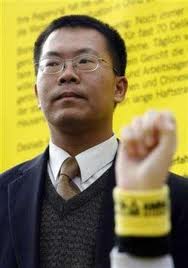
Just before dawn on July 29, 2009, the Beijing police apprehended leading Chinese public interest lawyer, Xu Zhiyong, allegedly to question him about possible tax evasion.  He has not been heard from since.  In an increasingly conservative political environment in China, Mr. Xu’s detention is far from an anomaly.  Many speculate that the Chinese government’s recent crackdown on public interest lawyers is merely a part of the preparations for the 60th

Xu Zhiyong; Photo by Shizhao

Xu Zhiyong; Photo by Shizhao

Anniversary of the founding of the People’s Republic of China this fall.  But in looking beneath the surface of the government’s recent actions, a different narrative emerges.

The apprehension of Mr. Xu, the forced closure of his legal assistance organization, Gongmeng (in English the Open Constitution Initiative), the investigation of Yi Ren Ping, a non-profit law center that assists AIDS and hepatitis patients with anti-discrimination actions, the recent disbarment of over 20 public interest lawyers, the professional “exile” of a leading legal scholar and outspoken critic to a remote region of China, all of these actions paint the picture of a government that has become increasingly more alarmed by a more vocal and organized group of lawyers.  The government, and the Chinese Communist Party (CCP) which ultimately controls all governmental bodies, has begun to view the development of these non-profit lawyers and legal reform as a threat to its authority and to the one-party rule of the CCP.  Recent governmental assaults on the public interest law field are not just a one-off affair.  Rather, they show a CCP not looking to embrace the “rule of law,” but instead seeking to contain it.

Development of Rule of Law in China from the US & Chinese Perspectives

Both China and the U.S. agree that greater rule of law in China is needed and can benefit China.  Virtually every conference between the two nations mentions the need for rule of law development. But what is never articulated is what each means by “rule of law.”  Many Western scholars claim that rule of law is value-neutral; it is merely a system where laws are enforced in a transparent manner by an independent judiciary and that rule of law can exist regardless of the political system of the country.

And while this is likely true, the U.S. government still largely views rule of law within the rubric of democracy; as the rule of law develops so does democracy and greater protection for human rights.  Of the $27 million the government appropriated to rule of law projects in China in 2008, $15 million were administered by the Department of State’s Bureau of Democracy, Human Rights and Labor and another $2 million was designated for non-State Department rule of law projects (see CSR report, p. 2).

China, however, takes a different perspective.  While seeing the benefits of rule of law in terms of economic development, international acceptance and respect, and the ability for the central government to have greater control over the provinces, China has largely limited rule of law to the economic sphere and at times, a few other select areas.  If a case involves a politically sensitive issue, involves an organized group of plaintiffs, or could unmask government malfeasance, the government will either not allow a case to proceed or will determine the ultimate outcome.

Even with this limited development toward legal reform, many U.S. policymakers believe that rule of law will continue to spread and permeate lawyers’, judges’ and society’s consciousness.  This Trojan horse strategy assumes that legal reform in the economic sphere will inevitably spread to all areas of the law and to Chinese civil society.  Government will be held more accountable to the people, laws will be administered transparently and all rights, political, economic and social, will be able to be vindicated.  But proponents of this theory offer little to no evidence as to why.  Why is this inevitable? Why can’t China succeed in limiting legal reform to the economic sphere?  Why can’t rule of law be contained?

In other words, what if China is the black swan in the whole rule of law theory?

Emergence of a More Conservative Legal Ideology in China

Theory of the Three Supremes

The detention of Xu Zhiyong comes amid an increasing conservative political environment in China, at least in terms of legal reform.  In December 2007, President Hu Jintao attempted to reassert the importance of the CCP in legal interpretation and reform by announcing his theory of  “The Three Supremes:” judges and prosecutors should “always regard as supreme the Party’s cause, the people’s interest, and the Constitution and laws.”   Although initially unclear if the Three Supremes were listed in hierarchical order, a recent announcement in July 2009 by a justice minister confirmed the hierarchical nature of the Three Supremes and the preeminence of the CCP when he called upon lawyers to “above all obey the Communist Party and help foster a harmonious society.”

Wang Shengjun, President of the Supreme People's Court

Wang Shengjun, President of the Supreme People's Court

The Three Supremes is not just rhetoric.  In March 2008, the National People’s Congress named Wang Shengjun, a Party insider without any legal training, as head of the Supreme People’s Court (SPC), replacing reform-minded and trained lawyer Xiao Yang.  Upon taking his position Wang has worked ardently to have the courts conform to the Three Supremes.

A More Organized Public Interest Law Movement

While the government expounds the Three Supremes and imposes this conservative ideology on the legal system, public interest lawyers have become increasingly organized and vocal.  In August 2008, a group of 35 public interest lawyers in Beijing issued an internet appeal that requested that the government-controlled Beijing Lawyers’ Association (BLA) to conduct free and direct elections of governing officials of the BLA.  In December 2008, human rights activists, many of whom are lawyers, signed Charter 08, a petition to the Chinese government calling for greater human rights, the end of one-party rule and an independent legal system.  In addition, many of the non-profit lawyers, including Xu Zhiyong, have represented plaintiffs in politically sensitive cases, including cases pertaining to the Sichuan earthquake and the melamine milk scandal.  Last year, Xu’s organization issued a report blaming Chinese policies in Tibet for the 2008 uprising in that region.

China’s Recent Response

Under the doctrine of the Three Supremes, China has not responded kindly to these public interest lawyers.  Although the BLA slightly altered its voting rules by allowing for the direct election of representatives who then in-turn elected the governing officials, in February 2009, the local Judicial Bureau sought its revenge.  After withholding a license from Li Subin, one of the advocates of the new voting procedures at the BLA, the Bureau issued an order for Yitong Law Firm, which employed Li, to shut down for six months for permitting a non-licensed attorney to practice law.

Liu Xiaobo, a leading human rights activist in China and signatory to Charter 08 was detained by police just hours before the publication of Charter 08.  He remains in police custody.  He Weifang, a well-known law scholar at the prestigious Peking University has been sent into professional exile and now teaches law in China’s most western region, Xinjiang.

Xu Zhiyong has faced a similar fate.  In May 2009, tax authorities began to investigate Xu’s non-profit legal center, Gongmeng.  On July 14, the Beijing office of the National Tax Bureau and the Beijing Local Tax Bureau each issued a notice to Gongmeng for non-payment of taxes on funds donated by Yale University and levied the maximum penalty of five-times the amount owed, or $208,000.  On July 17, twenty officials from the Beijing Office of Civil Affairs barged into the Gongmeng offices, confiscating all materials including computers, case files, and furniture, and shut down Gongmeng.  On July 29, Xu was apprehended by police for suspicion of tax evasion; he remains in custody.

In a Kafkaesque turn of events, on August 5, after raising at least some funds to pay its fine, the Beijing Public Security Bureau froze all of Gongmeng’s accounts.  On August 10, in an attempt to discuss this matter with tax officials at the Beijing Local Tax Bureau and the National Tax Bureau, Gongmeng officials were escorted out.   Authorities have informed Gongmeng that their recently filed paperwork is invalid because it does not contain the signature of Gongmeng’s legal representative, Xu Zhiyong. As this back-and-forth continues, Xu Zhiyong remains in police custody and the fine of $208,000 accrues daily compounded interest of 3%.

Also on July 29, officials from Beijing Cultural Market Administrative Enforcement Unit inspected the offices of Yi Ren

Click on image to open a PDF version of the Timeline of Events

Click on image to open a PDF version of the Timeline of Events

Ping, a non-profit organization that files anti-discrimination lawsuits on behalf of people AIDS or hepatitis.  Claiming that their search was being conducted under the Measures to Manage Internal Material Publications, a law that was repealed in 2001, the officials seized 90 copies of Yi Ren Ping’s newsletter.

China’s Containment of Rule of Law

The Chinese Communist Party is unified by one principle – to remain in power.  Any organized effort, even if within the confines of the law, will be viewed as a threat to the CCP’s authority.  In recent months, Chinese public interest lawyers have been effectively organizing themselves, especially through the internet, to challenge the current system.  However, these lawyers are far from what the rest of the world would deem radical.  They are merely using the laws passed by the National People’s Congress to protect people, especially those in disadvantaged groups like rural parents in Sichuan or people with AIDS.  They are not looking to overturn underlying constitutional principles; they just want to enforce the law as written.

Even though these lawyers work within the system to improve Chinese society in a way that the law permits, as soon as they amass sufficient numbers, in the minds of the CCP, they are no longer operating within the legal system, but within the political one.  In these situations, the CCP will abandon the legal system in favor of the political one.

But this is not to say that rule of law has not taken hold in China.  Today, foreign corporations usually receive a fair hearing before arbitration commissions and the majority of cases handled by the courts are ordinary cases that involve little to no Party interference.  There has been a marked increase in the professionalism of many judges and lawyers, and there is a sincere effort by many in the profession to develop greater rule of law.

However, those few cases that involve large groups of people or involve issues sensitive to the CCP, often do not receive the same transparent and independent judgment.  In these situations, the outcome is ultimately determined by the CCP.

Thus far, China has been successful at confining rule of law development to non-political cases.  The actions that have been taken against public interest lawyers in the past two years show China’s commitment to maintaining this separation.  The government’s harassment and detention of public interest lawyers is intended to have a chilling effect on the profession.  The low numbers of lawyers who seek a career in the public interest can be seen as a reflection of this impact.

But can China succeed in containing rule of law to certain areas?  Many look to Taiwan and South Korea as an example of the inevitability of legal reform and democracy in an East Asian society.  Both were under authoritarian regimes but eventually developed vibrant legal systems.  However, China is in a very different place.  Taiwan and South Korea were still dependent on the U.S. for trade and for military protection, and thus heavily influenced by the U.S.  China, on the other hand, has become an economic and military powerhouse, beholden to few other nations.  One of those countries is, of course, the United States, but China has gained significant leverage in this bilateral relationship by stocking up over $700 billion in US treasury bonds. All the while, it has been able to develop its economy while limiting legal development in the political and human rights spheres.  Its continued rise only solidifies the need for this separation in the minds of the CCP leadership.

China’s future remains uncertain and only time will tell if rule of law does in fact permeate other areas of Chinese society.  However, at this juncture, where China has become an important global power, it is important for U.S. policymakers to re-evaluate their assumptions of the rule of law landscape in China; and to ask themselves, what if China is successful in containing rule of law to certain segments?  Can the U.S. live with that reality?  Will it have a choice?

Bookmark and Share

Panorama Theme by Themocracy