Posts tagged: Barack Obama

Obama, the Dalai Lama and Tibet – What’s all the Fuss?

By Elizabeth M. Lynch, February 18, 2010
The Dalai Lama at the U.S. Capitol

The Dalai Lama at the U.S. Capitol

President Obama welcomes the Dalai Lama, Tibet’s spiritual leader, to the White House today. With this visit come renewed fears that U.S.-China relations are in a downward spiral.

Obama’s Meeting with the Dalai Lama will Not Harm U.S.-China Relations

The U.S. press has been adamant that President Obama’s meeting with the Dalai Lama will strain U.S.-China relations.  But this fear is misplaced.  Similar to the inevitability of U.S. arms sales to Taiwan, the Chinese government knows that a meeting with the Dalai Lama is a done deal – a U.S. president, at some point during his term, will invite the Dalai Lama to the White House.

Since 1990, every U.S. president has met with the Dalai Lama.  Obama’s meeting today is far from a surprise to Beijing; it’s what U.S. presidents do.  The topic even came up during President Obama’s visit to Beijing in November.  And the Obama Administration was fully aware that any contact with the Dalai Lama would elicit an angry response from Beijing.  It always does.

These recent events – the decision to meet with the Dalai Lama and China’s vocal response – in no way reflect a change in policy; it’s not a reflection of China flexing its muscles nor is it a reflection of a more hard-line approach by the U.S.  It’s merely just par for the course in U.S.-China relations; a rite of passage of sorts.

This isn’t to say that there has not been a change in the relationship.  The U.S.’ vocal critique of China’s internet censorship and the increasingly belligerent tone regarding China’s currency could show a stronger stance toward China.  Additionally, if China votes against sanctions against Iran or decides to abstain from Six-Party talks with North Korea, this could symbolize a China feeling stronger in the world.  But the rhetoric surrounding the Dalai Lama’s visit in no way represents a changed policy.

Beijing is Actually Happy about Obama’s Meeting with the Dalai Lama

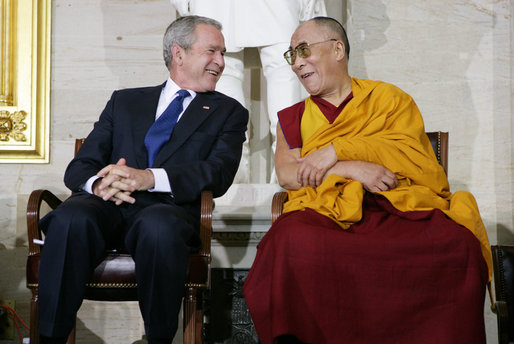
President Bush & the Dalai Lama

President Bush & the Dalai Lama

Well, “happy” might be a bit of a stretch, but Beijing is, at the very least, satisfied with the concessions that President Obama has already made.  Beijing knows things could be much worse (for them at least).  In 2007, President George W. Bush welcomed the Dalai Lama to the White House, and in a public ceremony, awarded him the Congressional Gold Medal.  Never before had a U.S. president met the Dalai Lama in public; and to award him with one of the highest civilian awards, just added insult to China’s injury.

Needless to say, this enraged the Chinese government, and post 2007, Beijing went on a global rampage to end foreign governments’ meetings with the Dalai Lama.  According to an interview with Tibetan scholar Robert J. Barnett, China has been largely successful with its strategy: “[l]ast year, only two national leaders met the Dalai Lama….compared to twenty-one in the previous four years.”

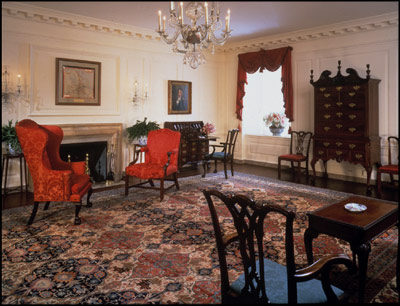
The Map Room: Less Prestigious perhaps, But more Ornate

The Map Room: Less Prestigious perhaps, But more Ornate

Comparatively, President Obama’s meeting tomorrow is much less confrontational than his predecessor’s.  President Obama will meet the Dalai Lama in private, and while the meeting will be held in the West Wing of the White House (not in the private residence as President Bill Clinton did and what the Chinese government would prefer), it will not be held in the Oval Office.  Instead, President Obama will meet the Dalai Lama in the less prestigious Map Room.  While this seems inconsequential to the American audience, this distinction is of high significance to China and is likely sufficient to placate the country.

So Why all the Hoopla?

In an interview with NPR, China historian Jeffery Wasserstrom explained the problem succinctly – both countries use this meeting to play toward their domestic audiences. If the U.S. president did not meet with the Dalai Lama, he would receive censure from Congress, human rights groups, and the public at large.  Last fall, prior to his trip to China, President Obama postponed a meeting with the Dalai Lama and received a lot of heat for it; the move was portrayed as a way to gain favor with China prior to his visit to Beijing.

Similarly, the Chinese government must cater to its domestic audience; part of that catering is to use angry rhetoric

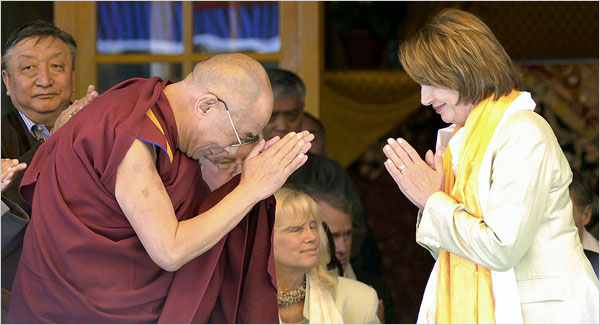
Speaker of the House, Nancy Pelosi meets with the Dalai Lama; another meeting that angered beijing

Speaker of the House, Nancy Pelosi meets with the Dalai Lama; another meeting that angered beijing

against any government leader who meets with the Dalai Lama.  To its people, the Chinese government portrays the Dalai Lama as a separatist intent on splitting Tibet from China.  Mix this with the Chinese government’s emphasis on nationalism, sovereignty and Tibet as an integral part of China, and you have a dangerous game.  The Chinese government has created a self-fulfilling prophecy – by encouraging strong feelings of nationalism, the people then demand that the Chinese government act upon any perceived slights to this nationalism.  In the case of Tibet, even though much of the people’s feelings are manufactured by the government, if the Chinese government does not respond with sharp attacks against anyone who meets with the Dalai Lama, then the people will begin to question its legitimacy.

The End Result for Tibet

So the dance continues.  But the third wheel here is the Tibetan people.  For the U.S. and China, this is a symbolic game to placate their respective domestic audiences; but for the Tibetans, this is about survival.  With each new U.S. president and with each new meeting with the Dalai Lama, there is a hope that the situation in Tibet can be resolved.

The Dalai Lama has not been allowed to return to his homeland and minister to his people, and the with an influx of ethnically Han Chinese into Tibet and laws that limit the Tibetan’s religious practices, it is questionable if the religion, the culture, and the people will be able to survive.  At the same time, negotiations between Beijing and envoys of the Dalai Lama have been at a standstill for over 15 years now, with the Tibetan side refusing to budge on its demand for greater autonomy, not just for the land mass of Tibet, but for all areas in China where there is a large population of Tibetans (this would be a little like Puerto Rico asking for greater autonomy for the island of Puerto Rico and also the South Bronx, Spanish Harlem and other areas of the U.S. with large Puerto Rican populations).  The Dalai Lama’s envoys met with officials in Beijing last month, but again the talks proved fruitless.

For the past 20 years, the U.S. has relied on symbolic gestures in its dealings with Tibet and has done little to actually move the dialogue between the Dalai Lama’s representatives and Beijing forward (see Melyvn C. Goldstein, The Snow Lion and the Dragon: China, Tibet and the Dalai Lama).  There’s a lot of focus on the Dalai Lama’s visit to the White House, but there is never a discussion as to why.  What does this do?  Where does this get the Dalai Lama?

What’s at stake here is more than just a popularity contest and the time for symbolic gestures has long passed.  Both China and the Dalai Lama are entrenched in their positions and neither is going to budge, but to move forward, a compromise is needed.  And each side does want to move forward; the Dalai Lama wants to return to Tibet and provide for greater religious freedom for Tibetans, and the Chinese government doesn’t want to live with the constant threat of riots and protests in the region.  But at this stage, a third-party, like the U.S., needs to step up to the plate to help negotiate a compromise – symbolic meetings won’t do the job.  Without the role of a third-party, there will never be progress.

Bookmark and Share

The NY Times Overreacts to U.S. Arms Sales to Taiwan

By Elizabeth M. Lynch, February 2, 2010

In yesterday’s New York Times, Helene Cooper argued that the Obama Administration’s recent announcement of over $6 billion in arms sales to Taiwan shows a “new toughness” toward Beijing and perhaps even a “fundamentally new direction” in the Administration’s China policy.  But, by focusing on the arms sales, Ms. Cooper overemphasizes the event.  U.S. arms sales to Taiwan are far from novel or tough, and some may argue, periodically required under U.S. law.

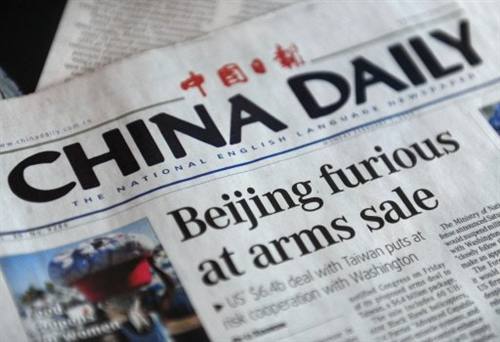
Similarly, Beijing’s angry reaction was predictable.  In fact, for each prior Administration’s arms sales to Taiwan, the Chinese government has responded in much the same way: postponement of military-to-military meetings, issue formal protests with U.S. officials, and saber-rattling for the domestic consumption.  However, Beijing’s recent threat of sanctions against U.S. companies involved with the arms sales is new and serious.  But this is more a reflection of China’s growing confidence and less a reflection of a changed or “tough” U.S. policy toward China.

Why Does China Care so Much about Taiwan?  Isn’t it a Separate Country?

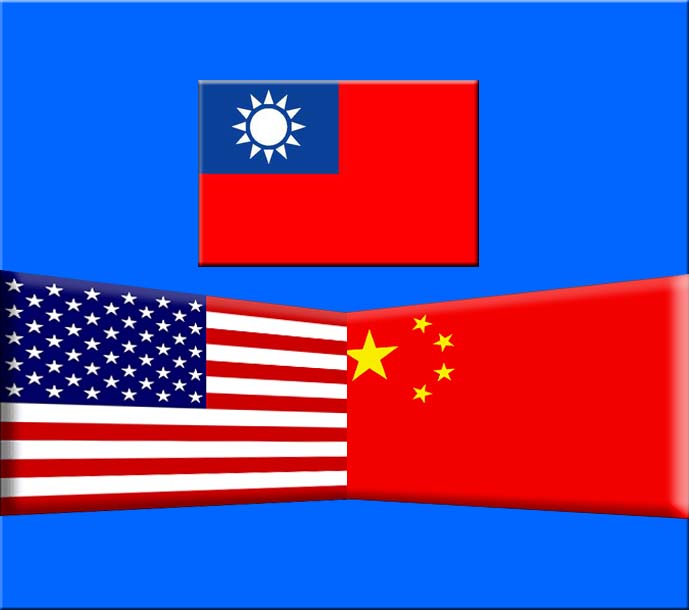
Nope, scrap that vision from your mind.  Taiwan is not a separate country, at least not in the eyes of the Chinese, Taiwanese or U.S. governments.   The People’s Republic of China (a.k.a. the mainland) views Taiwan (a.k.a. “The Republic of China”) as a renegade province and any relations between Taiwan and other countries is viewed as interference in the mainland’s domestic affairs.  While Taiwan has largely developed as an independent society, it agrees with the mainland’s assessment that there is only “one China.”  The Taiwanese government has never called for independence and the Kuo Min Tang party (pronounced Gwo min-dang and a.k.a. “the Nationalists” or KMT), which has ruled Taiwan for most of Taiwan’s separate existence, also espouses the view of “one China” and that eventually, the mainland and Taiwan will reunite.  The difference is who rules this reunited China.  For Taiwan, it’s the KMT; for the mainland, the Chinese Communist Party (CCP).

All of this stems from World War II.  After the War ended in 1945, the KMT and the CCP resumed their civil war, a civil war that was put on hold to fight the Japanese invasion from 1937 to 1945.  By 1949, the CCP’s victory was certain and the KMT government fled to the province of Taiwan to continue the Republic of China.

China DailyThus began the baffling existence of two Chinas – the communist People’s Republic of China on the mainland and the KMT’s Republic of China on Taiwan.  Each China claimed that it was the “official” and “rightful” China and the other a mere province; each forced the international community to recognize only one China – either China on the mainland or China on Taiwan – hence the birth of the “one China” policy.

The U.S. continued to ally itself with the KMT and the Republic of China, recognizing Taiwan as the official China and all but denying the existence of the mainland.  But starting in 1972, with President Richard Nixon’s historic visit to the mainland, relations between the U.S. and the PRC began to improve and in 1979, the U.S. switched recognition of China from Taiwan to the mainland.

Obama’s Arms Sales to Taiwan Is Par for the Course in U.S.-China Relations

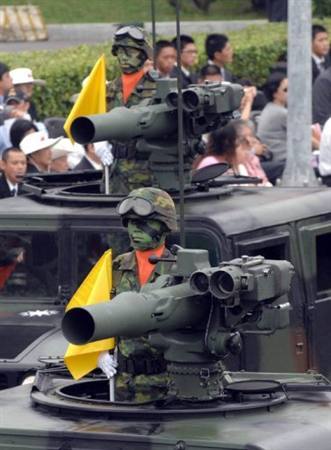
The Obama Administration’s recent announcement of arms sales to Taiwan follows a long line of arms sales by the U.S.  Almost every president since 1978 has sold arms to Taiwan.  In fact, the U.S., under the 1979 Taiwan Relations Act (TRA), is required to sell defensive arms to Taiwan.  In 1979, after changing recognition to mainland China, the U.S. did not want to leave its former ally completely open to attack or takeover.  As a result, Congress passed the TRA.

The TRA authorizes quasi-diplomatic relations between the U.S. and Taiwan.  For example, instead of having an official embassy on Taiwan, the TRA allows for the “American Institute in Taiwan.”  Additionally, and more importantly, the TRA established the U.S.’ responsibility toward Taiwan if it is threatened.  At issue here is the TRA’s requirement that the U.S. periodically sell defensive arms to Taiwan.

In announcing arms sales to Taiwan, the Obama Administration is merely following its obligations under the TRA.  green peopleAdditionally, the Obama Administration has not acquiesced to Taiwan’s request for F-16s.  During the George W. Bush Administration, Taiwan repeatedly requested the purchase of F-16s.  Similarly, Taiwan put out feelers with the Obama Administration to see if there was a possibility that they could purchase F-16s.  Again, Taiwan was told not to put in a formal request for F-16s.

The F-16s are a big issue since they are not “defensive” arms; Beijing would very much view a sale of F-16s to Taiwan as going a bit too far.  But Obama’s package to Taiwan merely includes the usual: Patriot missiles, Black Hawk helicopters, mine-hunting ships and information technology.

If the Obama Administration wanted to use the Taiwan arms sales requirement to “toughen” its stance to Beijing as the New York Times claims it has, the Administration would have acquiesced to Taiwan’s request for F-16s.  Instead, it merely sold similar arms to Taiwan that President George W. Bush sold in 2008.

This is not to say that the Obama Administration does not have a strong China policy.  Secretary of State Hillary Clinton’s recent policy speech on internet freedom was a robust critique of countries like China that censor their internet and partake in cyberhacking.  This follows President Obama’s strong and public criticism of internet censorship while in China this past November.  The New York Times would have done better to focus its argument on the Administration’s novel and forceful rhetoric on internet freedom vis-à-vis China.

Bookmark and Share

State of the Union & China

By Elizabeth M. Lynch, January 28, 2010

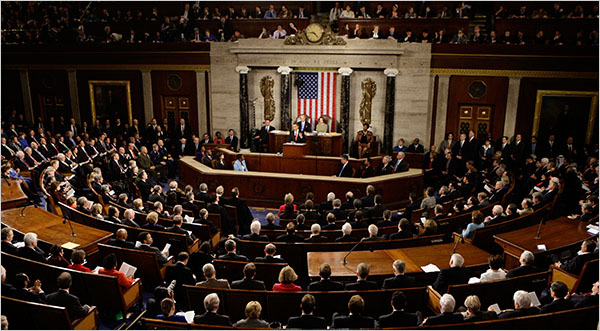
State of the Union addresses are mandated by the Constitution, and like most requirements in life, are often dull.

Barach Obama's first State of the Union

Barach Obama's first State of the Union

The speech usually turns into a laundry list of the President’s priorities with little rhetorical flair.  Often the most exciting part is when the TV cameras pan the audience and catch Senators and Congress members misbehaving.  This year it seems as if everyone Congress member was “tweeting” on their blackberry.

So to spice it up a bit, we at China Law & Policy decided to analyze President Obama’s first State of the Union address in terms of China.

Not surprisingly, President Obama’s speech focused mostly on the domestic agenda.  But China was mentioned twice, although both times only briefly.   China was first mentioned in regards to the technology behind its fast trains.  Similarly, when President Obama brought up China a second time, it was in regards to its technological advancement and that the U.S. must not fall behind.  In both instances, China was used more as a foil than anything else.

More compelling were the points when China wasn’t named but perhaps should have been.  In terms of trade partners, President Obama stated that he wanted closer ties with Panama, South Korea and Colombia.  But this is likely less of a snub to China than the fact that the Obama Administration is waiting on Democrats in Congress to approve free trade agreements with these three nations.

China was also absent when President Obama discussed the nuclear threat from both North Korea and Iran.  In fact, no other nation was mentioned and while President Obama was very forceful in threatening the two countries with increased sanctions, his actions appeared rather unilateral.  This is in contrast to his predecessor; in George W. Bush’s 2003 State of the Union address, the President specifically mentioned China as necessary to reach a peaceful solution on the Korean peninsula.

Does this mean that the U.S. is not receiving China’s support on this front?  It’s hard to tell.  Given the American public’s focus on the economy, health care and the corruption culture of Washington, it’s not surprising that President Obama’s speech had very little focus on foreign policy.  To draw any conclusions from the little he did say is speculative, but at the same time is something to be aware of and to watch.

Click Here for a Transcript of the State of the Union Address

Bookmark and Share

On the Eve of Copenhagen – China and the U.S. Join the rest of the World at the Table

By Elizabeth M. Lynch, December 7, 2009

Our last posting about the upcoming global climate change negotiations was not very positive; in fact very few analysts have been positive.  But the past week has proved interesting, with both the United States and China issuing carbon reduction plans, forcing us to reconsider our previous notion that Copenhagen will produce little results.


The U.S. and China Issue their Respective Climate Control Plans

cop15_logo_imgRight before Thanksgiving, President Barack Obama announced that the U.S. will be attending Copenhagen with a promise to cut emissions of greenhouse gases (GHG) by 17% from 2005 levels by 2020.  While it is a step forward that the U.S. will be attending the climate change talks with specific targets, those targets are still very much provisional.  Any targets coming out of the climate change talks will require Congressional approval post-Copenhagen.   While the 17% cuts proposed by the White House are identical to the GHG emission targets found in the House of Representative’s climate change bill passed in June, that bill has been languishing in the Senate, and will likely face an uphill battle once the Senate turns its attention from health care to climate change.   So whether the 17% cuts become a reality remains to be seen.

The day after the U.S. announcement, China issued a “carbon intensity target” reduction of 40-45% by 2020 to bring to Copenhagen.  While this looks huge on paper, in reality, it would allow GHG emissions to increase while China’s economy continues to grow, albeit GHG would grow at a lower rate.  Carbon intensity measures carbon emissions per unit of gross domestic product (GDP), so if your GDP skyrockets ever year, like China’s does at a rate of 8% a year, you can actually increase your absolute greenhouse gas emissions, and still show a 40-45% reduction by 2020.  Julian Wong on the Green Leap Forward also gives a good description of the math behind this.  China expects its GHG emissions to peak around 2035, a time that many experts believe is too late.

Although both the U.S.’ and China’s plans are far from perfect, at this stage, something is better than nothing from the world’s two largest greenhouse gas emitters.  And China has made concerted and sincere efforts thus far to increase its energy efficiency and reduce its greenhouse gas emission rate.

Now that China has set Some Targets Will it Be Able to Measure Them?

China is not known for reliable government statistics and while there has been notable improvements, its ability to

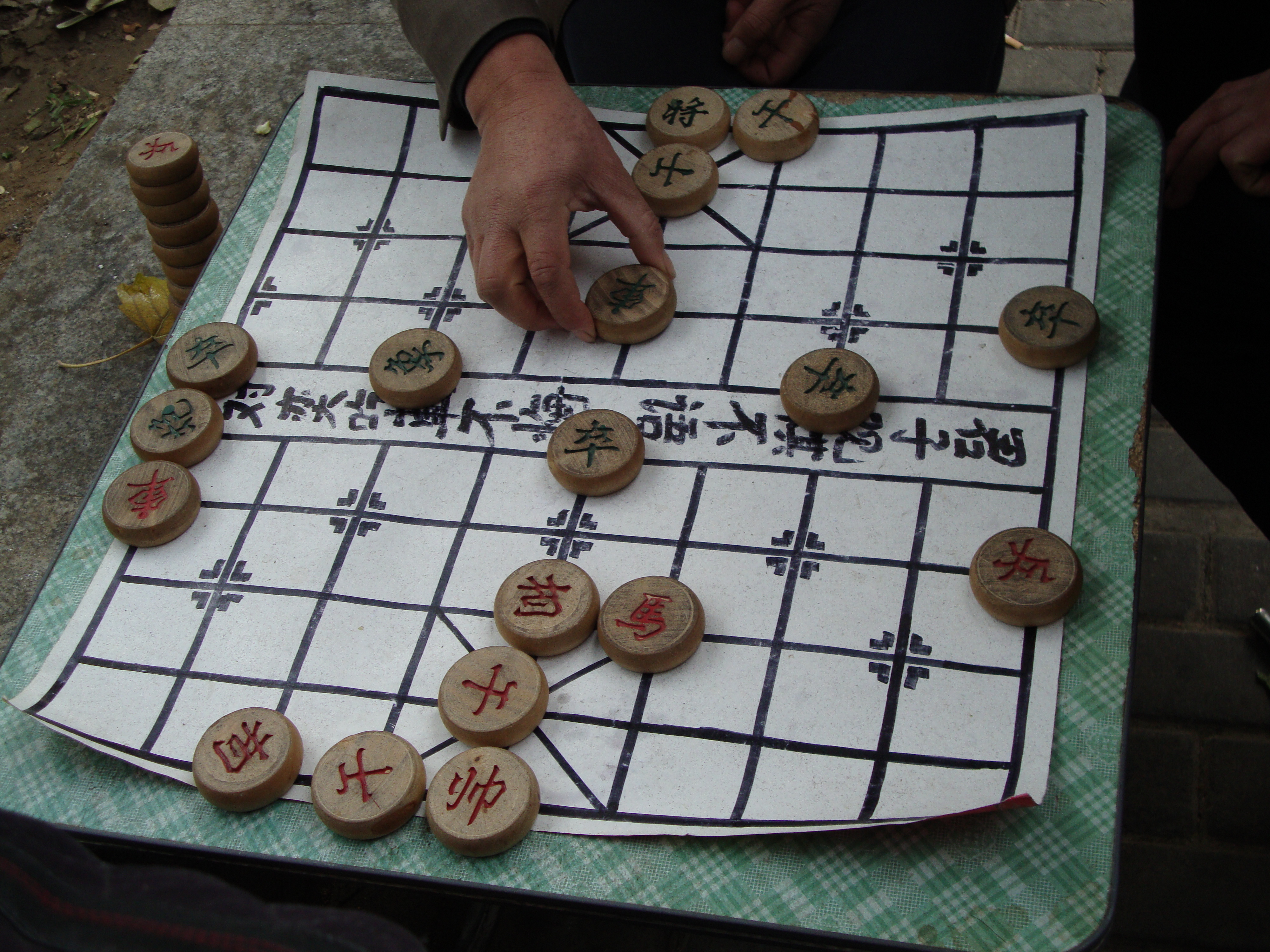
Copenhagen remains a game of Chinese chess

Copenhagen remains a game of Chinese chess

accurately measure and report its greenhouse gas emissions, and thus be held accountable to international commitments, has remained an issue leading up to Copenhagen.  Currently, China lacks the capacity – both technical and institutional – to provide such reliable data.

However, China has recently agreed to some cooperation with international and U.S. bodies to assist with developing its capacity to accurately measure its GHG emissions.  The U.S.’ Environmental Protection Agency (EPA) and its Chinese counterpart, the National Development Reform Commission (NDRC), signed a memorandum of cooperation (which is a step up from a memorandum of understanding) to work on China’s capacity issues concerning its ability to measure its emissions output.

But as Charlie McElwee over on the China Environmental Law blog notes, the EPA-NDRC memorandum currently lacks particulars and will likely go nowhere without being fully fleshed out.  At Copenhagen, the U.S. and the E.U. need to pressure China to work more closely with foreign bodies in developing its capacity.  It is important that Copenhagen does not conclude without a detailed plan to develop China’s capacity.  Additionally, this capacity development, especially in terms of institutional development and the ability of China to enforce its environmental regulations at the local level, could potentially influence the enforcement of regulations in all fields of law, providing for greater rule of law in China.

China though will not make this access easy; China has already begun to use this as a bargaining chip for greater financial assistance from developed countries for its climate change policies.  China’s climate change ambassador, Yu Qingtai, announced recently that China will only allow foreign verification of its GHG emissions if it receives outside financial assistance: “Actions would be measurable, reportable and verifiable if (international) support is measurable, reportable and verifiable.”  China’s stance on this should not be surprising.  It has repeatedly asked for international financial support for its efforts to curb its GHG emissions since the current climate crisis has largely been a result of the developed world’s past actions and not because of China’s development (it’s the future environmental crisis that China will largely play a role in if things remain as is).  China’s argument is understandable and rings true.

Fortunately, the Obama administration remains open to discussing a financial commitment.  China appears ready to bargain – if the U.S. wants the access to assist China with developing its technical and institutional capacity, which is necessary for any agreement out of Copenhagen to truly succeed, it must be ready to bargain as well and provide some financial assistance.

Bookmark and Share

Something Rotten in Denmark: What the U.S. & China Need to Do to Make the Most of Copenhagen

By Elizabeth M. Lynch, November 25, 2009
The Copenhagen Conference on Climate Change is set to start in less than two weeks.  Guest blogger Marcy Nicks Moody offers her assessment of what’s left of the road to Copenhagen and the necessary role the U.S. and China must play to move discussions forward.

Something Rotten in Denmark: What the United States & China Need to Do to Make the Most of Copenhagen

By Marcy Nicks Moody

Earlier this month, Danish Prime Minister Lars Lokke Rasmussen flew to Singapore to meet with President Obama and

Danish Prime Minister Lars Lokke Rasmussen, trying to save the Copenhagen Conference

Danish Prime Minister Lars Lokke Rasmussen, trying to save the Copenhagen Conference

other leaders on the sidelines of the Asia Pacific Economic Cooperation (APEC) Leaders Summit. With less than one month until the United Nations Climate Change Conference opens in Copenhagen on December 7 and little in the way progress on the negotiations, the APEC leaders and Danish Prime Minister discussed metrics for the success of the talks. APEC, an organization widely known for accomplishing little, served as an all too fitting forum for an announcement that a legally binding agreement is not going to emerge from the Copenhagen conference.

Though the announcement simply confirmed the writing already on the wall for those familiar with the negotiations, it was nonetheless disappointing. The terms of the Kyoto Protocol will expire in 2012, and a ‘Copenhagen Protocol’ to replace Kyoto has been a key goal for some time.

Indeed, the history leading up to Copenhagen is far from short. The aforementioned Kyoto Protocol is a legally binding protocol to the 1992 United Nations Framework Convention on Climate Change (UNFCCC). And the UNFCCC, in turn, is a non-binding treaty aimed at stabilizing greenhouse gas (GHG) concentrations in the atmosphere in order to prevent severe changes in the world’s climate. It is, so to speak, the fountainhead of global climate change negotiations.

Moreover, though 182 countries (with the notable exception of the United States) are signatories to Kyoto, only 37 of these are bound to limit GHG emissions. Since Kyoto, climate science has become more precise, the price tag associated with the consequences of climate change has become more daunting, and the need for a broader global agreement has become more pressing. To that end, during the 2007 UN Climate Change Conference, an accord called the Bali Action Plan called for a new legally binding climate change agreement to be finalized by the 2009 conference in Copenhagen, with the aim of it going into force in 2013. Since the administration of George W. Bush proved generally unfriendly to restrictions on carbon emissions, it was hoped that 2009 would be the earliest point at which a broader global agreement could be reached.

The lack of a successor to Kyoto is not just disappointing, it will also be costly. The International Energy Agency’s 2009 World Energy Outlook estimates that each year of delay before moving to an emissions path consistent with the agreed level of a 2° C temperature increase will add $500 billion to the global incremental investment cost of $10.5 trillion for the period between 2010 and 2030. A new global climate change agreement is not simply necessary, it’s urgent.

Though the Obama administration is much more serious about climate change than the Bush administration was, U.S. negotiators have nonetheless had little to offer their foreign counterparts. In particular, the Senate does not plan to begin debating Waxman-Markey, the relatively stringent climate change bill passed by the House of Representatives, until next year. With the world’s strongest economy and largest historic emitter of greenhouse gases currently uncommitted to binding emissions targets, why would the rest of the world possibly want to offer up pledges of its own?

On Monday, Danish Ambassador to the United States Friis Arne Petersen published an article in The New York Times arguing that “Yes we can reach a strong, comprehensive and global agreement next month.” His letter, likely an attempt to control the reputational damage done to Copenhagen during APEC, makes the case for a ‘political agreement,’ with the goal of really, actually deciding upon a timeline for a successor to Kyoto this time. On the one hand, locking in progress made seems like a reasonable way to salvage failed dreams for Copenhagen. On the other, however, a “politically binding” agreement – as opposed to a legal one – will likely lack the teeth to be enforceable. Whatever emissions targets emerge from Copenhagen may thus evolve into nothing more than numbers on pieces of paper.

Can the U.S. & China Save Copenhagen?

Can the U.S. & China Save Copenhagen?

In spite of Senate sluggishness, however, officials in the Obama administration have been hinting that they will try to provide momentum by bringing something to the table in Copenhagen next month, and the other elephant in the global climate room—China—did agree to language in a joint statement during Obama’s Asia trip indicating that a comprehensive agreement would “include emission reduction targets of developed countries and nationally appropriate mitigation actions of developing countries.” Some may scoff, but it’s better than nothing. And though it is currently the world’s largest GHG emitter, China is far from ignorant about the dangers of local pollution and global climate change.

One way in which the United States and China could reinvigorate climate change negotiations is by articulating a broad agreement (one which has not yet been reached) on the differentiation of financial responsibilities for mitigation and adaptation. The United States and China are, of course, the world’s most prominent emitters from the developed and developing worlds. How they plan to account for these very different roles would be a useful outcome of Copenhagen.

A legally binding agreement is, tragically (and expensively), out of the question, but Copenhagen is still not a foregone conclusion. China Law & Policy will keep its fingers crossed that the United States and China will give some momentum to the process, and that we can really, actually have an agreement in Mexico in 2010.

Marcy writes about China. In 2007-08, she was a Fulbright Scholar in China, where she was also a Research Fellow with the U.S.-Asia Law Institute. She received an M.A. in East Asian Studies from Columbia University and graduated from Brown University.

Bookmark and Share

The Obama Visit to China – What the U.S. Press Missed

By Elizabeth M. Lynch, November 23, 2009
DSC04715Originally Posted on the Huffington Post.


 Beijing, China – The U.S. press has not been kind to President Barack Obama and his recent visit to China.  Claiming that the U.S.’ tone has become conciliatory toward China, that the trip “yielded precious little” and even oddly comparing the Obama Administration’s behavior on the visit to a one-party, authoritarian regime, the U.S. press has all but designated the trip a failure.

But the trip was most certainly not a failure and in many ways fulfilled the U.S. press’ predictions – an event filled with a huge agenda covering a multitude of global issues, likely offering few deliverables, and probably playing down, at least publically, human rights.

So if the trip confirmed the press’ earlier predictions, then what’s got their panties all in a bunch?  Perhaps the one thing that upsets the press more than anything is a lack of access, and on this trip, the press certainly played second fiddle.  Questions were not taken from the press during last Tuesday’s press conference and very little other access was offered to the President.  But with only a day and a half in Beijing, this trip was not really about the press.

But in measuring President Obama’s trip based solely on their access, or lack of, the U.S. press has failed to report on some pretty substantial results of President Obama’s trip to China.  In what you likely will not find in other media outlets that are still licking their wounds from an alleged snub, below are some of the surprising deliverables from the visit.    

1.  Increased Military-to-Military Contact and High Level Military Exchanges

If the lack of communication between the U.S. and Chinese militaries does not keep you up at night, well it should.  The U.S. has a better relationship with Russia’s military than it does with China’s, but has more potential to cross paths with China’s because of the U.S.’ military presence in Asia.  Without proper channels of communication between the two militaries, a small skirmish can easily become a major crisis, as President Obama knows from his first months in office when Chinese navy ships circled and threatened a U.S. navy vessel in the South China Sea. 

Adding to the lack of communication is China’s broad interpretation of its “exclusive economic zone” (EEZ). A chinese-fleet-review-a-ch-008country’s EEZ extends 200 miles from the coast and gives the country sovereign rights over economic activities in those waters (usually the country uses its economic zone to search for natural resources).  By China’s broad definition, its sovereign rights in the EEZ expand outside of the economic realm, permitting it to interfere with other countries’ ships that enter its EEZ.  The U.S., as well as most other countries, perceives the EEZ as providing solely economic sovereignty for the coastal state, allowing other countries’ ships free access.  For the U.S., this also includes ships that are conducting military surveillance on the coastal state (for an excellent assessment of these different interpretations, see Margaret K. Lewis’ “An Analysis of State Responsibility for the Chinese-American Airplane Collision Incident”).  Needless to say, these different interpretations only add to the tensions between the two militaries. 

In the U.S.-China Joint Statement issued last week, much needed progress was made on the military front, especially in terms of communication.  High level exchanges between the U.S. and Chinese militaries will continue, with the Chief of the General Staff of the China’s People’s Liberation Army, General Chen Bingde, visiting the U.S. and both Secretary of Defense Robert Gates and Chairman of the Joint Chiefs of Staff Admiral Michael Mullen making a trip to China.

In regards to differing definitions of the EEZ, the Joint Statement alludes to this issue, showing that the two sides likely discussed and acknowledged the problem (From the Joint Statement: “The United States and China agreed to handle through existing channels…maritime issues in keeping with norms of international law and on the basis of respecting each other’s jurisdictions and interests”).  Granted they failed to reach a compromise, but this is not an issue that will be easily solved.  Just discussing this sensitive topic is progress. 

2.  Both Public and Private Discussion of Human Rights

Interestingly, a press that largely ignored this issue prior to President Obama’s trip is making a big deal of his “silence” on human rights violations in China.  Last I checked though, freedom of speech is usually regarded as one such right and President Obama discussed this issue rather bluntly and passionately at the Shanghai town hall.  While it is debatable as to whether focusing on freedom of expression on the internet is sufficient to assist China with a development of a civil society and a rule of law, it is difficult to argue that President Obama did not publically bring up the subject of human rights. 

Furthermore, in his letter written to China’s Southern Weekend newspaper, President Obama stressed the importance of a free press.  True, this letter was not permitted to be circulated to a wider audience, but it portrays the President’s continued emphasis, both publically and privately on human rights.

The Joint Statement also discusses human rights in general and calls for the next official human rights dialogue between the U.S. and China to be held by the end of February 2010 in Washington, D.C.  The Joint Statement also stressed the importance of rule of law in China and agreed to reconvene the U.S.-China Legal Experts Dialogue (see the Dui Hua Foundation website for further background).  With the increasing push back by the Chinese government in the area of rule of law, especially as it pertains to civil rights and civil liberties, deepening cooperation is an important deliverable.

It is true that the Obama Administration has opted more for a strategy of quiet engagement on this issue.  Whether the approach is effective remains to be seen.  This past summer, the Administration was able to secure the release of public interest attorney Xu Zhiyong through behind the scenes pressure on the Chinese government.  However, almost immediately after President Obama left China, the Beijing police apprehended and beat public interest lawyer Jiang Tianyong (pronounce Geeang Tian-young) as he was walking his 7 year old daughter to school.  While Mr. Jiang has since been released, he is under very tight surveillance.  Perhaps if President Obama had mentioned the plight and importance of public interest attorneys in China, the arrest of Mr. Jiang might not have happened.  Or maybe it would have.

Either way, the U.S. press’ conclusion that President Obama “soft-peddled” human rights on his trip does not appear to ring true.  Human rights was certainly discussed, both publically and privately, it just appears that perhaps China was not listening. 

3.  Clean Energy and Climate Change

As expected, the U.S. and China entered into a series of cooperative agreements pertaining to clean energy and climate change technology.  While neither side agreed to emission targets, the level of detail provided for in the issued agreements was more than anticipated.  Most interestingly, the U.S.’ Environmental Protection Agency and China’s National Development Reform Commission signed a memorandum of cooperation to help China develop its capacity to measure its greenhouse gas inventories.  This is no small feat.  China’s does not currently have the capacity to accurately measure its greenhouse gas emissions and thus, if it was to agree to emission targets, would be unable to provide verifiable data.  China’s lack of capacity on this front has rightly been a sticking point for many in the U.S. Congress, preventing the passage of domestic climate change legislation that would be used to bind the U.S. internationally.

This memorandum of cooperation is the first step to enable China to agree to emission targets and for the rest of the world to believe them. 

President Obama’s visit to China was certainly not overly exciting but it was far from the failure that the U.S. press has made it out to be.  It also does not signify the U.S.’ decline as some alarmist media outlets have claimed.  Instead, the visit was a series of tough negotiations between two global powers.  Both had winning issues and losing ones.  And in the end, President Obama likely walked out with a little more than expected.  For me, that’s an accomplishment.

Bookmark and Share

The Deliverables from Obama’s Trip – US-China Joint Statement

By Elizabeth M. Lynch, November 19, 2009

THE WHITE HOUSE

Office of the Press Secretary

_____________________________________________________________________________________________

FOR IMMEDIATE RELEASE

November 17, 2009

U.S.-China Joint Statement

November 17, 2009

Beijing, China

At the invitation of President Hu Jintao of the People’s Republic of China, President Barack Obama of the United States of America is paying a state visit to China from November 15–18, 2009.  The Presidents held in-depth, productive and candid discussions on U.S.-China relations and other issues of mutual interest.  They highlighted the substantial progress in U.S.-China relations over the past 30 years since the establishment of diplomatic ties, and they reached agreement to advance U.S.-China relations in the new era.  President Obama will have separate meetings with Wu Bangguo, Chairman of the Standing Committee of the National People’s Congress and Premier Wen Jiabao. President Obama also spoke with and answered questions from Chinese youth.

Continue reading 'The Deliverables from Obama’s Trip – US-China Joint Statement'»

Bookmark and Share

Presidents Obama & Hu – Joint Press Conference – Nov. 17, 2009

THE WHITE HOUSE

Office of the Press Secretary

_________________________________________________________________

For Immediate Release                        November 17, 2009

JOINT PRESS STATEMENT BY PRESIDENT OBAMA

AND PRESIDENT HU OF CHINA

Great Hall

Beijing, China

12:37 P.M. CST

PRESIDENT HU:  (As translated.) Your Excellency President Obama, and dear friends from the news media, ladies and gentlemen:  I’m very happy to meet our friends from the press and media.  To begin with, I would like to extend on behalf of the Chinese government and people a warm welcome to President Obama on his state visit.  Welcome to China.

Continue reading 'Presidents Obama & Hu – Joint Press Conference – Nov. 17, 2009'»

Bookmark and Share

Just For Fun: President Obama’s Itinerary to See the Real China

By Elizabeth M. Lynch, November 17, 2009

Susan Fishman Orlins, freelance writer and longtime China-watcher, offers some advice on where President Obama needs to go to see the real Beijing. 

Biking in Beijing - perhaps the best way to get around

Biking in Beijing - perhaps the best way to get around


DEAR MR PRESIDENT:  WHAT TO DO IN BEIJING

By Susan Fishman Orlins

Dear President Obama,

As I bike around Beijing this week, during a short trip to see my daughter who works here, I’ve been thinking about some local attractions you might enjoy during your visit.  I’ve also been thinking about how the ratio of bicycles to automobiles appears to have flip-flopped from the first time I arrived in China, thirty years ago.  When you inhale the acrid smell of motor vehicle fumes and view this smoggy city–as though through gauze or an organdy curtain, soiled with age–you may decide that you too would prefer getting around on a two-wheeler rather than waiting in traffic jams, adding to the pollution.  You can rent a bike at any of several subway stations and drop it off at any of the others.  Just be aware of the rule of the streets:  the bigger you are, the more you have the right of way.  At intersections, cars will turn from all four directions, seemingly at once, without slowing down.

I like starting off my stay here with a foot massage.  Side by side in oversized, cushy club chairs with high backs that recline, you and President Hu Jintao can first soak your feet in a barrel of milk, herbs and Chinese medicine.  Then, in the privacy of a room for two, you can watch CNN on the flat-screen TV or discuss human rights, while young men knead your shins and toes with Healthy Spa Life Cure Professor massage lotion. 

Afterwards, you might want to buy some gifts for Malia and Sasha.  Head to trendy Nanluoguoxiang, lined with coffee bars and boutiques and where you can pick up a couple of Oba-Mao t-shirts with your own image donning a red-star cap. 

Beijing's Hutong Life

Beijing's Hutong Life

I suggest quickly making your way out of there through the crowds of Chinese yuppies and foreign tourists.  To witness something of life as it has been here for decades (try to mentally delete all the cars), head south and turn into any hutong and lose yourself in the maze of narrow lanes lined with low courtyard houses with sloping tile roofs, most of which–unlike in earlier times–provide shelter for several families.  Some hutongs are quieter than others, with maybe only a cat stealthily creeping along the edge of a courtyard wall and a few rusty bikes leaning below.  Then you turn a corner and there unfolds a row of tiny, old shopfronts, many of which are selling dough in its endless forms:  fried, flat, squishy, steamed, noodly.  A bun–that looks like a large cream-colored ball you squeeze to exercise your hands–might be empty inside or filled with bean paste or minced pork.  Or you can get dumplings floating in broth. 

Hutongs are where I most like to watch the bustle.  Watching the bustle is a typical Chinese activity;  they call it kankan renao, literally look at bustle.  I could steer you to the hutong where I talked to a baby and bought striped socks from her grandmother, while a guy in a hard hat working nearby secured a shelf I’d bought to the back of my bicycle with some electrical wire.  But that would take away the fun of discovery.  No matter which way you turn in these lanes, you’ll get a sense of community, especially for elderly folks, whereas at home in the U.S. my sense of life for the elderly is often one of loneliness.

In fact, when I asked a retired Chinese friend what she does all day, she replied, “Wanr,” which is Beijingspeak for play and means hang out.  She hangs out in the park with her friends.  Just north of Jingshan Park, you can experience an inviting “playground” for senior citizens, one of many throughout the city.  Don’t be surprised if the rows of ping pong tables are all in use.  At a small cement table by the fence, some lao touzi, or old men, will probably be playing Chinese checkers with a ring of onlookers that sometimes grows to three-deep.  Meanwhile, lao tai tai, or old women sit on benches chattering.  Try out some of the colorful exercise contraptions:  stand on one to swing front to back, side to side on another.  Some have bars that stick out for leaning against to massage your back.  Ahh, lovely.  Maybe if we provided more recreation like this for our elderly, we could reduce health-care costs.

Another way the Chinese promote good health is by drinking tea.  My favorite teahouse in Beijing is Stone Boat, located in zen-like Ritan Park.  This being an embassy area, the setting is quiet, though you occasionally hear strains of someone practicing Peking Opera.  The teahouse is the shape of a shortened train car painted with intricate designs in which Chinese reds and greens dominate.  The carved wooden window frames open to a pond where a few men may be fishing, bare willow branches weeping over them.  Try for some solitary moments here, an opportunity to think quietly or take some notes, while sipping ginger tea.

If Michelle were with you, and if it were date night, I would suggest dinner at Lan in the business area, more for the exotic atmosphere than the expensive food.  In any case, it’s worth going there just to have a look at how lavish New China can be.  But be forewarned of sensory overload:  there are even paintings on the ceilings.  The blend of contemporary design with baroque and whimsy gives an overall Alice-in-Wonderland effect.  My favorite displays are on glass shelves that line the walls on either side after you enter:  a rainbow of fabrics stacked alongside cones of brightly colored thread, mock elaborately decorated pastries and cakes, Jesus candles of various sizes and shaped burnt down to different heights.  And sprinkled throughout, photographs of Marilyn Monroe and Audrey Hepburn. 

For more down-to-earth dining, I’d have a meal at Liu Zhai Shi Fu, located in a hutong behind The National Art

A feast at Liu Zhai Shifu - ma dofu is on the bottom right

A feast at Liu Zhai Shifu - ma dofu is on the bottom right

Museum of China.  Though it can be a bit chilly, sit in the enclosed area that used to be the courtyard of this family-run restaurant, where silk vines hang overhead.  Be sure to order ma doufu, a dish of old Beijing and, though it looks like chopped liver mixed with wet cement, it’s the most delicious dish made from a soy bean I’ve ever tasted:  sour, spicy hot, smooth on the palate.

Before you leave Beijing, why not drop in on the National Resources Defense Council (NRDC) offices and chat with the young Chinese employees there as well as with Princeton Fellows and other American interns who are doing all they can to safeguard the earth?

I hope you have a great and productive trip.

Warm regards,

Susan Fishman Orlins

Susan Fishman Orlins Susan’s work has appeared previously in The New York Times and The Washington Post as well as in Moment Magazine, where she is an associate editor.  She received a Rockower Award for excellence in Jewish journalism for her Moment profile of Deborah Tannen. 

Bookmark and Share

Obama’s Chinese Youth Vote – Filled with Hope As Well As Suggestions

By Elizabeth M. Lynch, November 15, 2009

Originally Posted on the Huffington Post.

Chinese artist's rendition of Barack Obama with Cultural Revolution Slogan "Serve the People"

Chinese artist's rendition of Barack Obama with Cultural Revolution Slogan "Serve the People"

Beijing, China – A certain excitement has lighted the streets of Beijing in anticipation of President Barack Obama’s maiden visit here this week.  Not only has the capital experienced two days of clear blue skies, a rarity in a city that is usually encased in a yellow, gritty smog during the cold winter months, but there is an electricity in the air as everyone discusses President Obama’s visit – from the formal news casters on TV analyzing the potential agenda to the famously earthy taxi drivers complaining about the potential traffic nightmare.

But like President Obama’s fan base back home, the young in China are especially keen on his visit.  And the President is acutely aware of this fact.  On Monday, his first day in China, President Obama will meet with a group of Chinese college and graduate students in Shanghai, to listen to their opinions and answer their questions.  What do these students think of President Obama?  What questions or recommendations will they have for the President?

In talking to a group of graduate students from the China University of Political Science and Law, one of Beijing’s most prestigious universities, President Obama’s rise to power has filled them with the hope that the impossible, or at least the improbable, is achievable.  “He gives young people encouragement.  If you work hard, you can obtain a high position….it’s the American Dream.” said Xie Jinbao (pronounced Syeh Gin-bao).    “For many, it is very dream-like” explained Liu Huisheng (pronounced Leo Hway-sheng), while cautioning that only those who care about politics have been paying attention.  “In general though my friends are neutral [about President Obama].”

In pinpointing the source of this hope, the Chinese students spoke more frankly than their American counterparts on

China University of Political Science and Law

China University of Political Science and Law

one subject in particular: President Obama’s race.  “He’s America’s first black president” Li Siming (pronounced Lee Tsi-ming) offered excitedly, “it makes young people very excited.”   “America was able to elect a black president, it shows that it has a certain openness” said Dong Jianjun (pronounced Dong Geeann-june).  The students also derived inspiration from the multicultural nature of the President’s cabinet, mentioning by name, at least their Chinese names, the appointment of Chinese-Americans including Commerce Secretary Gary Locke, Energy Secretary Steven Chu and Cabinet Secretary Chris Lu.  “In China, this could never happen; a foreigner could never work in the administration” said Xie Jinbao.

For the students, many who have little recognition of a world before President George W. Bush, President Obama represents a new approach to the global order, an approach that they eagerly look to be a part of.  “He is much better than Bush” Xie Jinbao said.  “Bush believed in unilateralism, but Obama supports multilateralism.”  At a time when many western observers question China’s commitment as a collaborator on the world stage, Li Siwei (pronounced Lee Tsi-way) seemed to imply her generation’s eagerness for greater responsibility: “Obama is willing to work with other countries, there will be more cooperation.”

But even though the term superstar was used repeatedly to describe President Obama and student Liang Xuanjing (pronounced Leeang Syuan-jing) was in awe of President Obama’s charisma, there were words of caution.  “Confucius had a saying ‘If a person is too perfect, we will have doubts’” Liu Huisheng said, noting that perhaps President Obama’s speeches are a bit “too perfect.”  Dong Jianjun echoed this sentiment: “Compared to presidents like Roosevelt or Kennedy, Obama has similarly great charisma…but we have yet to see if his [Obama’s] policies will be effective.”  Like many Americans, these Chinese students are looking for President Obama to follow through on the promises of his speeches.  In a relationship as close as the one between China and the U.S., President Obama’s actions, or lack of action, directly impact China and many of these Chinese students’ futures.

Not surprisingly though, many of the topics that the students would like Presidents Obama and Hu Jintao (pronounced Who Gin-tao) to discuss are the same as their U.S. contemporaries – international trade and the ever escalating tariff war topped the list for these students.  But so did the issue of climate change and energy efficiency as well as the economic recovery.

China’s youth are not that different from the young back home – they share the same hope that Presidents Obama and Hu can make the world a better place and they express an eagerness for a new world order where the U.S. and China can work through their issues.  But like their American brethren, if Presidents Obama and Hu cannot solve many of today’s problems, including the economic crisis, climate change, and an increasingly cantankerous trade relationship, it will be their generation that will be left holding the bag.

Bookmark and Share

Panorama theme by Themocracy