Posts tagged: Tang Jitian

In Defense of Dylan in China: Come Writers and Critics Who Prophesize with Your Pen

By , April 10, 2011

Originally posted on The Huffington Post

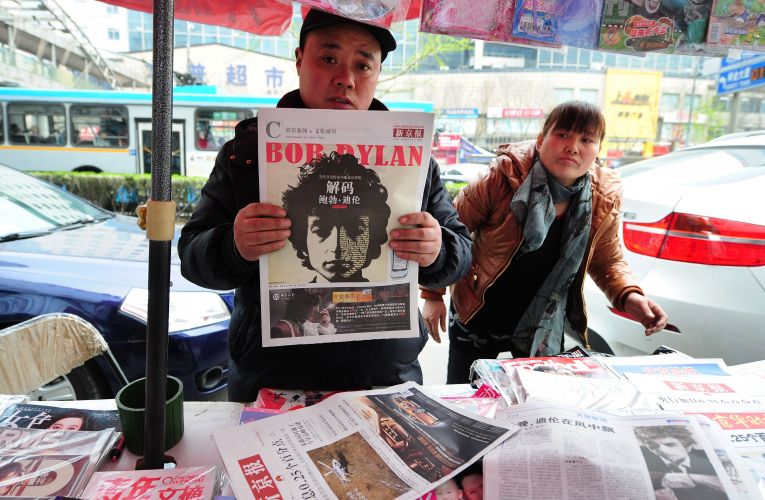
Bob Dylan performed in concert in Beijing on April 6 and Shanghai on April 8

Maureen Dowd’s op-ed in Sunday’s New York Times – Blowin’ in the Idiot Wind – lambasts singer-songwriter/protest-singer/civil-rights-activist/voice-of-a-generation/whatever-he-is-to-you Bob Dylan for his recent concert in Beijing, China.  For Dowd, Dylan’s acceptance of the Chinese government’s approval of his set list is anathema to everything he represents.  Dropping his famous protest songs of “Blowin’ in the Wind” and “The Times They Are A’Changin’” from the set list during China’s most severe crackdown on its own citizens since 1989 and ignoring the recent detention of Chinese rights activists shows, for Dowd, that Dylan is nothing more than a sellout, willing to auction his morals to the highest bidder.

But Dowd’s virulent critique of Dylan makes one wonder, where has she been in all of this?  Dowd is an obvious Dylan fan, likely even a disciple, with her skilled use of Dylan quotes and understanding of the man’s extremely tangled and uncomfortable history with fame.  But China’s “harshest crackdown on artists, lawyers, writers and dissidents in a decade” and its “dispatching the secret police to arrest willy-nilly, including Ai Weiwei” as Dowd notes, didn’t just start this weekend and didn’t just start with the detention of Ai Weiwei.

Since the middle of February, the Chinese government has been illegally abducting Chinese rights activists, preventing them from contacting their family let alone a lawyer, and subjecting them to torture and abuse.  This siege on rights activists in China is done as a pre-emptive strike on the nascent civil society that has been developing and is an attempt for the Chinese Communist Party to avoid the fate of Mubarak and Ben Ali and maintain its one-party authoritarian rule, especially as a change of leadership comes in 2012.

Tang Jitian was abducted from his home on February 16, 2011, starting what has proved to be a wide-cast net of illegal abductions and abuse (abuse of both China’s own laws and the individuals that remain in custody).  Since then, Dowd has written 13 columns, not a single one dealing with the issue of the Chinese government’s harsh and violent crackdown on its citizens.  Today’s column barely touches upon the issue and instead focuses on Dylan’s “selling out.”

Let’s face it, Dylan is unable to sell out because he never bought in in the first place.  Dylan never fully engaged the civil rights movement.  While his songs did become a motivating force for many of the great civil rights activists and moments in U.S. history, by 1965, he was done with folk and had plugged in.  And since the 1980s, Dylan has been on a non-stop tour, selling the rights of his iconic protest songs to commercial entities (the rights to Times They Are A Changin’ was first sold to accounting firm Coopers & Lybrand and in 1996 to the Bank of Montreal), appearing in a Victoria’s Secret ad, producing an abysmally bad Christmas album, and almost never including Blowin’ in the Wind and the Times They Are A’Changin’ in any set list anywhere in the world (review his set lists here: http://www.bobdylan.com/tour/calendar/2010).

Dylan’s lack of mentioning China’s recent crackdown on dissent isn’t shocking.  In fact, the old guy likely knows nothing of what is happening in China – why should we rely on him to be our voice and do all the work?  This isn’t his issue; in fact, the man likely has no issues other than himself.

Which brings us back to Maureen Dowd.  Unlike most of the people concerned about human rights abuses in China, Dowd has a powerful platform for her voice – her twice-a-week column in the N.Y. Times.  With a large and influential readership that likely reaches the halls of the White House and Congress, discussion of China’s recent abuse of its own citizens and its subversion of a rule of law in her column could influence important policy makers as well as the world-at-large.

To their credit, some of the world’s major newspapers have been reporting on China’s recent crackdown, but these articles have been cursory at best and do not fully explain why China’s recent assault goes above and beyond what traditionally occurs in an authoritarian regime.  But most individuals knowledgeable on the issue have had extreme difficulty in getting their voice out in the mainstream press (kudos though to The International Herald Tribune and the N.Y. Times for publishing opinion pieces in its print editions and kudos to  The Guardian and the Wall Street Journal for having opinion pieces on the issue in their online papers).

Dowd has the opportunity to expose what is happening in China and call for the freeing of, or at the very least the end of the abuse of, not just Ai Weiwei, but also rights-defending lawyers Tang Jitian, Jiang Tianyong, Teng Biao, Liu Shihui, Tang Jingling, Li Tiantian, and Gao Zhisheng.  The whereabouts of these lawyers, unlawfully abducted by Chinese authorities (even under Chinese law), remain unknown.  Their only offense: asking the Chinese government to uphold its promise of a rule of law and using the legal system to protect society’s most vulnerable.

Dowd’s disappointment in Dylan’s snub of China’s crackdown on dissent leads me to believe that this is an issue Dowd is concerned about.  But instead of asking Dylan to be the spokesperson for the issue, Dowd should practice what she herself appears to preach.  My challenge to Dowd is to use her sharp-witted pen and find a way to raise the plights of China’s rights-defenders in the American consciousness instead of relegating it to two sentences in a column that is otherwise a critique of Dylan.  If Dowd doesn’t, then I am left to think “you could have done better but I don’t mind, you just kinda wasted my precious time….”

Bookmark and Share

Rights Lawyer Gao Zhisheng’s Wife on His Abduction

By , March 28, 2011

Gao Zhisheng is perhaps the most well-known of China’s rights-defending lawyers.  In the late 1990s and early 2000s, Gao began successfully representing victims of medical malpractice and farmers denied just compensation for their land.  In fact, in 2001, Gao was named by China’s Ministry of Justice as one of China’s most influential lawyers.  Spurred by his success and what appeared to be a Chinese government welcoming a stronger public interest law bar, Gao expanded his work to included practitioners of Falun Gong, a religious organization which the Chinese government has long feared as a threat to its one-party rule and has declared a cult.  Gao’s representation of Falun Gong practitioners did not just highlight the baseless accusations of “using superstitious sects [cults] to undermine the implementation of the law” (China’s Criminal Law, art. 300), but also the torture of Falun Gong practitioners while in police custody (for a seminal article on Gao’s work, see Eva Pils, Asking the Tiger for His Skin: Rights Activism in China, Fordham International Law Journal 2007. Available at SSRN: http://ssrn.com/abstract=1563706).

Gao’s zealous advocacy of Falun Gong practitioners did not go unnoticed by the Chinese government, and his status as a lawyer to be celebrated for representing society’s most vulnerable, quickly changed.  Gao was now viewed as a piranha of the state. In December 2006, Gao was convicted of subversion and was given five years probation to be served from his home.  However, in February 2009, Gao was abducted from his home by the police.  For over fourteen months, he was not heard from and no one knew where he was.  In April 2010, Gao emerged from seclusion only to be abducted again only two weeks later.  During the time he was free, he was able to report to the Associated Press the torture he underwent while in police custody.

Gao’s whereabouts, like recently abducted rights defending lawyers Tang Jitian, Teng Biao, and Jiang Tianyong, remain unknown.  In a plea for the world to pay attention to these random and lawless detentions, Gao’s wife, Geng He, who was able to flee to the United States with their two children in January 2009, published an op-ed in today’s New York Times.  Below is an excerpt with a link to the full article.  Geng begs that if her husband has been killed, that the Chinese government have the dignity to return his body so that his family can lay him to rest.

The Dissident’s Wife

By Geng He

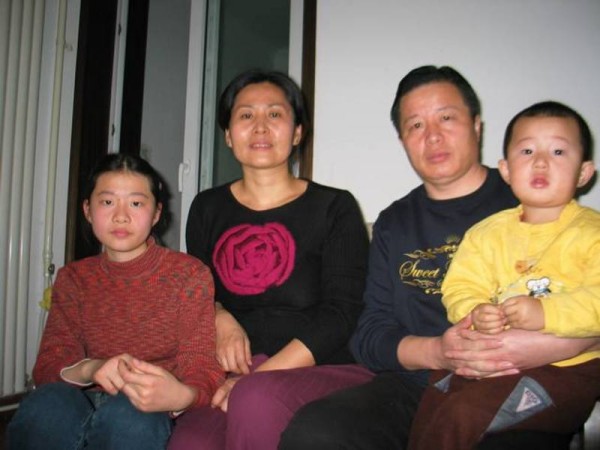
Gao Zhisheng with his wife, Geng He, and their two children

Gao Zhisheng with his wife, Geng He, and their two children

San Francisco – WITH the world’s attention on the uprisings in the Middle East, repressive regimes elsewhere are taking the opportunity to tighten their grip on power. In China, human rights activists have been disappearing since a call went out last month for a Tunisian-style “Jasmine Revolution.” I know what their families are going through. Almost a year ago, the Chinese government seized my husband and since then, we have had no news of him. I don’t know where he is, or even if he is alive.

Click here for full article

Bookmark and Share

Reality or Myth: China’s Rule of Law & Its Recent Assault on Lawyers

By , February 21, 2011

Originally posted on The Huffington Post

Rights-Defending Lawyer, Tang Jitian

The Chinese government has tried to break Tang Jitian’s spirit.  Failing, it now seeks to break his body.  Tang, a Chinese human rights lawyer, was forcibly abducted from his home on Wednesday, February 16 by the Beijing police.  Five days later, in contravention of Chinese law, Tang’s whereabouts remain unknown to his family, friends, and other human rights lawyers who desperately await some news of him.  Tang’s wife, after waiting at the police station for over four hours, was not permitted to see her husband and not informed of his whereabouts.  Tang’s “crime” in all of this: seeking to uphold individual’s legally-guaranteed rights and hold the State to its promise of a rule of law.

When Tang Jitian (pronounced Tang Gee Tea-ann) emerges from this unlawful and forced seclusion, he may be badly beaten, tortured and abused.  Soon after his abduction on Wednesday, Tang was transferred to the Beijing Public Security Bureau (PSB), an outfit that has been assigned the task of suppressing China’s nascent human rights movement.  Violence is a necessary part of the PSB’s mandate: it provides a very physical signal to other human rights lawyers what awaits them if they become too vocal, organized, or, ironically, too successful in bringing cases to protect citizen’s rights.  But this State-sanctioned violence is outside the limits of the law, and makes one wonder that if, by attacking these rights-defending lawyers (in Chinese, weiquan lawyers), the Chinese government is really committed to a “rule of law” society or if the use of such language by Chinese officials is a mere mirage.

The Breaking of a Body: Tang Jitian’s Potential Fate While in PSB Custody

Human rights lawyer Gao Zhisheng (pronounced Gao Zhi-sheng) likely serves as the most potent reminder of the

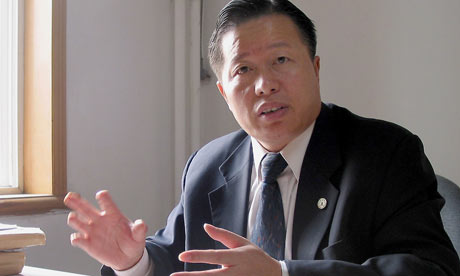
Human Rights Attorney, Gao Zhisheng

lawlessness of the PSB.  In 2001, Gao was listed by China’s Ministry of Justice as one of the country’s top-ten lawyers for his work representing victims of medical malpractice and farmers who were denied just compensation for their land.  But as Gao took on more controversial cases – particularly defending Falun Gong practitioners, a quasi-religious organization that the Chinese government perceives as a real threat to its power – government respect for his work quickly faded.   In December 2006, Gao was convicted of subversion and was given five years probation to be served from his home.  However, in February 2009, Gao was abducted from his home by the police.  This was the second time he was abducted, the first in 2007 where he was tortured for over 50 days.  But this time, Gao’s abduction would be for much longer.  For over fourteen months, he was not heard from and no one knew where he was.  In April 2010, Gao emerged from seclusion only to be abducted again only two weeks later.  During the time he was free, he was able to report to the Associated Press the torture he underwent while in police custody.

What awaits Tang may be similar – 48 hours of continuous beatings, various forms of physiological torture, wet towels over one’s face to give the feeling of suffocation – or even worse.  Unlike Gao Zhisheng, who is well known in the international community, or Teng Biao, a famous Chinese law professor and human rights activist who, because of his status, experienced a less violent beating when he was taken into custody for a few hours by police last December, Tang does not have such connections to protect him.  Without such an international cache like Teng Biao, Tang is an easy target for the Chinese security apparatus and will likely be used to violently symbolize the PSB’s power over the human rights lawyers.

Trying to Break a Spirit: Tang Jitian’s Disbarment

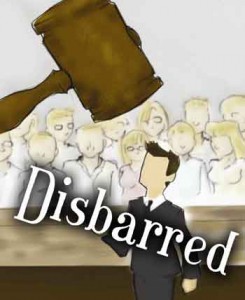
Wednesday’s abduction was not the first time that Tang has been on the Chinese government’s radar.  In May 2010, because of his defense of a Falun Gong practitioner in Sichuan province, the Beijing Bureau of Justice – the government body that manages the legal profession in Beijing – disbarred Tang from the practice of law.  Ostensibly arguing that Tang violated courtroom rules, the Beijing Bureau of Justice’s decision was largely seen as political.  Similar to the United States, disbarment in China is reserved for those lawyers who commit a crime.  Tang was the first lawyer to be disbarred for what merely appeared to be zealous advocacy.

Since his disbarment, Tang has had no way to economically support himself, relying solely on the kindness of other human rights lawyers.  Such a blow has had its impact and more recently, Tang had become depressed about his situation, although still very active in the human rights movement.  One would have thought that this would have been sufficient for the Chinese government – that by taking away Tang’s livelihood, it would not seek to detain him.  One would also think that such action would be unnecessary: Tang’s disbarment was a clear signal to other human rights lawyers that the State could use vague provisions of the law to disbar them and deny them their raison d’etre.  But it appears that disbarment was not punishment enough for the PSB.

Why Abduct Tang Jitian Now? China’s Rule of Law Regression

The immediate cause of Tang’s abduction relates to the recent house arrest and abuse of another human rights lawyer,

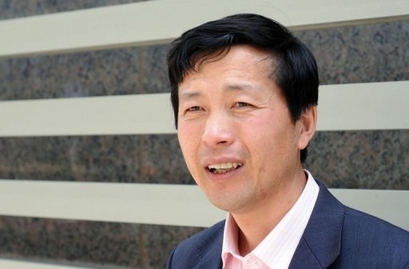
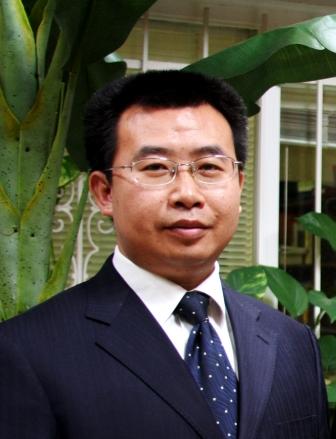
Human rights lawyer, Jiang Tianyong

Chen Guangcheng (pronounced Chen Gwang-chung).  Chen, a blind, self-taught lawyer who represented women forced into abortions by their village government, has been under house arrest since he was freed from prison in September 2010.  Last week, Chen and his wife were reportedly beaten after they leaked an hour-long video of their daily surveillance to the U.S.-based human rights and religious group, China Aid (for the video, click here).  On Wednesday afternoon, Tang Jitian had lunch with a group of Beijing human rights lawyers to discuss what the group could do to support Chen.  Soon after this brain-storming session, Tang was abducted.  Additionally, another participant of the Wednesday lunch group has also been abducted.  On Saturday, February 20, 2011, human rights lawyer Jiang Tianyong (pronounced Gee-ong Tea-ann young) was taken away in an unmarked van, only days after he was roughed up while in police custody.

But Tang and Jiang’s belief that the law should be followed and individuals’ rights should not be trampled on by the State is the real reason for his abduction and likely abuse at the hands of the PSB.  Over the past few years, China’s human rights attorneys have become more organized, using modern technology to quickly communicate with each other, and increasingly vocal, demanding that  the government abide by its own laws when it comes to the people’s civil rights and civil liberties.  Instead of responding positively to these developments – developments that largely symbolize a growing rule of law society and an emerging civil society  – the Chinese government and the Chinese Communist Party (CCP) has further entrenched its authoritarian rule and has used increasingly sever measures to break these human rights lawyers. While Chinese human rights lawyers’ cases would be everyday affairs for public interest lawyers elsewhere in the world, the CCP views these lawyers as a threat to their one-party rule and the PSB views them as a threat to its all-inclusive, and many times illegal, policing methods.  Based upon the recent abduction of Tang Jitian and Jiang Tianyong, the PSB and the CCP will do whatever it takes to suppress these human rights lawyers.

On Saturday, while rumors were circulating on the internet that China itself was to have a “Jasmine Revolution” following the events in the Middle East, a Chinese rights activist tweeted that the Chinese government detained twenty-one other human rights attorneys: Zhu Yufu, Liao Shuangyuan, Huang Yanming, Teng Biao, Ran Yunfei, Li Tiantian, Liu Guohui, Ding Mao, Lu Yongxiang, Xiao Yong, Zhang Jianping, Shi Yulin, She Wanbao, Li Yu, Lou Baosheng, Wei Shuishan, Zhang Shanguang, Li Xiongbing, Xu Zhiyong, Huang Yaling, and Li Bo.  Many may suffer physical abuse at the hands of the PSB.  Some already have.

Why Should Anyone Care?

I met Tang Jitian when I was last in China and was impressed, not just with his bravery, but also with understanding of his role in pushing the Chinese government to truly commit to a rule of law.  If human rights lawyers are suppressed now he told me, there will be no one to take over the movement.  Tang is right and breaking the movement appears to be one of the goals of the Chinese government.  By openly subjecting human rights attorneys to constant surveillance, disbarment, psychological threats, and physical abuse, the Chinese government hopes that once this generation of human right lawyers pass, no younger lawyers will dare to take up the mantle; the repercussions are too severe.

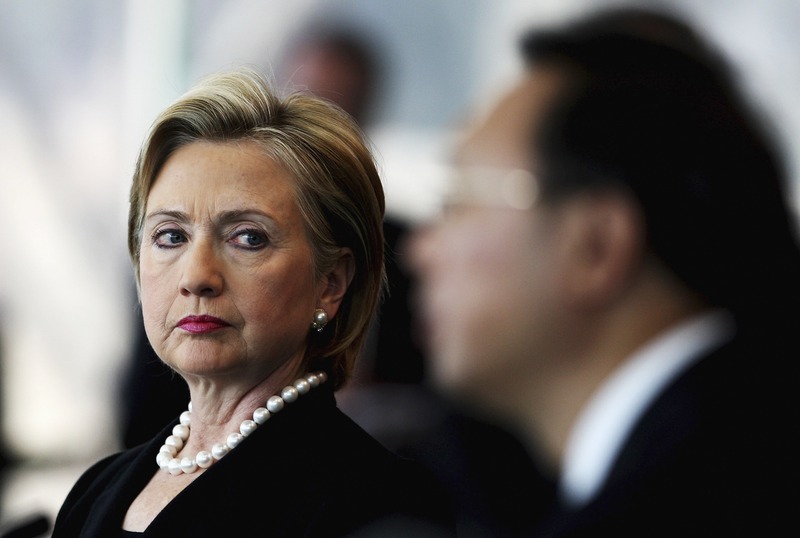
Secretary of State Hillary Clinton to take a hard line on human rights

But the question remains, will the rest of the world allow this?  Last month, the Obama Administration impressed many by repeatedly raising the issue of human rights with Chinese President Hu Jintao.  Just days before Hu’s arrival in Washington, D.C., Secretary of State Hillary Clinton bluntly discussed the plight of China’s human rights lawyers, stating that the United States will expect China to fulfill its own promise of rule of law: “America will continue to speak out and to press China…when lawyers and legal advocates are sent to prison simply for representing clients who challenge the government’s positions….”  The time has come for the United States to back-up that statement.

The Obama Administration has already expressed its concern with the treatment of Chen Guangcheng.  But it cannot forget the less known advocates like Tang Jitian and Jiang Tianyong – without some form of international recognition of his situation the PSB will believe it has the cover to do with Tang and Jiang what it wants.  Furthermore, the Obama Administration needs to see the Chinese government’s recent reaction as an affront to a “rule of law” and also needs to comment on the importance of not just a “rule of law” in China but on the existence of a vibrant public interest law bar.  Human rights lawyers directly challenge the State in order to protect individual’s legally-guaranteed rights; only when these lawyers are able to more freely function in society will China have any meaningful rule of law.

A meaningful rule of law in China is not just an abstract principle for Americans.  As more Americans do business in China and as the U.S. government seeks to increase the number of students studying in China to over 100,000, rule of law in China will become an everyday concern.  Last year’s arrest and prosecution of Australian citizen and Rio Tinto executive Stern Hu and the recent conviction of U.S. citizen and geologist Xue Feng embody the importance of China’s rule of law development for Americans.  The Obama Administration needs to publicly condemn the Chinese government’s recent suppression of human rights lawyers, call for the release of Tang Jitian, and frankly question the Chinese government’s commitment to a rule of law.  Tang and Jiang’s safety depends on it.

Bookmark and Share

The U.S.-China Human Rights Dialogue: There is News to Report!

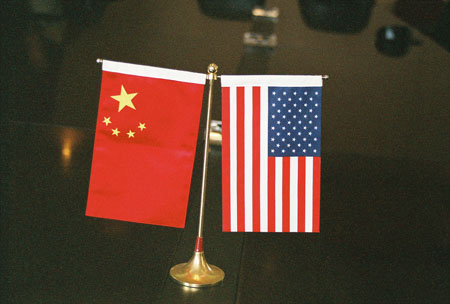
us20and20china20flagsAfter a two year hiatus, the U.S. and China resumed their human rights dialogue last Thursday and Friday in Washington, D.C.  Don’t be alarmed if this is the first you heard of the Dialogue; the U.S. mainstream press barely covered it.

The U.S-China Human Rights Dialogue is subject to criticism and much of it viable.  China doesn’t send anyone with much power to negotiate (for last week’s Dialogue the highest official was Chen Xu, Director General of the Department of International Organization of the Ministry of Foreign Affairs); the Dialogue itself is conducted largely behind closed doors and it is unclear what is accomplished; and there are never benchmarks set to determine if these dialogues actually produce any results.

But last week’s U.S.-China Human Rights Dialogue, even with the little that is

Assistant Secretary, DRL, Michael Posner

Assistant Secretary, DRL, Michael Posner

known about it, is newsworthy; it reflects a changing interpretation of human rights in the U.S.-China relationship.  From what can be gleaned from Department of State press conference, the new emphasis in human rights appears to be almost exclusively rule of law.  While Mike Posner, Assistant Secretary of State for the Bureau of Democracy, Human Rights and Labor, highlighted five different topics which were discussed at the dialogue (religious freedom, labor rights, freedom of expression, rule of law, and racial discrimination), the focus of the Chinese delegation’s field trip on Friday was largely legal.  On Friday, the Chinese delegation made the following visits: a meeting with Justice Sandra Day O’Connor to discuss rule of law and an independent judiciary; a talk with Cardinal McCarrisk at Catholic Charities’ Anchor Mental Health Center to discuss the relationship between the religious community and government as it pertains to human and social services; discussions with the Federal Mediation and Conciliation Services concerning labor rights and collective bargaining; and a talk with Thomas Crothers at the Carnegie Endowment for International Peace regarding the interplay among law, human rights and food safety.

In addition to the focus of an effective legal system as a part of human rights, here are some other interesting takeaways:

Why discuss with delegates from an atheist country the role of religious organizations?

This is perhaps the most interesting and most puzzling aspect of the talks.  China, run by the Communist Party, is a self-declared atheist country.  In fact, all of the Chinese delegates from last week are admitted atheists.  To be a Chinese official, Communist Party membership is a prerequisite; to be a member of the Chinese Communist Party renunciation of religion (Buddhist, Islam, Christianity, etc) is necessary.   So given this fact, the State Department trip to Catholic Charities offers an interesting insight into the U.S.’ policy toward religion, human rights, and China, particularly in regards to Christianity.

ChristianWhile ostensibly atheist, China is one of the fastest growing Christian nations.  Even based on the Chinese government’s official numbers –which are likely low-balled—from 1997 to 2006, China saw a 50% rise in the number of Christians.  The number, including those that attend the government-run churches as well as the underground, unofficial churches, is around 70 million.  Although this seems like a large number, population wise, it is only around 5%.  So for many Western Christian missionaries, the name of the game is China.  Western Catholics and Protestants both know this and are in China, albeit undercover, in large numbers.

While China has a growing Christian population, the Chinese government remains ambivalent about its development – sometimes seeing it as buttressing its authority and sometimes seeing it as a threat.  Although religious groups and charities have been important in the U.S.’ civil society development, China is a long way from having any sort of religious charities that could support human rights or rule of law.

So why the trip to Catholic Charities?   Perhaps the Chinese officials requested this because they are sincerely interested in learning more about the role religious groups can play in society.  Or perhaps U.S. policymakers’ idea of human rights, at least in China, is becoming less secular and more religious-based, particularly Christian.  Unfortunately, Assistant Secretary Posner did not explain why the Human Rights Dialogue with atheist China focused on the role of religious organizations in supporting human rights and we are left merely to speculate.

U.S. Raises Issue of Liu Xiaobo’s Imprisonment, the Disappearance of Gao Zhisheng, and likely the Disbarment of Tang Jitian and Liu Wei

Assistant Secretary Posner informed the press that U.S. officials discussed many specific Chinese dissents’ cases during the Dialogue.  However, the only two cases he named were those of Liu Xiaobo and the very odd case of Gao Zhisheng.

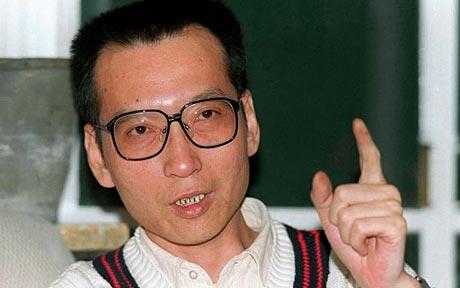
Liu Xiaobo has a long history of human rights activism in China.  In 1989, he

Activist Liu Xiaobo

Activist Liu Xiaobo

participated in the Tiananmen protests and has repeatedly criticized the Chinese government.  His activism has received many accolades from the West, including Reporters Without Borders’ Foundation de France Prize.  In December 2008, Liu Xiaobo was one of the organizers of the Charter ’08 movement, a movement calling for more democracy, less corruption and greater accountability of the Chinese government.  For these activities, Liu was arrested and sentenced to a very harsh 11-year prison term for inciting subversion of state power.  Even for China, the sentence is particularly long.

Although Liu’s sentence was harsh, the outcome was not surprising from

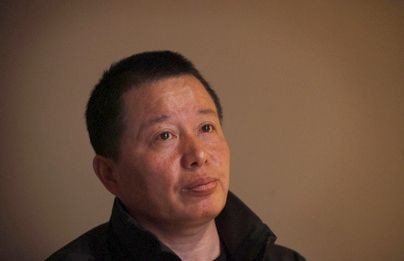
An emaciated Gao Zhisheng in March 2010 after a year in police custody

An emaciated Gao Zhisheng in March 2010 after a year in police custody

China.  Gao Zhisheng’s case however is just downright bizarre and Kafkaesque.  Gao is a self-taught lawyer and received much praise by the Chinese government for his work in public interest law.  But that was back in 2001.  By 2006, Gao had fallen out of favor and his work, particularly the representation of the repressed religious organization Falun Gong, was seen as a threat to the Chinese government.  In 2006, Gao was detained, arrested and eventually found guilty of subversion.  His three year prison sentence was converted to five year probation and he was allowed to remain at home.  After harassment, physical abuse and threats to his life, in February 2009, one month after his wife and child fled China for the United States, Gao was mysteriously abducted by Chinese police.  His whereabouts remained unknown.  The Chinese government remained largely silent in regards to Gao’s whereabouts until January of this year when in response to questions regarding Gao’s disappearance, Foreign Ministry spokesman Ma Zhaoxu retorted that Gao was “where he should be.” Although ominous, Gao eventually reemerged in March 2010 at Wutai Mountain, hundreds of miles from his home.  Announcing that he was giving up rights activism for the opportunity to be reunited with his family, Gao went to Xinjiang Autonomous Region at the beginning of April to visit his in-laws.  After one night there, Gao was abducted a second time and to this day, his whereabouts are unknown.

In addition to Liu and Gao, Posner also mentioned that the cases if recently disbarred public interest lawyers were also raised.  This likely means Tang Jitian and Liu Wei, two public interest lawyers who were recently stripped of the right to practice law.  Both Tang and Liu merely represented

China’s increasingly hard-line stance against rights activists and public interest lawyers reflects a country that may not be interested in establishing the rule of law, at least at it pertains to non-economic spheres.  Raising these issues is important not just for the people being detained or harassed, but also to see how China moves forward in response to the issues.  For example, President Obama, in his trip to China last November, reportedly raised the issue of Liu Xiaobo’s detention.  However, the Chinese government did not lighten Liu’s sentence in response.  Instead, the Chinese government sentenced Liu to the overly harsh term of 11 years in December, a month after President Obama’s visit.  It will be interesting to see what happens to Liu Xiaobo, Gao, Tang and Liu Wei after the Human Rights Dialogue.  Does China care anymore about the U.S.’ criticism?

Even the Chinese know what the real purpose of Arizona’s new law

To create a feeling of mutual respect, the U.S. usually voluntarily discusses design-swappableits own human rights issues during these dialogues.  In last week’s Dialogue, Assistant Secretary Posner volunteered Arizona’s new law against illegal immigrants as an example of a potential human rights violation in the United States.  However, according to Posner, the Chinese were not concerned about the law as it may apply to their citizens visiting the U.S.  Even the Chinese know that the law’s likely racial profiling will be for Mexicans, not Chinese.

How to Move Forward

Last week’s Human Rights Dialogue was only the second since 2002, after China suspended the talks.  Actually having the Dialogue itself is a major accomplishment.  Additionally, at the end both sides agreed to have another session in 2011, making the Dialogue an annual event.  For purposes of a continuing conversation, this is a good sign.  But the criticism that China merely plays lip service to the Dialogue is apt.  That is why it is important that during this month’s Strategic & Economic Dialogue (S&ED), to be held in China May 24 and 25, that high level officials, including the Secretary of State, raise human rights.  China places more emphasis on the S&ED compared to the Human Rights Dialogue.  But if the U.S. really wants China to move forward in human rights and rule of law, the topic must also be raised at the S&ED.

Bookmark and Share

Panorama Theme by Themocracy