The Taipei sun was already scorching at ten in the morning, and the tall palm trees lining the street teased us with their shade. We were waiting for the start of the “228” parade, an annual event that commemorates the February 28, 1947 massacre in Taiwan. The crowd was mostly composed of young Taiwanese NGO workers in their twenties and thirties, all dressed in black. We lined up in two columns divided by a long white banner. Then our leader, a petite young woman wearing an oversized black t-shirt and baggy cargo pants, solemnly lifted a green wooden pole. Atop it was a circle emblazoned with an image of the island of Taiwan, the numbers “228” and “和平日” (“Peace Day”) written across it. Silence enveloped us until a recorded dirge began to play. The moment was solemn, like a funeral procession.
For many in the United States, Taiwan means just one thing. The independent island, formally a part of China during the Qing Dynasty, is held up as a counterpoint to the Chinese Communist Party’s authoritarian dictatorship. But to conceive of Taiwan as nothing more than China’s opposite risks obscuring the island’s most distinctive features, including its dynamic civil society, stellar human rights record, and stable democratic institutions. It also prevents the Taiwanese people from claiming and celebrating their independent identity.
Ann Buchsbaum (at that time Ann Fried), at the Dutch orphanage. 15 years old United States Holocaust Memorial Museum Collection, Gift of Anne Fried Buchsbaum
One of the few happy memories Ann would share from her childhood was the time she spent in a Dutch orphanage. She talked about it often—the endless fields of red and yellow tulips that surrounded the place; the Dutch princess who sometimes stopped by to visit; the day trips to Amsterdam to visit the Rijksmuseum. Every time Ann reminisced about her time there, her pale blue eyes would light up her thin, wrinkled face and a small smile would sneak across her lips. Tulips were her favorite flower.
Ann Buchsbaum (nee Fried) was already eighty-nine years old when I first met her in 2012, and her body was beginning to betray her. Only a few years earlier, Ann was going to parties in Manhattan, volunteering at her beloved museums, and reading voraciously. Now, hobbled with a walker, her tiny, hundred-pound frame slightly hunched, Ann’s outings were limited to a three-block radius around our Forest Hills apartment building. Her social circle had been whittled down to her home-health aides and a few hallway neighbors. But Ann still had her stories and an enthusiasm for life. I could never tell if that enthusiasm was genuine or just a habit—developed as a Jew who had survived Hitler’s Europe.
Last October, after denying the existence of internment camps in Xinjiang for over a year, the Chinese government finally admitted to their existence but claimed that they were nothing more than “vocational education and training centers.” Places where “students” – over one million of them and almost all Uighur and other Turkic Muslims – could rid themselves of Islamic extremism while simultaneously upgrading their job skills. But camp survivors’ stories paint an entirely different, and much darker picture. In story after story, former detainees talked about the prison-like conditions, of being held for months to years without access to the outside world, of physiological and physical abuse, and punishment solely for practicing their faith. Women have consistently spoken of rape, forced sterilization and forced abortion. Unfortunately, with the Chinese government’s refusal to allow outside monitors unfettered access to the camps, these survivors’ stories could not be corroborated.
Until now. In the past two weeks, both The New York Times and the International Consortium of Investigative Journalists (“ICIJ”) have published two different troves of confidential Chinese government documents (the “Xinjiang Papers” and the “China Cables,” respectively) that confirm the unlawfully detention of Uighurs in what are essentially prisons. According to the Xinjiang Papers, any direct inquiry by relatives as to whether their detained family member has committed a crime, officials are to answer no but immediately follow it up with the assertion that the their family member still needs “education” to rid themselves of “unhealthy thoughts,” likening Islam to a disease.
Inside a Xinjiang Camp – looking more like a prison than a job skills class
ICIJ’s China Cables provide even more detail into the everyday operations of the prison camps. Detainees are kept in “double-locked” rooms at all times and are constantly watched, even in the bathroom. Preventing escapes is paramount and there must not be any “blind spots” in the video surveillance of the detainees. Guards are trained in “combat exercises” to ensure their immediate response if “something happens.” Detainees are forbidden from having cell phones and family visits are never in person; only periodic phone calls and occasional video chats are permitted. Detainees are forced to remain in the center for at least a year. And while the government documents refer to the camps as “vocational skills training centers,” it is apparent from the guidance provided to the camp administrators that the focus is to Sinicize the Uighurs and stamp out their religion. In fact it is only after a year of ideological indoctrination do some – not all – detainees continue on for a three to six month “skills improvement” training, a training that is more responsive to future employers’ needs than to the individual’s.
In no way did the Chinese government ever want these documents released. And the people who leaked these documents to the New York Times and to ICIJ put their lives on the line to stop the mass atrocities in Xinjiang. According to Margaret K. Lewis, a professor of Chinese law at Seton Hall University, at least some of these documents would be considered state secrets. “What is a state secret is very vague, can be defined retroactively and doesn’t need to be stamped ‘state secret’ to be considered a state secret,” Lewis told me when I asked her about the leak of the Xinjiang documents. Under China’s Criminal Law (“CL”), leaking state secrets is a serious offense, carrying a sentence anywhere from 10 years to life where the circumstances are especially serious (CL, Art. 111), which one would think is present here. A death sentence is possible if the leak causes particularly grave harm (CL, Art. 113).
“They could also be charged with subverting state power,” Lewis told me. “It’s not just what the documents were but also why they were giving these to foreigners” Lewis continued. Like state secrets, subverting state power (CL, Art. 105) can carry up to a life sentence and if the person colluded with foreigners in the subversion, arguably what the whistleblowers did here, then the law requires that the punishment be severe (CL, Art. 106). But, unlike state secrets, subverting state power is not subject to the death penalty. In pressing Lewis further on what she thought the whistleblowers would be charged with and what type of sentence they would get, Lewis was clear: “This is less of a legal question and more of a political one.” To Lewis, it will come down to what is best for President Xi Jinping: is it better to make an example of the whistleblowers, or are the whistle blowers high enough officials that publicly identifying who they are could be an embarrassment to the Chinese government, and thus their prosecution may never be public. Under Article 183 of China’s Criminal Procedure Law, state secrets trials are closed to the public.
“The one thing that is certain,” Lewis told me “is, if the whistleblowers are caught, they will experience long-term detention and suffering.” And their families. “You’re not just putting yourself at risk, but also your loved ones,” Lewis said. “Whoever this person is, I am grateful for the risks taken to bring the documents to light.”
Protest in Brussels Calling on the EU to Speak Up Against the Internment of Uighurs
These whistleblowers must have known the high costs associated with leaking the documents. But still they determined that it was worth it; that the world must know precisely what is happening in the Xinjiang prison camps; that Uighurs are unnecessarily suffering at the hands of the Chinese government; and that it must be stopped. But since the release of the China Cables on Sunday, only the United Kingdom and Germany have demanded that China provide unfettered access to United Nations human rights observers. But where is everyone else? Where is the United Nations’ response? Will Antonio Guterres, the current Secretary General who has stayed mum for the last two years about China’s treatment of Uighurs, finally condemn China’s actions? And while the United States issued a strong statement, it could do more. The Uyghur Human Rights Policy Act is just sitting in the House; the State Department has yet to call call for the UN to be given unfettered access to Xinjiang; and Treasury makes no mention of Maginsky Act sanctions against some of the high-level officials named in the Xinjiang papers. And what about Australia, Japan, Canada, or any of the Arab nations? Finally, where is the International Olympic Committee? Do we really want Beijing’s 2022 Olympics to be a replay of Nazi Germany’s 1936 Games?
I can only hope that in the next few days I can add more countries to this post as ones that spoke out. But more than anything, I hope that these countries and organizations unite to take action to stop the crimes against humanity currently occurring in Xinjiang. Individuals in China have put their lives on the line. It’s time the rest of the world follow suit and have the courage to act.
Uighur protester outside of China with a mask with the flag of East Turkestan and a Chinese flag covering her mouth
Last week, the Washington Post published my op-ed where I argued that what is being perpetrated against Uighur and other Turkic Muslim women – rapes, forced sterilization, forced abortion – are all crimes against humanity. Since publishing that piece, many have asked why I decided to describe these acts as crimes against humanity? Why am I not calling it genocide? Or at least cultural genocide?
In the past few months, many have stated that the Chinese government’s actions in Xinjiang are akin to cultural genocide. The government’s widespread razing of mosques; its destruction of Muslim burial grounds; its prohibition against certain religious baby names; its mass internment of 1.5 million Uighurs and other Turkic Muslims for no crime other than being Muslim; all of these reflect a Chinese government intent on destroying the Uighur culture and “Sinicize” them, making it cultural genocide. But cultural genocide is not a crime under international law and thus, brings with it no legal duty for the world to stop it nor any punishment for the perpetrators. In fact, the drafters of the Genocide Convention intentionally rejected the concept. Instead, genocide under the Convention is limited to the biological or physical destruction of the group coupled with an intent to destroy. When I spoke with Deborah Mayersen, a lecturer at the University of New South Wales at the Australian Defense Force Academy and an expert in the field of genocide studies, she was clear that she didn’t think that the situation in Xinjiang was genocide. “I do think there are warning signs, but at the moment [China] is not heading toward genocide” she told me. “There would need to be some sort of disruption – an economic disruption perhaps that can be blamed on the Uighurs – for [China] to be on the trajectory toward genocide.”
“But we do have a fairly clear case of crimes against humanity” Mayersen emphasized. Unlike genocide, crimes against humanity is not governed by a specific treaty. Instead, it has developed through international customary law, with its use at Nuremberg, the International Criminal Tribunal for the former Yugoslavia, and the International Criminal Tribunal for Rwanda among other instances. Crimes against humanity include acts that attack the very soul of a people and its culture: murder, extermination, torture, arbitrary detention, forcible transfer of a population, rape, sexual violence, forced sterilizations, apartheid. It might sounds a lot like genocide, but unlike genocide, these crimes do not require an intent to biologically destroy, an element we don’t yet have in Xinjiang. Instead, acts that constitute crimes against humanity merely need to be part of a widespread or systemic attack directed at a group, with the perpetrator’s knowledge that his or her acts are part of this larger attack.
Because crimes against humanity is a legally recognized doctrine, it “brings with it the responsibility to protect” Mayersen told me, citing to a 2005 U.N. Resolution, signed by all 193 UN member states. Under that Resolution, the international community is required to take quick and decisive action to protect the targeted group.
Protest in Brussels Calling on the EU to Speak Up Against the Internment of Uighurs
The unlawful internment of 1.5 million Uighurs and the removal of Uighur children from their families alone constitute crimes against humanity. And rape and forced sterilization have been considered crimes against humanity for decades. Sexual violence against women was a basis for crimes against humanity at the International Criminal Tribunal (ICT) for the Former Yugoslavia and of the ICT for Rwanda. In 2013, the U.N. Human Rights Council, in its inquiry report on North Korea and after conducting a number of victim interviews, found sufficient evidence for a charge of crimes against humanity for the rape, forced abortions and sexual violence perpetrated against women.
Because there is more than sufficient evidence that what is happening in Xinjiang is crimes against humanity, activists, journalists and others must refer to it as such. Only then is the world required to act. To call it anything less gives the world a free pass and permits the Chinese government to continue to engage in its destruction of the Uighur people and their culture.
Mihrigul Tursun (L), testifying at the CECC hearing
Sitting in a hearing room in Congress, in a gray plaid hijab, her dark blond hair poking out, Mihrigul Tursun begins to cry. She is there to share the plight of her fellow Uighurs in Xinjiang. Her translator reads aloud Tursun’s prepared statement about her three separate detentions by the Chinese government in Xinjiang’s internment camps. As the translator recounts Tursun’s first detention — upon her release, she learned that one of her 4-month-old triplets had died — Tursun struggles to hold back tears. Click here to read the entire op-ed
To say that co-directors Wang Nanfu and Zhang Jialing’s One Child Nation is a tour de force is a ridiculous understatement; it is a scathing critique of the Chinese government’s continued willingness to sacrifice the souls of its people for its unilateral desire for economic development. Last week, the world remembered that trade-off when it commemorated the 30th anniversary of the Chinese government’s killing of peaceful protesters around Tiananmen Square, all in the name of stability and economic success. In One Child Nation, Wang and Zhang expose yet another of the Chinese government’s one-sided bargains: its violent enforcement of the one child policy.
In an effort to curb its rapidly growing population, between 1979 and 2015, the Chinese government instituted a one child policy. In a society that prizes children, and male children especially, restricting married couples to one child was never going to be a hit. And that’s how Wang and Zhang begin their film, showing the intense propaganda that was necessary to get the people’s buy-in. Reaching every city, town and village, the government indoctrinated the people into believing that having one child was their patriotic duty; those who had more than one were to be socially shunned. Even that propaganda took its toll. Wang, who was the first of two children during that era, admitted that growing up, she was embarrassed that she had a sibling, internalizing the propaganda that her family was using up the state’s resources and hindering China’s progress, all for their selfish interest of having a second child.
But as One Child Nation shows, propaganda was only the start. Quickly, the movie descends into the more horrific aspects of the Chinese government’s one child policy: the forced sterilizations, abortions and killing of babies.
By merely reading about these acts in the pages of the New York Times and other western newspapers over the years, it has been easy to shrug them off as isolated incidents. But One Child Nation makes clear that these were not one-off acts. And in showing the pictures of women being dragged, kicking and screaming, to be sterilized, or the almost full born fetuses that an artist collected after finding them in the trash, wrapped in a yellow plastic bag labeled “medical waste,” or the almost catatonic expressions on the everyday people who experienced the policy firsthand, either because they had to implement it or because it was their baby that had to be killed, One Child Nation ensures that you never forget.
Co-directors Zhang Jialing (L) and Wang Nanfu (R)
And this is what makes One Child Nation so powerful and so successful in its condemnation of the one child policy and the Chinese government’s insistence on economic development no matter the human cost. Like nothing before it, One Child Nation visualizes the pain and suffering of the Chinese people, both the perpetrators of the policy and its victims. And the prevalence of these forced abortions and sterilizations become readily apparent when Wang interviews the village midwife. In the 20 years that she practiced, she preformed between 10,000 to 20,000 abortions and sterilizations. Quickly your mind does the math – if this is just one midwife in one rural village, the number of force abortions and sterilizations country-wide must be staggering.
But to truly understand the human and societal toll of China’s one child policy, Wang centers the film on her family in rural Jiangxi province, a brave choice that is a testament to Wang’s commitment to letting the world know what happened as opposed to protecting the privacy of her family. While Wang is very much aware of the cruelty of the one child policy, her family do not appear to be. There are moments in some of Wang’s interviews with her relatives – where they can speak so nonchalantly about the abandonment of a baby – that makes one cringe. But then it is easy for us in the Western world to cringe; we never had to experience a policy that required such a choice.
Propaganda poster from the time period
One example is Wang’s interview with her mother, when she admits that she helped her uncle abandon the uncle’s newborn daughter, in a market, hoping someone would pick her up. For Wang’s relatives, the logic was clear: abandon the girl and try for a son. But no one else wanted a baby girl, and by the second day, with a body covered in mosquito bites, Wang’s cousin died.
Another of Wang’s female cousins was sold to a trafficker. Luckily, this cousin was born later than the first one, when the market for international adoptions began to flourish with the Chinese government lifting of its ban on foreign adoptions in 1992. Instead of leaving girls to die, mothers could sell them to traffickers for placement in an orphanage. Unfortunately, as One Child Nation demonstrates, the market for these adoptions became so profitable that traffickers and government officials began stealing girls from rural families that had more than one child, even if these families had paid the fine.
For almost 40 years, the Chinese people – especially women in the rural areas – have had to undergo tremendous suffering under China’s one child policy. In a particularly moving montage, Wang and Zhang splice together each of their interviewees’ response to one question: why. And each says the same thing: there was nothing they could do. Only one person was able to express the pain of the one child policy – the 16 year-old whose identical twin sister was stolen from her family, sold to traffickers and now lives in the United States.
As One Child Nation makes clear, the question “why” needs to be asked of the Chinese government: why must the Chinese people continue to suffer because of its unilateral decision to seek economic gain at all costs, including trampling on people’s basic human rights. After the government-made famine of the Great Leap Forward, the shattering of traditional bonds in the Cultural Revolution, the murder of unarmed civilians near Tiananmen Square, and now the societal toll of the one child policy, when will the Chinese people be able to have a say as to whether their sacrifice is worth it?
The human toll of China’s one child policy; this girl’s identical twin sister is in America
Masterfully directed and powerfully curated, One Child Nation finally gives the Chinese people their voice. And what they are saying – that denying them their dignity could never be worth it – is not something the Chinese government wants to hear, especially as it peddles abroad its model of economic development above all other human rights. Unfortunately, the United Nations has become a receptive audience. In an April speech in Beijing, U.N. Secretary General Antonio Guterres’ sole focus was on economic development and how Beijing’s current international economic platform of the Belt and Road Initiative was perfectly aligned with the U.N.’s Sustainable Development Goals. There was no mention of the danger to other human rights that could arise if the singular focus is economic development or the need to ensure that those human rights are also allowed to flourish on an equal footing with economic development. But One Child Nation makes clear that those other rights desperately need to be protected; if they are not, then governments will be able to inflict any human rights violations they want all in the name of economic development. While this is a movie everyone must see, Antonio Guterres in particular would be well-advised to see this movie before he once again applauds the Chinese government for its economic development. It’s time he – and the world asks – at what cost?
Rating:
Next Showings: Nantucket, MA – June 19 – 24, 2019 at the Nantucket Film Festival; and Washington, D.C. – June 19 – 23, 2019 at the AFI Docs Film Festival. One Child Nation is supposed to have a nation-wide release on August 9, 2019. To stay up to date on One Child Nation, check out the film’s website here.
Today, China Law & Policy concludes its interview series for the 30th anniversary of the Tiananmen Massacre. Today, we are joined with Andréa Worden. Andréa is a noted China expert, human rights advocate and she will be teaching a course on human rights in China at John Hopkins University this fall. But back in the spring of 1989, she was an English teacher at Hunan Medical University in Changsha, China. And as a result, experienced firsthand the student protests that were happening in Changsha and then the subsequent crackdown.
Andréa has written about her experience, first, as a chapter in a book containing accounts of some of the pro-democracy protests outside of Beijing and then 15 years later, for China Rights Forum. Today, she’s going to talk to us about some of her experiences there.
Listen to the full audio of the interview here (total time 40 minutes):
CL&P: So Andréa, just to start, what started the protests in Beijing, for the Beijing students it was the death of Hu Yaobang back in, I believe, April of 1989 and that kicked off a lot of the pro-democracy protests there. For your students in Changsha, what were their reactions to Hu’s death, or did something else cause them to start protesting?
AW: Well first, Elizabeth, it is great to be with you again in the run up to the anniversary of June 4, and I really appreciate your taking the time to talk with me about this incredibly important event. I wanted to mention that, just first off, something that is not particularly well known is the fact that in more than 340 cities in China during the spring of 1989, there were protests. Likely that number is much higher. That figure comes from the compiler of the Tiananmen Papers.
I recently saw a figure online, unfortunately without a cite, it was the Wiki on the Tiananmen protests that mentioned the number 400 [cities with protests in 1989]. But my own feeling is that it’s probably even more than that becau
The distance between Changsha and Beijing.
se some of my students in Changsha were from fairly small towns in Hunan. When they went home during this period of April and May of 1989, they said even in their very small hometowns, villages even, there were protests. So it was truly nationwide and unfortunately, we probably will never know the full scope of the pro-democracy protests in China.
So right, April 15 was the day that Hu Yaobang passed away. We know that was obviously a critical moment in Beijing, and that’s what launched the student protests in Beijing. Also, in Changsha, many people were very sad when they heard the news. Hu Yaobang actually is from Hunan, so there was this sense of “he’s our native son” who was viewed very much by many people as being sort of a hero and somebody that they really had hope for, as somebody who supported intellectuals, who supported the students, and was very much involved in the economic reforms and some political reform under Deng.
My particular school. . .so Hunan Medical University medical students, they have a reputation for not being particularly political. But there were a few universities on the other side of the river that goes right through Changsha that were known to be very active politically both earlier in 1979 and 1980, and there’s also an election movement during that time period at those colleges. Those colleges include Hunan University, South Central Industrial University, and Hunan Teachers College. Then it was also known as Hunan Normal University. Over on that side of the river, the other side of the river, there were mourning activities or events [for Hu Yaobang], but no major protest as far as I know, yet.
CL&P: When your students in Changsha at the Hunan Medical University, when they started seeing the students in Beijing protest at Tiananmen Square, what were their reactions to it? Did they talk to you about it? Did they feel like they could talk to you about it?
AW: A few of my students that I had become quite close to as good friends, they felt very comfortable I think speaking with me about it. They were excited. They were sort of amazed, and there was really this sense of hope that students could come together on such a massive scale and speak out about the things that they also very much felt. Those things ranged from inflation, which was really a huge problem then at that time. My students felt it personally when the prices at the cafeteria went up, like doubled, and some of them said, “My parents can’t afford this.”
CL&P: Right.
AW: So there was that on a very personal, practical level. But then also corruption was everywhere. That became a big theme of the movement both in Beijing and in Changsha. Corruption, inflation and then certainly freedom, democracy. Regardless of what they might have viewed democracy as being or how they might define it, my clear sense was a lot of this was about personal freedoms, more personal freedom, certainly freedom of speech, freedom of expression.
Protests in Changsha the Spring of 1989; taken by Andréa Worden
CL&P: So in Changsha itself, when did the protests really take off? You mentioned that they were two different areas of universities and you were in the area on the other side of the river with Hunan Medical University. When did your students start participating in the protests or most of the university students at Hunan Medical start participating?
AW: So the students on the other side of the river – the more politically-active side of town – they had organized demonstrations, we could say a smaller-ish demonstration or just a gathering, on April 15th. Just really, truly mourning this leader. And of course, in China mourning a leader that has passed invariably ends up commenting on the current leadership, even implicitly. So that was happening.
The other folks, the more active folks organized demonstrations for April 22nd, April 26th and May 4. I should say also I don’t have complete information. So there may well have been more than this. This is what I have noted and I’ve written in my article that you’ve mentioned.
So at this point still my students were definitely, I think, interested in watching. Some I’m sure went out to maybe peek and take a look, but the students, the Hunan Medical University students were not yet actively involved en masse.
CL&P: Did they ever become involved en masse?
AW: Yes, they did. Yes. Let me tell you a little bit about that. It was this sort of. . . they were watching things very, very carefully. They were able to get information from the VOA and the BBC over. . .
CL&P: Yeah, a shortwave radio.
AW: Yeah, exactly. So Voice of America and the BBC from England, they were able to get that over a shortwave radio. And so what would happen – of course not everybody had a shortwave radio – but the people who did would write out on large poster board or pieces of paper, they would write out news from Beijing. They’d plaster these large pieces of paper of all over the city or actually in main areas, certainly at all universities and at big intersections people were watching, were looking around.
Also, there were certainly, there were hints on the evening news. A dialogue with the students in Beijing was coming up. This was also of course televised. [Ed. Note: During the course of the pro-democracy protests in Beijing, the central government held three dialogues with the Tiananmen student leaders – April 29, May 14 and May 18. All three were televised; some live, some on tape-delay]
So there was that and there were also of course at this point too, it’s something called chuanlian [串联], which is the students networking or people networking across cities, across boundaries, across the country to try to mobilize other students as well as workers. This was a term I think that came from the Cultural Revolution. Some of the Changsha student leaders were going up to Beijing and they were bringing back information.
So basically what happened at my school – again, probably one of the last schools to get very involved – was one [dorm] room of male students from my class, they decided to fast, to hunger strike or fast [after] one of the days the students had started their hunger strike in Beijing on May 13, and this really moved people. [Ed. Note: Andréa clarified this timeline in a follow up conversation with CL&P. She recalled this group of her students going on their hunger strike a few days after Beijing students did, on May 17, 1989.]
So they [the small group of Hunan Medical male students] were inspired and moved by the students who were hunger striking in Beijing and they said, “We had to do something. We couldn’t just sit here and go to class and not do anything, right?”
A photo from Andréa taken on May 17, 1989 in Changsha showing some of the hunger strikers in front of the provincial government headquarters
So anyways, on May 17, one group of this one room of these young [male] students put a sign up on their door and they said that they would just fast for one day and they weren’t encouraging anybody else to do anything. This was just something these however many boys, I can’t remember, six, eight, had decided they were going to do as a group. So that also inspired so many people at Hunan Medical University. So when some of the girls in our class found out what the boys were doing, they thought “oh, we can’t [not do anything]. We have to support this too.”
So anyway, it kind of went room by room, or dorm room by dorm room. The girls got involved and the students from other classes heard what was happening. Word travels fast. Basically very soon there was a lot of hubbub and momentum, people were fasting for the day, wanting to show support for the students in Beijing.
I wanted to share this story in part because it shows how important one person – or here seven people – deciding to do one thing, this personal act of protest, how that can just totally truly spark a much larger movement or event or action because it has a sort of amazing ripple effect of just inspiring other people to take action.
So that evening the students, the student union leaders, got onto the loud speaker, and announced on the loud speaker that the Hunan Medical University was going to participate in the city-wide demonstration that was going to be held that night. I don’t think that was just a coincidence. It might have been, but. . . .
CL&P: Right. So at Hunan Medical University, once this started around May 17th, the hunger strikes and then the student union leaders announcing that the university was going to participate, what happened with classes? Did they kind of just stop or did students try to balance classes or was it. . . .
AW: So that’s a really good question and they were like on and off. My recollection of this whole period was not a whole lot was happening in terms of classes. I think there was some coursework happening. I recall my students were feeling very stressed about missing classes. They were very obviously concerned about their grades, but they certainly also wanted to participate so there yeah, some classes were being held on certain days but there were other times when basically it was like every day seemed to be a demonstration; there were class boycotts, there were hunger strikes, there were sit-ins. Also, there started to become worker strikes as well. And some students just went home.
CL&P: In the reaction of the female students, I know in your essay “Despair and Hope: A Changsha Chronicle,” you actually do discuss about how the 1989 protests and the movement that was catching the nation was actually in some ways empowering to female students who engaged in the protests. Can you talk maybe a little bit more about that? And put it in a little bit more of a context?
Changsha shopowners providing free tea to the students to show their support – a photo by Andréa Worden from May, 1989
AW: Changsha came alive during this period of time, so roughly let’s say early May or mid-May through June 4, and it was incredible to witness that. There had been such a feeling of hopelessness beforehand and also this feeling of just total boredom and depression that people felt like they had no [choices]. One student had said, “Oh, I thought I was going to go to college and leaving my parents, and was excited about more freedom,” and he said, “When I got to Hunan Medical University it was like I was in prison.”
They had so many rules and were so tightly controlled and they had to sort of watch every step that they took and just be very, very careful. They just felt truly oppressed or repressed, suppressed. They couldn’t really express their individuality. There was a lot of conformity. You had to say the right the thing, you had to act a certain way, and I think students kind of particularly enjoyed our English, not just mine but my fellow English teachers, our classes because we were sort of like, “Okay, you can come to English class and you can say whatever you want.”
We encouraged them obviously to say how they felt and write essays about kind of interesting topics. I think they also felt that they could say more in English than they could in their Chinese classes in terms of maybe possibly “sensitive issues.” They were still kind of watching because they had to still be careful, they were watching sort of what they were saying but it was a breath of fresh air, our classes. I think that they didn’t have much of that elsewhere. So that period when the demonstrations had started, when people were sort of writing these wall posters, when they are out and about looking at and watching the demonstrations or just talking among themselves, the students were talking among themselves, what’s happening? What’s happening in Beijing? Where is this going? Or analyzing what was happening on the political level. Clearly there was a split that was coming to the fore between Li Peng and the hardliners, and Zhao Ziyang. People were very busy talking about that, analyzing this, where was it going to go? What was happening? They were talking about also the dynamics among the schools in Changsha. So it was just this heady time. Basically everyone I think, many people felt they had now the space and the freedom to speak out, including women.
So that was fantastic to see both because they looked so alive, they looked so engaged and happy and sort of free, really free. Anyway, both the men and the women, so the female and the male students, but I think it was interesting because the male students would kind of be quite surprised and sometimes I was too when they would see one of their female classmates who had been perhaps quite maybe fairly demure, shy, didn’t seem to be thinking about much of anything, making speeches on the corner, on the street corner in Changsha about large ideas and large principles of freedom, transparency, accountability, democracy, what do we do about corruption. Just talking, talking, talking.
So in that respect I think everybody felt empowered and that was wonderful. It was inspiring to see and it was also, I think they all inspired each other and I think just people took a particular pleasure at seeing the female students step up into that role.
CL&P: Then so on May 20th, 1989, martial law was declared. What was the reaction in Changsha?
AW: I also should back up a little bit. April 26 [1989] was the day The People’s Daily issued this editorial that declared the Beijing protests, what was happening in Tiananmen Square, declared it to be “turmoil.” So dongluan [动乱]. These sort of naïve – they didn’t use the word naïve – but students were being taken advantage of by a small handful of people who were anti-party, who were anti-socialist.
Very hard line, they didn’t acknowledge the students’ patriotism, which was very much front and center in Beijing and also Changsha. People [protesting] were very, very clear that they loved their country; they loved China. They were unhappy about the political system. They were very unhappy about corruption and they were looking for change and more freedoms. So that editorial, just like in Beijing, caused a huge reaction [in Changsha]. Anyways, so more protests, then in terms of May 20, Changsha, the people in Changsha were reacting to what was happening in Beijing.
When martial law was declared – it was the night of May 19th but actually it was supposed to take effect May 20 – people were very upset, very despondent. They felt like okay, this is done. Again it was despair. Our country is going to mobilize the army against us, against the people, against the students and so it was horrible. They felt betrayed.
CL&P: So just. . . and when martial law was declared, how did you feel? Were you scared?
AW: So I sort of felt similarly to my students. I had noted in my article, there was this feeling of “how could our government be so cruel?” So it was this alternation between feeling hopeful and feeling disempowered and just feeling despair. I felt, I couldn’t believe it. I was also just felt absolutely. . . .I also felt depressed and just thinking “oh, this is not going to end well,” but I wasn’t actually scared in Changsha.
As it became clear pretty quickly that troops were not going to proceed into the sort of inner city of Beijing or to Tiananmen, they were sort of stuck on the outside of suburbs, and that there was so
Army troops in Beijing when martial law was declared. The students were able to push them back without incident
much popular support. That then, once the students in Beijing went back out on the streets after May 20th, or maybe that was even the night of May 20th. Anyway, they went back after this [martial law] was declared because they saw that the people were essentially on their side and so when that happened there was this other wave of . . . . [Ed. Note: When martial law was declared, the Chinese government had organized the Beijing division of the army to stop the protests. However the student, workers and citizen protesters stopped the troops from entering the city and, with no shots fired, pushed the troops back.]
CL&P: Wave of hope.
AW: . . . hope. It’s like okay, there is a possible hopeful outcome for all of this.
CL&P: Then did the students in Changsha continue to protest when they saw the Beijing students?
AW: They did, yes. They absolutely did. Right, so that news from Beijing, about essentially the people of the city stopping the advancement of the troops, definitely gave the people of Changsha and the students in Changsha sort of a renewed sense of hope, yes. They continued to protest in various ways.
CL&P: Then the night of June 3rd into the morning of June 4th is the massacre at Tiananmen Square. So the massacre [also] in and around Tiananmen Square that occurred the night of June 3rd into the morning of June 4th, how did you learn about it?
AW: So I learned about. . . I learned about it from my students actually. So they had gotten up earlier than me on Sunday morning. That was a Sunday morning, June 4. And a handful of them came running over to our, excuse me, to the Yale-China house where the teachers were and were yelling to us from outside and just to say what had happened and they again had heard from. . . not only I guess at this point VOA but also the government was starting to spin this.
Actually one other thing I wanted to say that was also actually incredibly hopeful there was a three week period in May where the newspapers, the journalists probably throughout China, were actually reporting the real news, which was incredible, including in Changsha. So the Changsha Evening News – it’s just something I would read – they were reporting what was happening in Beijing, actual real news because there was sort of this opening.
CL&P: Ostensibly the newspaper would still be government-controlled. . . .
AW: Right.
CL&P: . . . but they were still writing the truth.
AW: Right, because they were protesting. The journalists, journalists were protesting on Tiananmen Square. Yes. They’d gotten involved. And also Shanghai there were large journalist protests, so that’s a whole other piece of the story that’s fascinating.
But anyway, so the morning of June 4, people were just incredibly upset, everybody. Some people were showing it more vividly. They were manifesting their emotions in sort of a more visible way than others, but we were just. . . . I remember just personally being floored, amazed, sort of incredibly depressed and also really felt for my students; they were very upset about the news.
We also just kind of couldn’t believe it. It’s unbelievable, right? The People’s Liberation Army opening fire on unarmed protestors. Peaceful protesters. So that is a vivid memory of learning about that from my students that morning.
Then after that, so June 4 later in the day and June 5, probably even into June 6th there were – yes, definitely into June 6 – there were definitely, there were protests against the military suppression.
CL&P: In Changsha?
AW: In Changsha. They were protesting. Also again, this is another part of the untold story. There are many, many untold stories of the spring of sort of April 15 to June 6, 7, 1989 and this is one of them. There were many, many, many cities throughout China where residents, workers, students were protesting against the violence in Beijing.
Photo taken by Andréa on June 5, 1989 – sign in Changsha that says “People of Changsha take action/rise up to support Beijing!”
CL&P: So after the Tiananmen Massacre on June 4th, other cities, including Changsha continued to protest even though they knew full well that there was a possibility their army could open fire on them.
AW: Yes. Right, so we know Louisa Lim has done a very nice job in her book, The People’s Republic of Amnesia, telling what she could find out about the Chengdu story. Still, she’s like, “There’s much we don’t know.” But she does a great job laying out what she’s been able to discover. I think also from other things that I’ve read it’s clear that the mobilization at that time of the military – June 3, 4 – that that very likely was a call across the country to all major cities. Because basically in Changsha, people kept saying there’s a rumor that troops are right outside the city. [Ed. Note: In our interview with Frank Upham about his experience in Wuhan during this time period, he too recollects the “rumor” that there were troops outside of Wuhan, ready to suppress the post-June 4 protests.]
And they’re going to come in at any time. And if you read other accounts in the book that you mentioned, The Pro-Democracy Protest in China: Reports from the Provinces, I see many of the other reports from the provinces, same thing. People were hearing that the troops were right outside the city ready to sort of. . . ready to come into the city and suppress protests as necessary. So there was basically a nationwide mobilization.
So people were kind of scared about that. That’s one moment where I was definitely feeling a bit scared because there was clearly an anti-Western turn, particular anti-American turn at this point. Not among the students or friends or faculty, but just overall politically. The CCP, the party secretary at the school and in Changsha, it was like this is an American. . . .Americans are behind this. Fang Lizhi taking refuge in the [US] Embassy with his wife. So this was all unfortunate because we then, the American teachers, were very concerned that we were going to become targets.
What was interesting about that time was that these protests also, sort of in a way became a bit more radical in they basically were causing – it was workers, it was students, it was residents. Many people were involved in blocking the train tracks so no trains could move. So the whole railroad operation was at a standstill.
Also, blocking major intersections. So they would corral buses and trucks. It was really, it was anarchy but it was peaceful anarchy in a way. These were actions that the Changsha populace supported.
There was debris in the streets. I remember the ride out to the airport. [Ed. Note: Andréa left Changsha on June 11, 1989]. The driver was trying to figure out how to get around all these roadblocks. We just saw there was a lot of sort of debris in the streets. So anyway, yeah, I’m not sure if I answered your question, but yeah, so they went on for a couple days but there was also a sense of who’s really in control? Also, again this fascinating feeling of this is so incredibly unusual.
With constant surveillence, don’t expect a Tiananmen protest anytime soon
CL&P: So your experience in the spring of 1989 in Changsha, what impact did it have on you?
AW: It was an incredible moment, incredible time. It was very dramatic. So our exit [on June 11, 1989], our leaving, we left very abruptly. It was really sort of an evacuation. Yale-China Association essentially said, “There will be a plane and you are getting on it and you are coming back.” Our parents were of course like, “Get out of there.” As we were leaving, many people said, “we don’t know what’s going to happen and you have to tell the world what happened here in Changsha.” Because people knew that they wouldn’t then be able to write about it or talk about it or even develop their photographs.
I was thinking about this recently. When I was out watching the protests and sort of taking photographs and documenting, just noting down some of the wall posters, some of the slogans, everyone had a camera, or some people had cameras and were taking photos. Where are all those photos? After June 4 people could not get that film developed. So where did all that go? There’s all this sense of this missing history and I think also people realizing they were not going to be able to tell their story. [Ed. Note: On May 31, 2019, Jian Liu, a student protestor in Beijing in 1989, developed some of his rolls of film from that time.]
I think they were very proud that they came out to support Beijing, to support the students and the workers. So the Changsha workers also got very involved in all of this, which of course made everybody in the government, Party folks, the most nervous. They felt really proud because this was such an empowering moment for them and they were like “we did something here. We didn’t succeed in the end. We want the world to know. We want people to know.” So I did feel this sense of like wow, returning to the US, I had this new sense of feeling very appreciative of the freedoms we have here and the rights that we have here. And that the absence of these rights and freedoms were just so apparent immediately once it was clear that the hardliners [Li Peng, etc.] had won this battle. That people wouldn’t be able to talk about this, and that. . .again, they had to toe the party line. My students had told me that they had two weeks of mandatory political education in the fall of I think it was, yeah, fall or maybe the summer, later in the summer.
Some of them said it was horrible. Some of them totally bought the party line. So anyway, so I felt very much like I wanted to do something to help support the democracy movement in China because it wasn’t going away. These feelings were. . . and these desires, these wants, were felt widely in China and I wanted to do what I could with the freedoms that I have to support their efforts. So when I got back I was starting a PhD program in Chinese History at Stanford, but I was quite involved in Human Rights in China [HRiC], it was just starting to get going – the organization Human Rights In China – doing what I could to help. Also to try to tell the story I helped put the book together, Children of the Dragon, for Human Rights in China. So, I have been involved on and off in various ways over the years in this cause. It’s basically taken on different forms and shapes over the years.
CL&P: What do you think ultimately is the legacy of the Tiananmen Massacre?
AW: So probably there are a few different answers to that. I think it’s an important question. One aspect of the legacy, or one legacy. . .there is very much, what did the Chinese Communist Party learn from this? Deng Xiaoping early on said that this is all – it’s in the Tiananmen Papers and it’s in Zhao Ziyang’s “secret journal,” The Prisoner of the State – the transcription of his audio tapes – that Deng felt that they had been too lax with ideological work.
So early on, in ’87, maybe end of ’86, there had been student protests then followed by the anti-bourgeois liberalization campaign and the anti-spiritual pollution campaign. It’s right when I arrived in China. I was a little bit nervous about that. But the people, they were like, “Oh, don’t worry about it.” I was in Tianjin. I spent the first six months in Tianjin and the teachers and the folks that I interacted with in Tianjin were like, “Oh, don’t worry.”
I’d see signs up everywhere about anti-this, anti-that. Essentially anti-western kind of everything. They [the people] would just say, “No, you’re so welcome here. Don’t worry. Don’t pay attention to any of that. We’re not paying attention to it.” So basically Deng was like “this [Tiananmen] is because of lax ideological work.” So we see now 30 years later, Xi Jinping, you cannot say that he’s lax.
CL&P: Yeah. He’s anything but.
Current Chinese President Xi Jinping (L) – is he just a little Mao?
AW: He’s anything but. Right. Over the years, since 1989, there have been moments that were a bit more open. But the overall trend has been “not lax.” And control of information of course, censorship as the internet grew, of course media censorship – so not lax.
So there’s that aspect of essentially political education and indoctrination, ideological education. We see that now tenfold, a hundred fold in Xinjiang with what’s happening with the Uighurs. They’re in concentration camps, probably 1.5 million all told and very much of this is about political education, forced education among other things. So forced ideological kind of education. So one aspect is this, that we have to sort of control information, control thought.
But there’s also just the physical, this physicality, if you will, of the protest. Now it’s physically impossible with all of the surveillance cameras and everything. They want to prevent you from even having the thought of protesting. That’s what a lot of the ideological education is about. And also of course everything is watched and surveilled. So you can’t even mobilize people, like five people. . . . it’s very difficult to mobilize even five or 10 people to do anything. So, it’s extremely hard to imagine a scenario where people are back on Tiananmen Square.
Also, of course another lesson was we need to train people’s armed police, armed forces. We need to be able to also have trained police, quasi-military forces, whatever, to deal with anything that might happen. Like essentially riot police, if you will. So they’ve got that whole aspect of things totally also nailed down.
Obviously we do see these sort of spontaneous or very small efforts here and there, but they’re immediately shutdown. So I think no more Tiananmens is of course a big legacy, and no little Tiananmens in terms of the protest. Then also of course in terms of the legacy, this is such a sensitive issue for the Communist Party, this whole period, particularly the massacre and the incredible spin they put. The story they’ve told that they continue now 30 years later to detain people who might mention June 4 or write something trying to commemorate June 4. One recent example is the folks, the four people in Chengdu I believe with the June 4 liquor labels. [Ed. Note: In 2016, a few people in Chengdu created a liquor label for a few bottles of Chinese rice wine – called “bai jiu” – a sound similar to the word for 1989 – “ba jiu” – with pictures of a man stopping a line of tanks. These men were arrested for subverting state power and were recently sentenced.]
CL&P: Yes. Yes.
The baijiu bottle that resulted in arrests and sentences for four indivduals
AW: I think it was even like one bottle. Then it was like three-year or four-year sentences for that.
So, it’s that level of insecurity, of absolute intolerance toward any sort of expression around June 4 and commemorating the dead, those who were killed. Some have also called to re-designate those protests as patriotic and as not turmoil, something that is going to continue to be something that people will continue to call for. But the CCP, I can’t imagine them really doing that. It would seriously have to be major political reform for that to happen. But one day I’m hopeful, one day that that will indeed happen. [Ed. Note: Rights Lawyer Teng Biao echoed a similar sentiment in his interview: that the Tiananmen protests will not be remembered on mainland China unless there is significant political reform. For him, that is democracy in China.]
And that particularly I wanted to also just mention the group The Tiananmen Mothers. [These are] family members who lost loved ones in Beijing June 3 and 4 in 1989 and who have just been an amazing force to try to uncover – because the Chinese government isn’t and is trying to suppress this information – trying to uncover the names and identities and sort of details about who was killed that night. They’re still at it. They’re calling for an investigation, for compensation and for an apology. Anyway, it’s important to also honor their efforts and their loss.
CL&P: Yeah. Well, I want to thank you and also echo your sentiments that there’s still a lot of brave Chinese that are still trying to commemorate what happened on June 4th and the bravery of their fellow citizens. But I want to also thank you for also writing down your stories and remembering for the Chinese people who can’t right now develop their photos of what happened during that time period and commemorate it in the way they can. So thank you again, Andréa for sharing and do you have any last words?
Nobel Peace Prize Laureate Liu Xiaobo (with megaphone) protesting at Tiananmen, spring 1989. He would latter be sentenced to 11 years for participating in 2008’s Charter ’08 and would ultimately die will serving his term.
AW: Yes. Thank you so much. Although it’s a grim topic, if you will, I appreciate the opportunity to sort of share this with you. I do actually want to end on another note of hope, which is that another legacy of Tiananmen is also those people who continue to fight for democracy and human rights in China. For example, Charter ’08 and the Charter ’08 Movement, Liu Xiaobo and many others, many of the human rights lawyers, there is a direct line from 1989 through Charter ’08 to today.
So a lot of the activism is happening outside of China now, but there still are activists in China doing what they can in the very limited space that they have to essentially fight for human rights, for rule of law, and political freedom.
CL&P: Yes. Thank you for reminding us of that.
AW: Okay, thanks, Elizabeth.
CL&P: Thank you.
*********************************************************************************************************************** This ends China Law & Policy’s interview series, #Tiananmen30 – Eyewitnesses to History. If you missed our interview with Frank Upham who was in Wuhan in May and June 1989, please click here. If you missed our interview with human rights lawyer Teng Biao, who recounted the indoctrination he received after Tiananmen and then his awakening to the truth, click here.
Never forget the murder, but more importantly, never forget the hope
In commemorating the 30th anniversary of the Tiananmen Massacre, China Law & Policy continues its interview series of various eyewitnesses to this history. Today we are joined by Teng Biao. Teng Biao received his doctorate of law in 2002 from Peking University. He became a lecturer at the China University of Politics and Law while he continued as a rights lawyer and advocate. Teng Biao litigated and represented some of China’s most important civil rights cases, including the Sun Zhigang incident, he served as counsel to rights advocates Chen Guangcheng and Hu Jia, and also worked on overturning a death sentence in the Li Peng case in Jiangsu province. In addition to his individual work, Teng Biao is the co-founder of two important Beijing based NGOs that seek to protect the rights of China’s most vulnerable, China Against the Death Penalty and The Open Constitution Initiative. As a result of his advocacy on behalf of China’s most vulnerable, Teng Biao has been detained many times by the police and authorities in China.
Since 2014, Teng Biao has been living in the United States where he was a visiting scholar at the US-Asia Law Institute at NYU Law School. In the United States, Teng Biao has continued his advocacy for the rule of law in China, and for rights protection there, co-founding the Human Rights Accountability Center. But more importantly for today, back in 1989, Teng Biao was in China.
Listen to the full audio of the interview here (total time 26 minutes):
CL&P: So, Teng Biao, I want to thank you again for joining us today. Just to get started, can you tell us where you were in the spring of 1989 when the pro-democracy demonstrations started in Beijing?
TB: I was a high school student in Jilin province. I lived in a small town in a rural area.
CL&P: What year were you back then, in 1989? How old were you in high school?
TB: First grade [of high school], I was 16 years old.
CL&P: And in your high school, when the pro-democracy demonstrations started in Beijing, were the students aware of them? Did you hear the news about them?
TB: Yes. We watched the official television, but we didn’t talk about that too much.
CL&P: Okay.
Protests in Tiananmen Square, Beijing, spring 1989
TB: I think almost all the high school students in rural areas and small towns work very hard to prepare the college entrance examination. So I knew, but I didn’t know the truth of the Tiananmen movement and massacre.
CL&P: Yeah. And then the night of June 3rd into the morning of June 4th 1989, when there was the massacre in and around Tiananmen Square, do you remember hearing the news about that?
TB: No. Actually, most of the students, including me and most of my classmates, maybe 100%, were brainwashed. We were brainwashed so much that we didn’t know everything other than the textbooks or what the teacher told us, and we never challenged what the teachers, what the official media told us, and we didn’t have any access to the books, any materials that the Communist Party prohibited.
CL&P: So you’re saying that when the Tiananmen Square massacre happened, you guys weren’t aware of it, and then afterwards they tried to brainwash you into thinking. . . .What was the party line that they were teaching at that time, if you remember?
TB: Yeah. We saw something on the television, and we knew that students were on the street protesting against corruption. But we were taught that it was a violent riot, and some soldiers were killed by the students and the Beijing citizens. And we were even actually forced to memorize the names of the soldiers who were killed.
CL&P: Oh wow.
TB: Yeah, and I can remember their names even today, two of the three, that Liu Guogeng and Cui Guozheng, and because we had to memorize these names. They were a part of the political examination. So, for me, I didn’t have the capacity to challenge the official version of this, of Tiananmen.
CL&P: Right, right. And I think it’s important that you mention that they were soldiers that were killed in the Tiananmen protests, but at the same time the students themselves were also injured and killed. When did you start realizing or learning that you hadn’t been taught the full truth, and the full facts about Tiananmen?
Wang Dan, one of the protest’s leaders, stands in front of a sign that says Peking University
TB: That’s two years later. Two years later I went to Peking University, but because of the Tiananmen, all students, the first year students of Peking University and Fudan University had to go to junxiao [军校], military college, to have a whole year of military training. But some classmates of mine brought some books, underground books written by the overseas dissidents and some other democracy thinkers. So I personally knew the truth of Tiananmen from these books, and also some classmates from Beijing, Shanghai, these big cities also told us a lot of stories they saw. They participated in the movement, and they were eyewitnesses of the Tiananmen massacre. So, two years after 1989, I knew the truth.
CL&P: And when you learned about what really happened in Tiananmen, what was your reaction? Or how did you feel?
TB: I was really shocked, and that’s the beginning of my awakening. You know, I was brainwashed, and I didn’t have the ability to think independently. So that’s the beginning of my thinking independently. And I was so shocked that I started to read a lot of books, and I realized that many, many history knowledge that I was taught [in school] was false. So I realized I had been cheated by the Chinese Communist Party for so many years, since primary school.
CL&P: And when you were there in Peking University, this would have been a couple of years after the crackdown, were other students. . .I mean I know some stories from Beijing and Shanghai, as you said, introduced you to what really happened, but what was the majority of students? Did they talk about it? Did professors talk about it? Because Peking University, they played a large role, their students, in the 1989 Tiananmen protests, right?
TB: Yeah. Between 1989 and 1992, 93 the political atmosphere was very, very supressive. People were so disappointed and they were so afraid of talking about these sensitive things. So, some of my classmates were interested in talking about political issues and human rights, but the majority of the college students never talked about it. And the majority of Chinese people, not only students, became more and more cynical and politically indifferent. Yeah, so only a few of my classmates later participated in some political activities, and they also, of course, got punished.
CL&P: And when did you decide that you wanted to go to law school, or to study law, I’m sorry, to study law?
TB: In China we have law school in undergraduate, so because I was brainwashed, so I didn’t know the meaning of entering the law school, the meaning of law, or human rights, or democracy before I went to college. So I had really good scores, so I just registered at the best university in China, and I went to Peking University. So, only four or five years later I got my bachelor degree, master degree, and PhD in law school. So I think four or five years after studying law, I gradually knew the meaning of studying law. Especially in the Chinese context, I think it’s really useful to know the law and politics and we should do something to improve, to promote rule of law in China.
CL&P: In your study of the law, when did you really become, or maybe you started out very passionate, about human rights and taking your career in that direction? In deciding to be a human rights lawyer, as opposed to a corporate lawyer or something like that? When did you decide that’s what you wanted to do? Or did it happen by accident, that it wasn’t a decision?
TB: In 1999, when I started my PhD program, I decided to become an academic. I was so interested in doing research, and I want to be a professor. And to me, the idea at that time was to use my academic research and my teachings as a tool to promote rule of law in China. And at that time, human rights was not allowed to be discussed publicly. There were some academic papers on human rights, but most of them were propaganda papers. The scholars can only say that human rights is, what’s the word? Hypocritical?
CL&P: Hypocritical, yeah, yeah.
TB: Yeah. It [human rights] is a hypocritical theory of western capitalists. But several years later though, human rights was written into the Chinese constitution, and it’s more open to talk about human rights. So, after I got my PhD I began to teach at the China University of Political Science and Law.
CL&P: So, as an attorney who worked on human rights in China, and also supports rule of law, and has worked with the group of rights lawyers, the weiquan [维权] lawyers in China, as a member of that group, is there any influence of the Tiananmen crackdown on that group? Does that drive you, does that drive them to keep doing what they’re doing?
TB: Yeah. I became a lecturer and soon I practiced law as a part-time lawyer, and I dedicated myself into human rights cases. Most of my cases were related to civil rights, to these politically-sensitive cases and I was one of the earliest promoters of the rights defense movement. I found that there was a close connection between the rights defense movement and the previous democracy movement. Many human rights lawyers were influenced by the Tiananmen movement, and they were inspired by the courageous students of 1989, and some of them were also activists or witnessed the Tiananmen [protests]. Some Tiananmen activists and democracy activists joined in the rights defense movement and became part of the human rights movement. And some human rights lawyers, like me, defend not only constitutional rights using the existing legal system, but also promote democracy in China.
So, we gradually politicized the human rights movement. For example, we worked together with the dissidents, the democracy activists. And we joined the Charter 08 movement. We defend dissidents and human rights activists. And we challenge the abuse of power and corruption. So, the human rights movement in China gradually became a movement promoting democracy.
CL&P: So, you have the 1989 Tiananmen crackdown where the Chinese government opens fire on its own people. I understand why the protests are inspiring to the weiquan lawyers now and to you. But why isn’t it also something to be frightened of, that the government is willing to do something so rash? Where does the Chinese human rights lawyers and the advocates, where does their courage come from, in light of the fact that the shadow of Tiananmen hangs over them, that there could be a violent crackdown? And there has been violent crackdowns, just different, in the detentions, the mass detentions, your detentions you’ve experienced. I guess, where does that courage come from to keep going?
Sun Zhigang, migrant work killed while in police custoday.
TB: Yeah. So, for me, I think it’s my responsibility as a lawyer, as an intellectual to bear more of a burden for a democratized China. I had my PhD and I was teaching in the university, and I became a bit famous after the Sun Zhigang incident. So, [I thought] I should do more to promote democracy and rule of law in China. And in the process of human rights movement, more and more lawyers joined, and we got more and more support from the ordinary people. So, we had this feeling of solidarity, and we support each other. We were harassed, and punished, and persecuted by the authorities again and again. But we didn’t give up, and we were admired and praised by the people every time after we were targeted.
And for some other people, especially the young generation, they don’t know the Tiananmen. They may have heard of Tiananmen, but they don’t know the details of the massacre, and they are not witnesses of the Tiananmen massacre. So, of course that’s bad because they don’t have that part of the memory. But it’s also good because they don’t have the fear. They’ve never thought about the possibility of a bloody crackdown on the protesters. So, that lack of fear also inspires some people of the younger generation.
CL&P: And going back to the fact that a lot of young Chinese people don’t really know the full facts of Tiananmen, which can be good in that they don’t have the fear, but 30 years from now when we have the 60th anniversary of Tiananmen, what do you think the legacy of Tiananmen will be in China especially? Will people be able to talk openly at that point about Tiananmen?
TB: The Chinese government has been suppressing the memory of Tiananmen, suppressing the truth. And some Chinese people who commemorated the Tiananmen massacre were even been arrested and convicted [of crimes]. Chinese people now don’t enjoy freedom of expression, freedom of demonstration. So even the Tiananmen Mothers are harassed again and again for these 30 years, only because they want to commemorate their lost children, their loved ones. So, it is not possible to have a real true history, a true memory of Tiananmen if China is not a free and democratic country. So, the answer is that one, the Chinese Communist Party will step down when China can achieve legal democracy. So, I don’t know another 30 years whether or not China becomes a free country, and an open society. It’s possible, and that’s the biggest dream of many of us human rights activists and democracy activists. So we have to keep the memory alive, keep the hope alive. We have to fight for democracy and human rights. So I really hope that 30 years later, Chinese people can freely talk about Tiananmen, to commemorate the victims, and to have the freedom of expression, and a meaningful democracy.
CL&P: Well, I want to thank you again, Teng Biao, for sharing your experiences and your thoughts about Tiananmen, and also for preserving the memory for the many Chinese people in China who can’t talk about it just yet. And I also want to thank you for the amazing work you have done in China, and continue to do in trying to promote greater rights and rule of law in China. So, thank you for sharing.
TB: Thank you.
*********************************************************************************************************************** China Law & Policy will concludes its series “#Tiananmen30 – Eyewitnesses to History” with Andréa Worden, a noted China expert and, in the spring of 1989, an English teacher in Changsha, China. Hear Changsha’s story on Tuesday.
If you missed our interview with Prof. Frank Upham who was in Wuhan on June 4, 1989, please click here.
For the 30th anniversary of the Tiananmen massacre, China Law & Policy is conducting various interviews with eyewitnesses to this history. Today, we are joined by Professor Frank Upham, the Wilf Family Professor of Property Law at NYU School of Law, a faculty advisor to the US-Asia Law Institute, and a noted expert on both Japanese and Chinese law.
But back in the spring of 1989 Professor Upham was a researcher at Wuhan University faculty of law and as a result witnessed the pro-democracy protests that were also occurring in Wuhan, the capital of China’s Hubei Province. Unfortunately, there are no pictures of the 1989 Wuhan protests online. If people do have photos that they would like to share, please feel free to email me.
Listen to the full audio of this interview here (total time 40 minutes):
CL&P: Thank you for joining us today. Let’s just go back to the spring of 1989. When did you arrive in Wuhan, and what brought you there?
FU: Yes. Well, it’s been 30 years. My memory is not going to be as detailed as we both might like, but I do remember that I was in Hong Kong. I had decided, after concentrating on Japanese law for most of the 80s, that I would like to study a little bit about China. I had gotten Chinese language earlier. I thought the best way to do that would be to go to someplace in China. I had spent time in Taiwan, but I wanted to learn about China. I chose Wuhan, because I didn’t want to go to Beijing, or Shanghai, or someplace that would already be, for lack of a better word, overrun with curious foreigners. Wuhan University is a good university, had a good reputation. I made contact with people in Wuhan, and I don’t remember exactly how I did that. I arrived in Hong Kong at some time in the middle of May. If we could find out, I mean, I could go back and search through my passports, but another way to find out when I arrived would be to learn when the US State Department issued a declaration, or announcement, or whatever the correct term would be, advising Americans in China to leave and advising Americans planning to go to China not to go to China.
Prof. Jerome Cohen
CL&P: And you still decided to go?
FU: Yes. I don’t know what I would have decided without a piece of advice that I got from someone. My former professor and now colleague at NYU, Jerry Cohen, was in Hong Kong at the time. I called Jerry, and I said to him, which I think he probably knew, “I’m scheduled to go to Wuhan two days from now, or three days from now, or something like that.” I had already heard from my wife back in Boston. She had a different opinion about whether I should go. She didn’t want me to go, of course. So, I asked Jerry, “Do you think I should go or not?” My memory is, we should maybe check with Jerry on this, is he said, “Well, I guess it depends on whether you want to be a part of history or not.” So, I thought, “Do I want to be a part of history?” I guess I decided I did, so I went.
CL&P: Okay. So, then when you arrived in Wuhan … First off, how did you get there, by train or by flight?
FU: Yeah. There were no scheduled flights to Wuhan from Hong Kong. There were charter flights. The charter flight was in itself a wonderful experience, because I was the only non-Asian person, I mean, there may have been Japanese or Koreans, on the flight. As I was waiting in line, I was approached by a travel agent, who was arranging for – I don’t know whether you’d know this phrase – a “laobing” [老兵]. These are old soldiers who came over with the Nationalist forces in 1949 to Taiwan. They were generally young, illiterate, and at least this person remained not young, but illiterate. This travel agent saw me, saw that I was reading documents in Chinese, introduced me to his client, and his client and I. . . .I helped him fill out all the visa forms for going into China, which was fun.
We sat together on the flight. Then when we got to Wuhan. . . .I don’t know whether you’ve seen the movie Casablanca, but at the end they’re leaving from the airport. Humphrey Bogart’s leaving from the airport I think. The Wuhan Airport at that time could have been the set for Casablanca. Wuhan had not yet been, quote, reformed, close quote. So, it was still like it had been for 20 or 30 years. We arrived at night. It was dark. I had called [Wuhan University]. There was no email. Anyway, I had made many efforts to contact Wuhan University and my contacts there to get them to meet the flight. I’d had no response. But I just figured, how far could the university be from the airport? I helped this laobing from Taiwan fill out his forms and so on.
Airport from Casablanca
We got to the airport. There was nobody to meet me. There was nobody at all. It was dark. There were a few light fixtures. I guess there must have been a customs of some sort, but most of the people on the flight were laobing, and they were bringing back televisions, cigarettes, all this stuff to give to their relatives in central China. And my guy was not an exception. So, we arrived, and I went to the line for foreigners, I mean, real foreigners – waiguoren [外国人] – and he went to the line for tongbao [同胞; “compatriots” – a term mainland China uses to describe Taiwanese]. Thank God he and his relatives who were meeting him waited for me. And I came out, and they were there. His relatives had done well. They had two black cars. They took me to Wuhan University.
CL&P: So, the kindness of strangers.
FU: Well, he wasn’t a stranger by that time, but yeah.
CL&P: I guess that’s true. So, when you got to the university, and I guess the next morning, what was it like? Were there students out protesting already? Were classes disbanded?
FU: I think they were already protesting. Yes. I was sent to the Chinese guesthouse. Wuhan, for reasons that still escape me, had been chosen by the French government as a center for the Alliance Française, which is their kind of propaganda wing, like the Voice of America. So, there was a foreigner’s guesthouse. They didn’t take me there, and I don’t know why, but they took me to the guesthouse for Chinese. It was full, and they gave me a room. Luckily it wasn’t raining. Anyway, when it rained, it had three different leaks. But anyway, that’s a different story.
I guess the demonstrations had begun, but first I checked in with the law faculty. Of course, to say that my arrival was not central to their interests at the moment would be an understatement. So, it was obvious that I was going to be on my own.
So, I just started to attend or observe the student demonstrations. I’m very careful about how I characterize that, because I’m an American. I don’t feel that it’s my role to try to influence Chinese political events, but I was incredibly curious. Of course, I wanted to see what I could see. So, I started out every day walking along with the marches. I would walk along the side. I didn’t chant. I didn’t participate. I observed.
Wuhan University was founded in 1893 and has been able to maintain its historic buildings.
CL&P: And where were the marches going? Or were they on the university campus?
FU: They went downtown. They went from the campus to downtown. There’s a huge bridge in Wuhan. God, I don’t remember any of this stuff. I think Wuhan is the confluence of two rivers. So, essentially there is what looks like a big “Y,” and there’s a 16 lane bridge or something going over them. They would go there, and I would go along with them.
CL&P: How big were the protests? I’m sure you don’t know the numbers, but yeah.
FU: They started out being very big, huge. I mean, lots, and lots, and lots of people. They would always gather. . . .I don’t know whether they started at the Wuhan campus, but the people going from Wuhan [University] started at the Wuhan campus. So, every morning I would go down to where the people gathered. I was by myself, and nobody else was with me. I would then spend the day.
CL&P: So, as an observer walking with the protests, what did you observe was fueling the protests? Was it the same as what was fueling what was going on in Beijing?
FU: Besides what I read, I don’t know what was going on in Beijing. When I would talk to, and of course I did talk to people, they said that they didn’t want to overthrow the Communist Party, that they were Communists, some of them members of the [Chinese Communist] Party. But they wanted the Party to be democratic.
Protestors on Tiananmen Square in Beijing, 1989.
CL&P: Was it all just students? Because I know some of the reports from Beijing, it was also workers, from what you can observe?
FU: Yes. There were definitely other people. But I joined the flow with people coming from Wuhan University, so my people, the people I was with were students.
CL&P: Do you remember if you were there the day martial law was declared, around May-
FU: No. I don’t remember. I think it was May 19th?
CL&P: Yes.
FU: I don’t know.
CL&P: Do you remember, I mean, like how coordinated were the protests in Wuhan with what was happening in Beijing? Was information coming in from Beijing, or was there a complete-
FU: Oh. There was plenty of information. I don’t know if there was any coordination. That was above my pay grade. I was just walking alongside them [the students].
CL&P: But did you notice if anything, like if news from Beijing came in, it would cause the crowd to swell or anything like that, if you remember?
FU: When the news of the killings came in. . . .and that was something that I was quite puzzled by. When I first got there, these demonstrations were huge, and then I don’t know how many days I went out with them, but each day there were fewer people. The 4th [June 4, 1989], was that
CL&P: I feel like it was a Sunday.
FU: Yes. Maybe. And it was Saturday night.
Anyway, by that weekend, by Friday or Saturday, there were just not very many people [marching in Wuhan]. I thought to myself, “Well, the regime has outlasted them.” I don’t know what was happening at Tiananmen Square, the place, not the event, at the time, but my sort of vague impression is that things were slowing down there too, but I could be wrong. They certainly were in Wuhan. So, I thought to myself, “Okay. It’s ending.” I think I even stopped going, because there weren’t enough people to make it interesting.
CL&P: Was there any point before the June 3rd, June 4th incident up in Beijing, was there any point when you were in Wuhan that you were scared that? Because, I mean, if martial law had already been declared, was there anything scary about it that you thought, “Oh. Maybe I made the wrong choice [going to China]?”[Ed. Note: Martial law was declared on May 19, 1989 to go into effect on May 20, 1989].
FU: Okay. As I said, Wuhan University, Wuhan Municipality and University had been chosen by the French and the Japanese too as a kind of center for whatever you want to call it, propaganda, educational efforts, or whatever. So, there was a building that housed the foreigners, and it was much, much better than the building that housed the Chinese guests. When the violence occurred-
CL&P: The violence, you mean up in Beijing on [the night of] June 3rd [into June 4th]?
FU: Yeah. In Beijing. Martial law was declared the 19th you said?
CL&P: They declared it on the 19th to go into effect the 20th.
FU: And they didn’t go in with the famous tanks until the 3rd or 4th, right?
Protestors in Beijing pushing back the army soon after martial law was declared on May 19, 1989.
CL&P: They started with tanks, but then the people in Beijing were able to push back the tanks after martial law was declared. Then the protests continued up in Beijing until the night of-
FU: And the killing occurred on the 3rd?
CL&P: Yes, June 3rd, the night of June 3rd, into June 4th.
FU: I think it was when the killing occurred. By that time all the Chinese visitors in the Chinese guesthouse had left, which of course they would. They wanted to go home. There was no class. There was no reason to be there, unless you were like me and you were interested in what was happening. So, I was living in the Chinese guesthouse by myself. I should have changed rooms then to get out of the way of the leaks, but I didn’t. Anyway, I got to know the people in the Chinese guesthouse. Then I got a request from the head foreigner or something to move to the foreign guesthouse. So, I thought, “I should do that.” That was the responsible thing to do. So, I moved for one night.
I had not been at all apprehensive about my personal safety up to that point. I moved in with the foreigners, and they were I think it’s fair to say, I’m not a doctor, but hysterical. They were convinced that the regime was gathering an army [in Wuhan]. And this may be true. The president of Wuhan University had been told to – this is all what I heard; I don’t know that any of this is true, remember – he had been told to go talk to the army, that the army was surrounding Wuhan University or preparing to come in; that they were waiting to get soldiers from outside of the region, so that on the theory that people from Guangzhou will happily slaughter people from Hubei, whereas people from Hubei will not. So that was the general zeitgeist of the people there [in the foreigners’ guesthouse] was that there was a chance all foreigners would be killed.
I laugh now. I laughed then. It was this ridiculous idea. But most of the people there, they were French literature specialists. There was a guy from Ohio State who was there teaching about American history. They didn’t know anything about China. I’d spent a fair amount of time in China – Taiwan, but I consider it the same culturally – so I was not scared until I moved into the foreign guesthouse. I knew intellectually I shouldn’t be scared, but I was hysterical. I got so hysterical that my mouth got dry. I started trembling. So, I spent one night in the foreign guesthouse and then I moved back to the Chinese guesthouse, and everything was fine. When the evacuation flight was organized, there were meetings among the foreigners, which were very interesting.
CL&P: Just to go back, how did you learn about the killings in Beijing?
FU: First place, it was over the VOA, and it was over the BBC. Some part of the dorms at Wuhan University at that time were on a slope, and they were low-rise kind of buildings. They were dormitories, but they weren’t big, huge, six story things. I would daily, I don’t know why, but I would walk up and back through these dormitories. You never stopped listening to the Voice of America or BBC because there were people listening to it the whole time.
CL&P: Were you able to observe the Chinese students’ and faculty’s reaction to what happened on June 3rd, June 4th, [the night of] the killings?
FU: Yes.
CL&P: What did you observe?
Wuhan University’s historic dorms – where VOA and BBC were playing non-stop in the spring of 1989.
FU: The way I knew that there were people going out on marches when I first got there was there would be marching music, there would be a kind of marching music. And the music had died down, because, as I said, the protests had died down. Then I guess it was a Sunday, the 4th, the music was up again. I don’t know whether I had already heard that there had been killings or not, but I heard the music. Maybe the people at the Chinese guesthouse told me about it. So, I went there. There were lots and lots of people there.
CL&P: So, the students were continuing to protest, even after learning-
FU: Well, they started again.
CL&P: They started again. Okay. Were you able to observe how long that lasted, how many-
FU: Well, it lasted until I left. Again, I was there. Of course, people were excited. I don’t mean like they were enthusiastic. I mean, it was a traumatic event, and they organized, and we marched, and we went to the same place. That was spontaneous, but then there was an organized march. I don’t know how I found out about that, but by that time I knew students. They undoubtedly told me that there was going to be not just the daily march, but a march in capital letters. That was one of the most awe-inspiring things I’ve ever witnessed.
CL&P: What made it awe-inspiring?
FU: Well, I was told about it, and so I went out early, before the march. I went to this 16 lane bridge or whatever it is, this place we were talking about. At the far end of the bridge was a kind of little hill. I knew by that time that that was a good place to watch the demonstrations. I went early on, and I went up on the hill, and I was by myself. Then I heard the music, but it wasn’t marching music or whatever the music had been before. It was funeral music. As I was watching, the marchers came from across the river, or rivers, or whatever. I should go back to Wuhan and look at this.
But they came. It was not a protest march. It was a funeral march. Everybody was in perfect alignment. Everybody was wearing, I can’t remember what, but I have a memory that they were wearing a particular kind of clothes. They were chanting things or singing things that I knew were mourning, were expressing mourning. They came across that bridge, and it was a sea of humanity. They came to the bottom of the hill, where I was, where they gathered. It was people from the bottom of the hill, where I was, filling every street, the whole bridge, across the river. It was just people. As far as I knew, I was the only non-Chinese there.
CL&P: So, how many days did this last, if you can remember?
FU: I can’t remember. There was that day, and then I think I don’t have any memory after that.
CL&P: Then when you were there observing it, did you see any police or any army coming around during this?
FU: No. I’m making all these authoritative statements without-
CL&P: Well, you don’t recall it precisely.
FU: Yeah. Okay. But anyway, my sense was throughout that there was nobody in Wuhan who did not sympathize with us.
Wuhan’s Yangtze River Bridge
CL&P: For you, when did you leave Wuhan, and how did you leave Wuhan?
FU: My wife and family. . . .This was 1989, so I had a 12 or 13 year old son and a six or seven year old daughter. They were watching this on American television. They were probably just as hysterical as I attribute to the people in the foreign guesthouse. I was in touch with my wife partially through the consulate in Shanghai. She wanted me to get out. I, of course, wanted to stay. But John Kerry was the senator from Massachusetts at the time I think, and he is a graduate of Boston College Law School, where I was teaching at the time. We should ask my wife about this, but I think my wife contacted Boston College Law School and said, “Would you get my husband out of there?” John Kerry got involved, I think. This is the way I remember it. There was an evacuation flight organized.
I think I was still living at the Chinese guesthouse at the time, but I was chosen, probably because the three nationalities that were there were English speaking people, which included a lot of people. And then there was a group of French speakers and a group of Japanese speakers, and I have some Japanese language and some French. I think that was one of the reasons I was chosen as one of the two organizers for the evacuation flight. I’m trying to make this as accurate as possible. I was asked, along with the other person – and I can visualize her, but I can’t remember her name, she was also a lawyer – we were asked to literally decide who was going to get on the flight and who wasn’t.
CL&P: Oh, God.
FU: By this time, however, I wanted out. And I wanted out because it went from being exciting – although it was exciting in a kind of perverse, vicarious way of seeing people suffering – to being profoundly depressing, because that was the overall emotion that people I knew at Wuhan, not just the University, but elsewhere. It was one of just not sorrow, depression. And depression is deadening. There’s just nothing to exist for. I wanted out at that point because there was no reason to stay. Nothing was happening. There wasn’t anger. It was just there’d been such incredible hope, and enthusiasm, and passion, and now it was just. . .over.
So, we had this evacuation. Oh, yeah. We were trying to get out. The consulate in Shanghai, we were calling someone at the consulate in Shanghai, because this other person, this lawyer, she and I were sort of trying to organize this kind of stuff. The person at the US consulate said to me, “Well, you’re on the Yangtze River, aren’t you?” I said, “Yeah.” He said, “Well, why don’t you just get on a river boat?” I said, “I’m not sure that’s going to work.” He said, “Well, I know. Why don’t you commandeer a bus and drive to Shanghai?” I was just in wonderment at that. There’s no Second Amendment. I wasn’t armed. I didn’t know exactly how I was going to commandeer a bus. Later I found out that that guy who was talking to me at the consulate had arrived a month before. He knew nothing. He was just somebody who was sent around the world, and he handled troubles. He knew nothing about China. After that, we got the evacuation flight.
Tanks on Tiananmen Square in Beijing, after the crackdown where the government killed anywhere from hundreds to thousands of peaceful protestors.
CL&P: Then you went home on the flight?
FU: Yeah. Went to Hong Kong on the flight and then home.
CL&P: Oh. Hong Kong and then home. I guess looking back on it, from 30 years ago, I mean, you went because you wanted to witness history.
FU: Well, I went originally because I wanted to brush up my Chinese.
CL&P: Right. But the decision you made after the advice from Professor Cohen was to see history. I guess in being a witness to that history, has it impacted your life at all? What do you think about when June 4th comes around every year? Do you think about what you experienced, or has it played any role in where you’ve gone in life or how you view the world even?
FU: [Long Pause] Clearly, it’s a question I don’t have a ready answer for. I resist this response, but I think my response is “no.” I was in Vietnam during the war, so that was witnessing history. I mean, did it make me more sympathetic to the Chinese democracy movement? Did it make me more sympathetic to public protests generally? Did it make me want to throw myself into human rights in China, that kind of thing? I don’t think so. It certainly deepened my emotional involvement with China, but I don’t see it. . . .I went along to the parent-teacher conferences after I got back to Massachusetts, just like I had before. It didn’t change the pattern of my life in any way I can identify.
If Jerry had said, “Don’t go,” I wouldn’t have gone. But if Jerry hadn’t been there, I don’t know what I would have done. But I’m very, very glad I went, because it’s a major part of what I remember about what’s made my life. . . .It was an encounter with raw emotion on a mass scale, seeing people dedicated to something. It was inspiring, but I didn’t head to the barricades when I got back to Newton [Massachusetts].
CL&P: Contrasting the inspiration you saw from the people, what about the impact of the government’s response to the protests? I mean, has that. . . .and the ability of people to affect change in an authoritarian regime through protest-
FU: Above my pay grade. I would say that if you want to affect change, you occupy illegally someplace, and they shoot you, it’s probably discouraging. But political change continued to occur in China. I’m not an expert on the politics, or human rights, or democracy in China, but I follow it. I follow the legal side, mainly property rights. But until President Xi sort of, not sort of, but turned against any kind of participatory democracy, if not electoral democracy, I didn’t see the intervention in the [Tiananmen] Square as just stopping everything cold. It continued. I had lived in Taiwan for two years when it was a police state, just like China. I had my room searched. There were spies in my classes. I was teaching English.
Taiwan, a vibrant democracy that can commemorate the bravery of the lives lost on June 4, 1989.
And then I observed Taiwan becoming this vibrant democracy. That’s what I expected China to be. Stupidly, I looked at Taiwan. I looked at Korea. I looked at Japan. Japan was a democracy before World War II for a while. I just want to make that clear. America didn’t make Japan a democracy. It made itself a democracy. I thought, “Well, that’ll happen in China too.” Maybe not. I don’t blame Deng Xiaoping for that so much as I do Xi, to the extent I blame anybody. I don’t know where the Tiananmen killings figure into that, but I don’t think they were the thing that changed China, but I don’t know. Obviously, I’m not a political scientist of China.
CL&P: All right. Well, I want to thank you, Frank, for sitting down with us and just reliving your experiences from 30 years ago. I know it was to the best of your recollection, so we won’t hold you to the facts.
FU: Yes. Thank you, Elizabeth. I just want to make sure that. . . .I tried to qualify it probably too many times, but. . . .I have a student now, a PhD student, she’s not directly my student, but she’s a friend of mine. I told her about this interview. It was going to be yesterday, and so she was going to come. I mean, she was here at 4:00, and she was going to stay, because she said she didn’t know about the Tiananmen incident until she came to the US.
I think it says a couple of things. It’s a long time ago. It’s not a long time ago for me. But she wasn’t born then. And it also talks about the way information can be shaped in China or in any other place.
CL&P: All right. Well, thank you, Frank.
FU: Thank you, Elizabeth. It was fun.
*********************************************************************************************************************** Please join us next week, as China Law & Policy continues its series “#Tiananmen30 – Eyewitnesses to History” and sits down with noted Chinese human rights lawyer, Teng Biao. Learn about the political indoctrination Teng Biao experienced as a high school student in rural Jilin back in 1989.
For the first few years after the Tiananmen massacre on June 4, 1989, the question was, how long will the Chinese government refuse to investigate its murder of hundreds – if not thousands – of Chinese students, workers and civilians. Thirty years later, the question now is, will the Chinese people ever know their own history? As memories fade, Tiananmen mothers die, and the Chinese Communist Party remains in power, the answer seems to be leaning toward no.
That is why those outside of China must never forget June 4, 1989 and continue to memorialize and investigate the events. Someday, the Chinese people will be free to remember their history as they choose to; not as the Communist Party tells them to. When that moment happens, the Chinese will be able to access the memories that the rest of the world has temporarily maintained on their behalf.
In that effort, to mark the 30th anniversary of the Tiananmen massacre, China Law & Policy sat down with a couple of eyewitnesses to that history. One, who was in Wuhan at the time, still remembers the eerie music that played the morning that the students learned of the killings in Beijing. Another cannot forget the names of the soldiers that were killed during the crackdown that he and his high school classmates were forced to memorize in their political indoctrination classes, only learning about the hundreds of students killed years later. A third witnessed the citizens of Changsha who, in their euphoria during the hopeful days before June 4, took thousands of photos. She now wonders, 30 years later, if those rolls of film will ever be developed.
When the students ruled the Tiananmen Square, May/June 1989
Please join us over the next week, where we post these stories of remembrance. Our interview series, #Tiananmen30 – Eyewitnesses to History, will kick off tomorrow with Professor Frank Upham who recounts his memories from his time in Wuhan in the spring of 1989.

 On Facebook
 By Email
 Comments (0)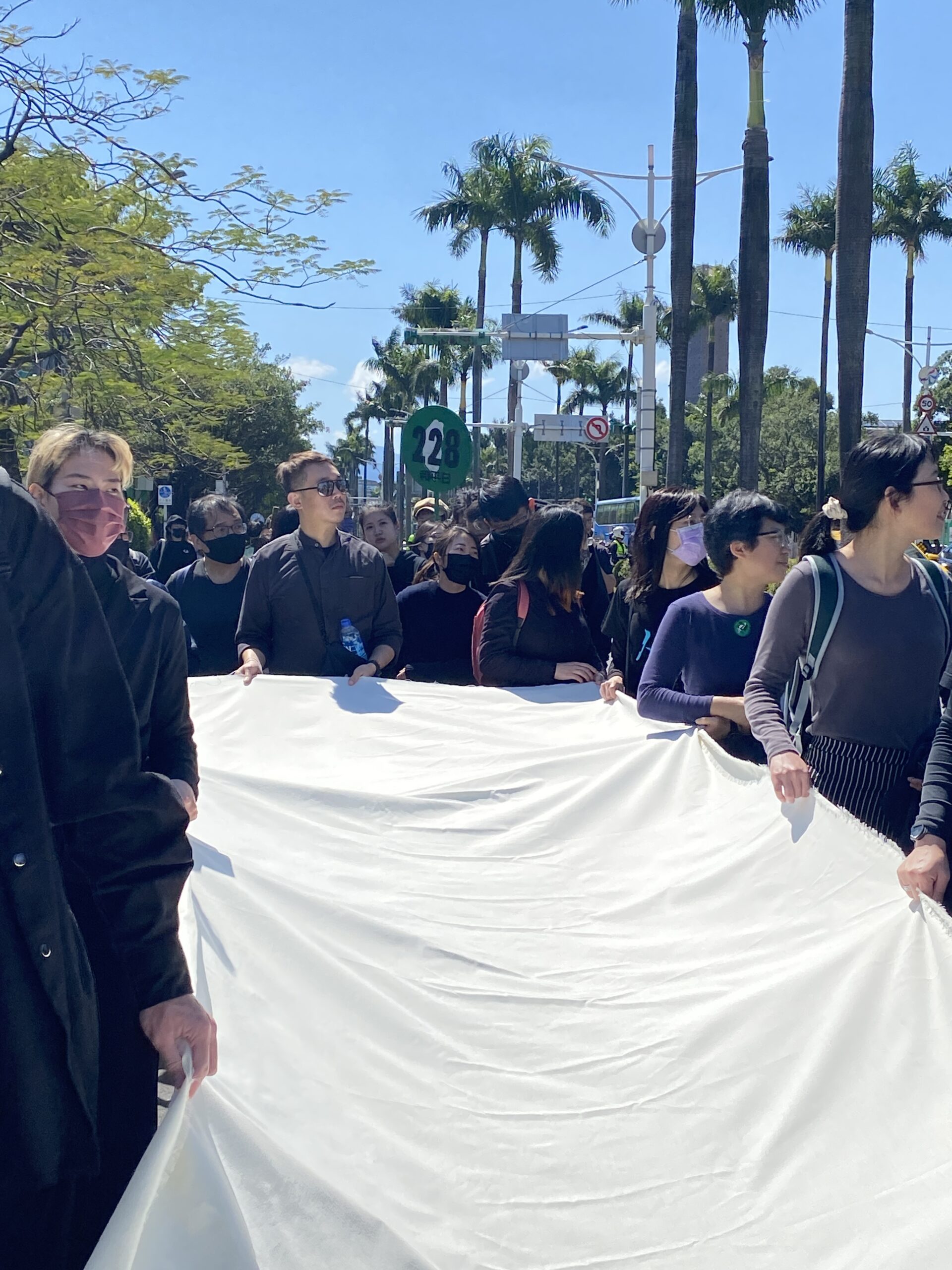


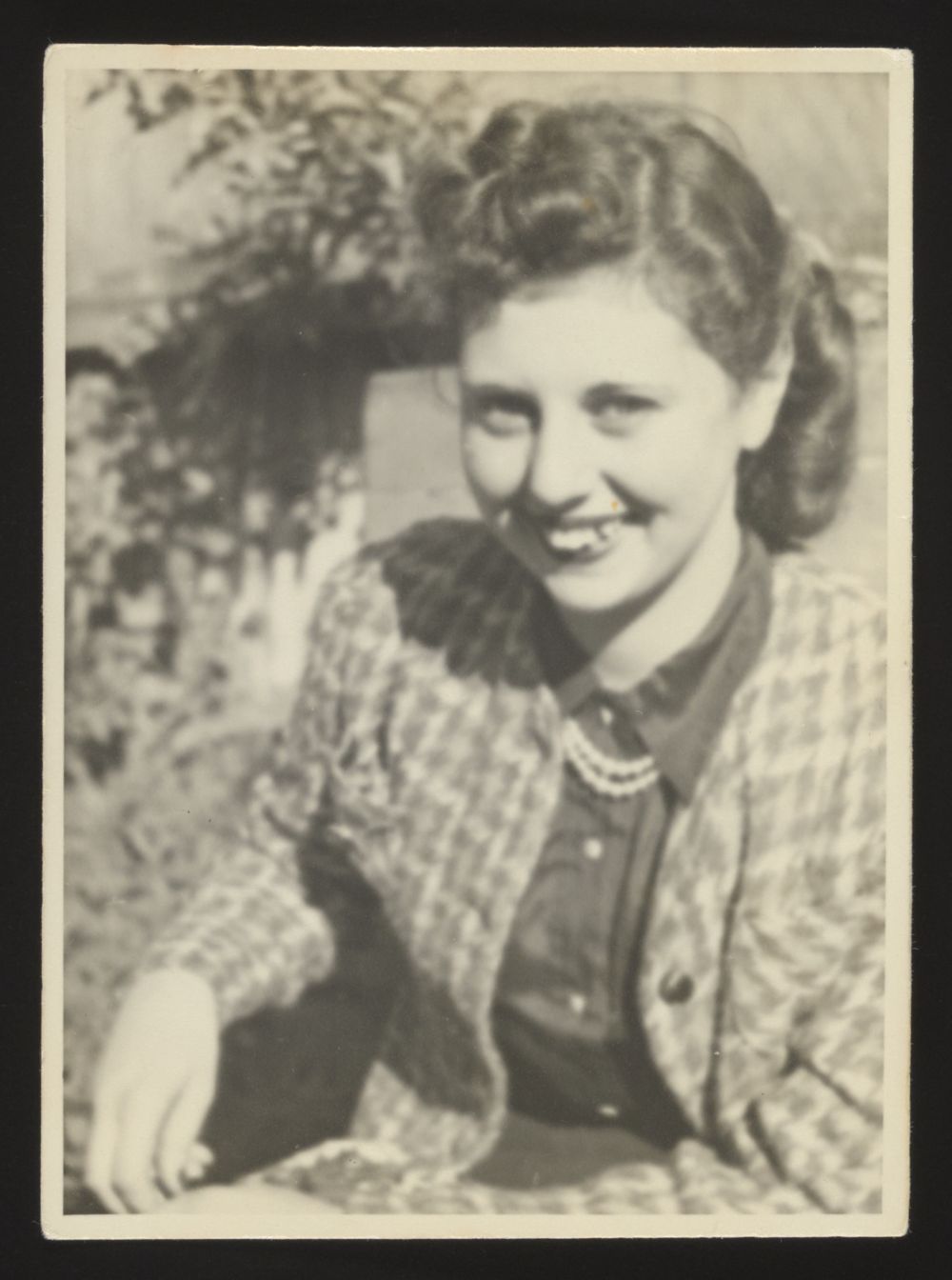
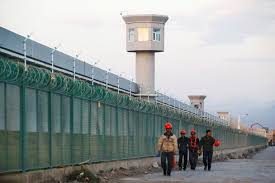
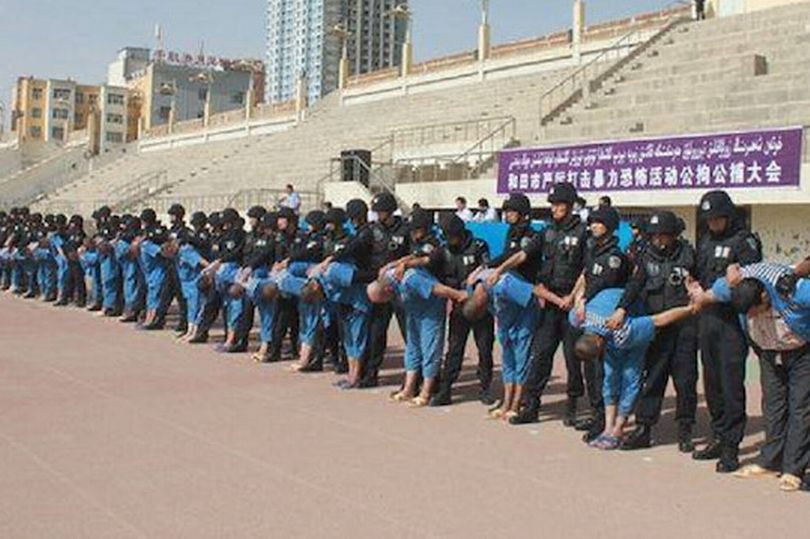

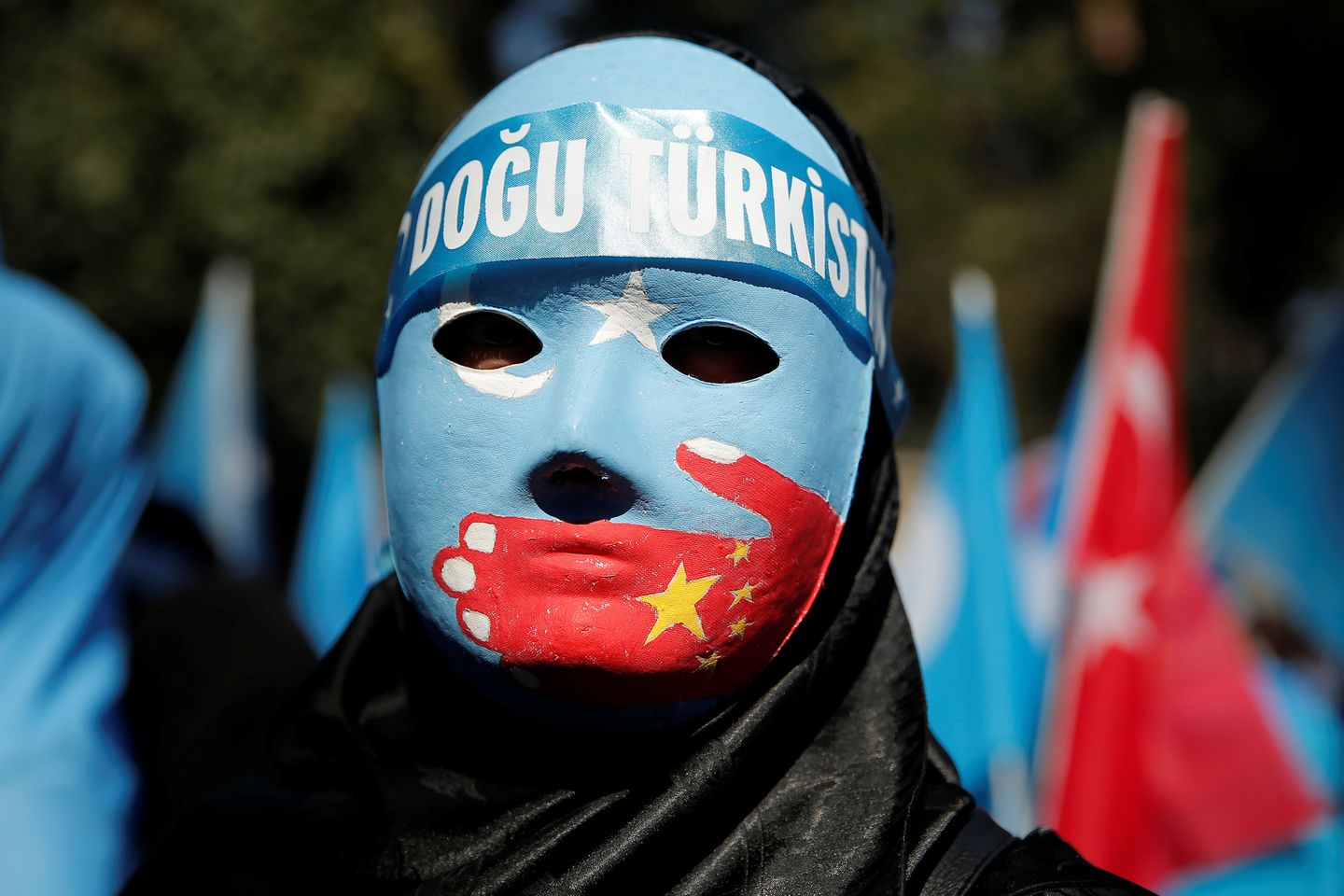

 To say that co-directors Wang Nanfu and Zhang Jialing’s



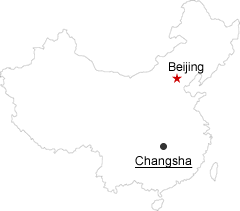


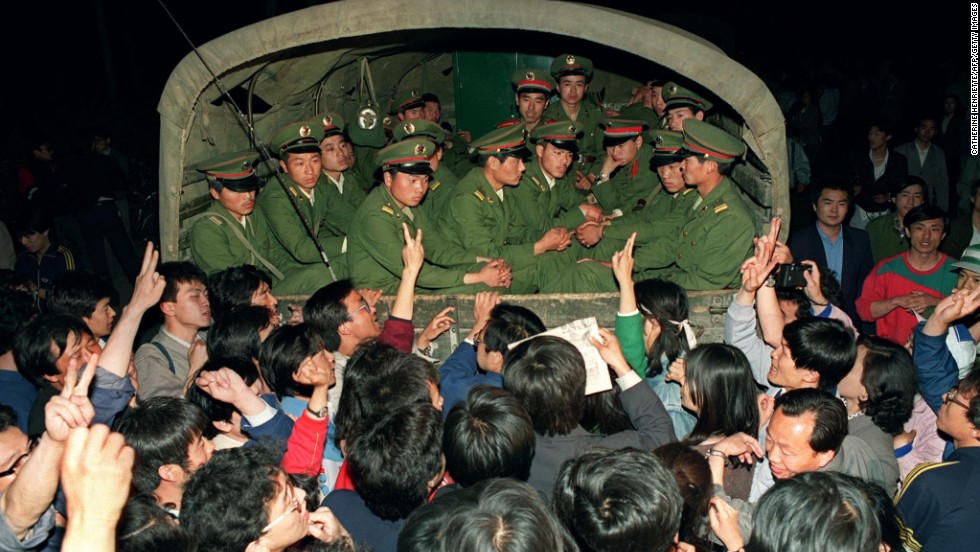



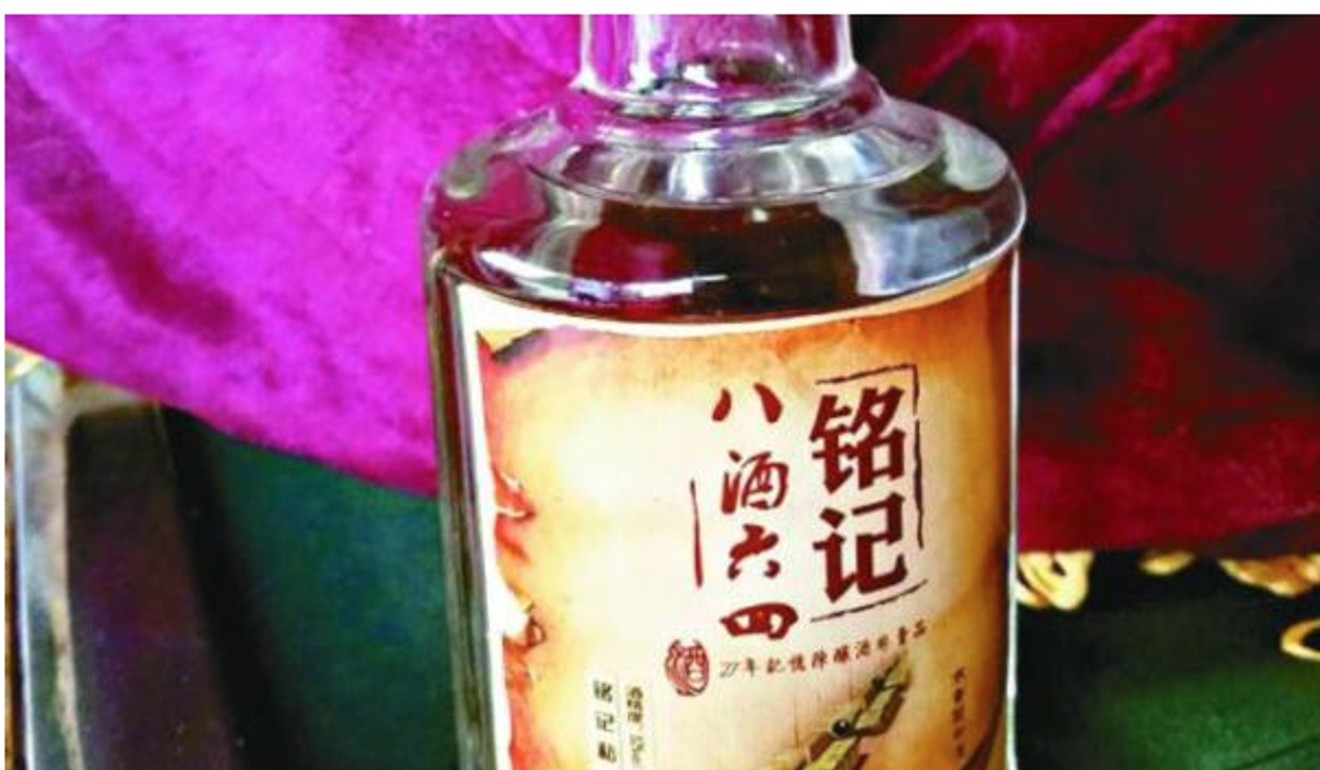
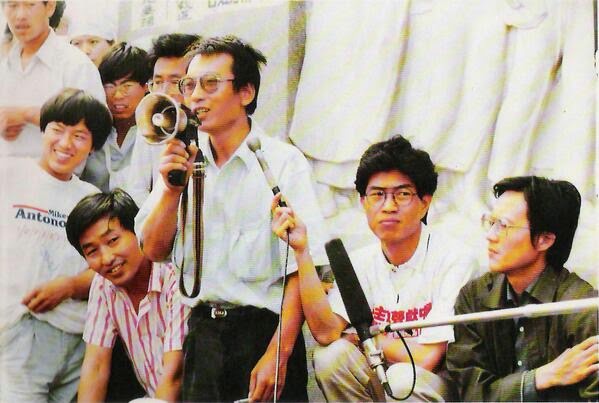


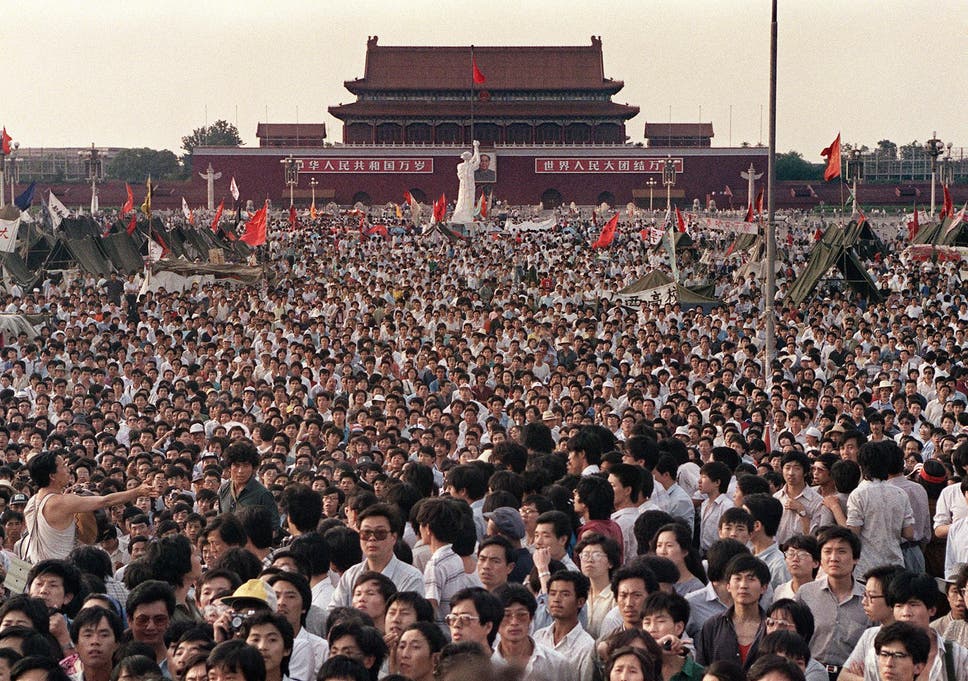

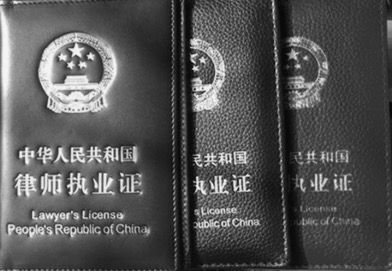 CL&P: And when did you decide that you wanted to go to law school, or to study law, I’m sorry, to study law?
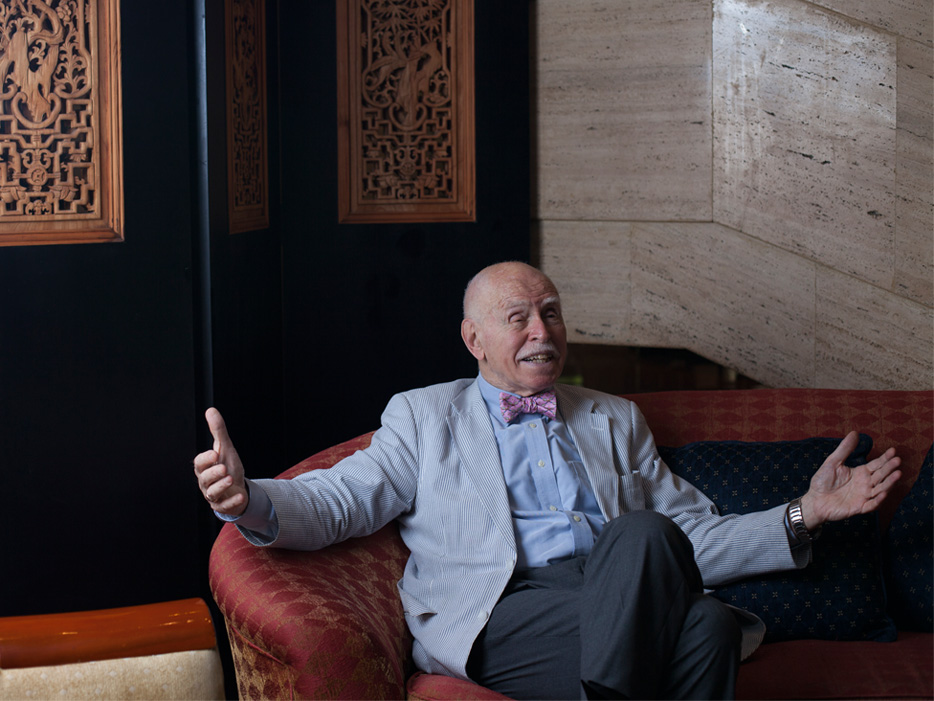


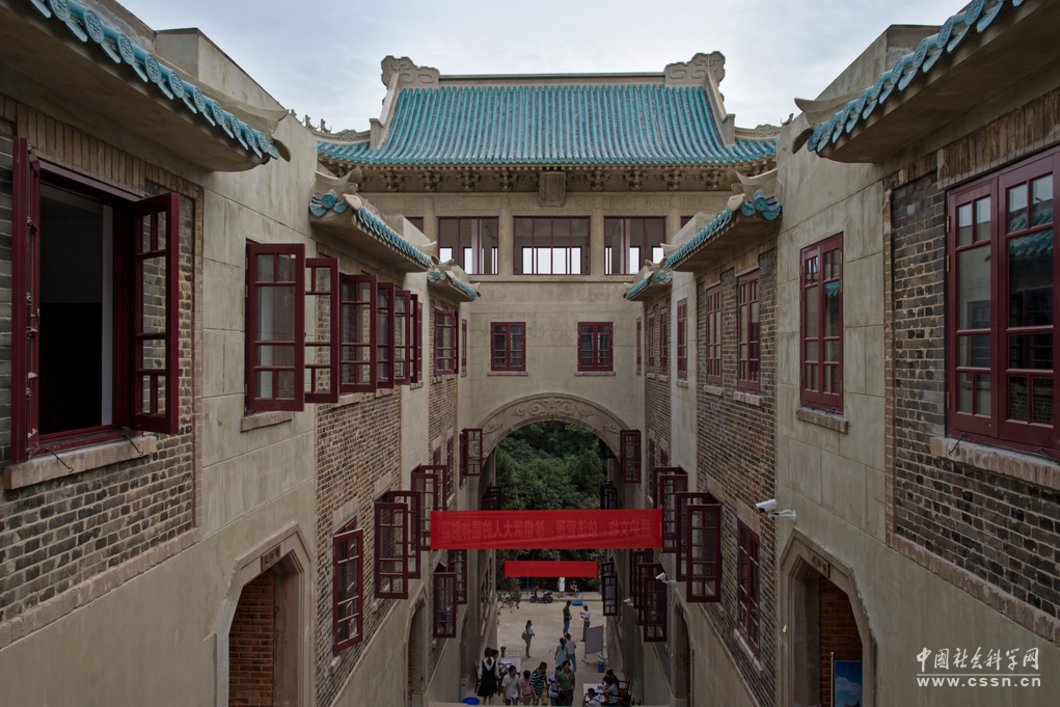


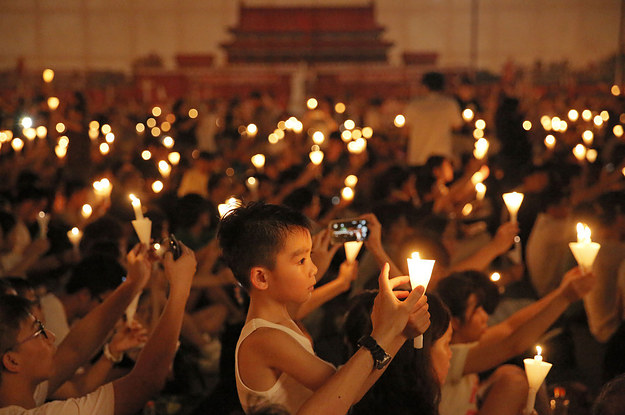
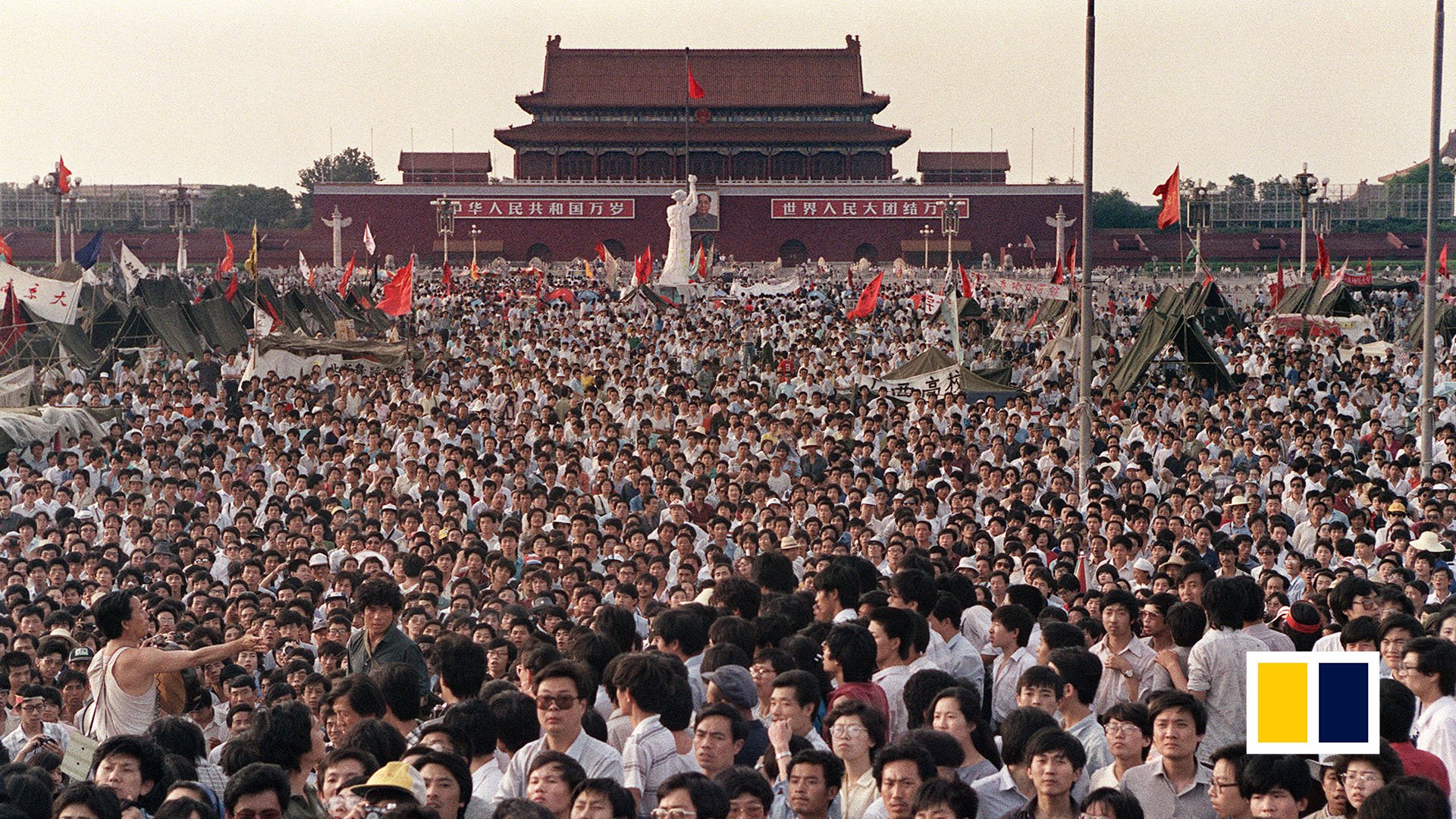
 Themocracy