Short Take is a periodic series where China Law & Policy briefly analyzes a current China-related issue and give our take. We aim for 500 words or less (around a 4-minute read).
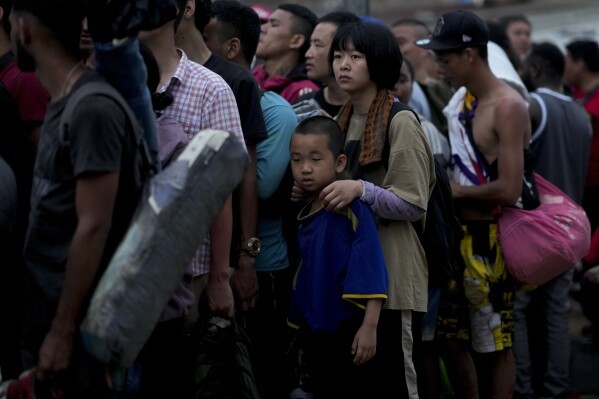
Last week, New York Times’ reporter, Li Yuan, appeared on The Daily in a fascinating podcast that retold the story Gao Zhibian, a Chinese migrant who entered the United States by taking the perilous trek across Central America’s Darien Gap and up through Mexico, eventually crossing the Texas border. What caught my attention was the numbers Yuan reported. In 2023, 24,000 Chinese citizens took this path. That number surpassed the number of Chinese crossing the Mexican border from the previous 10 years combined. Prior to 2023, Chinese migration through Mexico was a mere 1,500 per year.
For years, if not decades, Chinese citizens have been able to travel visa-free to Ecuador. It is from there that they trudge through the Darien Gap, Central America, Mexico to reach the US. This has long been the route of choice for Chinese citizens unable to obtain a US student visa, an H1-B visa, or even a tourist visa. In other words, this has been the only way into the US for China’s migrant workers, the farmers from the countryside that moved to China’s cities to become the construction and factory workers. It is these workers that largely propelled China out of poverty, enabling it to become the second largest economy in the world. With increased income, they too shared in China’s economic miracle.
What has caused this sixteen-fold increase in the last year? No doubt China’s slowing economy, whose future is uncertain, is one reason. But it is more than that as Yuan shows in her interview with Gao Zhibian. Gao didn’t leave China solely because of the economy. After succeeding as a migrant worker, he ended up developing a small apartment building in the suburbs of Beijing, becoming a small-time landlord. But in 2018, the local government confiscated his land to sell to richer developers, with the local government retaining all the profits. Gao sought justice through China’s legal system in the form of petitioning to the national government. But he and his family were constantly harassed by the local authorities and Gao gave up his fight, losing his land and receiving little to no compensation. It was the Chinese legal system’s failure to provide justice or even establish a fair system that caused Gao to start researching migrating to the US through Central America.
Similarly, CNN, in its excellent, in-depth reporting on Chinese migration from Ecuador, featured a Chinese migrant that also fled China because of the lack of justice. Zheng Shiqing, a 28-year-old, high school migrant worker, left China after his factory wages were unlawfully withheld and the formal complaint he filed was ignored.
Economics certainly plays a major role in the increased Chinese migrants along the US’ southern border, but for both Gao and Zeng, it’s the Chinese legal system’s failure to provide for any form of redress that adds to the mix.[1] For China’s migrants, it is this lack of a rule of law that any hope that the legal system can protect the rights of the weak.
[1] What doesn’t play a role are the far-right media’s unsubstantiated claims and racist tropes that these Chinese migrants are spies for the Chinese Communist Party.
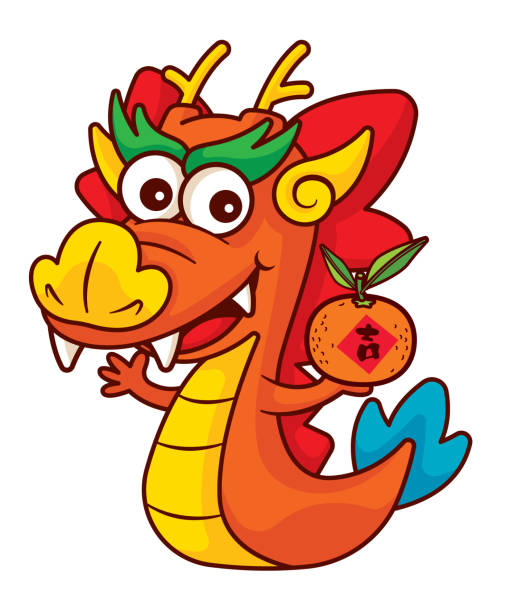
On February 10, we say goodbye to the introspective, more pensive rabbit and greet the most prized of all the Chinese zodiac signs, the dragon. But not just any ordinary dragon; 2024 ushers in the year of the wood dragon. Buckle up because it is going to be a wild ride!
In addition to being associated with a zodiac animal, each year is also associated with one of the five elements (earth, wood, water, fire, metal). This year’s element is wood. While the dragon is an auspicious sign, it is also a volatile one, offering fast-paced opportunities that could yield tremendous successes or abysmal failures. The wood element – which fuels flames – enhances the intensity of the dragon. Expect the possibility of great transformations that positively impact the course of world events. In the last wood dragon year, 1964, Martin Luther King, Jr. won the Nobel Peace Prize, the Beatles arrived in America, and the Civil Rights Act of 1964 was passed. But there were also great upheavals. The U.S. radically ramped up its involvement in Vietnam and students began protesting en masse; Nelson Mandela, after giving his “I am prepared to die” speech, was sentenced to life by a South African court; the second most powerful earthquake – registering a 9.2 on the Richter scale – occurred in Alaska; and three civil rights workers, a part of the 1964 Freedom Summer, were brutally murdered in Mississippi.
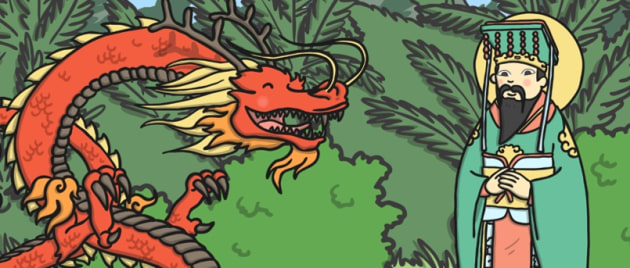
But we should keep hope that the wood dragon will usher in peace and positivity in the world as the dragon is not just the most revered animal of the Chinese zodiac, it is also the kindest. When the Jade Emperor, ruler of heaven and earth, created the Chinese zodiac, he decided to create a 12-year cycle calendar, with an animal representing each year. Instead of just choosing his favorites, he challenged the animals of the world to a race. The first 12 to arrive at his palace on the other side of the river would become part of the zodiac. The dragon came in fifth. Shocked, the Jade Emperor asked the dragon how that could have happened given that he can fly. The dragon told him that he had gotten waylaid. First, he had to stop to help provide rain to a village of farmers whose crops were dying from draught. Then, as he was about to fly across the river, he saw the rabbit clinging on to a log in a sad attempt to cross the river. “I had to help the rabbit” the dragon told the Jade Emperor. “So I blew gently on the log to make sure the rabbit would safely arrive on the other side of the river.”
For the dragon, power should be used to help others, not dominate over them. And that fits with some of the most famous dragons: Bruce Lee; Martin Luther King, Jr.; Joan of Arc; John Lennon; Adele; and Pelé. With the wars in Ukraine and Gaza and the U.S. presidential election, hopefully this characteristic of using power to help others will dominate in the year to come. Heavens knows we need it.
What does the wood dragon have in store for you? That all depends on your own Chinese zodiac sign. Fortunately, the aptly named website, The Chinese Zodiac.com has listed its Lunar New Year predictions for the 12 zodiac signs. You can read what is in store for you here (remember those born in late January to early February should look up the precise date of the lunar new year for your birth year to make sure you have the right zodiac sign).
Ultimately the lunar new year is less about predictions than it is about spending time with family and friends. So to our East Asian friends who celebrate the lunar new year, 恭喜发财! (Gong Xi Fa Cai – pronounced gong see fa tsai and meaning “wishing happiness and wealth”).
Gulbahar Haitiwaji hoped it would be the last time she would have to betray a family member. She had already denounced her own daughter, her husband, and Uyghur activist leader Rebiya Kadeer the month before. That video-recorded “confession” had secured her release from the Chinese prison camps, where she had been detained for more than two years. But Gulbahar was not actually free. Instead she was sitting in a plush room in a house adjacent to the prison camp, ordered by the Chinese police who lived with her to call her family in France. She had not spoken to her husband or daughters since she was first arrested two and a half years earlier. Did they even know she was still alive? What would she tell them?
Gulbahar did not have to worry about being tongue-tied. The police would sit next to her during the call, providing her with notes on what she should ask and what she was forbidden to mention. If she ever wanted to see her family again, the police told her, she would instruct them to stop their public advocacy on behalf of her and millions of others caught up in China’s genocidal campaign to destroy the Uyghur people.
She readily complied. Refusal to go along with the police meant going back to the hell of the Xinjiang camps, with their constant degradation: sharing a small cell and one squat toilet with thirty other women; a starvation diet; rarely bathing and wearing clothes encrusted with two years of dirt; constantly being called a “filthy terrorist”; being shackled and hooded whenever she was moved to a new room or camp; being forbidden to speak her native Uyghur or show any signs of her Muslim religion; rarely seeing daylight; and being chained to her bed for twenty days, forced to defecate in front of her cellmates.
Gulbahar’s calls continued to be monitored for months. “Are you sure you are alone?” her daughter would ask whenever she called. Yes, Gulbahar would sheepishly reply, as the police wrote down her daughter’s every word—including the fact that she was meeting with French government officials in an effort to free her mother. “My room became the field headquarters for a Chinese intelligence operation directed against my own family, and I was a part of it,” writes Gulbahar in her powerful, heart-wrenching memoir, How I Survived a Chinese “Reeducation” Camp: A Uyghur Woman’s Story. “I had become a bargaining chip between my family and the police…. Lies leave a terrible taste in your mouth.”
Only after her husband and daughters removed all of their social-media posts about Gulbahar’s disappearance, in August 2019, did the Chinese government finally allow Gulbahar to return to France.
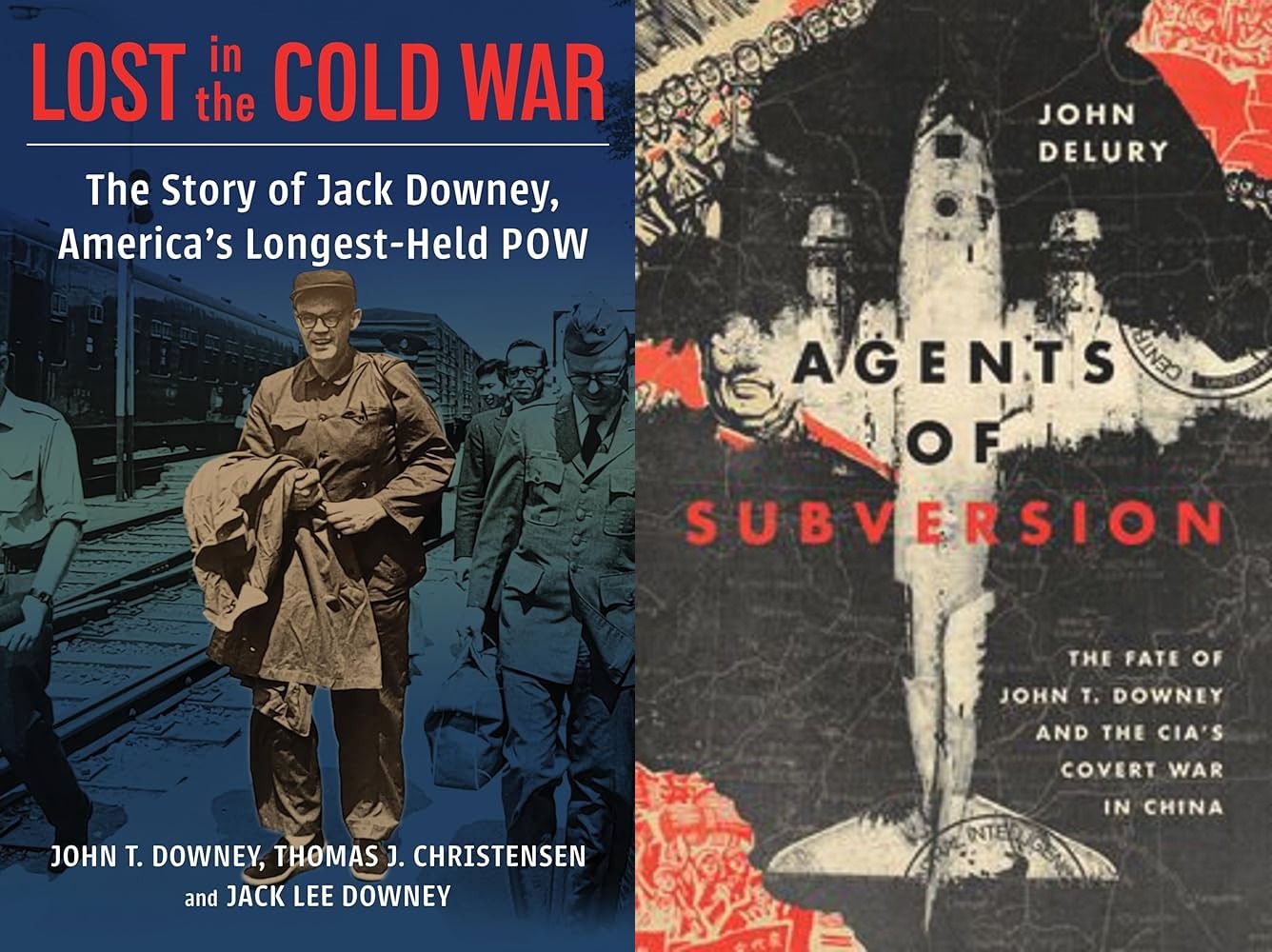
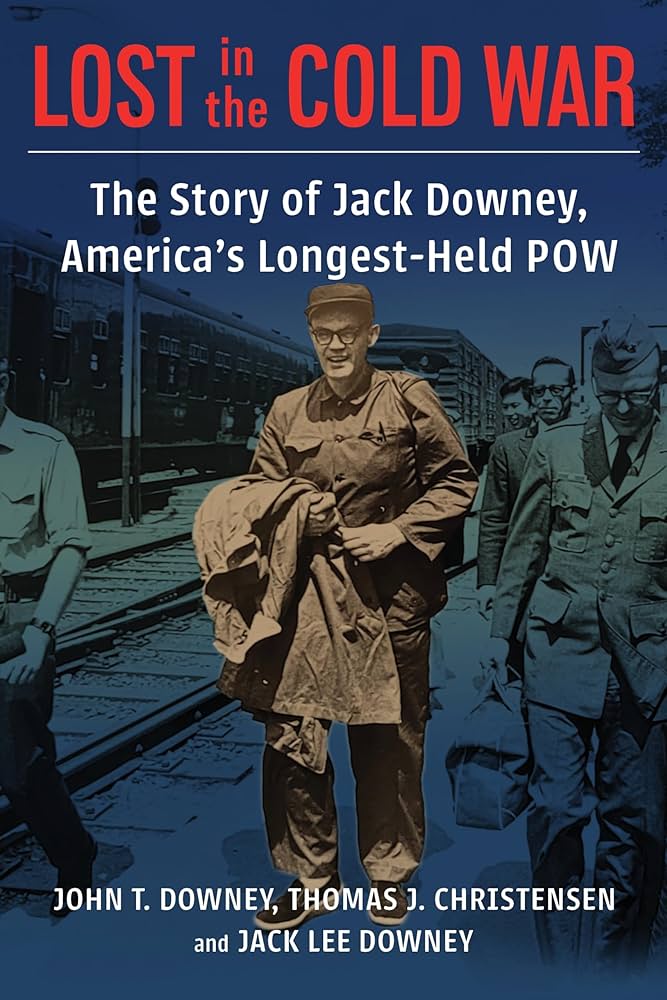
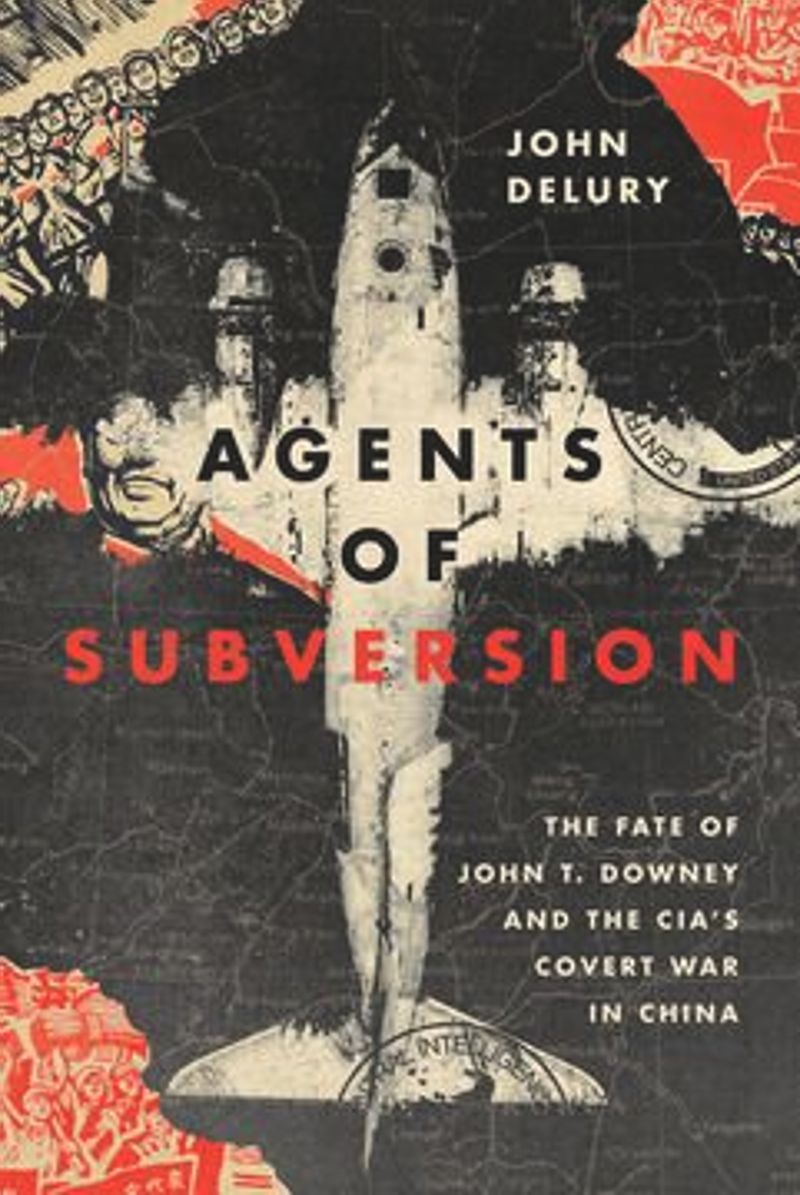
Few Americans know the story of John “Jack” Downey, the United States’ longest-held prisoner of war who served over 20 years in a Chinese prison. But given the current broken relationship between the U.S. and China, it’s important to understand Downey’s ordeal and the human toll of the last Cold War. Fortunately, two new, thought-provoking books, Lost in the Cold War: The Story of Jack Downey, America’s Longest-Held POW, written by John T. Downey with explanations by China political scientist Thomas Christensen and a moving epilogue by Downey’s son, John Lee Downey, and Agents of Subversion: The Fate of John T. Downey and the CIA’s Covert War in China, by China historian John Delury, recounts Downey’s story and the repercussions of trying to “win” a cold war.
Downey’s story starts with America in 1950. Communism was spreading across the world and many in D.C. were looking for someone to blame for the “loss” of China to the Chinese Communist Party (CCP) the year prior. Senator Joseph McCarthy settled upon the China hands at the State Department, hauling them before the Senate to accuse them of being Communist sympathizers. By October 1950, the CCP had entered the Korean War, turning the tide against the Americans forces. For the newly formed Central Intelligence Agency (“CIA”), overthrowing the CCP through covert action became a priority. Initially, the CIA used Chinese operatives, agents it called “the Third Force” because of their lack of allegiance to the CCP or the prior party that had governed China, the Kuo Min Tang (“KMT”). With only minimal training, the CIA would clandestinely air drop these Third Force agents into a village in China, hoping they could go on to form a successful resistance movement against the CCP. But after the corruption of the KMT and years of war, most Chinese were not interested in overthrowing the CCP. Of the CIA’s 212 Third Force operatives it dropped in China, 111 were captured and 101 killed.
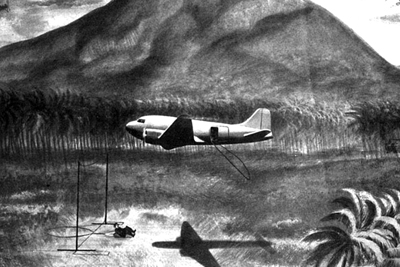
But these abysmal numbers did not stop the CIA. Instead, it hatched an even more absurd plan: send American agents into China to try to help these Third Force operatives. In November 1952, the CIA sent two of its American agents into Chinese airspace over Manchuria to physically pick up one of these Third Force operatives: Jack Downey, only a year out of Yale University and with no knowledge on China, and agent Richard “Dick” Fecteau, also a recent grad with zero China knowledge. Their plane was to fly low over a meeting point, with Downey and Fecteau holding out a long hook that the operative was to attach to his vest, and as the plane ascended, Downey and Fecteau would pull the hook up into the plane, bringing the Third Force operative with it. But the operative had already been discovered by the CCP weeks earlier, had flipped, and CCP forces were awaiting Downey and Fecteau’s plane. As soon as the plane was low enough, CCP forces shot it down, killing the pilots and capturing Downey and Fecteau.
For two years, the Chinese government kept secret the capture of these two Americans. The CIA presumed the two dead and sent letters to their families to that effect. But in 1954, when Mao Zedong and Zhou Enlai made public that the two were very much alive and had been convicted of espionage, with Downey receiving a life sentence and Fecteau twenty years, the U.S. government went into crisis mode. But instead of admitting the truth, that they were in fact spies, the U.S. government concocted the story that the two had been civilian employees of the army and their flight from South Korea to Japan had been blown off course into Chinese airspace due to a storm.
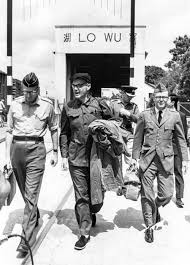
For the next twenty years, the U.S. government maintained this fiction to the world and to its own people even though between 1954 and 1966, there were at least two opportunities to free the men. All that the U.S government would have to have done was to admit that the two were CIA operatives. Then-Secretary of State John Foster Dulles refused. To him, such an admission would be a victory for the Communists and every Administration went along with his decision. It would not be until the early 1970s, and the formation of a new China policy by President Richard Nixon, that there would be any movement. With warming relations between the two countries, Fecteau was freed on December 1971, but Downey, always viewed by the Chinese as the mission’s leader, only received a reduction in his life sentence. Finally, at a press conference about Vietnam POWs in January 1973, Nixon admitted that Downey was a CIA agent. Two months later, on March 12, Downey would cross the Chinese border into Hong Kong, finally a free man.
Lost in the Cold War is Downey’s memoir of the mission, recounting his zealousness in signing up for the CIA during his senior year at Yale (“Suddenly, my life had purpose”), his training, his capture, and then how he mentally and physically survived close to twenty-one years in a Chinese prison. Written in secret and only discovered by his family after his death in 2014, Downey’s writing style is engaging, making his ordeal into a page-turner. Interestingly, he harbors little resentment against the Chinese government, accepting that a life sentence was appropriate for what he did – unlawfully fly into Chinese airspace with the intent to overthrow the CCP. There is also no ill-will toward the U.S. government even though years of his life were wasted because of Dulles’ belief that negotiating with Communists was below him. Although Downey doesn’t express any anger, the reader cannot help but feel it for him. When Downey returns to Connecticut in 1973, he visits Yale; it was his memories of Yale, where he was a popular star athlete, that sustained him through prison. But all he finds on campus are ghosts. When he reunites with some college friends he sees that Yale is long behind them. “They had homes, jobs, wives, and children to enjoy and worry about. To them, the years at Yale were a distant memory. To me college was yesterday. . .In many ways, I was still twenty-two.” When he visits his sick mother, she firmly grasps his hand, unable to let go of the son she had to fight her own government to bring home.
Jack Downey crossing the border to Hong Kong
How could the U.S. government allow this suffering to continue for 20 years and what was it all for? That is where Christensen’s chapters become important. For the majority of Americans today – two-thirds of whom were born either in the waning days of the Cold War or after it was over – the Cold War is nothing more than a plotline in a movie. Christensen reminds us that at the time, both the U.S. government and the American people really believed that every last resource had to be used to fight Communism. What we perceive as immoral choices today – letting Downey and Fecteau rot in a Chinese prison – were perceived as necessary to protect America. But even with this perspective, the failure to put a human life first still seems unnecessarily harsh. Downey’s son, whose moving epilogue is beautifully written and presents Downey as a kind, if somewhat tortured father, is much less forgiving. When he recounts the “celebration” the CIA held for his father and Fecteau in 2010, his tone is biting and rightfully so, reminding the reader of the human toll of all this.
Delury’s Agents of Subversion is an important supplement to Downey’s memoirs, artfully putting Downey’s story into the larger narrative of the United States’ changing society in the early 1950s. It starts with the intellectual battles that were brewing in post-World War II America, between those who thought the U.S should focus on its own domestic issues and those who believed that any means that could eliminate Communism from the world should be used. Ultimately those who wanted to take on Communism through subversive and covert operations – especially John Foster Dulles and his brother, Allen Dulles who was the CIA’s director at the time – won the day.
Further, by using original Chinese language sources, Delury shows that instead of fermenting revolution in China, the CIA’s efforts had the opposite effect: they justified Mao’s fear that the United States was seeking to undermine his rule, and validated his suppression and surveillance of the Chinese population. Delury also recounts the U.S. government’s response to the failed mission, its subsequent cover up, the constant pressure of Downey’s mother to free her son, and the road to Fecteau and Downey’s release after Nixon takes office. With deep research and a well-written narrative, Agents of Subversion is an important contribution to the intellectual history of the United States in the 1950s as well as its policy toward China.
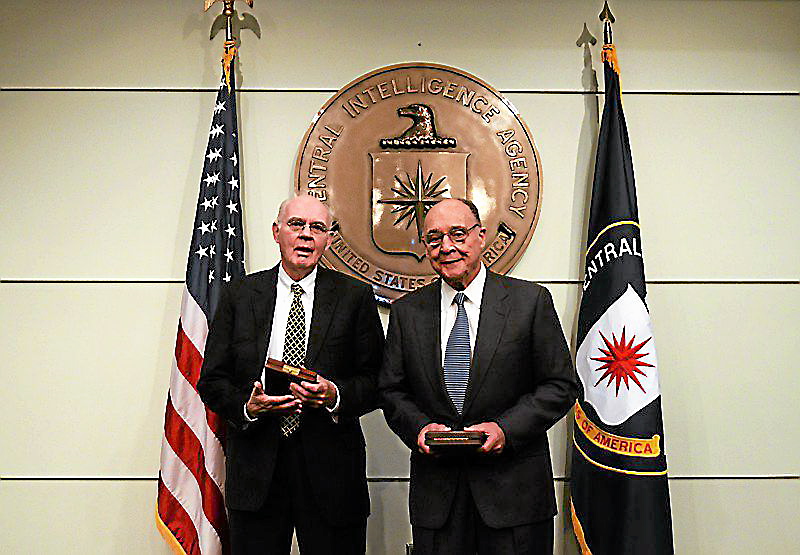
In 2013, the CIA awarded Jack Downey (L) and Dick Fecteau (R) its highest award.
Today, the U.S.’ China policy seems to be circling back to a cold war mentality of the 1950s and 60s, with increasing anti-China rhetoric coming from both sides of the aisle. There are aspects of the current Chinese regime that undermine a lawful and human rights-respecting world order that the U.S. must combat, but a complete vilification of the country does not serve that goal. And, as in the case with Jack Downey, it may even cause us to lose sight of our own values. Lost In the Cold War and Agents of Subversion are timely reminders that when ideological stakes are running high, our government is not above lying to its own people or forsaking its own citizens.
Lost in the Cold War: The Story of Jack Downey, America’s Longest-Held POW, by John T. Downey, Thomas Christensen and, John Lee Downey (Columbia University Press, 2022), 344 pages.
Rating:
Agents of Subversion: The Fate of John T. Downey and the CIA’s Covert War in China, by John Delury (Cornell University Press, 2022), 408 pages.
Rating:
Interested in purchasing these books? Consider supporting your local, independent bookstore. Find the nearest one here.
*******Correction: An earlier version of this article mistakenly referred to Eugene McCarthy instead of Joseph McCarthy. This has now been corrected. Apologies.
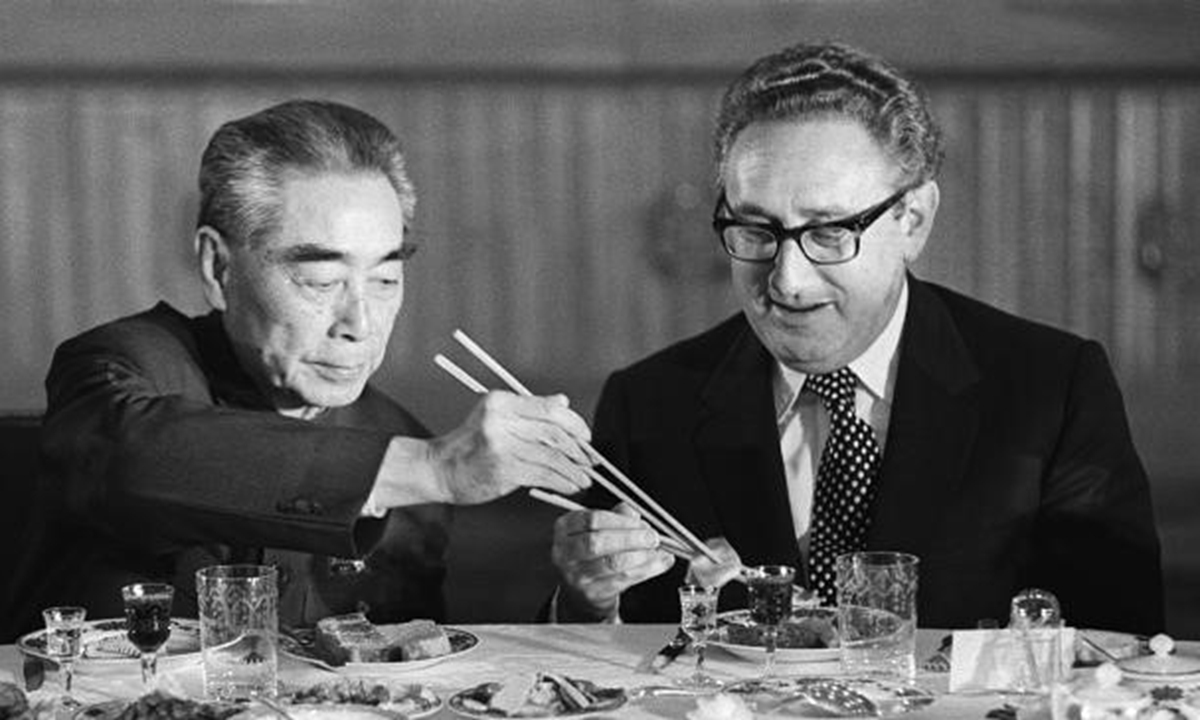
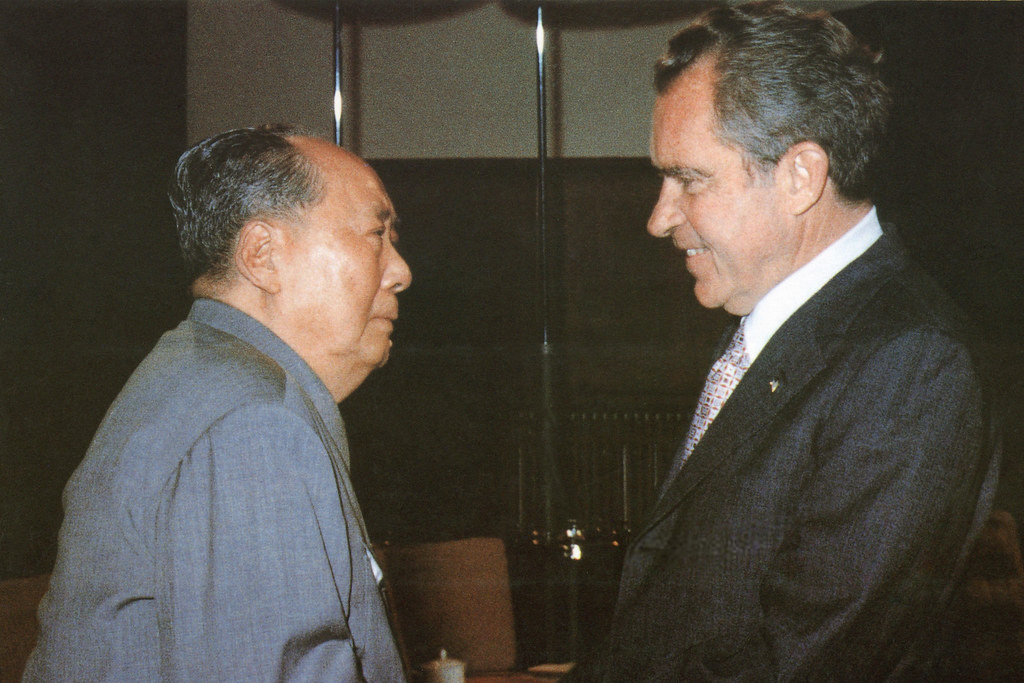
With Henry Kissinger’s death last month at the age of 100, obituaries around the globe have wrestled with his controversial legacy. Some label him a diplomatic genius, others a war criminal. But regardless, each one credits Kissinger with re-setting U.S.-China relations with his secret trip to China in July 1971 while serving as President Richard Nixon’s National Security Adviser. Six months later, Nixon would make his historic visit to Beijing, meet Chairman Mao and essentially end the Cold War between China and the U.S. “Engineered the United States’ opening to China,” The New York Times wroteabout Kissinger last month; “the orchestrator of Washington’s opening to communist China,” noted The Guardian in its obituary; “a key figure in China-US icebreaking in 1972,” claimed The Global Times the day after his death; and “the impresario of Nixon’s historic opening to China,” stated The Washington Post.
But was he? Was Kissinger the brains behind changing the U.S.’ China policy from one of isolation to one of engagement?
Two must-read op-eds from last week unequivocally say no. The first, by Prof. Jerome A. Cohen and published in The Diplomat, provides personal anecdotes that show not only did Kissinger not come up with the idea to engage China, but he wasn’t the all-powerful diplomat he pretended to be, cowering when Nixon would call. The second, by former China journalist and author James Mann and appearing in Politico, uses some of the documents Mann obtained in Freedom of Information Act requests over the years to show that Kissinger thought it insane to even contemplate détente with China.
If it wasn’t Kissinger’s brain child, then whose was it? Mann, in his piece, gives credit to Nixon as “the driving force behind the decision to reestablish diplomatic relations with Beijing.” Nixon might have been that force, but ultimately it was a group of China academics at Harvard University that didn’t just set the stage for Nixon’s trip but provided a roadmap for a new China policy.
Back in 1967, ten East Asian scholars, Jerome A. Cohen, John King Fairbank. Roy Hofheinz, Jr., Dwight Perkins, Edwin O. Reischauer, Benjamin I. Schwartz, James Thomson, Ezra Vogel, A. Doak Barnett, and Lucian Pye, decided that the U.S. needed a new China policy, to bring China into the international community, to avoid a war with the country, and to help end the Vietnam War (China was seen as increasingly crucial to that effort). For over a year, these scholars met to not only discuss how the U.S. could go about engaging a communist country, but how to handle the fallout of that engagement with China’s surrounding neighbors, in particular Taiwan. The final product would be a letter to whichever presidential candidate would win the November 5, 1968 election.
On November 6, 1968, the day after Nixon’s victory, the scholars sent their letter to the president-elect. That letter, and the policy that Nixon ultimately followed in sending Kissinger to China on a secret trip, was published in the Congressional Record in August 1971 by Congressman John Rousselot who was angry after learning of Kissinger’s China trip a month prior. “I urge my colleagues to carefully study this document,” Rousselot wrote, going on to note:
“The effect it has obviously had on our policy toward Communist China is startling. Dr. Kissinger’s ‘advice’ so closely parallels the position taken in this memorandum that I cannot overemphasize how important it is that each Member realize that as early as November 6, 1968, at a time when we were most deeply committed in Vietnam, the plan which is being followed today to appease Communist Chinese aggressors was being presented to the President.”
The letter – which can be read in the Congressional Record here – starts with the recommendation that Nixon task a trusted advisor to have confidential and “perhaps even deniable” conversations with the Chinese leadership in more informal settings, a.k.a a visit to Beijing. The letter also recommended greater people-to-people ties, something the Nixon Administration followed through in permitting the U.S. ping pong team to visit China in 1971 and encouraging the Philadelphia Orchestra’s visit to Beijing in 1973.
Finally, the letter wrestled with what to do with Taiwan, and it is here that Nixon – and future administrations – failed to fully adopted all of the policy recommendations. The letter made clear that the China seat on the United Nations’ Security Council should go to the People’s Republic of China (it had been held by the Nationalist Chinese government on the island of Taiwan), which eventually happened in 1971. But the scholars provided more support for Taiwan at the U.N. stating that the U.S. should seek to “preserve a general assembly seat for Taiwan, whether as the Republic of China, an independent nation, or an autonomous region of China.” One wonders if Nixon had followed that advice, if the current China-Taiwan predicament could have been avoided.
In Brownsville Girl, a lesser-known Bob Dylan masterpiece, Dylan sings “if there’s an original thought out there, I could use it right now,” and that’s what Kissinger did here: take this 1968 letter and pretend like it was his original idea to change U.S.-China relations. But it was not. That credit is due to the ten China academics who had the courage to provide an alternative roadmap to policymakers in the hopes of maintaining peace in East Asia.
The recent meeting between U.S. President Joe Biden and Chinese President Xi Jinping at the Asia-Pacific Economic Cooperation (APEC) summit in California was heralded as an initial attempt to thaw relations. As part of that broader effort, both sides expressed interest in expanding educational exchanges. China’s announced goal of hosting 50,000 U.S. students in the next five years looks wildly ambitious compared to the current 211 Americans studying in mainland China today, but ten years ago, as many as 15,000 studied there annually.
The drastic decline of American students in China is creating an expertise gap that threatens the United States’ long-term ability to navigate the complexities of the China-U.S. geopolitical landscape. CLICK HERE to continue reading this article.
Every so often, I witness a scene in my neighborhood that’s all too common in New York City. A single car is double-parked on a narrow side street in front of a large apartment building. A blocked, frustrated driver—say, of a school bus full of frenetic children, or a delivery van on a tight schedule—angrily lays on the horn, sometimes for a full minute or more. Sometimes the guilty party sheepishly emerges to move their vehicle. But just as often they don’t.
If this were not Queens but Hangzhou, a city near China’s eastern coast, there would be no need for honking. In China’s “smart cities,” surveillance cameras immediately flag double-parked cars and run their plates to identify the owner. Local city managers, known as the Chengguan, then order such cars be moved via text message. Traffic can then resume flowing within minutes.
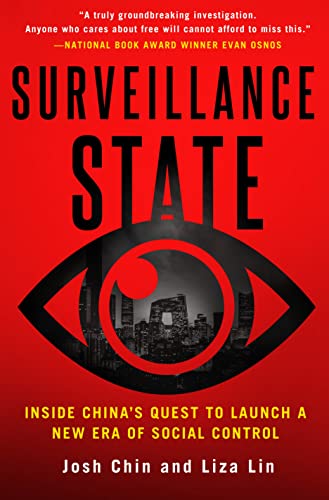
This is one positive element of China’s increasingly data-driven governance, analyzed by veteran reporters Josh Chin and Liza Lin in Surveillance State: Inside China’s Quest to Launch a New Era of Social Control. Their presentation can make Hangzhou seem like a paradise of efficiency, even to Americans skeptical of government control. Given China’s extensive record of human-rights violations, it can be tempting to dismiss innovations like Hangzhou’s camera and AI-based technology as tools of oppression.
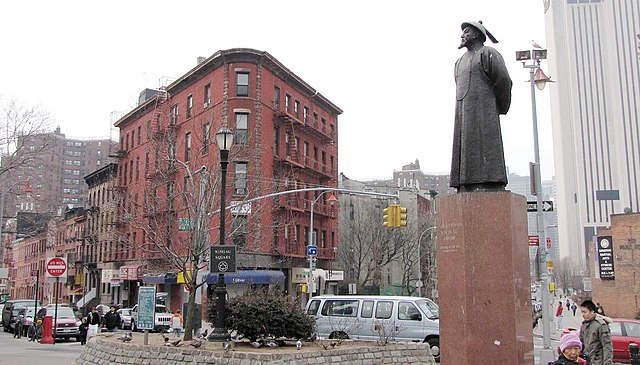
Lin Zexu in NYC’s Chinatown. Photo courtesy of LuHungnguong/Wikimedia
About six miles south of The Jewish Museum in New York, where an exhibit on the Jewish British merchant family, the Sassoons, is on view until Aug. 13, lies Chinatown’s Chatham Square. In the center of the square is a bronze statue of Qing Dynasty official Lin Zexu. The words “Pioneer in the War Against Drugs” are carved into the red granite pedestal upon which he proudly stands, in recognition of his efforts to rid China of opium in the mid-1800s.
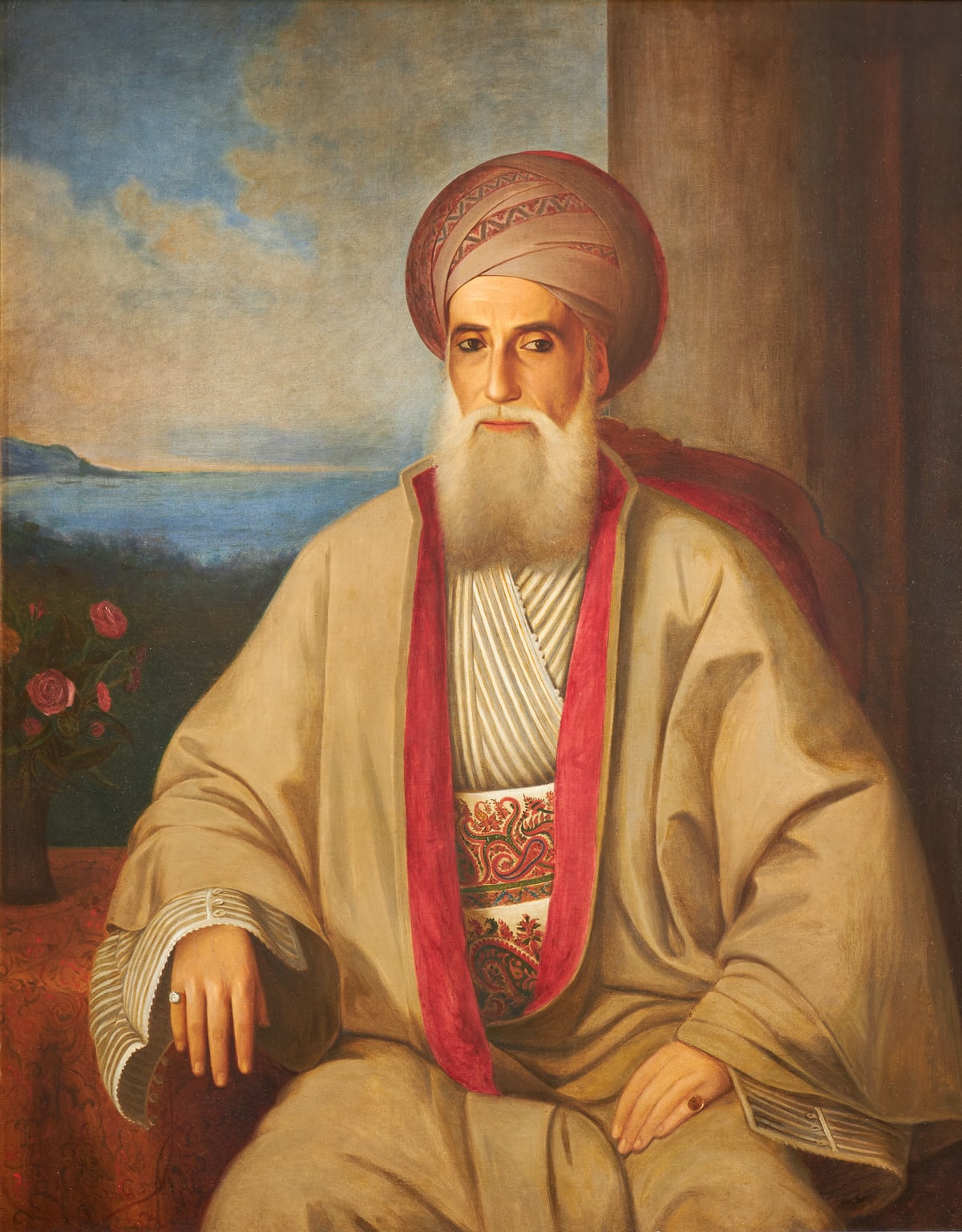
The Sassoon family dominated the opium trade in China, and the exhibit honoring them displays numerous treasures and artifacts they were able to collect, thanks to their opium-fueled wealth. In an age where the Sackler family’s name is being removed from museum buildings because of its ties to the U.S. opioid epidemic, it is no longer appropriate to celebrate artifacts like the ones the Sassoons were able to collect because they profited from China’s addiction without the full context.
To continue reading this article, please click here.
Portrait of David Sassoon. Attributed to William Melville. Oil on canvas; 41 ½ × 33 in. (105.4 × 83.8 cm). Private Collection/The Jewish Museum
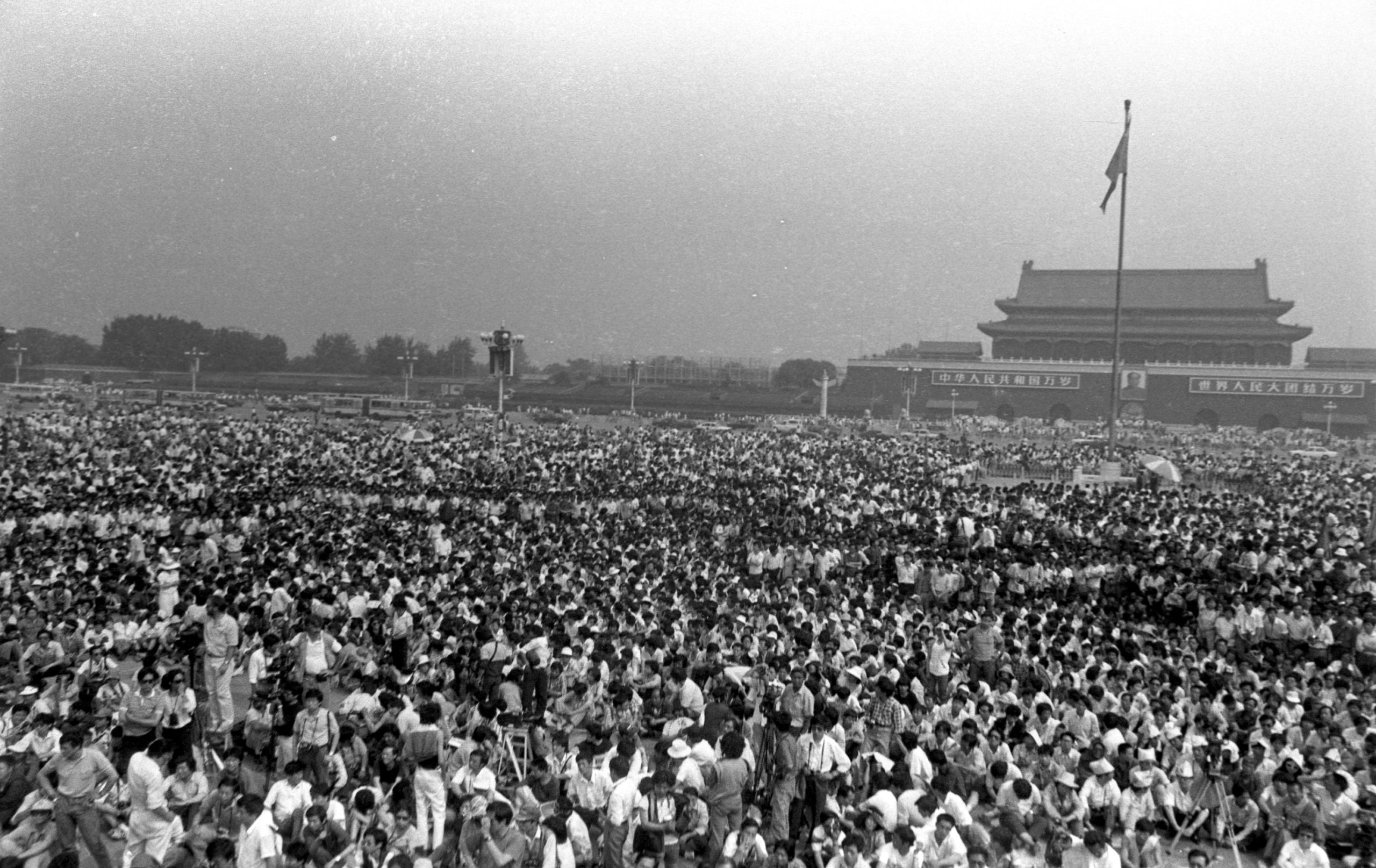
Thirty-four years later and even in the West, where we are allowed to remember the events surrounding the Chinese government’s June 4th, 1989 massacre of its people, there are things we have forgotten. We think of the Tiananmen protests as millions of students occupying the Square every day for months. But the protests had largely died down by the end of May 1989, with just a few thousand people left on the Square. We refer to Li Peng, Premier at the time, as the “Butcher of Beijing,” but it was Deng Xiaoping who was most eager for blood and had been plotting a military response since early May.
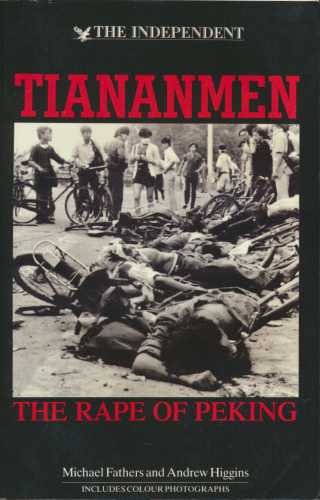
To help us remember is Michael Fathers and Andrew Higgins’ gripping, and, at only 148 pages, concise classic, Tiananmen: The Rape of Peking, published a few months after the June 4th crackdown. In 1989, Fathers and Higgins were The Independent’s China correspondents giving them front-row seats to the protests. More important though, were Fathers and Higgins’ well-connected government sources which allowed for their vivid descriptions of the factional infighting in the highest levels of the Chinese Communist Party (“CCP”). It is this insider knowledge that makes Tiananmen: The Rape of Peking an astonishing read, especially compared to today, where China is increasingly closed off and the inner workings of the Party are a guessing game. With their focus on the political power plays inside the Chinese leadership, Fathers and Higgins argue that the massacre was intended not just to subdue the Chinese people but to show Party officials that any dissension would be dealt with severely.
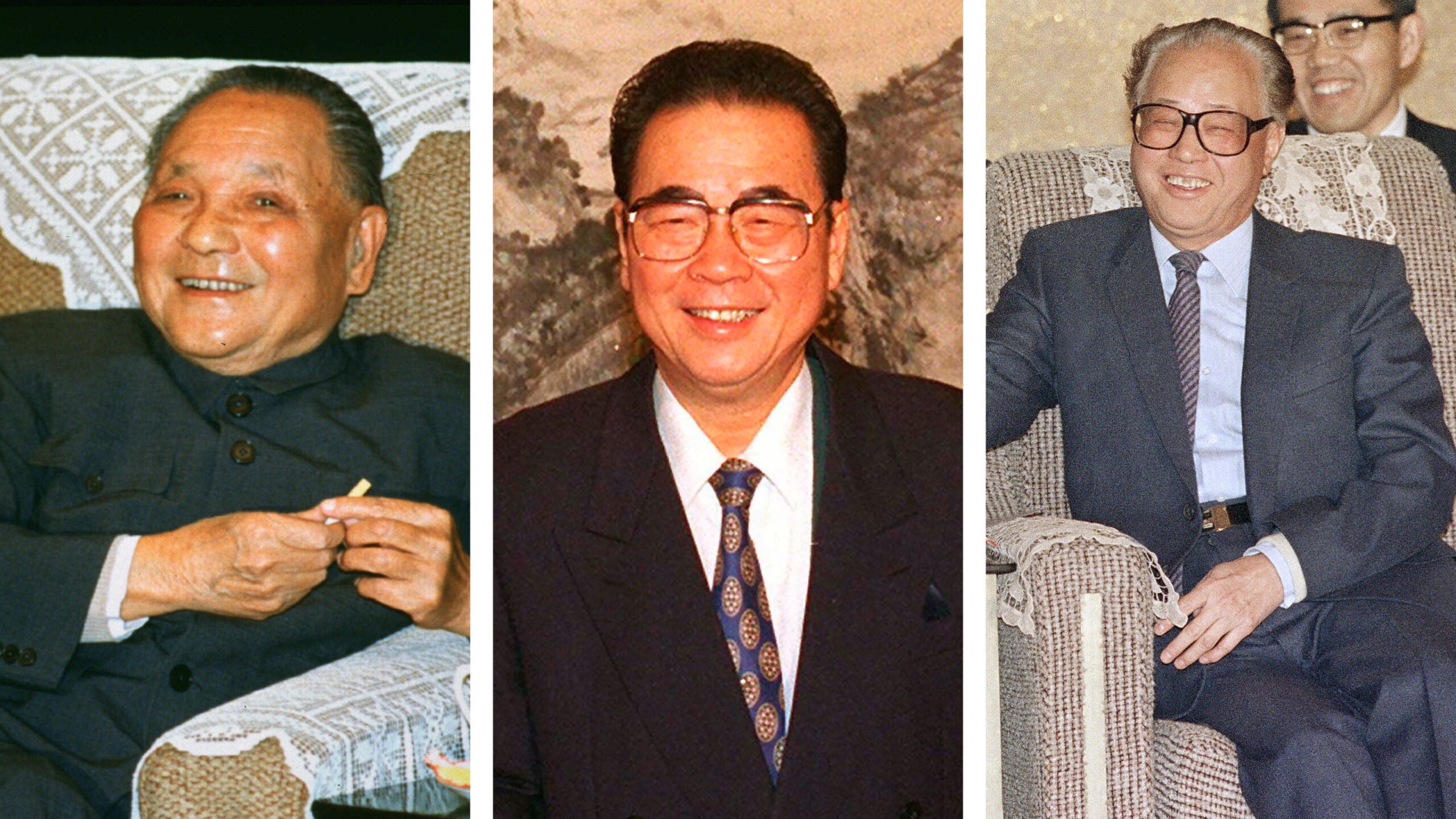
By the late 1980s, the CCP was fractured between two camps: the reformers, led by CCP General Secretary Zhao Ziyang who called for more economic reforms with some societal loosening, and the conservatives, led by Prime Minister Li Peng who wanted to maintain Party ideology. Deng Xiaoping, retired from government but still in charge of China, was generally a reformer. But as Fathers and Higgins show, above all else Deng was a political survivor, overcoming multiple Party purges in his lifetime and unseating Mao Zedong’s chosen successor, Hua Guofeng, to become China’s leader after Mao’s death. A year before the protests, as Fathers and Higgins point out, Deng and Zhao advocated for free market pricing. When record inflation hit the country as a result, it was Zhao who took the fall, not Deng. Li Peng, who opposed such unorthodoxy, saw his star rise.
Left to Right: Deng Xiaoping, Li Peng and Zhao Ziyang, all in happier times
In Tiananmen: The Rape of Peking, it is Deng’s desire to politically survive that made the massacre in Beijing inevitable. With 100,000 students marching to Tiananmen for reformer Hu Yaobang’s funeral on April 22 and demanding a dialogue with leadership, Deng saw the student protests as a threat to his absolute authority. Knowing that Zhao, the Party’s Chairman, held a more sympathetic view, Deng bypassed the chain of command, and while Zhao was on an official visit to North Korea, he convened a meeting of the leadership. Without Zhao, Deng and the conservatives dominated and they approved the publication of Deng’s provocative People’s Daily editorial that unequivocally condemned the student protests and referred to them as “turmoil.” For Fathers and Higgins,
“The editorial marked a crucial point in the evolution of an official response to the student unrest – the point of no return. The hardliners [conservatives] had published their manifesto. So great was judged to be its importance that it was made public before it had been printed in People’s Daily itself. That, at least, was part of the reason: the other part was more devious. A copy of the proposed text had been sent that same afternoon to Zhao Ziyang in North Korea….By the time he received the telegram, the text was already being released.”
Tiananmen: The Rape of Peking, p. 37
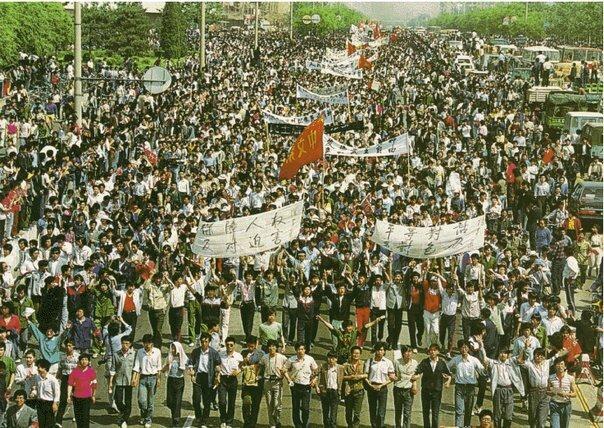
Students march to Tiananmen on April 27, 1989 (Photo courtesy of Patrick Chovanec: https://twitter.com/prchovanec/status/460373323008835585?s=20)
On April 27th, the day after the editorial’s publication, 150,000 students and Beijing residents marched to Tiananmen Square, demanding that the editorial be withdrawn in addition to general calls for greater freedom. On May 4th, an important day in Chinese history, tens of thousands of students again marched to the Square.
Zhao though was no political neophyte as Fathers and Higgins brilliantly portray in their chapter that describes his comeback. Simultaneous with the students’ May 4th protest, Zhao publicly stated that he believed the protests would “calm down” and there would be “no great turmoil in China.” With Zhao’s speech, it was now public that the Party was far from unified. “From the point at which Zhao delivered this speech, coexistence with Deng would become impossible” Fathers and Higgins grimly write.
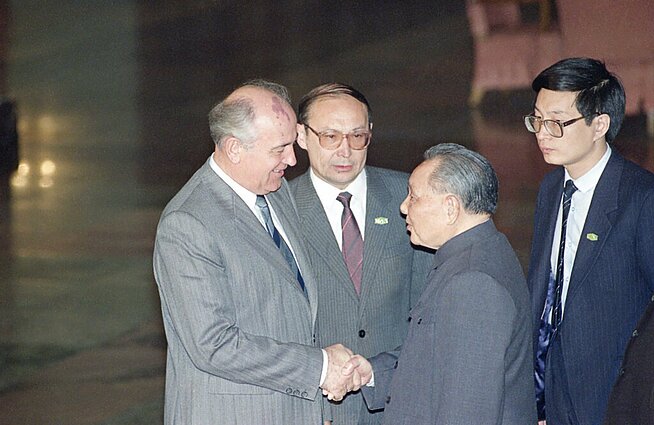
Gorbachev and Deng meet in Beijing, May 15, 1989
Zhao’s speech had its intended effect. The Square emptied and the students returned to their campuses. It seemed like the political winds were blowing in Zhao’s favor. But all that changed in the middle of May when the students, sensing the leverage that Soviet Union president Mikhail Gorbachev’s historic visit to Beijing could provide, began a hunger strike to last through his visit. 2,000 students participated and 10,000 more camped out on the Square in support. Before Gorbachev’s arrival on May 15, Zhao’s staff pleaded with the students to move their hunger strike to outside Zhongnanhai, the Party’s headquarters. To do otherwise they told the students, could severely damage the reformers’ efforts. But the students did not move their protests and on May 17, during Gorbachev’s visit, over a million people occupied Tiananmen Square. Joining the students were labor unions, professors, high school students and ordinary Beijingers, discontent with the status quo and excited for change. May 18 saw another million-strong on the Square.
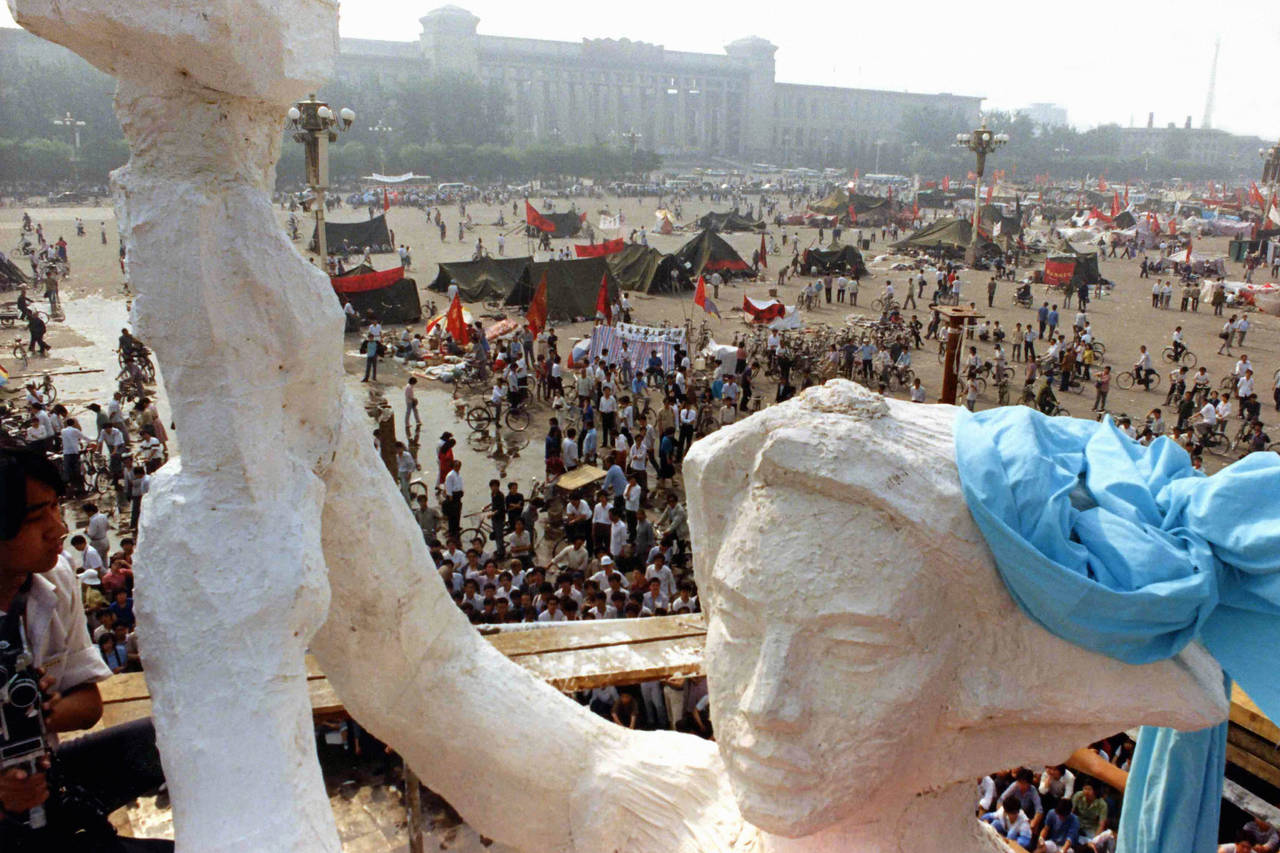
With Deng’s loss of face before Gorbachev, Zhao’s strategy had failed. On May 20, Li Peng declared martial law and Deng called up the military to prepare for a crackdown. But as Fathers and Higgins point out, by the end of May, the protests had fizzled out. Although the Goddess of Democracy’s arrival on May 30th renewed some interest, only 5,000 students remained on the Square, and most of them were students from other parts of China. Two of the protests’ leaders – Wang Dan and Wu’erkaixi – had returned to their campuses. Summer vacation was only two weeks away. Time was on the leaders’ side.
May 30, 1989 – A sparsely-filled Tiananmen Square
But time was irrelevant to Deng and the conservatives as they readied the PLA to enter Beijing. As Fathers and Higgins recount, during the day on June 3, PLA troops began to march into Beijing. All were met by thousands of unarmed Beijingers who blocked the roads with either buses, cars or their own bodies. Instead of attacking, the PLA retreated. The people cheered and beckoned the retreating troops back out to celebrate the fact that the army did not turn on the people. A carnival-like atmosphere permeated the streets of Beijing.
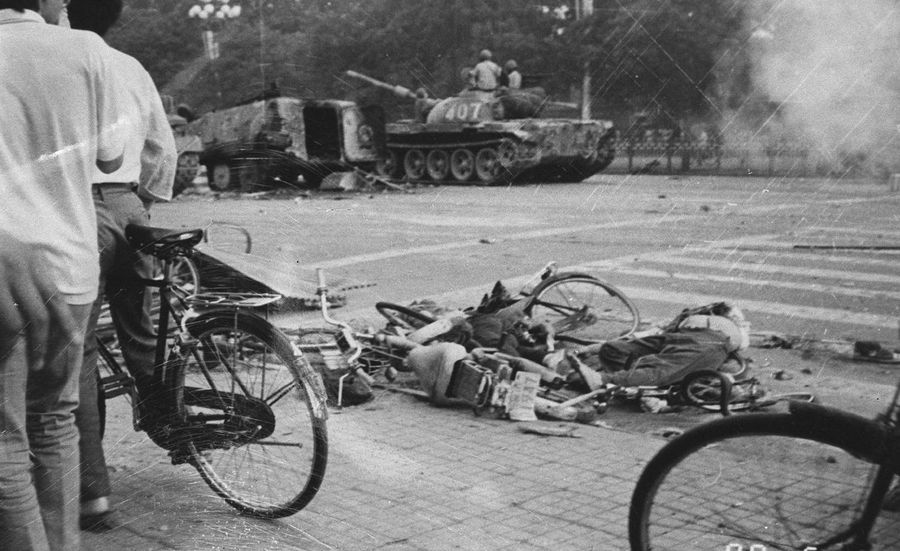
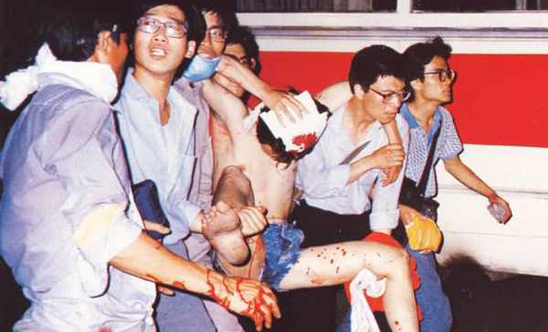
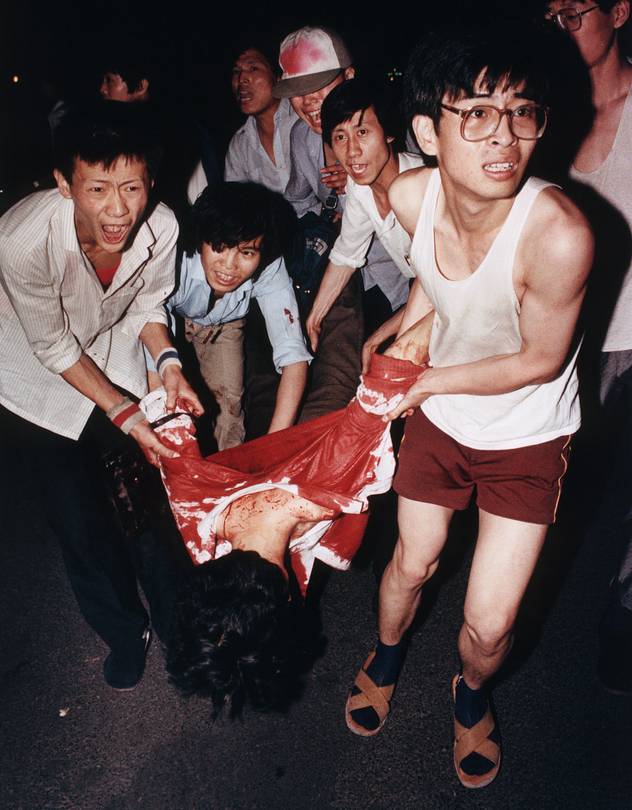
But a little bit before midnight on June 3, in the Muxidi section of Beijing, all of that changed. In their most powerful and heart-wrenching chapter, Fathers and Higgins portray the valiant Beijingers, over 5,000 of them, who tried to stop the troops from closing in on the Square. The crowd included factory and office workers, journalists and writers, and the children of CCP officials who lived in the high-end apartment complex overlooking the Muxidi intersection. Just like earlier in the day, unarmed soldiers were sent to disperse the crowd. Again, these soldiers retreated giving the crowd the sense that the people were victorious. This time though, the troops were replaced by new ones. With their AK-47s, the troops stormed the crowd, shooting wildly. In the first few minutes, deaths were in the double digits according to Fathers and Higgins. The army’s appetite for blood would continue as it marched down the main boulevard to the Square, meeting crowds of people at each intersection who thought they could stop the PLA. Instead, many were killed, either shot by soldiers or crushed by tanks. Even in the daylight hours of June 4th and long after the PLA had secured the Square, it continued to shoot into crowds of onlookers, adding to the civilian death toll.
For Fathers and Higgins, Muxidi shows Deng and the conservative’s diabolical nature. Sending unarmed troops into Beijing all throughout the day on June 3 was all part Deng’s plan Fathers and Higgins argue: to lure as many people out into the streets as possible so that when the PLA did open fire, casualties were certain. And it was no accident that the first murders happened before the apartment complexes that housed high-level Party members and their families:
Those who ordered the army into Peking, Deng and president Yang Shangkun, had done so not merely to disperse the mobs from the barricades, but to create a spectacle of forceful repression so shocking that it could not fail to cow anyone within the Party who had dared to sympathize with such defiance. The decision to open fire at Muxidi, in front of one of the Part’s main residential compounds, was a part of that spectacle.
Tiananmen: The Rape of Peking, p. 116
Tiananmen: The Rape of Peking is a fast-paced, comprehensive masterpiece that makes a frighteningly compelling argument that Deng Xiaoping, from the very first protests in mid April, wanted a violent crackdown so that his power would never again be challenged. For Fathers and Higgins, Deng is the ultimate villain and thirty-four years later, it is important that we do not forget this. But it is also essential that on this thirty-fourth anniversary of June 4th that we remember some of the heroes of Tiananmen that Fathers and Higgins highlight: those unnamed and unarmed civilians who took to the streets in a courageous effort to protect their city, mistakenly trusting that their government would never open fire on them.
Rating:
Tiananmen: The Rape of Peking, by Michael Fathers and Andrew Higgins (The Independent/Doubleday 1989), 148 pages
Unfortunately this book is out of print which we hope that the publisher rectifies for the 35th anniversary of the Tiananmen crackdown next year (2024). And, with the Chinese people unable to write their own history on this tragic event, we also hope that the publisher publishes a Chinese version (there is an Indonesian translation). Sometimes things jump the firewall; providing this book in Chinese will allow the Chinese people to learn about their fellow countrymen’s’ valiant efforts thirty-four years ago.
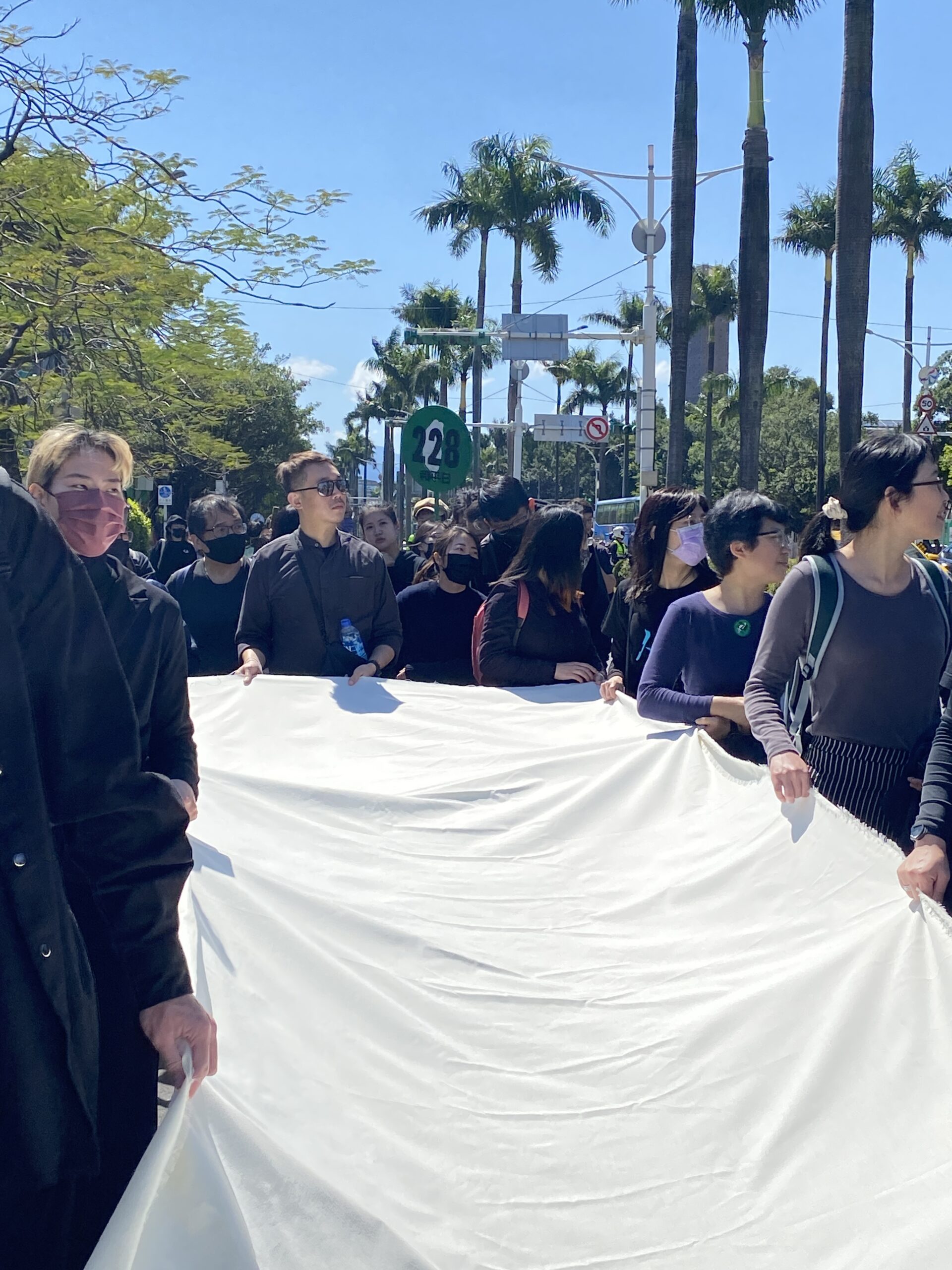
The Taipei sun was already scorching at ten in the morning, and the tall palm trees lining the street teased us with their shade. We were waiting for the start of the “228” parade, an annual event that commemorates the February 28, 1947 massacre in Taiwan. The crowd was mostly composed of young Taiwanese NGO workers in their twenties and thirties, all dressed in black. We lined up in two columns divided by a long white banner. Then our leader, a petite young woman wearing an oversized black t-shirt and baggy cargo pants, solemnly lifted a green wooden pole. Atop it was a circle emblazoned with an image of the island of Taiwan, the numbers “228” and “和平日” (“Peace Day”) written across it. Silence enveloped us until a recorded dirge began to play. The moment was solemn, like a funeral procession.
For many in the United States, Taiwan means just one thing. The independent island, formally a part of China during the Qing Dynasty, is held up as a counterpoint to the Chinese Communist Party’s authoritarian dictatorship. But to conceive of Taiwan as nothing more than China’s opposite risks obscuring the island’s most distinctive features, including its dynamic civil society, stellar human rights record, and stable democratic institutions. It also prevents the Taiwanese people from claiming and celebrating their independent identity.

 On Facebook
 By Email
 Comments (0)






 Themocracy