Posts tagged: Xu Zhiyong

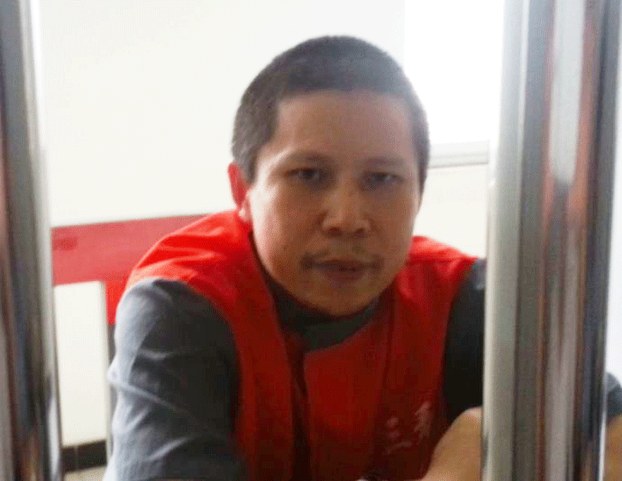
Xu Zhiyong on the Disappearance of His Volunteer Song Ze

By , July 23, 2012

Seeing Red in China, a blog that often posts translations of Chinese activists’ work, has just posted two must read translations (see hereand

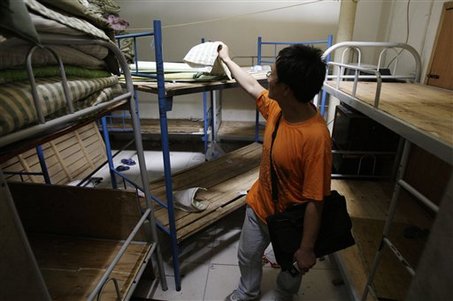
Beds in a vacant black jail - Caijing investigation.

here).

Both concern the recent abduction and detention of Song Ze, a volunteer attorney at the Open Constitution Initiative.  Like most recent college graduates, Song Ze is an idealist young man who wants to use his education to better society.  That is what brought him to the Open Constitution Intiative and helped him to become an advocate to those petitioners illegally subjected to one of China’s black jails.  As Xu Zhiyong recollects in his essay exclusively written for Seeing Red in China, Song Ze’s advocacy brought him to the cries of Hu Yufu, an 80 year old petitioner desperate for medical attention but denied access to a hospital by his jailers.  Hu Yufu died only a few days after Song Ze first heard his story.  Relying on China’s rule of law, Song Ze assisted the family in bringing a lawsuit against the local Party for their father’s death.

As with all stories where a young idealist lawyer relies on the Chinese government’s promises of rule of law, it was that advocacy that caused Song Ze to be abducted and detained for “provoking disturbances.”  As recounted by his lawyer, Liang Xiaojun, Song Ze has been detained beyond the 37 days allowed by law and has yet to be charged or arrested.  Liang’s account demonstrates a criminal justice system that still has a long way to go before it follows its own laws.  Even citation to the law does not matter:

The officer in charge of the case was there. Upon hearing my request to meet Song Ze, he asked who had sent me and how, while recording information about me on a notepad. Then he left the room with the approval form. When he returned shortly, he told me the lieutenant, whose signature was required, was unavailable, and I couldn’t meet Song Ze on that day. He told me to come back tomorrow.

I argued that, according to China’s Lawyers Law, meeting with client required no approval. He said, the new criminal procedure law wouldn’t take effect until next year, and it was good for a lawyer to obtain approval

Song Ze’s current whereabouts are now unknown.  As Liang points out in his essay, this has become permissible under Article 73 of China’s amended Criminal Procedure Law.  Liang suspects that “residential surveillance” in an undisclosed location will become the tool of choice of the police so as to avoid even the limited protections afforded criminal defendants.

Xu Zhiyong and Liang Xiaojun‘s essays not only reflect the absurdity of China’s legal system where the police do as they please, but they also reveal what is becoming a battle for China’s future.  When the heavy hand of the Party falls on a young, idealistic volunteer, the Chinese Communist Party sends a strong warning signal to China’s other Song Zes: your idealism could silence you and cause you to become a case in and of yourself.

Bookmark and Share

Why So Secretive? US-China Legal Experts Dialogue

Who received the invitation to the Legal Experts Dialogue?

One would think that after a six-year hiatus, the resumption of the U.S.-China Legal Experts Dialogue would receive a little more fanfare than a cursory four-sentence press release from the Department of State (“DOS”), issued on June 6, a mere two days before the big event.

For the past two years, almost every high-level discussion between the U.S. and China has raised the issue of the Legal Experts Dialogue (“LED”), with the goal of resuming the talks (last held in 2005).  When President Obama visited China in November 2009, the two countries’ Joint Statement directly stated that “[t]he United States and China decided to convene the U.S.-China Legal Experts Dialogue at an early date.”  Ditto for the Joint Statement after President Hu’s visit to Washington, D.C. in January 2011.

It wasn’t until April 28, 2011, at the Human Rights Dialogue, that anyone provided somewhat more of a hard date.  At a press conference, Assistant Secretary of State Michael Posner announced that the U.S. and China finally agreed to convene the LED in “June 2011.”  This vague date was reiterated a few weeks later in the statement issued at the conclusion of the Strategic & Economic Dialogue.

So why the lame press release about the LED?  It’s been a priority item in the U.S.’s negotiations with China.  One would think that finally being able to achieve the goal of actually having the LED and especially of hosting it in the midst of the Chinese government’s crackdown on rights-defending lawyers, would be a feather in DOS’s cap; something that they would want the world to know about.

Why remain mum on who these “experts” are and what they will be discussing?  Instead, DOS only states that there will be “government and non-government experts” who will “explore key legal issues of mutual interest.”  Could DOS be more vague?

There are occasions when the U.S. might achieve more by pressuring China behind the scenes.  In the case of Xu Zhiyong in 2009, it looks like that approached worked.  But the LED is a completely different beast – the existence of the Dialogue has long been made public and given that there will be non-government experts, it does not appear that there will be high-level discussions here on par with Hu-Obama talks.  It sounds like it is one group of lawyers talking to another.  Given some of the issues that have sprung up in the past few months, including the assault on public interest lawyers, China’s indigenous innovation policy, various WTO cases, and the criminal trials of U.S. citizens, it would be interesting to know what is on the agenda.

But in general, I do not hold out hope that the LED will produce any earth-shattering results, if it produces results at all.  While DOS has stated that there will be “in-depth discussions and practical cooperation on the rule of law” (yeah, I don’t know what that means either), it’s basically two days of meetings among strangers with translators in between.  How much can really be achieved?

And maybe that’s why the U.S. hasn’t given the LED the credit one would think it is due.  Maybe even DOS realizes that bringing over a delegation of Chinese lawyers and legal experts for a mere two days is likely a waste of taxpayer’s money.

I do think that more open dialogue between the U.S. and China is a good thing.  But there are better ways to increase the lines of communication between the legal communities in the two nations and assist China with improving upon its commitment to a rule of law.  Identifying and inviting reform-minded Chinese lawyers to the United States for a longer period of time – anywhere between three months to a year – is a better use of money.  Through that experience, a Chinese lawyer can see how our legal system functions, see the good and the bad, interact with U.S. lawyers, and determine which aspects if any should be replicated in China.

These types of sustained contact are what can best assist China with implementing a rule of law.  A two-day conference likely cannot.  But unfortunately, we won’t really know because nothing about the LED is publicly available.

Bookmark and Share

When the Murder Victim Turns Up Alive – Will Justice Be Served?

By , July 21, 2010

Zhao Zuohai, freed after 11 years in jail for a murder that never happened

May 2, 2010 was the day that Zhao Zuohai got his life back.  It was also the day that China was forced to re-examine its criminal justice system and deal with the very real fact that many innocent people in China are in jail.

In 1999, after being tortured for 33 days, including being handcuffed to a chair, beaten with sticks and denied eating and sleeping for long periods of time, Zhao Zuohai, a poor farmer from a village in Henan Province, confessed to killing a fellow villager who had gone missing.  Although only a behead body was found, its identity not 100% certain, Zhao was convicted of murder.  But after Zhao served 10 years of his 29-year sentence, the “murder victim” turned up alive, returning to his village to obtain his social security benefits.  On May 10, 2010, a court threw out Zhao’s conviction and Zhao returned to his village.

Zhao’s wrongful conviction led to a very open critique of the Chinese criminal justice system and produced changes.  At least on paper.  A month after Zhao was freed, China passed its first rules to exclude during a trial any confessions obtained through torture.  While the regulations had been a work in progress for at least the past year, Zhao’s case likely sped up their issuance.  Then, on Friday, the Supreme People’s Procuratorate  took action, upgrading its compensation scheme for wrongful conviction from 111.99 yuan (approximately $16.50) to 125.43 yuan (approximately $18.50) for every day of a person’s sentence.

Although the recent police investigation into the circumstances surrounding Zhao’s detention has been surprisingly candid, with the public release last week of the police’s investigation (in the form of a “prosecution recommendation proposal” as required by Article 129 of China’s Criminal Procedure Law (CPL)), actual repercussions for the perpetrators remain to be seen.  While five police officers have been charged with “forcing a confession,” all remain free out on China’s equivalent of bail.  Unlike in the U.S., bail is notoriously uncommon in China, where suspects remain in custody up until trial.  The example of Australian national Stern Hu is typical – denied bail even though he posed little to no flight risk.

The decision to release a suspect on bail is usually made by a high official in the police or the prosecutor’s office.  And if the recent case of Xu Zhiyong is any guide, bail means that the case will likely never go to trial.  While it creates a legal limbo for the suspect, the suspect remains free, which beats sitting in a Chinese prison.

The fact that the five police officers responsible for the torture of Zhao Zuohai are on bail means that a trial against them is unlikely.  Additionally, a recent article by Shen Bin, a Shanghai lawyer, questions if a case can even be brought against the police (English translation courtesy of the Dui Hua Foundation).  Article 87 of the Criminal Law (CL) sets a statute of limitation for criminal prosecutions; for crimes that receive a sentence of five years or less, the statute of limitations is five years. In this case, the maximum sentence the police could receive is three years (CL Article 247), making the statute of limitations for bringing a case five years, which Zhao Zuohai’s case has long surpassed. Article 88 of the CL permits the statute of limitations to be ignored if the victim brought a charge of prosecution and the prosecutor ignored it, but it is unclear if Zhao Zuohai’s complaints of torture soon after his conviction are sufficient to rise to the level of “charge of prosecution.”

Zhao Zuohai’s wrongful conviction case confirms a criminal justice system that has a lot of failings.  But it also shows a somewhat more open Chinese government willing to confront some of these issues and a populace seeking to better protect criminal suspects.  However, with the fact that the police who tortured Zhao remain free on bail with little risk of prosecution, China still has a way to go before the danger of wrongful convictions is minimized.

Bookmark and Share

The Obama Visit to China – What the U.S. Press Missed

By , November 23, 2009
DSC04715Originally Posted on the Huffington Post.


 Beijing, China – The U.S. press has not been kind to President Barack Obama and his recent visit to China.  Claiming that the U.S.’ tone has become conciliatory toward China, that the trip “yielded precious little” and even oddly comparing the Obama Administration’s behavior on the visit to a one-party, authoritarian regime, the U.S. press has all but designated the trip a failure.

But the trip was most certainly not a failure and in many ways fulfilled the U.S. press’ predictions – an event filled with a huge agenda covering a multitude of global issues, likely offering few deliverables, and probably playing down, at least publically, human rights.

So if the trip confirmed the press’ earlier predictions, then what’s got their panties all in a bunch?  Perhaps the one thing that upsets the press more than anything is a lack of access, and on this trip, the press certainly played second fiddle.  Questions were not taken from the press during last Tuesday’s press conference and very little other access was offered to the President.  But with only a day and a half in Beijing, this trip was not really about the press.

But in measuring President Obama’s trip based solely on their access, or lack of, the U.S. press has failed to report on some pretty substantial results of President Obama’s trip to China.  In what you likely will not find in other media outlets that are still licking their wounds from an alleged snub, below are some of the surprising deliverables from the visit.    

1.  Increased Military-to-Military Contact and High Level Military Exchanges

If the lack of communication between the U.S. and Chinese militaries does not keep you up at night, well it should.  The U.S. has a better relationship with Russia’s military than it does with China’s, but has more potential to cross paths with China’s because of the U.S.’ military presence in Asia.  Without proper channels of communication between the two militaries, a small skirmish can easily become a major crisis, as President Obama knows from his first months in office when Chinese navy ships circled and threatened a U.S. navy vessel in the South China Sea. 

Adding to the lack of communication is China’s broad interpretation of its “exclusive economic zone” (EEZ). A chinese-fleet-review-a-ch-008country’s EEZ extends 200 miles from the coast and gives the country sovereign rights over economic activities in those waters (usually the country uses its economic zone to search for natural resources).  By China’s broad definition, its sovereign rights in the EEZ expand outside of the economic realm, permitting it to interfere with other countries’ ships that enter its EEZ.  The U.S., as well as most other countries, perceives the EEZ as providing solely economic sovereignty for the coastal state, allowing other countries’ ships free access.  For the U.S., this also includes ships that are conducting military surveillance on the coastal state (for an excellent assessment of these different interpretations, see Margaret K. Lewis’ “An Analysis of State Responsibility for the Chinese-American Airplane Collision Incident”).  Needless to say, these different interpretations only add to the tensions between the two militaries. 

In the U.S.-China Joint Statement issued last week, much needed progress was made on the military front, especially in terms of communication.  High level exchanges between the U.S. and Chinese militaries will continue, with the Chief of the General Staff of the China’s People’s Liberation Army, General Chen Bingde, visiting the U.S. and both Secretary of Defense Robert Gates and Chairman of the Joint Chiefs of Staff Admiral Michael Mullen making a trip to China.

In regards to differing definitions of the EEZ, the Joint Statement alludes to this issue, showing that the two sides likely discussed and acknowledged the problem (From the Joint Statement: “The United States and China agreed to handle through existing channels…maritime issues in keeping with norms of international law and on the basis of respecting each other’s jurisdictions and interests”).  Granted they failed to reach a compromise, but this is not an issue that will be easily solved.  Just discussing this sensitive topic is progress. 

2.  Both Public and Private Discussion of Human Rights

Interestingly, a press that largely ignored this issue prior to President Obama’s trip is making a big deal of his “silence” on human rights violations in China.  Last I checked though, freedom of speech is usually regarded as one such right and President Obama discussed this issue rather bluntly and passionately at the Shanghai town hall.  While it is debatable as to whether focusing on freedom of expression on the internet is sufficient to assist China with a development of a civil society and a rule of law, it is difficult to argue that President Obama did not publically bring up the subject of human rights. 

Furthermore, in his letter written to China’s Southern Weekend newspaper, President Obama stressed the importance of a free press.  True, this letter was not permitted to be circulated to a wider audience, but it portrays the President’s continued emphasis, both publically and privately on human rights.

The Joint Statement also discusses human rights in general and calls for the next official human rights dialogue between the U.S. and China to be held by the end of February 2010 in Washington, D.C.  The Joint Statement also stressed the importance of rule of law in China and agreed to reconvene the U.S.-China Legal Experts Dialogue (see the Dui Hua Foundation website for further background).  With the increasing push back by the Chinese government in the area of rule of law, especially as it pertains to civil rights and civil liberties, deepening cooperation is an important deliverable.

It is true that the Obama Administration has opted more for a strategy of quiet engagement on this issue.  Whether the approach is effective remains to be seen.  This past summer, the Administration was able to secure the release of public interest attorney Xu Zhiyong through behind the scenes pressure on the Chinese government.  However, almost immediately after President Obama left China, the Beijing police apprehended and beat public interest lawyer Jiang Tianyong (pronounce Geeang Tian-young) as he was walking his 7 year old daughter to school.  While Mr. Jiang has since been released, he is under very tight surveillance.  Perhaps if President Obama had mentioned the plight and importance of public interest attorneys in China, the arrest of Mr. Jiang might not have happened.  Or maybe it would have.

Either way, the U.S. press’ conclusion that President Obama “soft-peddled” human rights on his trip does not appear to ring true.  Human rights was certainly discussed, both publically and privately, it just appears that perhaps China was not listening. 

3.  Clean Energy and Climate Change

As expected, the U.S. and China entered into a series of cooperative agreements pertaining to clean energy and climate change technology.  While neither side agreed to emission targets, the level of detail provided for in the issued agreements was more than anticipated.  Most interestingly, the U.S.’ Environmental Protection Agency and China’s National Development Reform Commission signed a memorandum of cooperation to help China develop its capacity to measure its greenhouse gas inventories.  This is no small feat.  China’s does not currently have the capacity to accurately measure its greenhouse gas emissions and thus, if it was to agree to emission targets, would be unable to provide verifiable data.  China’s lack of capacity on this front has rightly been a sticking point for many in the U.S. Congress, preventing the passage of domestic climate change legislation that would be used to bind the U.S. internationally.

This memorandum of cooperation is the first step to enable China to agree to emission targets and for the rest of the world to believe them. 

President Obama’s visit to China was certainly not overly exciting but it was far from the failure that the U.S. press has made it out to be.  It also does not signify the U.S.’ decline as some alarmist media outlets have claimed.  Instead, the visit was a series of tough negotiations between two global powers.  Both had winning issues and losing ones.  And in the end, President Obama likely walked out with a little more than expected.  For me, that’s an accomplishment.

Bookmark and Share

What to Expect from President Obama’s Visit to China – A Primer

By , November 3, 2009

Originally posted on the Huffington Post.

Obama & Hu share the stage in Pittsburgh.  Soon it will be Beijing.

Obama & Hu share the stage in Pittsburgh. Soon it will be Beijing.

President Obama will visit China, his first trip to the country, from November 15 through the 18.  Although his visit is less than two weeks away, the question remains – what will be on the agenda for his three days in China.  While the White House has yet to release President Obama’s schedule, expect President Obama and President Hu Jintao (pronounced Who Gin-tao) to discuss military ties, global economic health, climate change and human rights.  

(1)   Improved US-China Military Relations – Let’s Hope

While U.S.-China economic ties bring the two nations into alignment on various issues, military-to-military relations remain dangerously tense.  President George W. Bush realized this early on in his presidency after a U.S. spy plane crashed with a Chinese military jet and was then forced to make an emergency landing on Hainan Island in China.  For a few days, it was unclear what the Chinese military would do with the captured U.S. pilots, leading to the acknowledgement that better communication between the two militaries was necessary.  

President Obama has already had a taste of the danger of weak military ties this past March, when five Chinese naval vessels circled and threatened a U.S. navy ship in international waters, 75 miles off of Hainan Island.  

The People’s Liberation Army (PLA) is largely to blame for the lack of communication between the two militaries.  Historically, the PLA has remained secretive about its military development and has usually refrained from military-to-military relations with other countries, although that is slowly changing.  While the Clinton Administration made some headway, at least on paper with the signing of the Military Maritime Consultative Agreement (MMCA), suspicion between the two militaries has remained high and there are no procedures in place for each country’s military to follow should unexpected events occur.   The U.S.’ military agreements with all other countries, including Russia, contain provisions to deal with emergency incidents to prevent their escalation.

As an emerging superpower and already a regional one, minor military incidents with China will likely continue to

Xu Caihou & Robert Gates - maintaining close ties?

Xu Caihou & Robert Gates - maintaining close ties?

occur, especially as China rapidly expands its military spending and build-up. Without better communication, these incidents can easily turn to major crises.  The Obama Administration appears to recognize this danger.  Defense Secretary Robert Gates just concluded a meeting with Vice-Chairman of the Central Military Commission (CMC), Xu Caihou (pronounced Sue Tsai-ho) in Washington, D.C. after Mr. Xu spent a week in the U.S. viewing U.S.  military bases and meeting with other military leaders. 

Securing a better understanding between the two nations’ militaries would be no small feat.  The PLA remains a very powerful, and largely independent, force within the Chinese government and President Hu Jintao’s control over the organization remains questionable (see Susan Shirk, China: Fragile Superpower, p. 73).  But it appears that President Obama, especially after the March 2009 incident in the South China Sea, recognizes the importance of pushing China forward to secure better military ties.  However, anticipate that China will raise the issue of U.S. arm sales to Taiwan, and may very well use that as a bargaining chip for better U.S.-China military relations. 

(2)   Coordination on the Global Economic Crisis – Tow Superpowers Tied Together

To make it through the current global economic crisis, China needs the U.S. and the U.S. needs China.  While China’s stimulus package has taken hold quicker then its American counter-part, China’s future is still largely dependent on the U.S.’ success.  Last year, China surpassed Japan as the largest holder of U.S. Treasuries, holding approximately $800 billion (25% of total U.S. Treasuries); this amount accounts for approximately 40% of China’s foreign reserves.  In order for the U.S. to continue to fund its stimulus, it needs China to continue to purchase U.S. Treasuries.  But at the same time, China right now has no choice but to hold the treasuries, intertwining China with the future of the U.S. economy. 

Because of this arrangement, expect China to scold the U.S. on its increasingly high levels of debt.  This though is more for the domestic Chinese market than actually for U.S. policy makers.  The Chinese government’s hands are tied – it cannot sell off their Treasuries; its act of selling would inevitably cause market to decrease the price of U.S. Treasuries while China is attempting to sell.  But it still has to show the Chinese people that it is doing something. 

On the U.S. side, anticipate the issue of currency manipulation to be raised but not to be discussed in-depth.  Commerce Secretary Gary Locke raised the issue on his trip to Guangzhou last week, a surprise since currency has not been a high priority as of late.  However, for certain U.S. industries, such as the steel industry, China’s currency policy remains a viable issue. 

In terms of trade issues, such as the recent U.S. tariffs on tires and Chinese threats to slap tariffs on certain U.S. imports in response, expect some discussion.  But largely, this “trade war” has become much less of a problem.

Instead, U.S.-China discussions on the economy will likely entail how U.S. and Chinese companies can continue to work together.    

(3)   Climate Change & Copenhagen – “I’ll Go If You Go”

Do not expect much in terms of climate change.  Todd Stern, the Administration’s special envoy on the issue, announced last week that a bi-lateral agreement is not likely to emerge from President Obama’s and President Hu’s discussions on climate change.  Instead, the heads of state of the two leading emitters of greenhouse gases are hoping to reach “a common understanding.” 

Anticipate that a “common understanding” will involve a discussion of financial and technical assistance to China to help combat climate change.  As of the U.N. General Assembly in September, the U.S. and China do not see eye-to-eye on this issue.  While the European Union has pledged to provide financial assistance to developing countries, including China, the Obama Administration has yet to agree to such assistance to China.  However, it is this issue that the U.S. should attempt to parlay into actual emission targets from China. 

In terms of greater technical assistance, expect President Obama to ask for more protection of intellectual property and actual enforcement of the law in China, an issue Commerce Secretary Gary Locke recently raised on his October 2009 trip to China. 

Finally, the success of the Obama-Hu talks on climate change will determine whether either leader will join the rest of the world in Copenhagen in December.  This is pretty much a package deal; if the U.S. and China reach a “common understanding,” expect both Obama and Hu to attend Copenhagen.  If they do not, expect both to be watching it on T.V. from home. 

(4)   Human Rights & Rule of Law – This is Where the Surprise will Lie

Whether President Obama brings up the issue of human rights is currently the big “if” of his visit.  Secretary of State Hillary Clinton received tremendous backlash, both at home and internationally, when she heavily implied that the U.S. would not press China on human rights at the expense of other issues. 

However, during Ambassador Huntsman’s Senate confirmation hearing, he repeatedly stressed the importance of a continuous dialogue with China on human rights.  Furthermore, the release of activist-attorney Xu Zhiyong upon Ambassador Huntsman’s arrival to Beijing is likely a reflection of pressure from high up in the Administration (Xu Zhiyong ‘s organization received financial support from Yale University, Secretary Clinton’s alma mater).  But more than anything else, Xu Zhiyong’s detention made apparent to the Administration the important role that the U.S. still plays to many of these Chinese human rights activists; the U.S. still serves as their beacon of hope, and often gives these activists the courage to push forward when many in their country and their government work against them. 

Will President Obama make public comments about human rights?  Expect something.  Likely though, the issue of human rights will be painted as one of “rule of law.”  Recently, a group of Chinese lawyers convened a press conference in China imploring President Obama to raise the issue of human rights but in terms of their ability to bring cases in court concerning religious freedom and human rights.  Additionally, the Xu Zhiyong case showed the still arbitrary nature of the Chinese justice system.

Obama Before the Crowds in Germany.  Will it be the same in China?

Obama Before the Crowds in Germany. Will it be the same in China?

In Beijing, rumors abound on whether President Obama, like his Democratic predecessor President Bill Clinton, will speak at one of the many universities in the capital.  President Clinton’s speech at Peking University was historic, impressive and broadcasted to the Chinese people; the capital essentially stood still while he spoke.  Given President Obama’s panache for large-scale, media-friendly events, it is very likely that Chinese officials will allow a speech to the Chinese people.  However, will the Chinese state-controlled media appropriately translate President Obama’s speech remains to be seen.  Even President Obama’s inaugural speech, which never even mentioned China, was partially censored.

Bookmark and Share

A Bit Too Much Pollyanna? Brookings’ Report on Legal Development in China

By , October 19, 2009

pollyanna-150x150Many Western China observers were dismayed by this past summer’s arrests and harassment of Chinese public interest lawyers; for many, such a crackdown evidenced a step back in creating an independent legal system.  Cheng Li and Jordan Lee of the Brookings Institution offer a different interpretation.  In their recent work, “China’s Legal System,” Li and Lee maintain that while the arrest and detention of rights lawyers like Xu Zhiyong was certainly a disappointment, China’s recent progress with legal reform overshadows this past summer’s events.  But even though Li and Lee are correct to note some of the positive developments, especially with the growth of the legal profession in China, they perhaps put too much weight on these developments at the expense of recent obstacles.

Li and Lee offer four developments that they claim bode well for legal development in China: (1) an increasing body of law, with new laws being written and old ones amended; (2) the astronomical growth in the number of lawyers; (3) increasing economic autonomy and a greater sense of professionalism in the legal profession; and (4) the rapidly rising number of legally-trained government officials.

Li and Lee cite the huge number of laws that China currently has on the books (231 individual laws, 600 administrative regulations, 7,000 local rules and regulations, and a sizable number of departmental regulations), but only pay passing attention to China’s difficulty in implementing laws on the local level, arguably the most important aspect of a functioning legal system.  To be sure, drafting laws is the first step; but without meaningful and consistent implementation, the value of such a large body of law is questionable.

Additionally, Li and Lee look to the increased professionalization of the legal profession as a positive sign.  It is true Gavel-LawBookthat the Chinese bar has become more professionalized and lawyers are no longer employees of the State as they were in the 1950s.  But Li and Lee make no mention of the fact that the All China Lawyers Association and local bar associations are government-controlled and answer to the Ministry of Justice (MOJ).  Prof. Jerome Cohen of NYU’s U.S.-Asia Law Institute has consistently commented on this lack of independence of the Chinese bar and has noted the role that the MOJ has played in influencing bar associations to punish rights lawyers that go a bit too far for the government’s taste.

Finally, Li and Lee are correct to note that there has been an increase in the number of legally trained government officials rising through the ranks.  Most officials in the current leadership have a science background, with very few with a background in law or even the social sciences.  In the next generation of officials, currently being groomed for powerful positions in the Party and the government, a majority have a background in the social sciences.  But only one, Li Keqing, has a background in law.  Thus, a shift toward leaders with legal training is not as apparent as Li and Lee contend.  Furthermore, such a shift is not reflected in the positions in the Chinese government that one would think necessitate legal training.  Hu Jintao’s recent appointments to the MOJ and the Central Party Political-Legal Committee (the committee responsible for all legal institutions) all lack legal training; instead, many have training in the police force providing for a more militant view of justice.  Even the new president of the Supreme People’s Court, Wang Shengjun, has no formal legal training.

China’s legal development has come a long way since the era of Mao, when law was merely a tool for class struggle and lawyers were often harshly persecuted.  But using the Cultural Revolution as a baseline will only impede China’s progress; arguably, everything is better now than it was during the Cultural Revolution.  China has made progress, but its progress should not be overstated and its limitations need to be noted in order to move forward.

Bookmark and Share

Huntsman Arrives in China; Xu Zhiyong, Zhang Lu & Ilham Tohti are Released

By , August 25, 2009

A day after Ambassador Huntsman’s arrival in Beijing, Chinese authorities released three prominent activists on

Ambassador to China Jon Huntsman

Ambassador to China Jon Huntsman

Sunday: Xu Zhiyong, founder of Gongmeng, a public interest law organization, Xu’s assistant Zhang Lu, and economics professor and Uighur Online founder, Ilham Tohti.

Both Xu and Zhang were released on bail, a very rare occurrence under Chinese law, signifying that higher authorities likely gave approval to release the two.  Although bail is theoretically available, in the vast majority of criminal cases, the suspect remains in custody until trial.

The circumstances surrounding Tohti’s release are much less clear, but it appears that charges against him are no longer pending.

Was it U.S. pressure on the Chinese government that secured the release of these three activists?  While it likely played a role, there are other important factors that influenced the Chinese government.  First, there was significant domestic pressure, especially for the release of Xu and Zhang.  Through small donations, some as little as five or one yuan, Gongmeng was able to raise over 800,000 yuan (over $115,000) to pay the fine imposed by the tax courts.   Additionally, a group of well-regarded academics and professionals issued an open letter to the Chinese government requesting the release of Xu and Zhang.

In addition to the domestic support for Xu and Zhang’s release, a second factor that likely played a part is that their actions are viewed as less threatening to the Chinese government.  Xu’s organization, Gongmeng, worked within the

Activist, Gao Zhisheng

Activist, Gao Zhisheng

legal system, using the very laws passed by the National People’s Congress to protect the rights of vulnerable individuals.  Other activists who have taken a more strident approach to the Chinese government have not been released.  Gao Zhisheng, an attorney who has ardently represented members of the religious organization Falun Gong and who also openly called on western nations to boycott the 2008 Beijing Olympics, was taken into custody in February 2009 and has not been heard from since.

Although Gao Zhisheng and Liu Xiaobo and many others remain in Chinese police custody, the release of Xu, Zhang and Tohti should still be viewed with guarded optimism.  Evidently, for those activists who do not go too far, the Chinese government does respond to domestic and international pressure.  However, what it means to “go too far” is still unclear and detention of activist attorneys will likely continue.

But Ambassador Huntsman and President Obama should see the release of these three activists as a positive sign, and should continue with the dialogue they have evidently already started with the Chinese government.

Bookmark and Share

News Alert: Xu Zhiyong Formally Arrested

By , August 19, 2009

Chinese Human Rights Defenders reported yesterday that Xu Zhiyong was formally arrested on August 18, 2009 at 11:50 AM.

Holding a person in detention for many days prior to arrest is not uncommon.  While the norm is three days before a request for an arrest, in political cases it is not uncommon to hold an individual for up to 30 days before a formal arrest.  For a great summary on the multiple ways that a person can be held by the police without an arrest in China, see this post on China Law Prof Blog.

The charge against Xu Zhiyong – tax evasion.

Bookmark and Share

Xu Zhiyong and What his Detention Means for Rule of Law in China

By , August 17, 2009

Originally posted on the Huffington Post

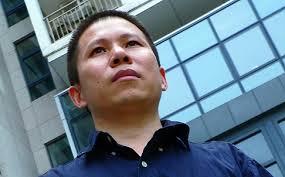
Just before dawn on July 29, 2009, the Beijing police apprehended leading Chinese public interest lawyer, Xu Zhiyong, allegedly to question him about possible tax evasion.  He has not been heard from since.  In an increasingly conservative political environment in China, Mr. Xu’s detention is far from an anomaly.  Many speculate that the Chinese government’s recent crackdown on public interest lawyers is merely a part of the preparations for the 60th

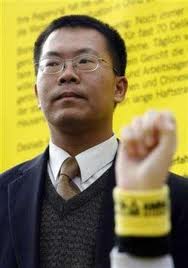
Xu Zhiyong; Photo by Shizhao

Xu Zhiyong; Photo by Shizhao

Anniversary of the founding of the People’s Republic of China this fall.  But in looking beneath the surface of the government’s recent actions, a different narrative emerges.

The apprehension of Mr. Xu, the forced closure of his legal assistance organization, Gongmeng (in English the Open Constitution Initiative), the investigation of Yi Ren Ping, a non-profit law center that assists AIDS and hepatitis patients with anti-discrimination actions, the recent disbarment of over 20 public interest lawyers, the professional “exile” of a leading legal scholar and outspoken critic to a remote region of China, all of these actions paint the picture of a government that has become increasingly more alarmed by a more vocal and organized group of lawyers.  The government, and the Chinese Communist Party (CCP) which ultimately controls all governmental bodies, has begun to view the development of these non-profit lawyers and legal reform as a threat to its authority and to the one-party rule of the CCP.  Recent governmental assaults on the public interest law field are not just a one-off affair.  Rather, they show a CCP not looking to embrace the “rule of law,” but instead seeking to contain it.

Development of Rule of Law in China from the US & Chinese Perspectives

Both China and the U.S. agree that greater rule of law in China is needed and can benefit China.  Virtually every conference between the two nations mentions the need for rule of law development. But what is never articulated is what each means by “rule of law.”  Many Western scholars claim that rule of law is value-neutral; it is merely a system where laws are enforced in a transparent manner by an independent judiciary and that rule of law can exist regardless of the political system of the country.

And while this is likely true, the U.S. government still largely views rule of law within the rubric of democracy; as the rule of law develops so does democracy and greater protection for human rights.  Of the $27 million the government appropriated to rule of law projects in China in 2008, $15 million were administered by the Department of State’s Bureau of Democracy, Human Rights and Labor and another $2 million was designated for non-State Department rule of law projects (see CSR report, p. 2).

China, however, takes a different perspective.  While seeing the benefits of rule of law in terms of economic development, international acceptance and respect, and the ability for the central government to have greater control over the provinces, China has largely limited rule of law to the economic sphere and at times, a few other select areas.  If a case involves a politically sensitive issue, involves an organized group of plaintiffs, or could unmask government malfeasance, the government will either not allow a case to proceed or will determine the ultimate outcome.

Even with this limited development toward legal reform, many U.S. policymakers believe that rule of law will continue to spread and permeate lawyers’, judges’ and society’s consciousness.  This Trojan horse strategy assumes that legal reform in the economic sphere will inevitably spread to all areas of the law and to Chinese civil society.  Government will be held more accountable to the people, laws will be administered transparently and all rights, political, economic and social, will be able to be vindicated.  But proponents of this theory offer little to no evidence as to why.  Why is this inevitable? Why can’t China succeed in limiting legal reform to the economic sphere?  Why can’t rule of law be contained?

In other words, what if China is the black swan in the whole rule of law theory?

Emergence of a More Conservative Legal Ideology in China

Theory of the Three Supremes

The detention of Xu Zhiyong comes amid an increasing conservative political environment in China, at least in terms of legal reform.  In December 2007, President Hu Jintao attempted to reassert the importance of the CCP in legal interpretation and reform by announcing his theory of  “The Three Supremes:” judges and prosecutors should “always regard as supreme the Party’s cause, the people’s interest, and the Constitution and laws.”   Although initially unclear if the Three Supremes were listed in hierarchical order, a recent announcement in July 2009 by a justice minister confirmed the hierarchical nature of the Three Supremes and the preeminence of the CCP when he called upon lawyers to “above all obey the Communist Party and help foster a harmonious society.”

Wang Shengjun, President of the Supreme People's Court

Wang Shengjun, President of the Supreme People's Court

The Three Supremes is not just rhetoric.  In March 2008, the National People’s Congress named Wang Shengjun, a Party insider without any legal training, as head of the Supreme People’s Court (SPC), replacing reform-minded and trained lawyer Xiao Yang.  Upon taking his position Wang has worked ardently to have the courts conform to the Three Supremes.

A More Organized Public Interest Law Movement

While the government expounds the Three Supremes and imposes this conservative ideology on the legal system, public interest lawyers have become increasingly organized and vocal.  In August 2008, a group of 35 public interest lawyers in Beijing issued an internet appeal that requested that the government-controlled Beijing Lawyers’ Association (BLA) to conduct free and direct elections of governing officials of the BLA.  In December 2008, human rights activists, many of whom are lawyers, signed Charter 08, a petition to the Chinese government calling for greater human rights, the end of one-party rule and an independent legal system.  In addition, many of the non-profit lawyers, including Xu Zhiyong, have represented plaintiffs in politically sensitive cases, including cases pertaining to the Sichuan earthquake and the melamine milk scandal.  Last year, Xu’s organization issued a report blaming Chinese policies in Tibet for the 2008 uprising in that region.

China’s Recent Response

Under the doctrine of the Three Supremes, China has not responded kindly to these public interest lawyers.  Although the BLA slightly altered its voting rules by allowing for the direct election of representatives who then in-turn elected the governing officials, in February 2009, the local Judicial Bureau sought its revenge.  After withholding a license from Li Subin, one of the advocates of the new voting procedures at the BLA, the Bureau issued an order for Yitong Law Firm, which employed Li, to shut down for six months for permitting a non-licensed attorney to practice law.

Liu Xiaobo, a leading human rights activist in China and signatory to Charter 08 was detained by police just hours before the publication of Charter 08.  He remains in police custody.  He Weifang, a well-known law scholar at the prestigious Peking University has been sent into professional exile and now teaches law in China’s most western region, Xinjiang.

Xu Zhiyong has faced a similar fate.  In May 2009, tax authorities began to investigate Xu’s non-profit legal center, Gongmeng.  On July 14, the Beijing office of the National Tax Bureau and the Beijing Local Tax Bureau each issued a notice to Gongmeng for non-payment of taxes on funds donated by Yale University and levied the maximum penalty of five-times the amount owed, or $208,000.  On July 17, twenty officials from the Beijing Office of Civil Affairs barged into the Gongmeng offices, confiscating all materials including computers, case files, and furniture, and shut down Gongmeng.  On July 29, Xu was apprehended by police for suspicion of tax evasion; he remains in custody.

In a Kafkaesque turn of events, on August 5, after raising at least some funds to pay its fine, the Beijing Public Security Bureau froze all of Gongmeng’s accounts.  On August 10, in an attempt to discuss this matter with tax officials at the Beijing Local Tax Bureau and the National Tax Bureau, Gongmeng officials were escorted out.   Authorities have informed Gongmeng that their recently filed paperwork is invalid because it does not contain the signature of Gongmeng’s legal representative, Xu Zhiyong. As this back-and-forth continues, Xu Zhiyong remains in police custody and the fine of $208,000 accrues daily compounded interest of 3%.

Also on July 29, officials from Beijing Cultural Market Administrative Enforcement Unit inspected the offices of Yi Ren

Click on image to open a PDF version of the Timeline of Events

Click on image to open a PDF version of the Timeline of Events

Ping, a non-profit organization that files anti-discrimination lawsuits on behalf of people AIDS or hepatitis.  Claiming that their search was being conducted under the Measures to Manage Internal Material Publications, a law that was repealed in 2001, the officials seized 90 copies of Yi Ren Ping’s newsletter.

China’s Containment of Rule of Law

The Chinese Communist Party is unified by one principle – to remain in power.  Any organized effort, even if within the confines of the law, will be viewed as a threat to the CCP’s authority.  In recent months, Chinese public interest lawyers have been effectively organizing themselves, especially through the internet, to challenge the current system.  However, these lawyers are far from what the rest of the world would deem radical.  They are merely using the laws passed by the National People’s Congress to protect people, especially those in disadvantaged groups like rural parents in Sichuan or people with AIDS.  They are not looking to overturn underlying constitutional principles; they just want to enforce the law as written.

Even though these lawyers work within the system to improve Chinese society in a way that the law permits, as soon as they amass sufficient numbers, in the minds of the CCP, they are no longer operating within the legal system, but within the political one.  In these situations, the CCP will abandon the legal system in favor of the political one.

But this is not to say that rule of law has not taken hold in China.  Today, foreign corporations usually receive a fair hearing before arbitration commissions and the majority of cases handled by the courts are ordinary cases that involve little to no Party interference.  There has been a marked increase in the professionalism of many judges and lawyers, and there is a sincere effort by many in the profession to develop greater rule of law.

However, those few cases that involve large groups of people or involve issues sensitive to the CCP, often do not receive the same transparent and independent judgment.  In these situations, the outcome is ultimately determined by the CCP.

Thus far, China has been successful at confining rule of law development to non-political cases.  The actions that have been taken against public interest lawyers in the past two years show China’s commitment to maintaining this separation.  The government’s harassment and detention of public interest lawyers is intended to have a chilling effect on the profession.  The low numbers of lawyers who seek a career in the public interest can be seen as a reflection of this impact.

But can China succeed in containing rule of law to certain areas?  Many look to Taiwan and South Korea as an example of the inevitability of legal reform and democracy in an East Asian society.  Both were under authoritarian regimes but eventually developed vibrant legal systems.  However, China is in a very different place.  Taiwan and South Korea were still dependent on the U.S. for trade and for military protection, and thus heavily influenced by the U.S.  China, on the other hand, has become an economic and military powerhouse, beholden to few other nations.  One of those countries is, of course, the United States, but China has gained significant leverage in this bilateral relationship by stocking up over $700 billion in US treasury bonds. All the while, it has been able to develop its economy while limiting legal development in the political and human rights spheres.  Its continued rise only solidifies the need for this separation in the minds of the CCP leadership.

China’s future remains uncertain and only time will tell if rule of law does in fact permeate other areas of Chinese society.  However, at this juncture, where China has become an important global power, it is important for U.S. policymakers to re-evaluate their assumptions of the rule of law landscape in China; and to ask themselves, what if China is successful in containing rule of law to certain segments?  Can the U.S. live with that reality?  Will it have a choice?

Bookmark and Share

Panorama Theme by Themocracy