Category: Restaurant Review

Just for Fun: Mao’s Kitchen – L.A. Restaurant Review

By Elizabeth M. Lynch, January 16, 2012

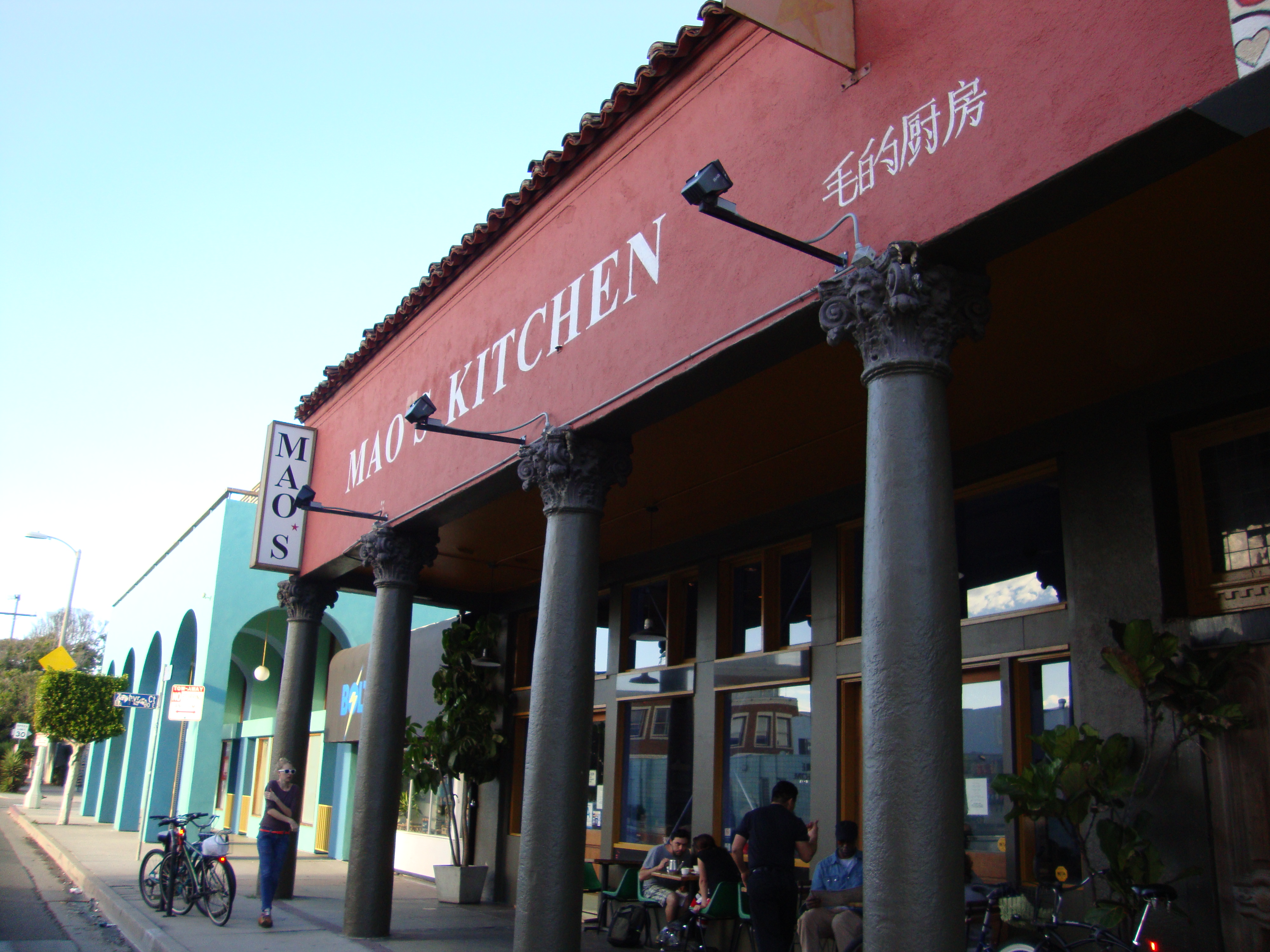
Mao's Kitchen - Venice Beach, CA

Any visit to LA is not complete without a visit to Venice Beach’s Mao’s Kitchen.  I first went to Mao’s back in 2005, long before this blog and long before “Just for Fun,” but I have always remember it as a fun, good Chinese restaurant with surprisingly authentic food.  On a visit back to L.A. a few weeks ago, a return to Mao’s Kitchen was high on the list of things to do.

Of course I dragged along my friend who first introduced me to Mao’s Kitchen, but who now doubted if Mao’s was truly authentic or any good.  She hadn’t been back since our last visit, and it gave me pause too – what if the reality of Mao’s Kitchen didn’t hold up to my memories?  Could I live with the disappointment?  In the end, I threw caution to the wind and decided to go.

After a long bike ride down the coast from Malibu, my dining companion and I arrived on Mao’s doorstep famished, the way one wants to be when going to Mao’s so as to fit more food into one’s stomach.  The outside was not what I remembered; it seemed more upscale, more put together.  Was this the Mao’s of my memories?

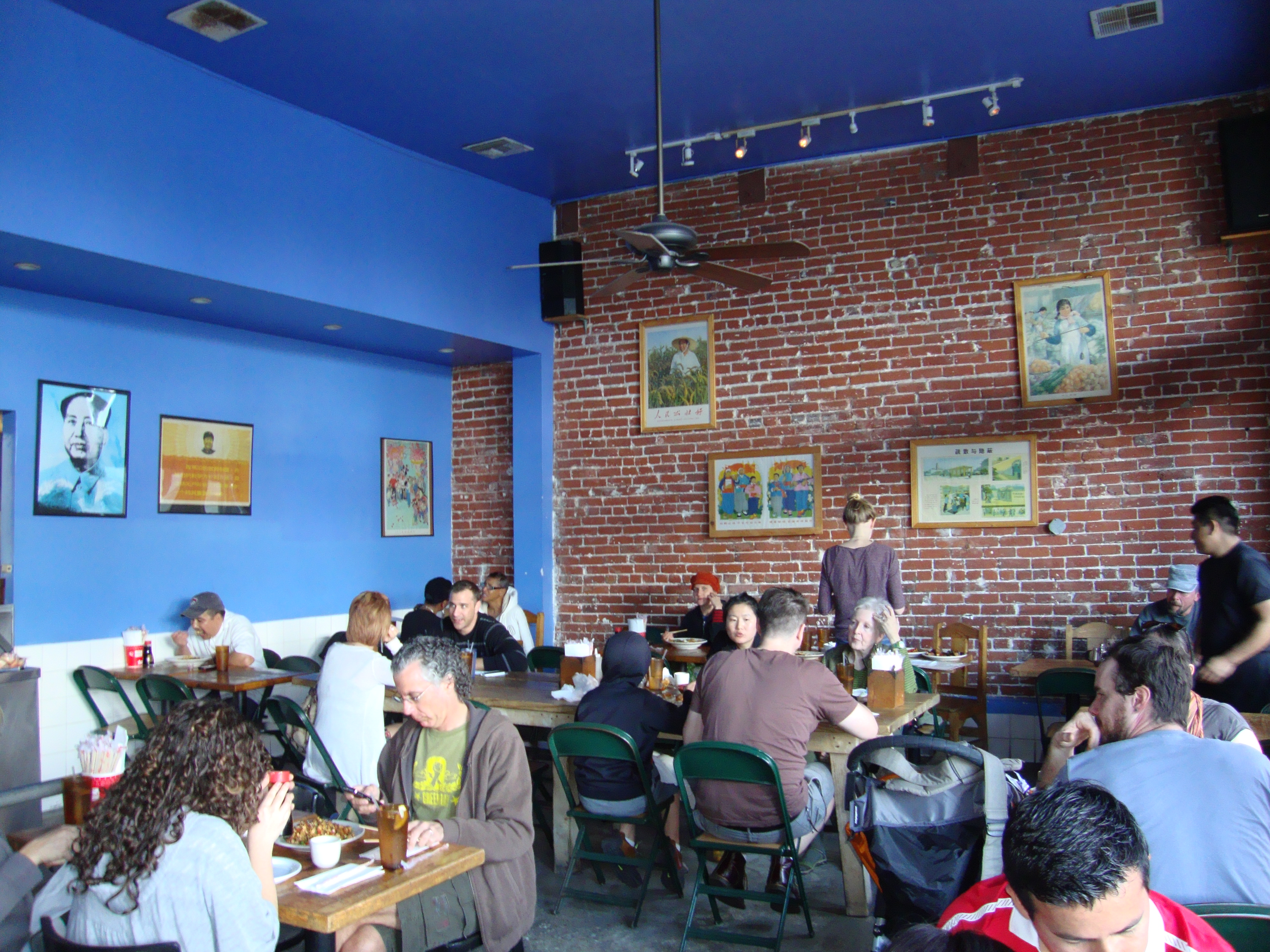
But upon entering, I was reminded why I first fell in love with Mao’s Kitchen: the restaurant is perfectly kitsch.  Its sparse design, brick walls, cement floors, and long cafeteria-like dining tables makes it Cultural Revolution chic, with perfectly-placed propaganda posters from the time period lining the walls.  The menu is filled with names of dishes harking back to the more proletarian times, names like “People’s Potstickers,” “Model Citizen Noodle Soup,” and “Gang of Four Fried Shrimp.”

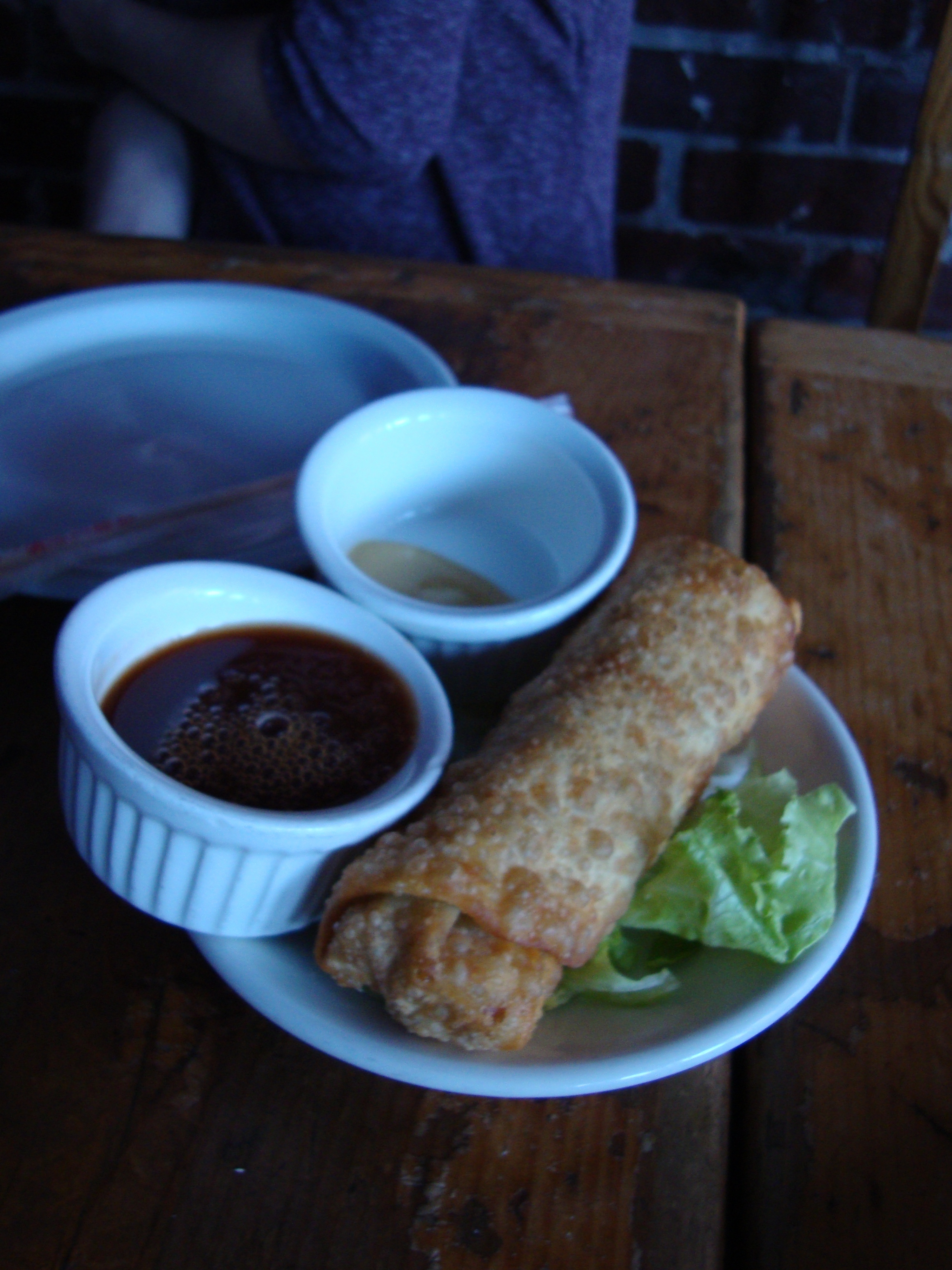
$1 Egg Roll with spicy hot mustard and Mao's secret sauce

Between the two of us, we ordered three dishes and one appetizer, all of which were vegetarian (meat options abound but my dining companion was vegetarian, so we stuck with veggies).  I’m not a fan of egg rolls but at a dollar a piece, we decided to order one and split it.  The egg roll is pure vegetarian, filled with shredded carrots and cabbage.  Although lightly fried – with little grease on it – the egg roll itself is not memorable.  But the Mao’s proprietary dipping sauce – a subtle sweet and sour-like sauce – and the hot mustard make it an interesting experience.  The mustard makes for a precarious situation – a little too much and you feel its effects shoot up your nose but not enough and the egg roll lacks flavor.

The second dish to arrive was the culinary king of the restaurant – Mao’s Kitchen’s Dandan Noodles.  I hesitated when it first arrived – it did not look like all the other dandan noodles I have had.  Normally, dandan noodles are a small dish, with the noodles covered with a watery, oily, and spicy chili and sesame seed sauce.  Mao’s dandan noodles were decidedly different – first, the dish was colossal with enough noodles to feed at least five people.  Second, you could actually see the noodles – they were not completely immersed in that soupy, oily chili sauce that has become somewhat repetitive in Sichuan cooking.  In fact, there was no remnants of an oily sauce to speak of.

Upon first bite, I realized my fears were misplaced: these were the best dandan noodles I had ever had (and yes, I

Mao's Kitchen's Famous Dandan Noodles

understand the seriousness of that statement).  The freshness of the homemade noodles, boiled perfectly al dente, was complemented perfectly by the fullness of all the other flavors; dandan noodles are often over powered by that chili sesame seed sauce.  But here, without the drenching sauce, the freshness of the spinach and carrots came through while maintaining that Sichuan chili flavor.  The balance of all the flavors is perfectly sublime and the tofu was just lightly fried and crispy enough that it also had its own flavor to add.  As new dinners sat down around us, we couldn’t help but recommend the dandan noodles to everyone – unfortunately one of our neighbors had a gluten allergy but her friend, after our recommendation, order it with impunity.  Yes, these dandan noodles are worth losing friends over.

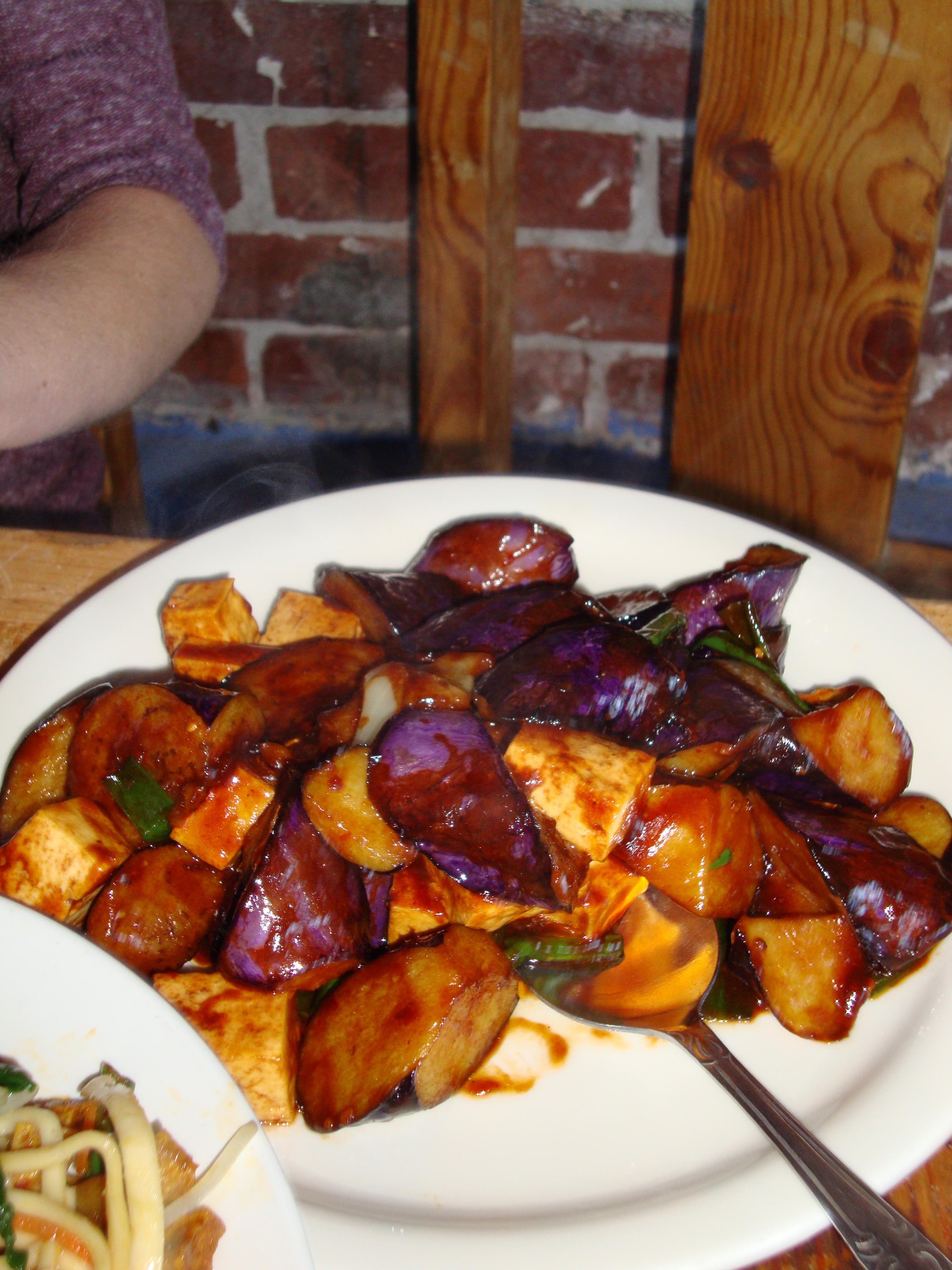
Our third dish was Sichuan Eggplant with Soft Tofu.  As my dining companion noted, the

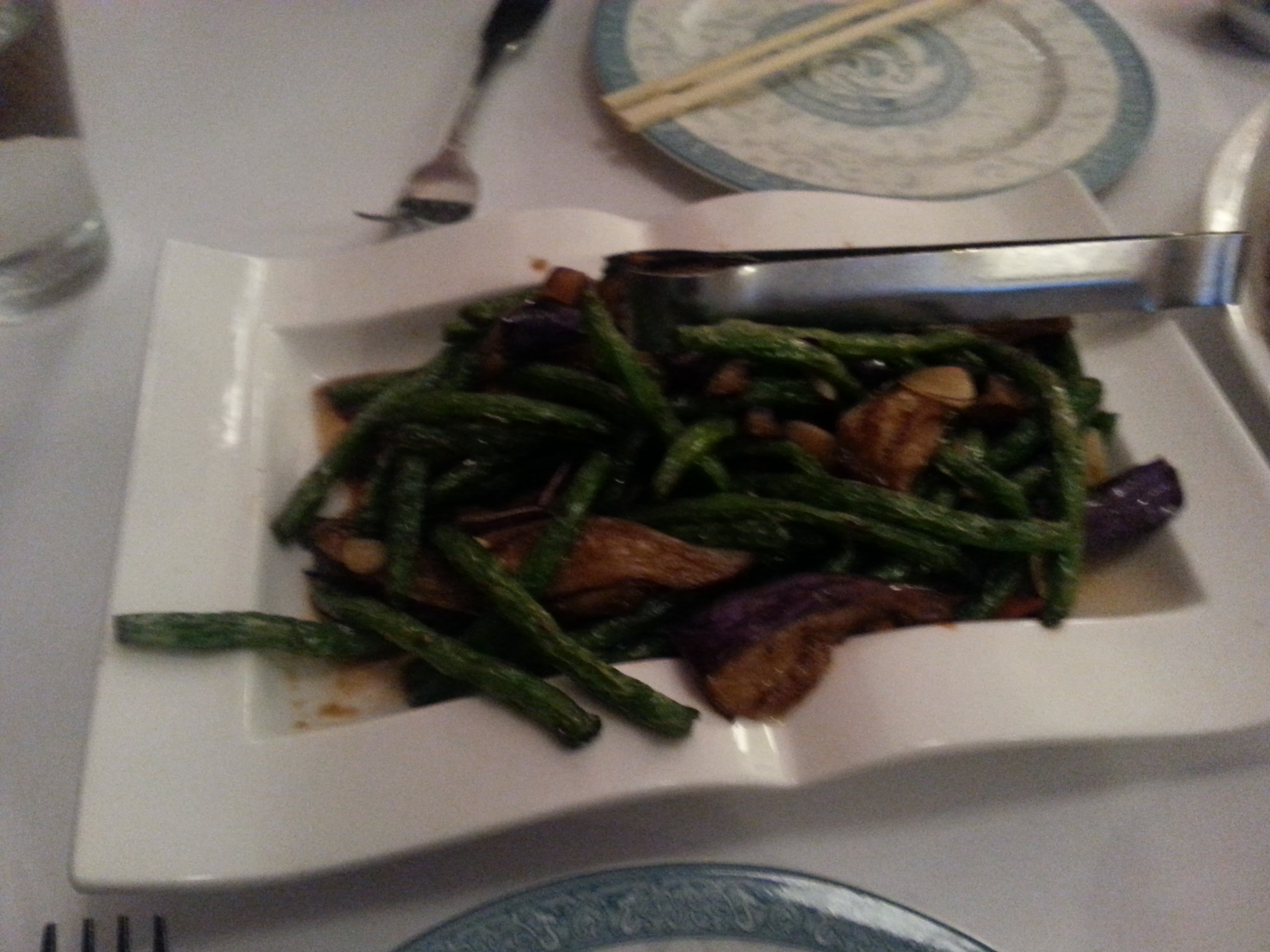
Sichuan Eggplant

dandan noodles made it hard to move on to another dish, but alas we had to.  The Sichuan Eggplant is just another name for Eggplant with Fish-Fragrant Sauce (yuxiang qiezi 鱼香茄子), although the flavoring has nothing to do with fish but instead is a mix of sweet, salty, and spicy flavorings.  Mao doesn’t do Sichuan Eggplant different from the rest, but it does do it better.  With extremely fresh and firm eggplant not caked in yuxiang sauce and a yuxiang sauce not covered with oil spots, the flavorings of this dished helped to quiet the taste buds after the dandan noodles.

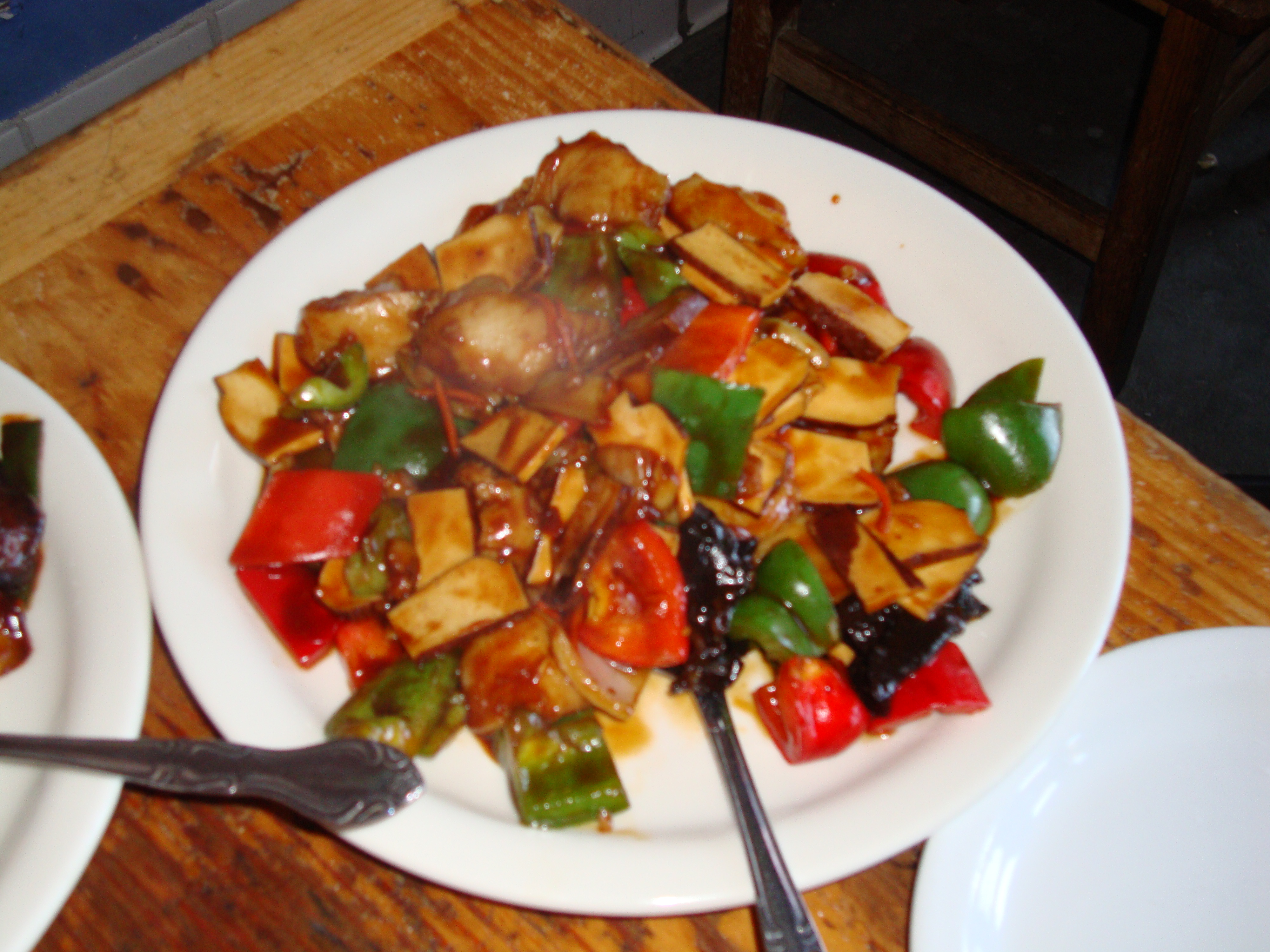
Our fourth and final dish was Mao’s Hometown with fish (sole).  Mao’s Hometown stir fries some smoked tofu and wood ear mushroom with the fish in Mao’s sweet and sour sauce.  It’s sweeter than the other dishes and doesn’t explode with flavor like the other two.  I liked it

Mao's Hometown

but my dining companion was sorely disappointed.  For her, the fish was the dish’s only saving grace – without the fish, the dish would be overly sweet.  The smoked tofu and the mushrooms are overpowered by the sauce; but the fish more than holds its own.  If you like sweet you will still like this dish – certainly not the best on the menu, but still alright.

Mao’s Kitchen is an amazing experience – the dandan noodles alone make it a landmark.  But the other dishes are also excellent.  In fact, at the end of the meal, my friend and I were able to recall what we ordered the last time – the salt and pepper fish.  If only we had ordered that again this time instead of the Mao’s Hometown, Mao’s Kitchen likely would have gotten five stars.  But 4.5 stars make it well worth the trip.  What sets Mao’s Kitchen apart from other Chinese restaurants is the freshness of its vegetables, the lightness of its frying, its ability to capture each enormous flavor, and the awesomeness of its décor.  Finally at $38 for three massive dishes (which provided leftovers for two days), it’s a great deal.

A Utopian Ideal? Inside Mao's Kitchen

Rating: ★★★★½

Mao’s Kitchen
1512 Pacific Ave.
Venice, CA 90291
(310) 581-8305
http://www.maoskitchen.com/

Bookmark and Share

Just for Fun – London Restaurant Review – Chilli Cool

By Elizabeth M. Lynch, October 2, 2011

London's Chilli Cool

Is it possible to go to a foreign country, live there for a number of years and remain completely unchanged?  In the case of British cuisine, the answer is a resounding yes.  Although England ruled countries with the world’s most flavorful food, the Brits never thought to incorporate any of the newly found spices into their own cuisine.  But while British food has remained unchanged, major cities in the U.K. are filled with foreign restaurants, which have a good number of British customers.  By choosing not to create a fusion cuisine, the Brits have guaranteed that cities like London have some of the most authentic ethnic restaurants;  arguably the best Indian food outside of India can be found in London (major props to Masala Zone – yes it’s a chain, but it was phenomenal).

But what about Chinese food in London?  For over 100 years, England ruled the island of Hong Kong and made significant inroads into the Mainland prior to the Communist takeover, with major concession areas in Shanghai and Canton.  But unfortunately, the number of good Chinese restaurants in London is scant.  In speaking with a London friend  who spent many years in China, she noted that there were only around three good Chinese restaurants in London, a disappointment indeed.

And that is how I found myself at Chilli Cool (the misspelling of “chili” is intentional), one of the recommended three, in the Kings Cross area of London.  From the moment you open the door to the restaurant, Chilli Cool is unmistakably Sichuan, with the smells of the region engulfing you- a very promising sign.  Additionally, Chilli Cool compromises two restaurants, one that serves Sichuan hotpot and one that serves appetizers dishes.  My friend and I opted for the main restaurant to try the dishes.

Savory Hot Spicy Chicken

The first dish we ordered, Sichuan Savory Hot Spicy Chicken (No. 6), a traditional Sichuan appetizer where the Chinese literally translates to “mouth-watering chicken”, was not just dead-on authentic but delish.  The chicken, served in a bowl drenched by a Sichuan hot sauce and sesame seeds, was tender and although the dish is filled with a canopy of spices, the flavor of the chicken (which is served cold) is not lost.  Instead, the spices only enhance the flavor. The chili is the main flavor of the dish, but the subtle smokiness of the black pepper serves as a wonderful compliment.  Any trip to Chilli Cool is incomplete without ordering the Sichuan Savory Hot Spicy Chicken – Chilli Cool offers the best version of the dish that I have had outside of China.

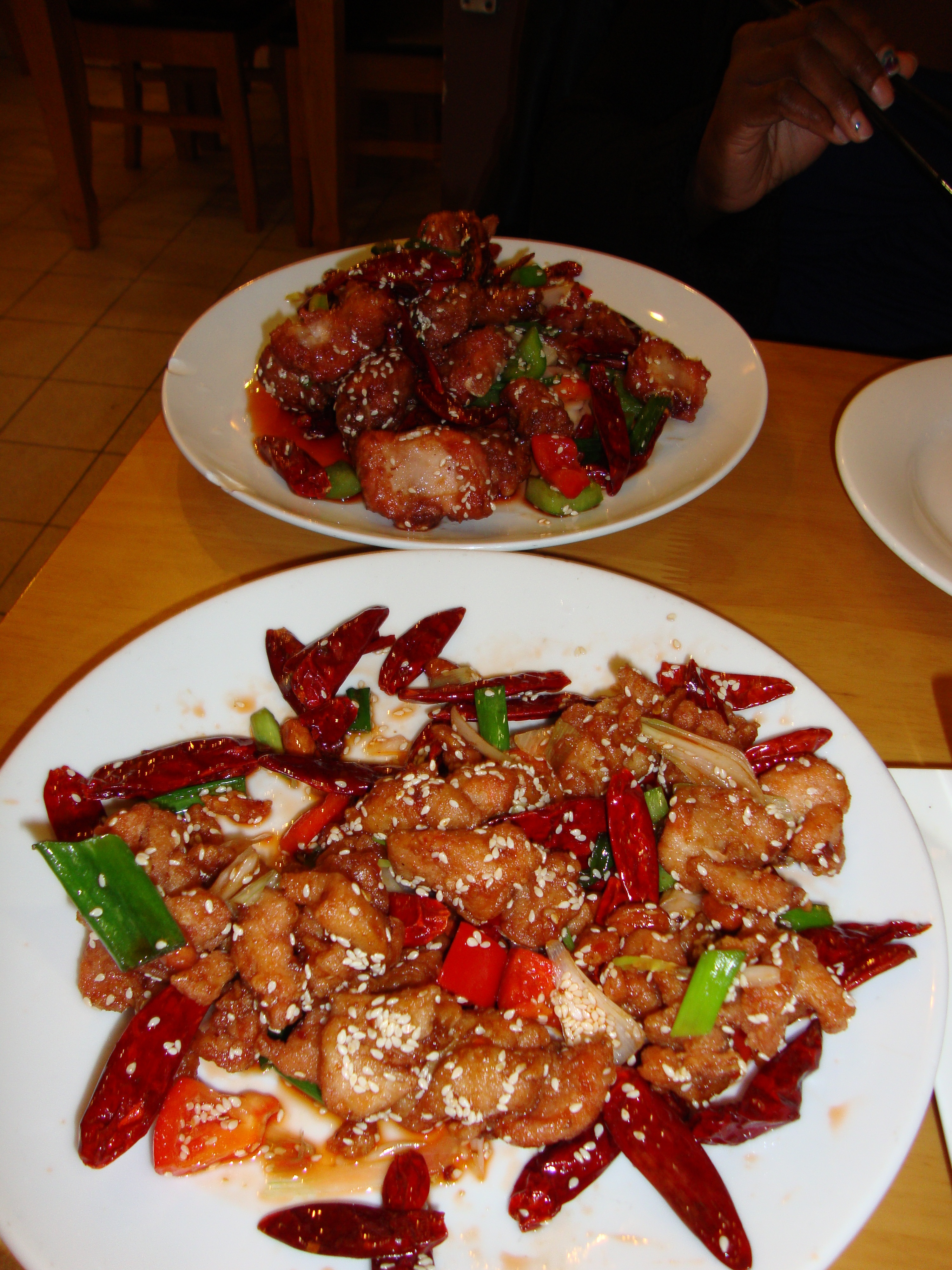
To shake things up, we then ordered the Hot & Spicy Spare Ribs (No. 29) and the Dry Fried Chicken with Cumin & Chili (No. 37).  Unfortunately that is where our culinary adventure began to go off course.  Aside from the meat selection – one with chicken, one with pork – the dishes were exactly the same.  Neither the English description nor the Chinese

Two of the Same - Dry Fried Chicken (near) with Hot & Spicy Spare Ribs

name of the dish signaled that two dishes would be virtually identical and our waiter did not let us know that perhaps choosing two of the same dishes was not a good idea.

Fortunately, the chicken version came out first and was amazingly good and flavorful;  if one had to choose between the two dishes (which one should otherwise it is repetitive), the chicken version is by far superior.  The chicken was lightly fried and breaded, giving the dish a lightness that is often not found in fried Chinese food.  For those with a more delicate palate, the dish was not overwhelmingly spicy and was bursting with flavor.  The scallions, onions and peppers were fresh and perfectly complemented the mild chili flavor.  However, the dish likely could have used a touch more cumin as that flavor went largely unnoticed.

As for the pork version, the spare ribs were a bit dry.  Additionally, the flavoring of the dish tastes better with chicken.  Arguably other pork dishes on the menu would be a better choice.

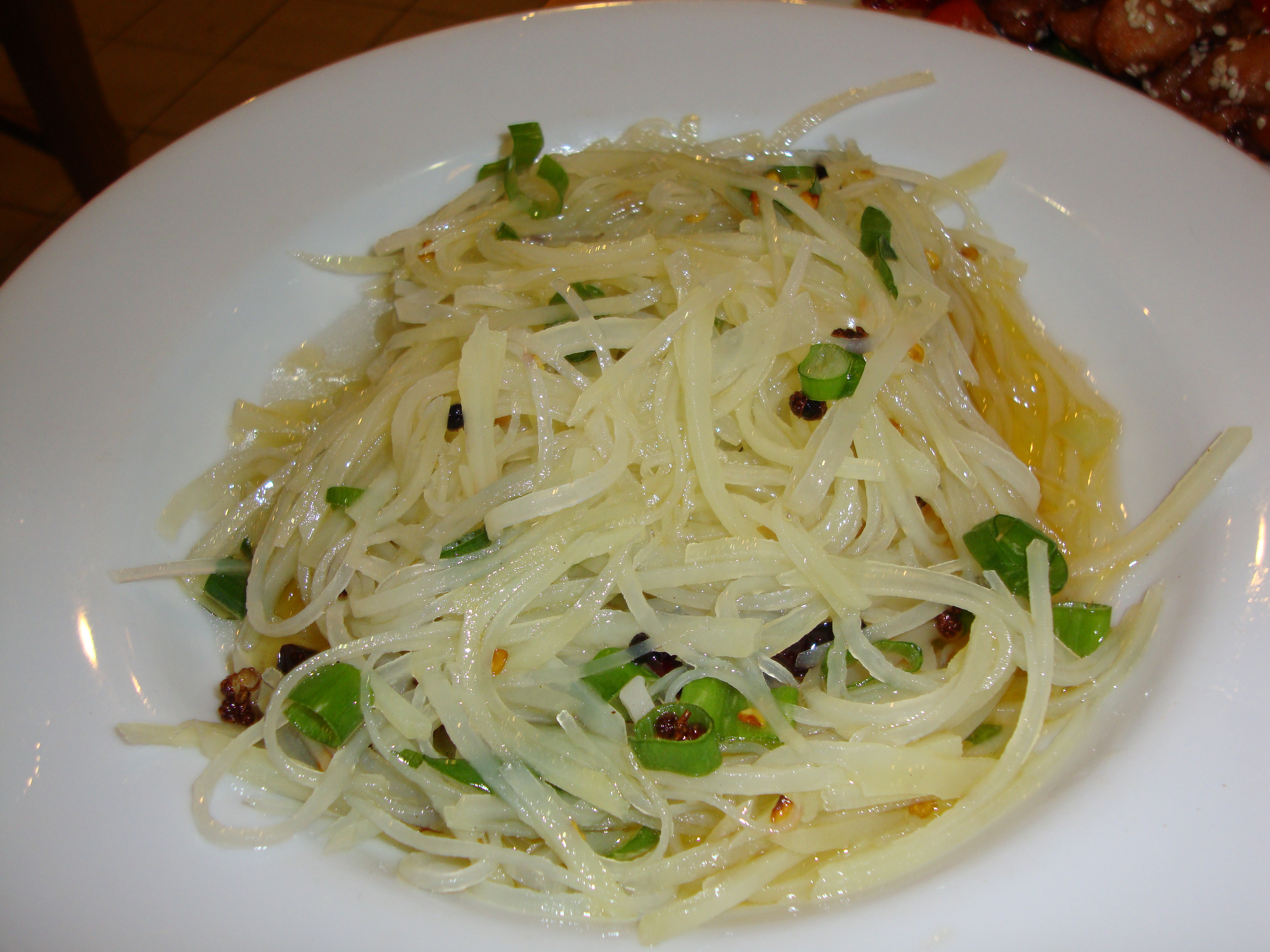
As our fourth and final dish, we ordered one of my favorites, Shredded Potato with Spicy Dried Chili (No. 18).  When I lived in China, this dish was a staple for me and when made right, is a good carbohydrate alternative to

Shredded Potato with Spicy Dried Chili

rice.  Unfortunately, Chili Cool could not have made it more wrong.  The dish, which is usually very lightly fried, came out drenched in grease.  If made right, the potato slices should be firm; in the Chilli Cool version they were soft and soggy.  For some reason, Chili Cool added cloves to the dish which was weird and messed too much with the flavor.  Our Shredded Potato dish remained untouched during our meal.

Although one of the dishes was largely inedible and we were not properly warned that two of our dishes were twins of each other, I would still recommend a visit to Chili Cool when in London.  Two of the dishes were pretty amazing and could easily compete with the Sichuan chefs of Chengdu or Chongqing.  However, it might be best to stick with the traditional Sichuan “appetizers” (like dan dan noodles and Sichuan dumplings).

However, do note that Chilli Cool is no where near “Chinatown cheap.”  With four dishes and one beer, Chili Cool set us back 40 pounds (approximately $63), a lot of money considering two of the dishes were not that great.  Chilli Cool holds promise to be an amazing experience but a more careful selection from the menu is necessary.

Rating: ★★½☆☆

Chilli Cool
15 Leigh Street
London, UK WC1H 9EW
020 7383 3135
Nearest Tube Station: Kings Cross
http://www.chillicool.com/home-eng.html

Bookmark and Share

Just for Fun: Restaurant Review – Macao Trading Company

By Elizabeth M. Lynch, August 5, 2010

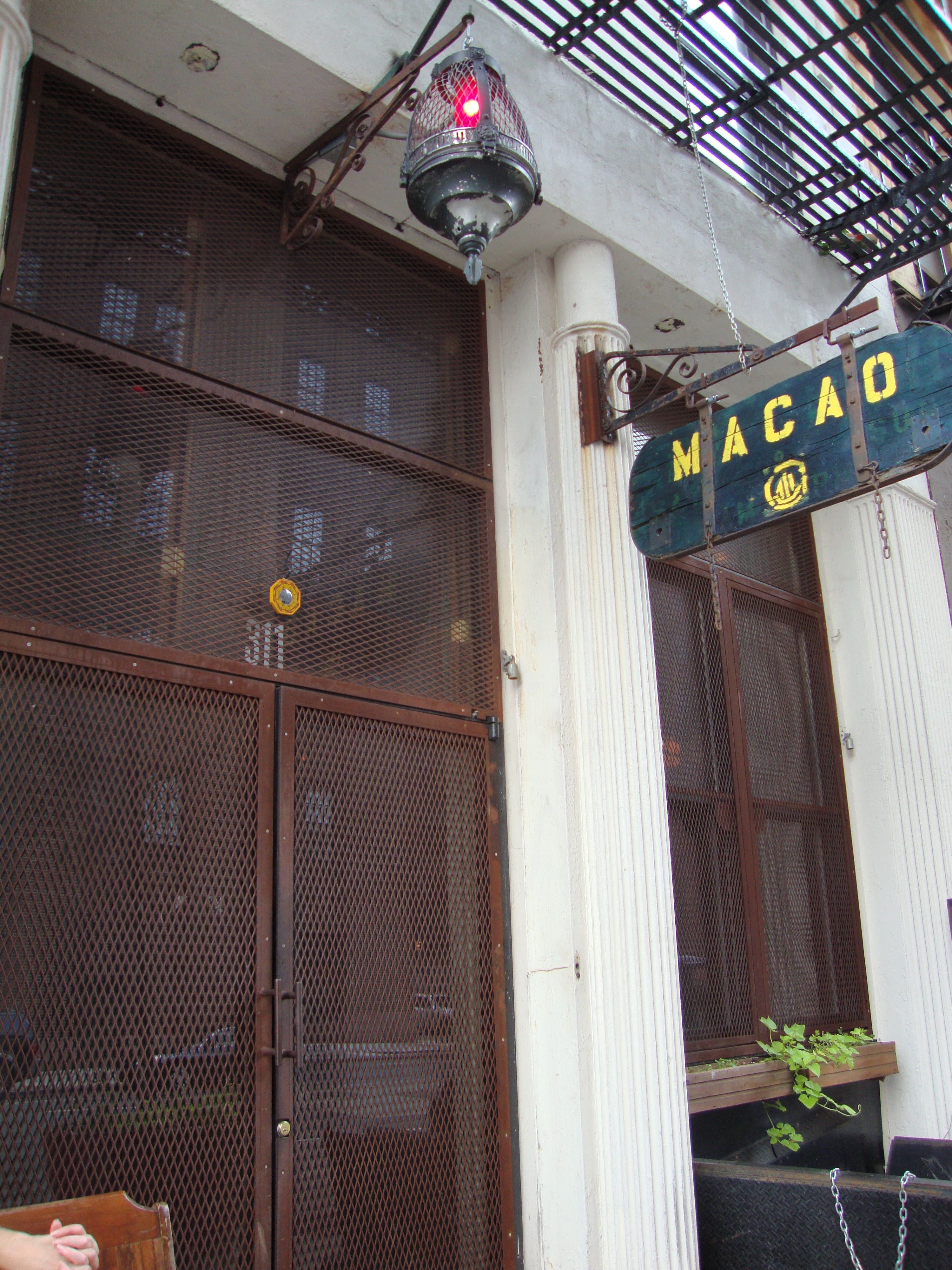
Macau Trading Company - 311 Church Street, NY

***NOTE – On a return back to Macao Trading Co. in October 2011 (just for drinks), no longer on the menu were the to-die-for-lamb-chops. Given that the lamb chops were the best thing listed in the review, it’s questionable if a trip to Macao is worth it. Certainly the ambiance is still there and it would still be a good place for your out-of-town mother-in-law, but the food is only average; edible but average.***

Macau may be a tiny island neighboring Hong Kong, but it has an air larger than life.  The first and last European colony in the Far East (the Portuguese arrived in Macau in 1557, leaving 400-odd years later in 1999), Macau still maintains the romantic feel of its colonial past, where East meets West in the culture, architecture and food.  But with the romantic, there is also the illicit air of Macau’s colonial past.  As the gambling mecca of Asia since the 1850s, organized crime has permeated, controlling Macau’s largest industry – the casinos – and in many ways, its government as well.

But it’s this feel of illegality that makes Macau attractive and the backdrop for some of Hong Kong’s best gangster films.  So when my friend suggested that we have dinner at Macao Trading Company in New York City’s Tribeca, I was excited at the chance to be transported back to the mysterious and dark Macau.

Unfortunately, Macao Trading Company doesn’t exactly live up to its namesake, but not for want of trying.  The bar area of the restaurant could easily be found in the streets of Macau, with strong teak wood elements, Buddha statutes, and iron fans.  But as I sat there, sipping on a glass of Portuguese wine, waiting for my dining companions, I realized that the fault lied more with the customers.  Americans just don’t do colonial sleazy nearly as well as their European counterparts; we are too earnest I suppose.  But in order to help overcome such a deficit, the bar offered a wide selection of drinks, with specialty cocktails starting at $14 each (including a $15 mai tai).  Stick with the Portuguese white house wine.  It was tasty and refreshing on a hot and humid New York City summer night.  As soon as we were seated, we immediately ordered a carafe.

While we were expecting fusion, the menu was largely divided between solidly Portuguese dishes and decidedly

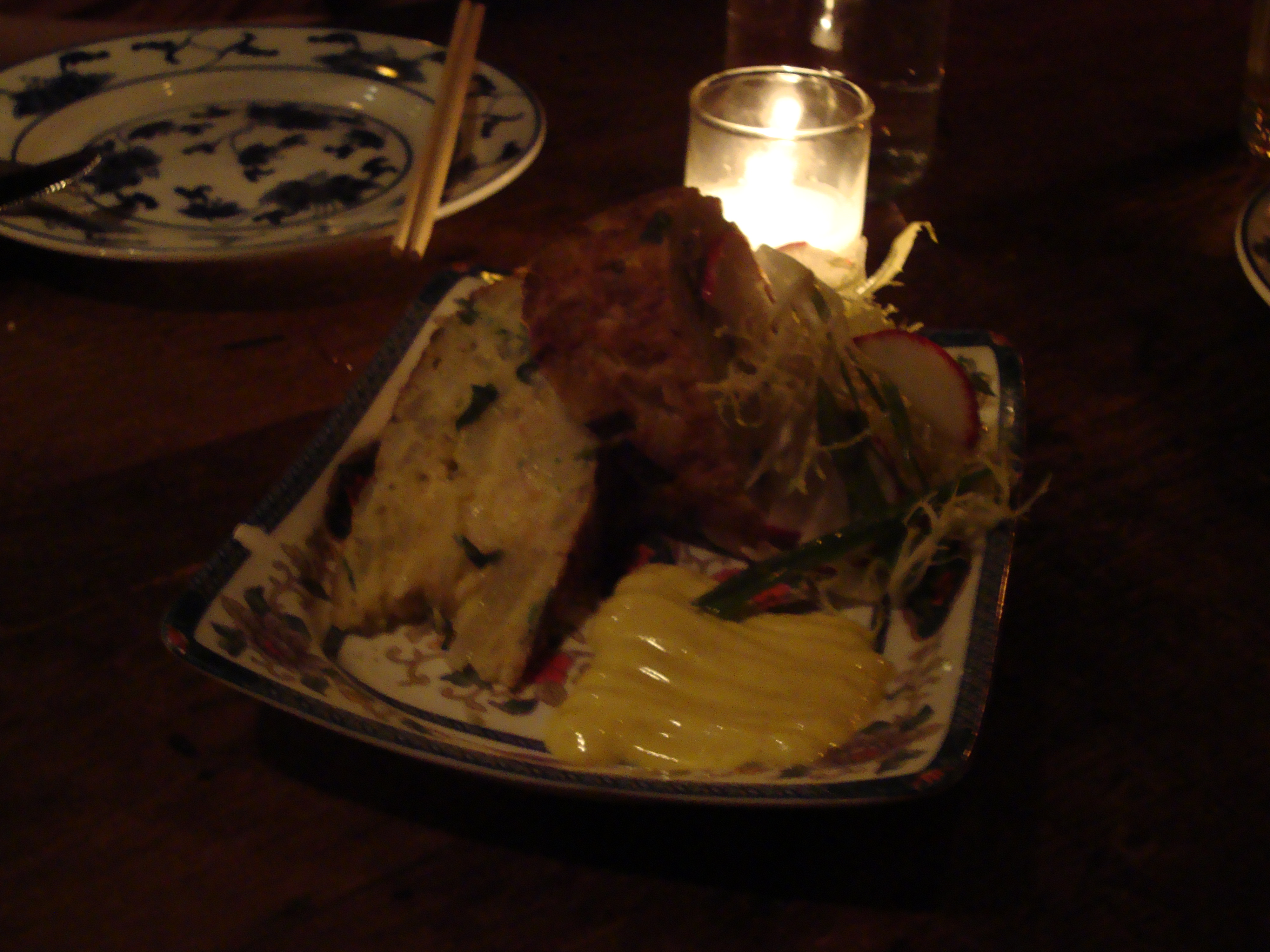
Tortilha do Macao

Chinese ones, with some Chinese dishes oddly of the Sichuan-style rather than Cantonese (which would be the native type of Chinese food in Macau).  We decided to start our adventure with a Portuguese dish – Tortilha do Macao – a lump of crab meat and potato, with a curry dipping sauce.  It was a heavy mix, with a comfort-food type texture but without any of the consoling flavors.  It was too much potato with almost no flavor of the crab and absent the curry dipping sauce, the tortilha do macao would be a dry lump of nothingness.

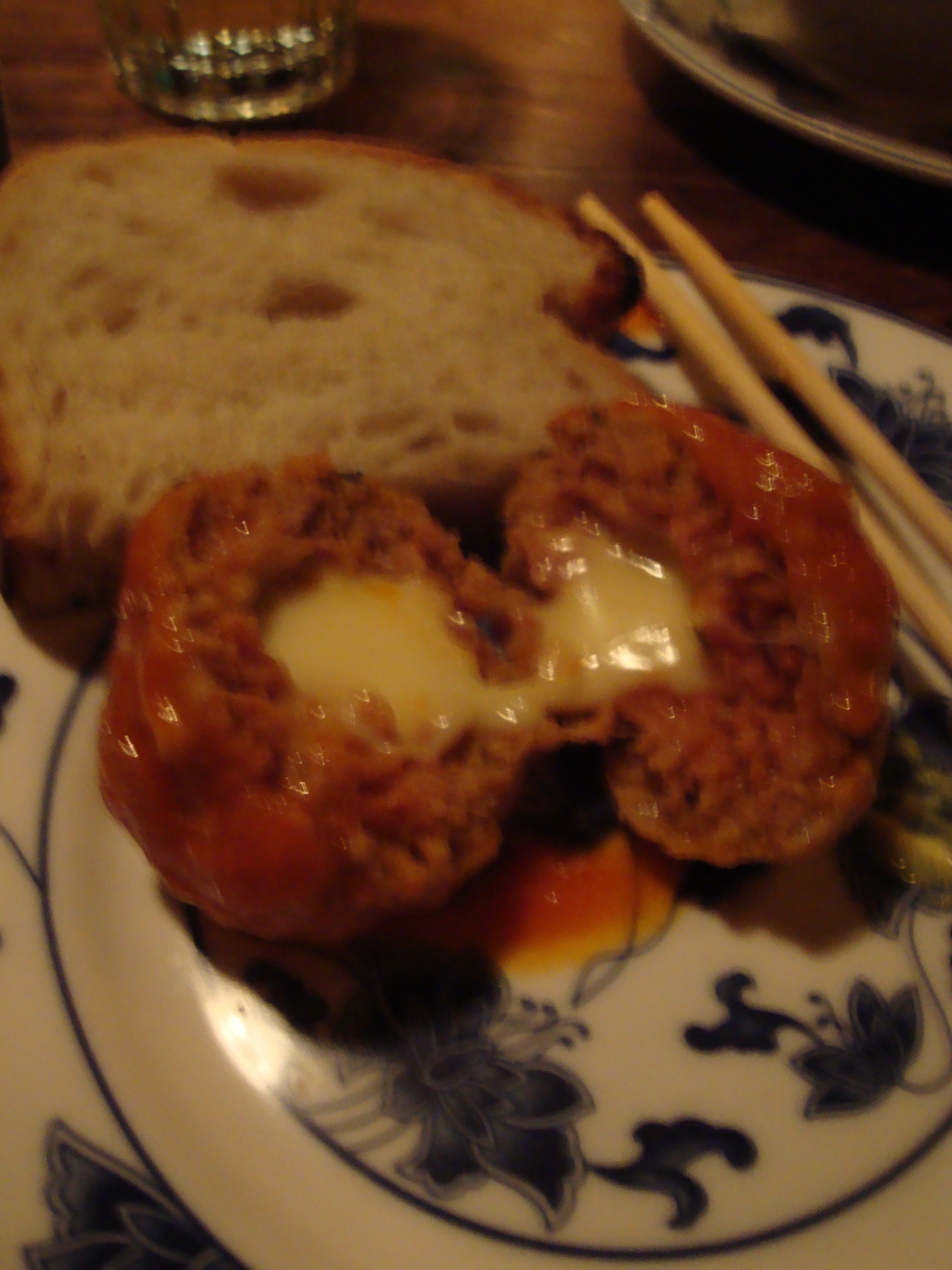
Meatballs!

The Portuguese meatballs (as opposed to the Chinese meatballs) were equally as heavy but with much more of a taste – a very pronounced meat one.  Mixing ground lamb with ground pork and a juicy mozzarella center, the Portuguese meatballs were hearty but nothing to write home about.

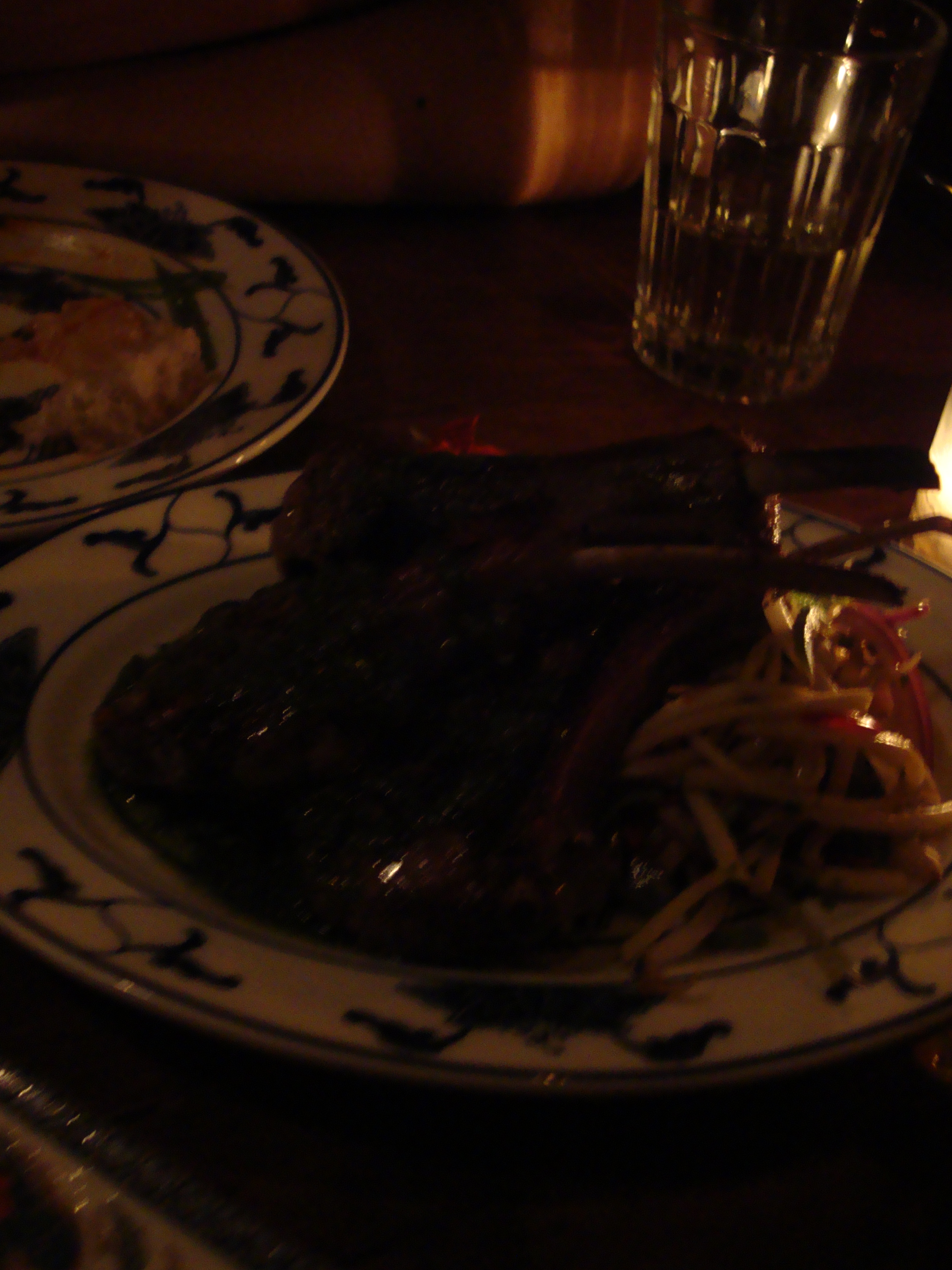
The grilled lamb chops on the other hand were almost divine.  Or at least I thought so.  Initially we hesitated ordering the lamb chops because they were listed on the “small plates” side of the menu,

Lamb chops

and we are three people who like to eat lamb.  But the portion size was good – with more than enough for two servings each.  The on-the-bone lamb chops were perfectly tender with a smokey, barbecue taste.  Flawlessly complementing the lamb was a light and savory garnish of bean sprouts, radish, peppers and mango.  For me, the mix of these flavors is Macau.  My dining companions were a little less impressed, noting that lamb chops are a Cantonese specialty (this I never knew – how many times you go to Hong Kong and see lambs walking around?) and that lamb chops this good could easily be found in Flushing, Queens, at a cheaper price.  While this might be true, any trip to Macao Trading Company is not complete without these lamb chops.

Our next dish was a decidedly Chinese and one of my favorites – Ants Climbing the Tree.  While not an appetizing name, ants climbing the tree is a dish of glass noodles with minced pork and a red chili sauce.  It can be a fulfilling, flavorful dish but Macao Trading Company’s version falls far short of the ideal.  There was no distinction in flavors with the chili sauce overpowering everything else and the noodles too pasty.

Bacalao Fried Rice

Fortunately we ended our meal with a bang, the Bacalao Fried Rice – a very Cantonese dish that one dining companion commented was a dish her aunt would make if she was feeling experimental (note that in traditional Chinese cooking, the key is never to experiment but rather to perfect).  The flavor of the salted cod was perfectly pronounced and the use of jasmine rice was brilliant.  With the lamb chops, the bacalao fried rice was off the charts.

With its Tribeca address and dim lit interior, Macao Trading Company, as one of my dining companions noted, is the perfect place to bring your mother-in-law who is visiting from Cleveland and wants a crazy night out on the town.  But its neither terribly crazy nor terribly good.  At the very least though, the check won’t set you back too much.  With five dishes and a carafe of house wine, the bill came to $114 with tip ($38/each).  Macao Trading Company also picks up after hours, staying open till 3:30 AM.  The heavy food could be good to sop up some alcohol and after a night of partying the lack of flavor in some of the dishes will likely go unnoticed.  But in general, Macao Trading Company is average; if you’re in the neighborhood and want ambiance, give it a shot.  Just know what to order.

Rating: ★★½☆☆

Macao Trading Company
311 Church Street (just south of Canal)
New York,  NY 10013
(212) 431-8750
www.macaonyc.com

Bookmark and Share

Just For Fun: Chinese Mirch – Restaurant Review

By Elizabeth M. Lynch, April 8, 2010
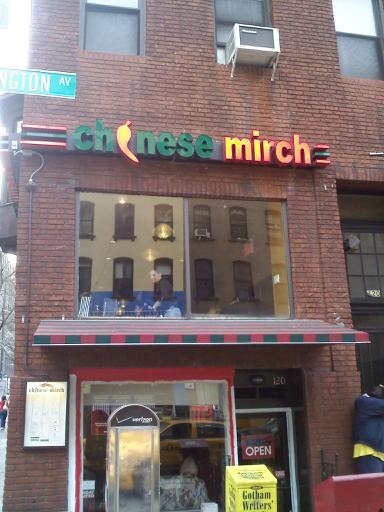
Chinese Mirch

Chinese Mirch

Religion successfully moves from country to country by adopting many of the customs and culture of its new host country.  Similarly, so does Chinese food.  The food you find at a local take-out in Manhattan is different than what you would find on the streets of Beijing.  While some sinophiles might turn up their nose to American Chinese food, it is its own distinct cuisine, to be loved and respected for its own separate reasons.  And love it I do.

But the Chinese have gone all over the world.  So what is Chinese food like outside of the U.S.?  Is there sweet-and-sour pork?  General Tsao’s?  Such thoughts blow my mind, sort of like wondering, what is out there after the planet Pluto?

So imagine my excitement last weekend when a friend (and avid China Law & Policy reader!) invited me to join her at an Indian Chinese restaurant.  And that’s how I ended up at Chinese Mirch on Lexington Avenue and 28th Street.

Chinese food is not new to India and in fact likely has a longer history there than in the United States.  With the Chinese first settling in Calcutta in the late 18th century, Chinese food in India has had the time to fuse some of the best of both Asian countries.  A mix described as “an explosion of flavor, sometimes bold and fiery, but always a delight to the senses,”  Chinese Mirch certainly delivered on the bold and fiery, but at times left me without the delight.

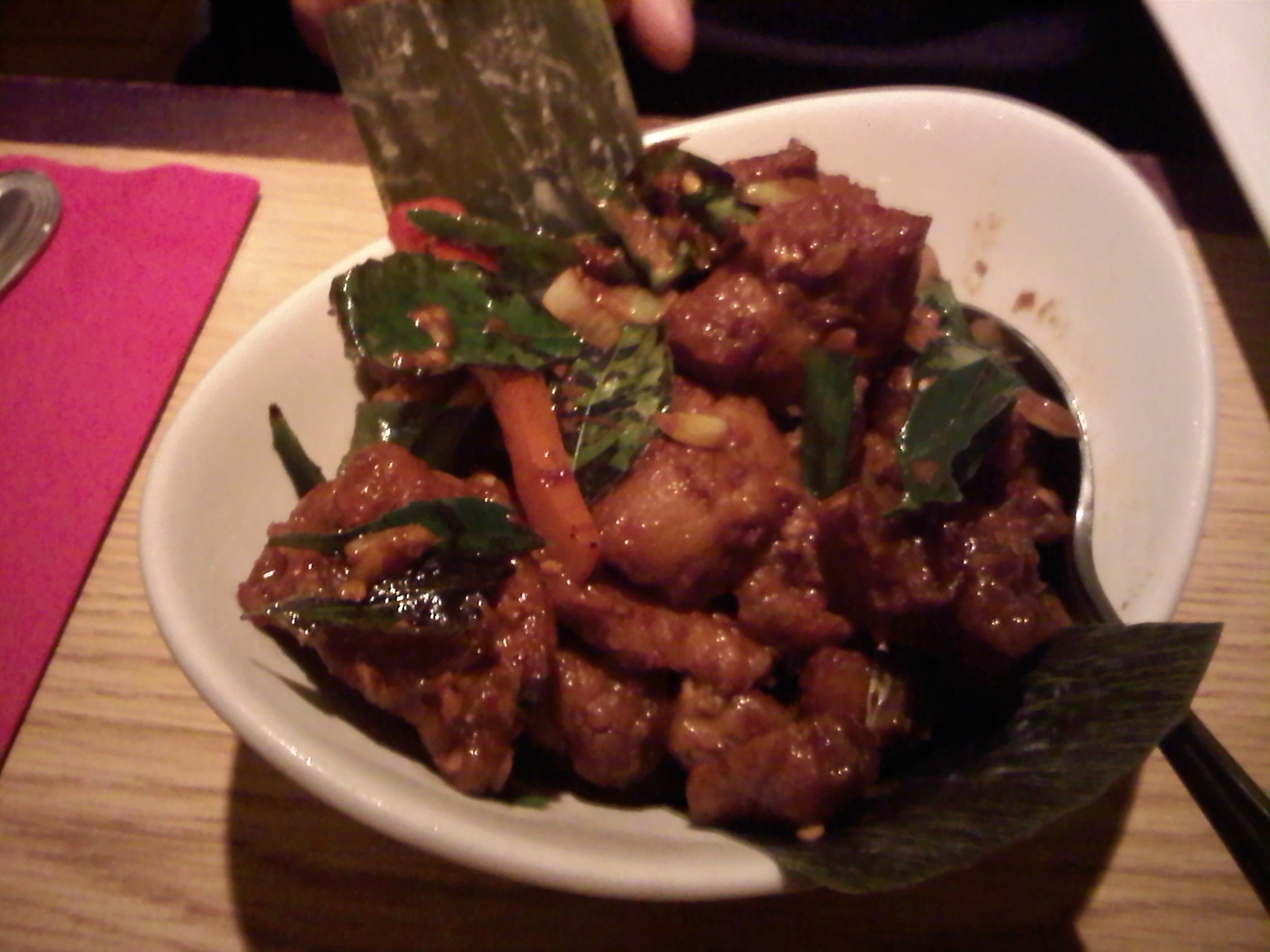
For me, we might have started off wrong.  Chinese Mirch’s appetizer of chicken spiked with curry leaves and red hot

Mirch 65

Mirch 65

chilies, named Mirch 65, was intense and not in a good way; more in a “can I have a bigger glass of  water” way.  I don’t consider myself weak when it comes to spicy, but Mirch 65 had way too much chili, overpowering what otherwise might have been a good dish with fresh, succulent pieces of chicken.  Our dish of fried okra though was pretty solid.  Nice fresh pieces of okra with a light fried batter and good and crispy.  But while it was good, it wasn’t spectacular.

But things decidedly picked up with the main dishes.  Vegetable ball Manchurian is a must.  While shaped as little meatballs, it does not attempt to replicate the taste or feel of meat.  It knows better than that and does not need to stoop to that level.  No, vegetable Manchurian rightfully stands alone.  Made of fresh ground vegetables in a minced onion, garlic and cilantro sauce, and lightly fried, the flavors of the fresh vegetables clearly speak for themselves and trust me, what they have to say shouldn’t be missed.

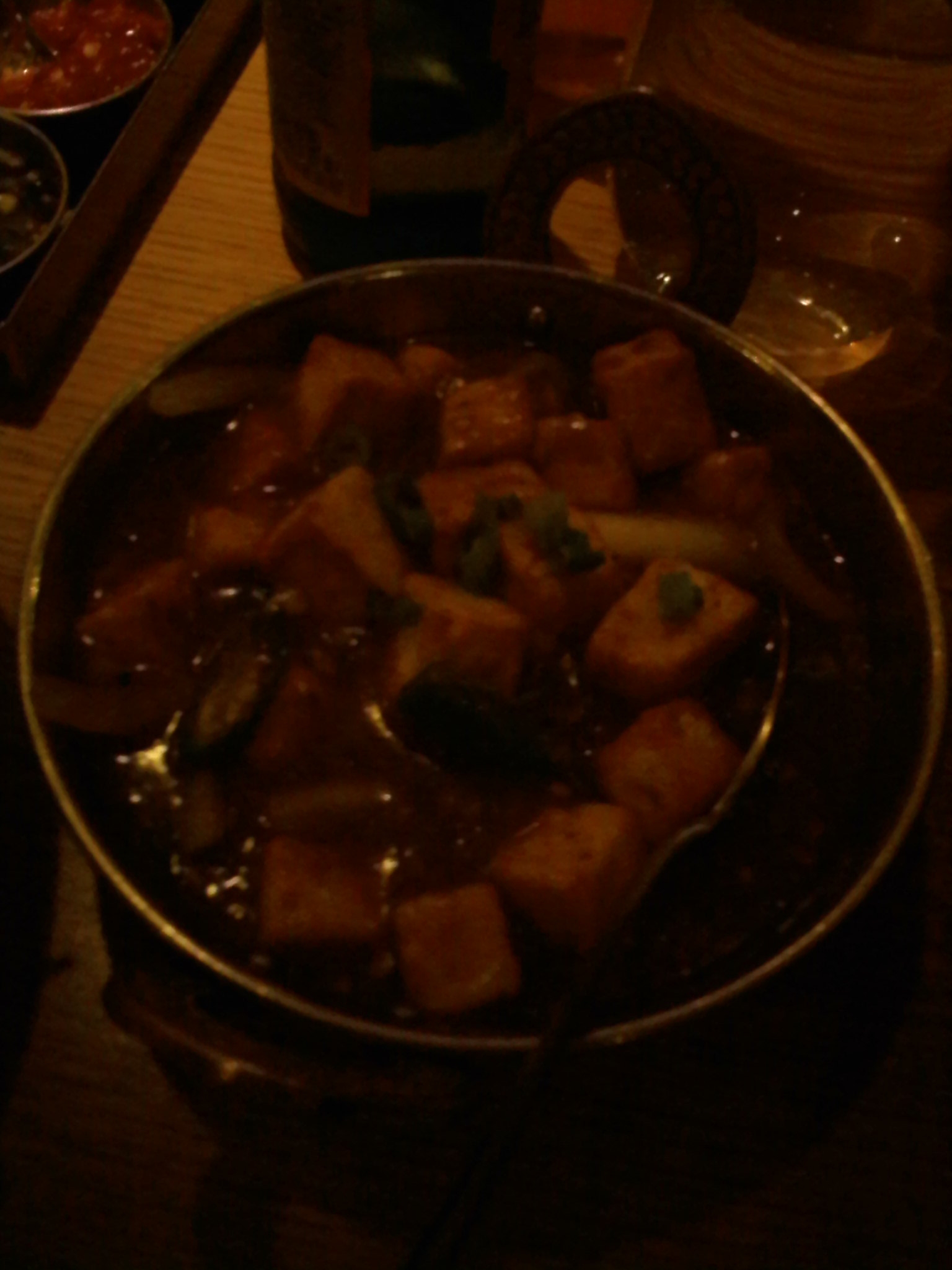
Chili Paneer

Chili Paneer

The chili paneer, lightly fried cubes of cheese in a hot soy chili gravy, was close to divine.  Outside of a few places in China, cheese does not exist and is not found in traditional Chinese cooking.  So the paneer is much more of an Indian dish than a Chinese one, but the soy sauce and chili gravy allowed the flavor of the paneer to pop.  Likely to the displeasure of my dining companions, I couldn’t stop eating it.  By time I knew it, the whole dish was gone.

After two marvelous dishes, the crispy Szechuan lamb was a bit disappointing.  There wasn’t really anything exciting about it.  It consisted of good pieces of meat, not at all chewy, with good lamb flavor and a nice chili spice aftertaste.  But it wasn’t anything to write home about.

Fortunately we finished our meal on a bang with the Hakka noodles.  The Hakka are a group of Chinese who speak the

Hakka Noodles

Hakka Noodles

Hakka dialect and during the late 18th and 19th centuries, traveled and settled in many places outside of China, including India.  While few Hakkas can still be found in China today, remnants of their distinct food can easily be found in Chinatowns that dot the globe.  Hence, Hakka noodles from India.  Hakka noodles are so common and popular in India that most young Indians today don’t realize that the dish is not original to India, at least according to one of my dining companions.  If lo mein is too greasy for you, hakka noodles are a wonderful alternative.  Thinner, flatter and less greasy, Hakka noodles do not leave you feeling overly full and gross like lo mein can.

Overall, Chinese Mirch was a good find and I look forward to exploring more of the flavors of Inidan Chinese food.  The food has all the savoriness of traditional Indian food but with lighter sauces and flavors.  It also makes significantly more use of the chili which in some cases (like the Mirch 65) can be a bit much but in other cases, really makes the dish.  Prices though are reasonable with most dishes around $10.  Do note that Chinese Mirch is a rather small restaurant and given the increasing demand for Indian Chinese food, the wait can be long.  If you would like to try to make some Indian Chinese food on your own, you can find a great recipe here.

Rating: ★★★½☆

Chinese Mirch
120 Lexington Ave. (corner of 28th Street)
New York, NY 10016
(212) 532-3663
www.chinesemirch.com

Bookmark and Share

Just For Fun: Uighur Resturant Review – Cafe Kashkar

By Elizabeth M. Lynch, September 4, 2009

In this week’s Just for Fun section, guest blogger Thomas Cantwell, reviews the only authentic Uighur restaurant in all of New York.

Despite having a rich history, the Uighur (pronounced Wii-grrr) have largely flown under the radar of American consciousness until the recent violence in Urumqi which resulted in the death of nearly 200 people. The Uighur, a Turkic Muslim ethnic group living mainly in the Xinjiang Uighur Autonomous Region in the northwest of China

Cafe Kashgar

Cafe Kashgar

dominated the region for nearly a millennium before falling under Chinese control. Absent an arduous journey through rural China, the closest one can get to Uighur culture in New York is a visit to Cafe Kashkar, a Uighur restaurant in Brighton Beach.

Cafe Kashkar is definitely a cultural experience, though possibly more of a Brooklyn one than anything Uighur. Not having been to Xinjiang, it is difficult for this reviewer to judge whether the region is marked by unflattering florescent lighting, exact replicas of Alice Kramden’s kitchen furniture, and carpet so ugly it would embarrass a pitboss. The nonstop Uzbek music videos–think Bollywood thumping tunes sung by better-looking Borats, backed up by big-haired tramps dancing suggestively–played on the flatscreen television mounted above the cafe’s door do attest, however, to the pan-national character of the Uighur–significant populations are located throughout all of the Stans.

While not a choice for a romantic night out, one doesn’t go to Cafe Kashkar for the decor. My companions and I ordered a number of dishes that arrived as they were prepared, which seemed fun at Kashkar, with its tiny one-man kitchen, as

Salad Langsai

Salad Langsai

opposed to pretentious as it does at, say, Asia de Cuba. First was the Salad Langsai, a mix of cucumbers, peppers and another couple of unidentified vegetables in a vinegary/garlicky dressing. It was crisp and refreshing–perfect for a warm summer evening. Next came the Kashkar Soup, which contained lamb, vegetables, and noodles in a tasty lamb broth. The soup was light and satisfying. The server–probably the nicest waitperson in all of New York City–next brought out the naan which, aside from being made from grain, bears virtually no resemblance to its Indian namesake. A sort of giant, slightly-less dense bagel, the naan was bland and virtually tasteless, though it did serve as a vehicle for sopping up the remnants of the various soups and sauces.

Next up was the best dish of the night, the geiro lagman, a slightly oily noodle dish with meat (lamb, again) and vegetables. The noodles were thick and the sauce just spicy enough to be interesting without

Geiro Lagman

Geiro Lagman

overpowering the taste of the meat and veg. We could have ordered another.
The manty, four giant dumplings stuffed with–you’ve got it–lamb (though mixed with beef just to shake it up a little) was so heavily laced with cumin that it tasted like cheap enchilada filling. Apparently wildly popular–you can buy frozen manty to go–you can secure a similar taste at any Taco Bell without having to haul all the way to the beach. The lamb kebobs, four fatty pieces of ribmeat that tasted of the grill, were enjoyed by my companions but I found them disappointing. Perhaps I was on lamb burnout by then.

Dessert consisted of chak chak, the only menu option available. Best described as a giant Rice Krispie treat made with honey rather than marshmallows, it was mildly sweet. American palates accustomed to sugar-laden desserts might be disappointed, though I found it a nice, light closing to the meal.

Cafe Kashkar has no liquor license, but our server specifically offered at the start of the meal the suggestion that we might secure beer from a nearby gas station. The Russian trio at the next table choose to enhance their dinner with a liter of off-brand vodka. We stuck with some pear and pomegranate/blueberry flavored soda which the server described as “Soviet” in origin and whose name I failed to note but that I’d definitely have again.
The total, before tip, was $41, a steal given the amount of food consumed. We tipped huge as the service was excellent. I’m not certain if Cafe Kashkar is worth a trip from the other boroughs–particularly in light of the upcoming suspension of B line service, which means a person could get to Philly faster than Brighton Beach from midtown Manhattan–but, if one finds oneself in Brighton Beach, Cafe Kashkar is a great alternative to New York standbys like pizza. Plus, it’s really, really fun to be able to have an excuse to use the word “Uighur”.

Rating: ★★★☆☆

Cafe Kashkar
1141 Brighton Beach Ave
Brooklyn, NY 11235-5903
(718) 743-3832‎

Bookmark and Share

Just for Fun: Restaurant Review of Corner 28 in Flushing, Queens

By Elizabeth M. Lynch, August 20, 2009

When one studies Chinese or anything China, the question inevitable arises from others: what’s the best Chinese restaurant?  Like all things China, it’s complicated and like the Chinese Communist Party, Chinese food is not

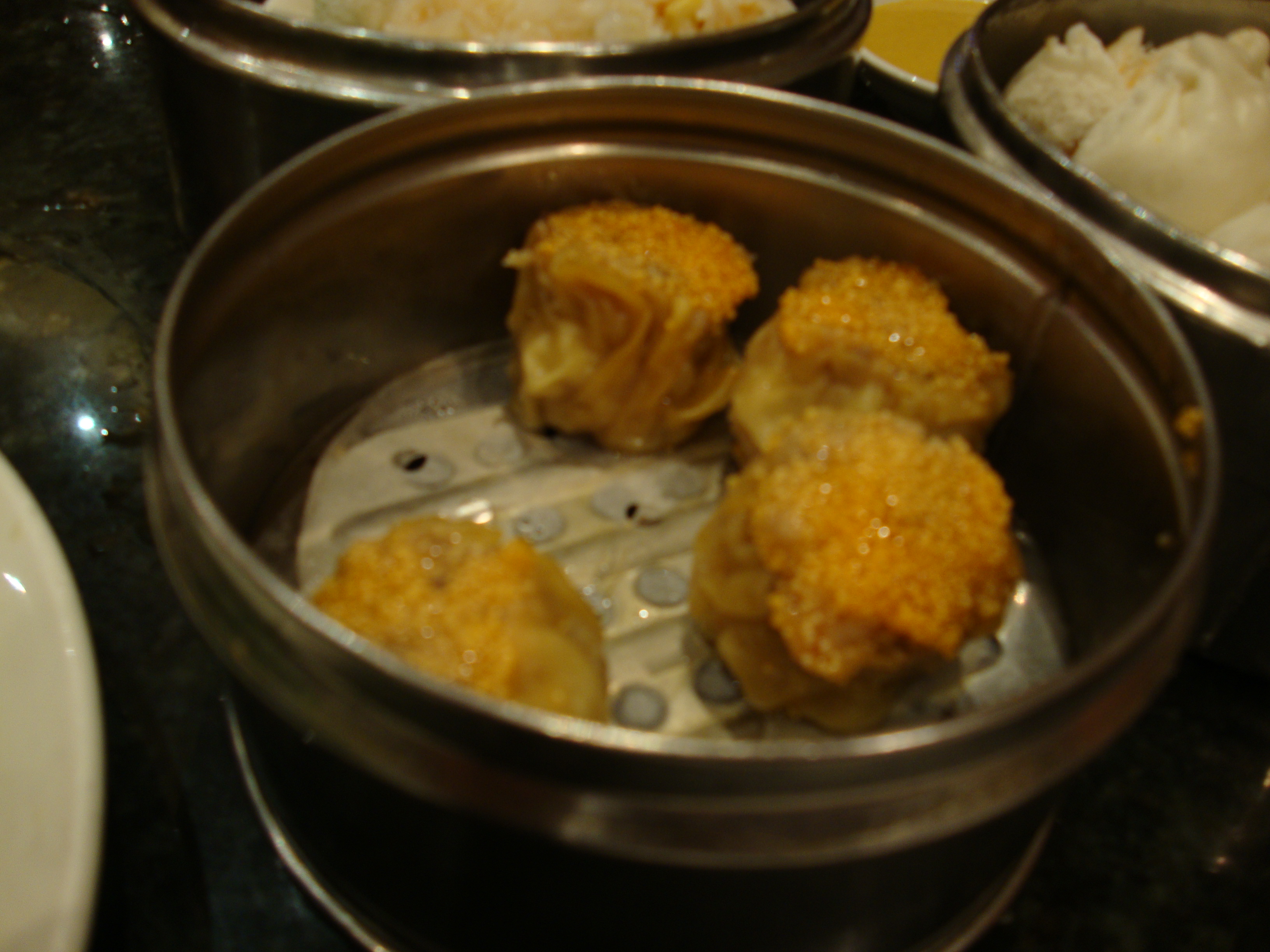
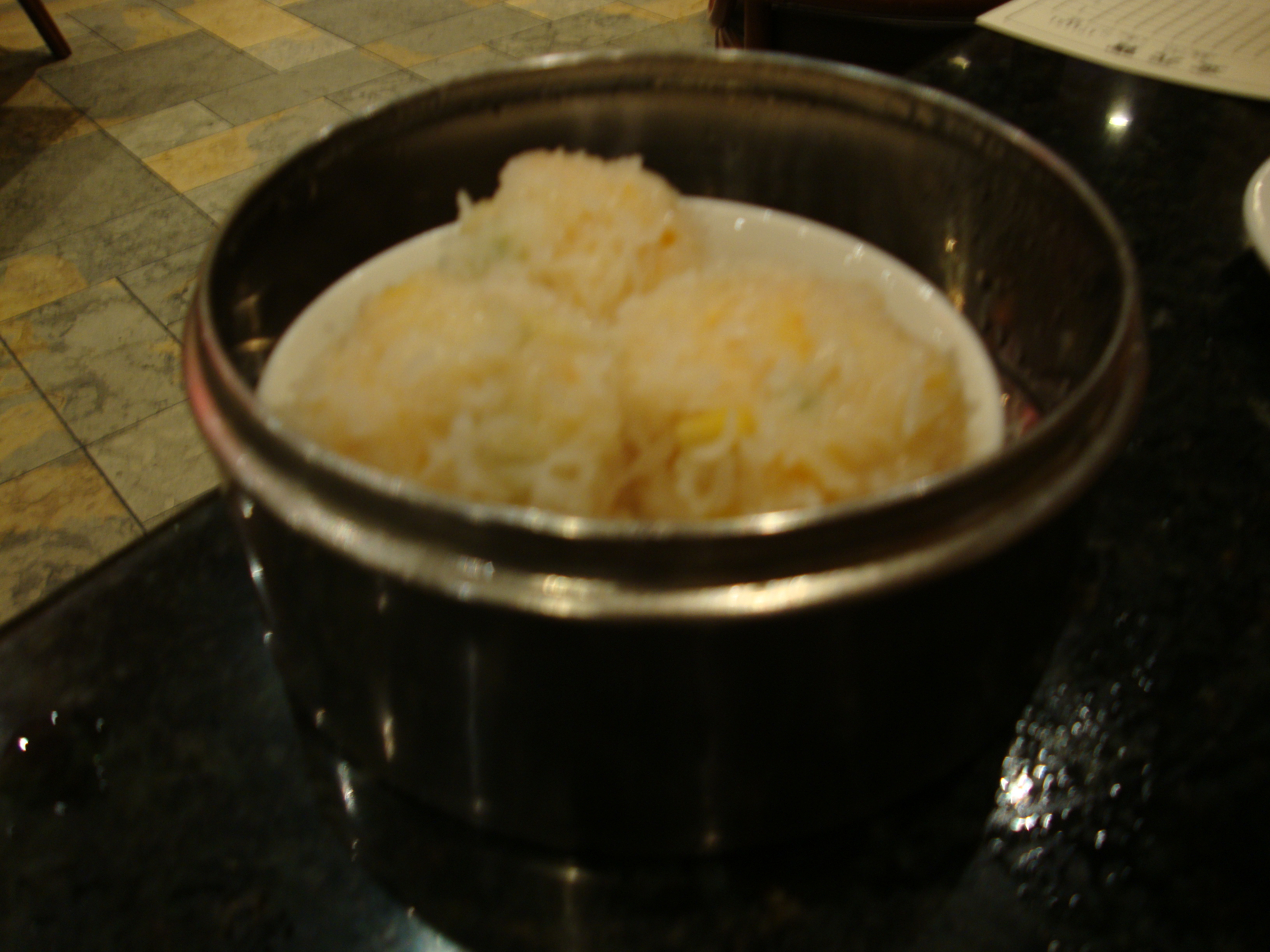
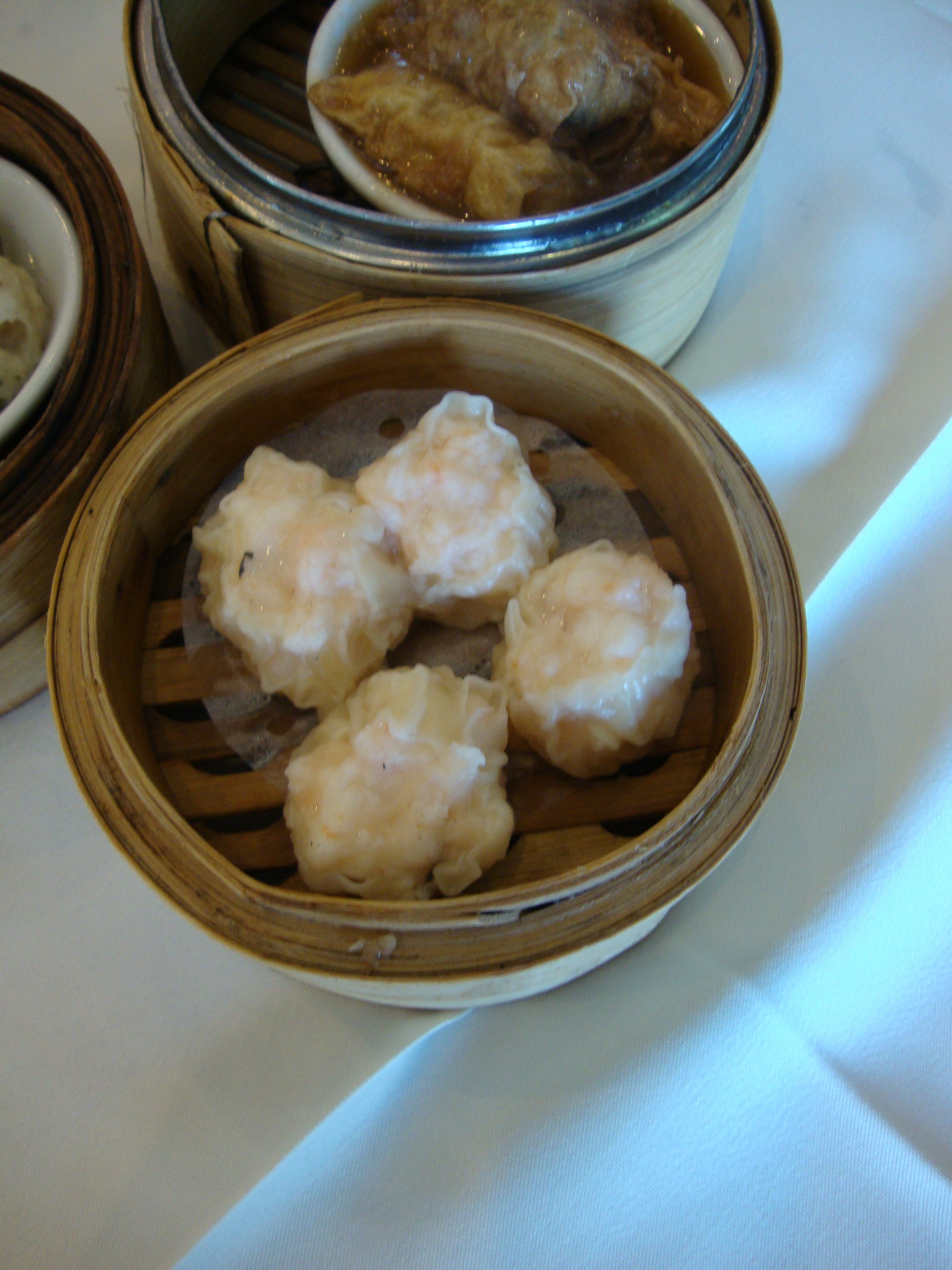
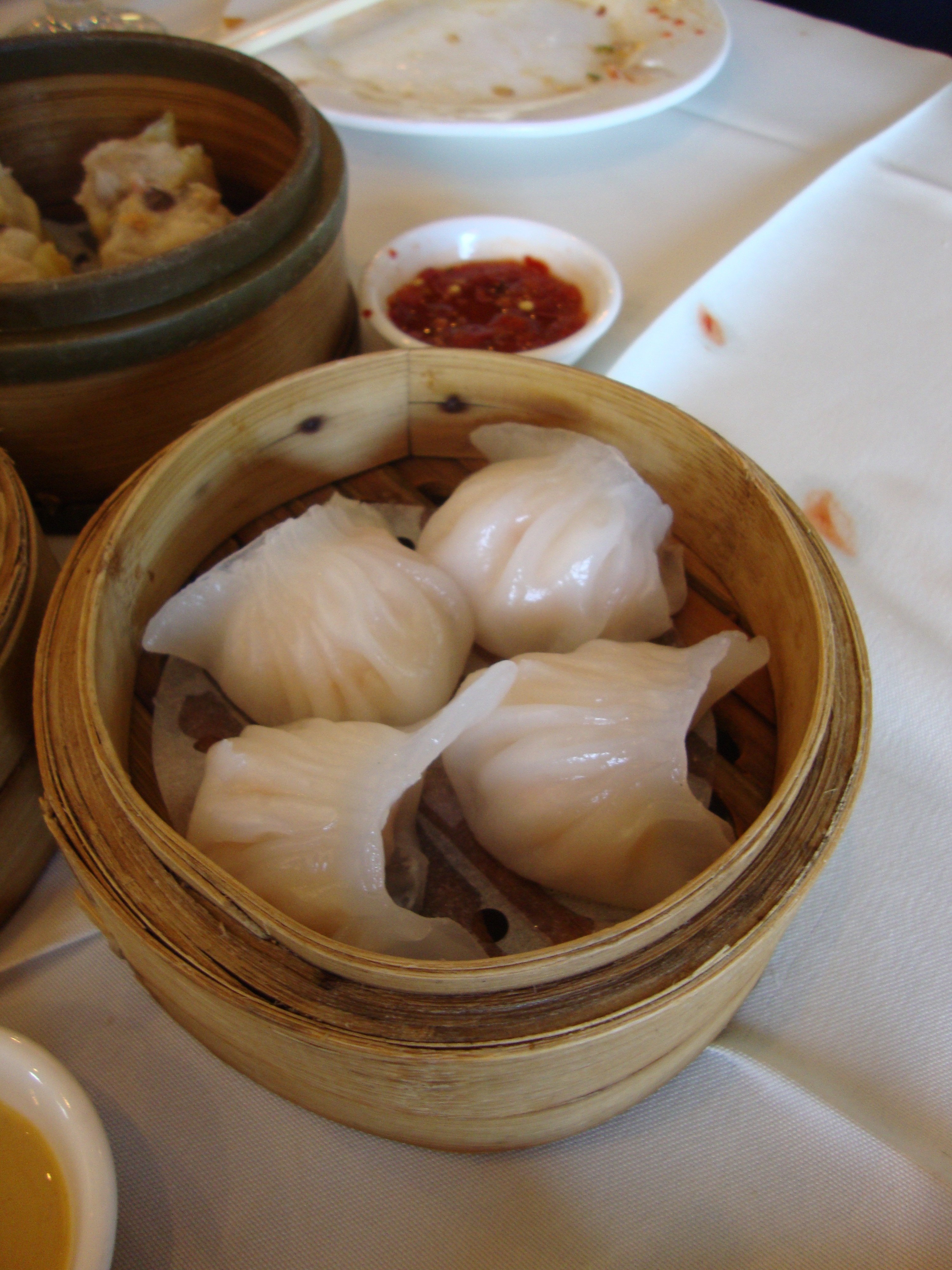
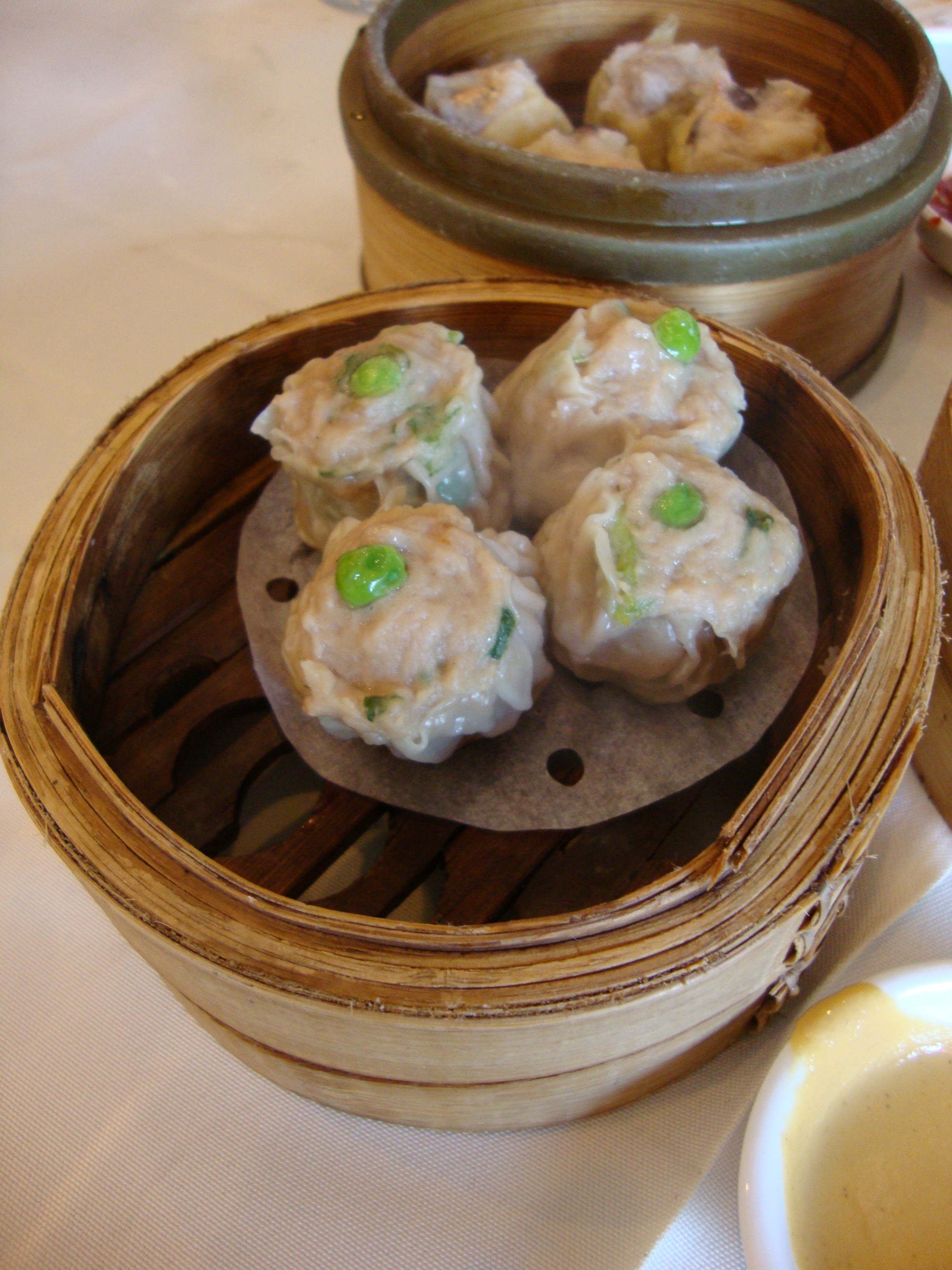
Best Steamed Shrimp Dumplings Ever - Corner 28

Best Steamed Shrimp Dumplings Ever - Corner 28

monolithic.  Today in “Just for Fun,” we review Corner 28 in Flushing, Queens.

Corner 28 is not easy to find and that’s a good thing.  This gem of a Cantonese restaurant lists an address on Main Street but in reality, the entrance is around the corner on 40th Rd.; you will have to walk around the flower vendor to enter and then up to the second floor.  But once in, the effort is worth it.

The menu offers a wide variety of Hong Kong delights, from congee and noodle soups, to various dim sum standards.  This is a great place to go for dim sum if you are looking to avoid the crowds and carts of the traditional dim sum places.  All of the dishes use fresh ingredients with lots of flavor, but the best dish was by far the steamed shrimp

dumplings.  It’s hard to find steamed shrimp dumplings with the proper ratio of wrapping to shrimp; most times the dumpling wrapping overpowers the shrimp and leaves a stickiness in the mouth.  But at Corner 28, the chef has evidently perfected the proper balance between shrimp to wrapping by providing a huge serving of meat that has been marinated in a sweet and light sauce.  With the first bite, the flavors of the shrimp cannot be denied.

Also of note was the Thousand Year Egg congee.  While rice gruel often does not appeal to non-Chinese, this is unfortunate, especially when it is the Hong Kong version – congee.  Congee offers a meal in and of itself and Corner 28 serves a strong one.  With the congee are thick and soft breadsticks, known in Mandarin as youtiao (oil sticks).  These are some of the best youtiao out there.

Prices are also extremely reasonable.  With dim sum dishes averaging around $2.50, Corner 28 will not break the bank.

Housed in a relaxing and modern atmosphere, above the hubbub of Flushing, Corner 28 not only offers fresh and yummy Cantonese food, but also provides a great break before getting back on the subway.

Rating: ★★★★☆

Corner 28
718-886-6628
40-28 Main Street, Flushing NY
(entrance around the corner on 40th Road)
Take the 7 train to the last stop, Main Street, Flushing

Bookmark and Share

Panorama Theme by Themocracy